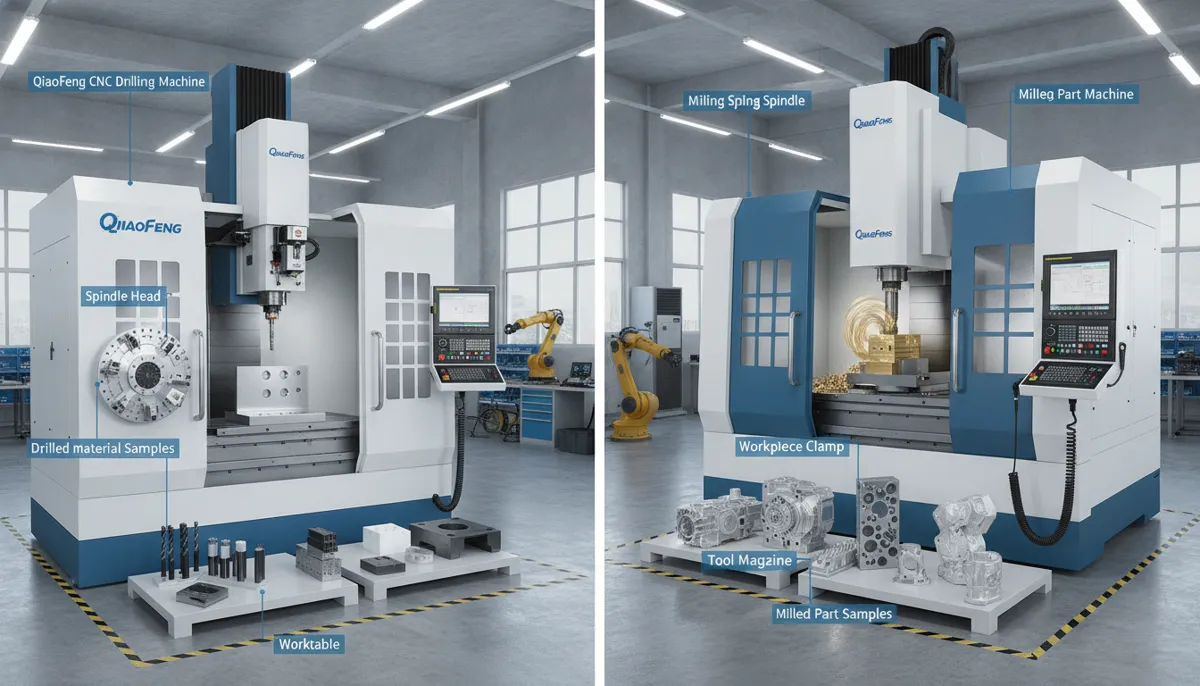
Choosing the right CNC drilling machine — or deciding whether a CNC milling machine better fits your production line — is one of the most consequential capital decisions a small or medium-sized factory can make. At QiaoFeng, founded in 2010 and trusted by 750+ factories across Europe, the United States, and Southeast Asia, we have helped thousands of workshop owners navigate exactly this choice. This comprehensive guide breaks down the real differences, specs, costs, and use cases so you can invest with confidence. For a focused look at hybrid solutions, see our related post: CNC Milling vs Drilling: Which for Your Workshop?
1. Market Overview: Why This Decision Matters More Than Ever
The global CNC machine tool market is expanding rapidly. According to Mordor Intelligence’s Machining Centers Market Size, Share and Growth Trends Report (2024), the machining centers segment — encompassing both CNC drilling and milling equipment — is projected to grow at a CAGR of approximately 6.5% through 2029, driven by rising demand from the automotive, aerospace, and electronics manufacturing sectors. For SMEs, this growth means both greater opportunity and greater risk if the wrong machine is selected.
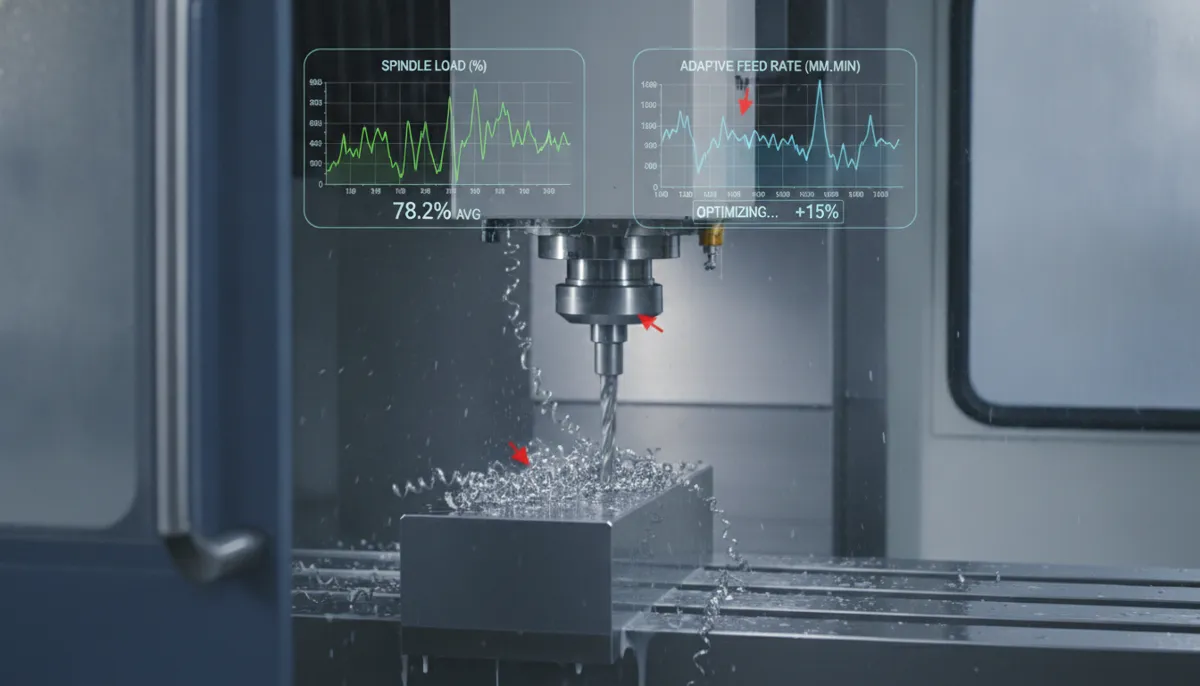
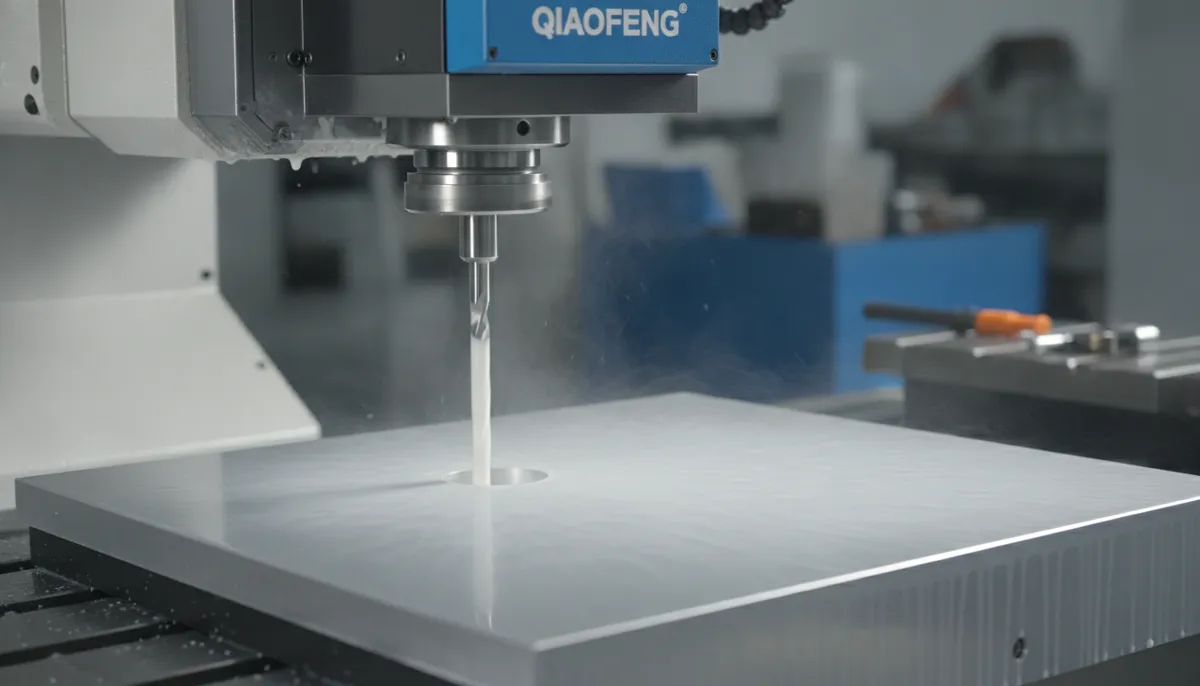
A dedicated CNC drilling machine is engineered specifically for high-speed, high-precision hole making — drilling, tapping, reaming, and spot facing. A CNC milling machine uses rotary multi-point cutters to remove material across multiple axes, enabling surface milling, slotting, pocketing, and complex 3D contouring. The two machines are not interchangeable, and selecting the wrong one can cost a factory months of lost productivity.
2. Head-to-Head Specs: QiaoFeng D-Series vs M-Series
The table below compares QiaoFeng’s dedicated CNC drilling machine (D-Series) against our CNC milling machine (M-Series) across the metrics that matter most to workshop managers:
| Feature | CNC Drilling Machine (QiaoFeng D-Series) | CNC Milling Machine (QiaoFeng M-Series) |
|---|---|---|
| Spindle Speed | Up to 12,000 RPM | Up to 8,000 RPM |
| Axis Configuration | 3-axis (X, Y, Z) | 3 to 5-axis |
| Max Workpiece Size | 600 x 400 x 200 mm | 800 x 600 x 500 mm |
| Positioning Accuracy | +/-0.005 mm | +/-0.003 mm |
| Tool Capacity (ATC) | 12 tools | 20 tools |
| Primary Application | Hole drilling, tapping, spot facing, reaming | Surface milling, slotting, 3D contouring, boring |
| Typical Cycle Time (drilling) | Optimized — 20 to 30% faster than milling machines | Adequate, but not optimized for drilling |
| Price Range (USD) | $15,000 to $30,000 | $30,000 to $60,000 |
| Estimated ROI Period | 12 to 18 months | 24 to 36 months |
| Warranty | 2 years | 2 years |
For workshops where 70% or more of operations involve hole making, the D-Series delivers a faster ROI at roughly half the capital outlay. The M-Series justifies its higher price when the job mix demands surfacing, complex profiles, or multi-operation setups that would otherwise require separate machines.
3. Industry Expert Insight
“In my 20 years of consulting for SMEs, I have seen many factories overspend on a milling machine when a CNC drilling machine would have sufficed. The key is to analyze your part mix. If 80% of your operations involve hole making, a dedicated drilling machine is the smartest investment.”
— John Miller, Manufacturing Engineer and Industry Consultant (200+ machine shops consulted globally)
This is a recurring pattern QiaoFeng’s application engineers observe across our 750+ customer base. Capital misallocation — buying versatility you do not need — is one of the top avoidable mistakes in SME equipment procurement. Our pre-sales team offers free production analysis consultations to help you map your part mix before committing to a purchase.
4. Pros and Cons at a Glance
CNC Drilling Machine
Pros
- Higher spindle speeds for cleaner, burr-free holes
- 20 to 30% faster cycle times on drilling operations
- Lower initial investment ($15K to $30K)
- Simpler operation — shorter operator training time
- Lower maintenance cost and complexity
- Faster ROI for drilling-focused production
Cons
- Limited to drilling, tapping, reaming, spot facing
- Cannot perform surface milling or 3D contouring
- Additional setup required for angled or compound holes
- Lower resale value compared to milling machines
CNC Milling Machine
Pros
- Versatile: milling, drilling, boring, slotting in one machine
- Handles complex 3D geometries and contoured surfaces
- Higher resale value on the used market
- Expands the range of jobs your shop can accept
- 5-axis option enables aerospace-grade complex parts
Cons
- Higher upfront cost ($30K to $60K)
- Lower spindle speeds — less efficient for pure drilling
- Steeper operator learning curve
- Higher maintenance requirements and cost
- Longer ROI period for drilling-heavy shops
5. Real-World Use Cases and Customer Results
Case 1 — Automotive Brake Disc Production (Germany)
A medium-sized brake disc supplier in Bavaria was experiencing hole alignment defects at a 5% scrap rate using conventional equipment. After deploying a QiaoFeng D-Series CNC drilling machine with automatic tool changer, cycle time dropped by 35% and scrap fell to 0.5% — a 90% reduction in waste. The high-speed spindle eliminated burring on safety-critical bolt-hole patterns.
“We supply Tier-1 automotive customers who have zero tolerance for dimensional variance. The QiaoFeng drilling machine gave us the repeatability we needed — +/-0.005 mm every single cycle. Within 14 months, the machine had paid for itself entirely through scrap reduction alone.”
Case 2 — Aluminum Furniture Hardware (United States)
A small workshop in Ohio producing aluminum brackets for commercial furniture needed to drill precise bolt-hole patterns across 500+ parts per shift. Manual drilling had created inconsistent hole spacing, leading to assembly rework. A QiaoFeng CNC drilling machine eliminated manual error entirely, doubled shift output, and reduced rework time by over 80%.
“I was skeptical about importing a machine from China, but QiaoFeng’s pre-sales team walked us through every spec and the after-sales support has been excellent. Our output doubled in the first month and the holes are perfect every time. Best equipment investment we have made in a decade.”
Case 3 — Medical Device Prototyping (Vietnam)
A startup in Ho Chi Minh City developing surgical instrument prototypes required both precision drilling and surface milling on titanium blanks. Buying two dedicated machines was outside their budget. They opted for a QiaoFeng combination milling-drilling CNC machine, which reduced setup time by 50% and compressed their prototype-to-sample cycle from 3 weeks to under 10 days.
“As a startup, capital efficiency is everything. The QiaoFeng combination machine let us do in one setup what would have taken two machines and two operators. The build quality is on par with European brands we evaluated at three times the price. QiaoFeng’s team in Dongguan was responsive and professional throughout.”
6. How to Choose: A Practical Decision Framework
Key factors to evaluate before purchasing:
- Part Mix Analysis: Log your last 3 months of jobs. What percentage required only hole making vs. surface work?
- Volume vs. Variety: High-volume, low-variety production favors dedicated drilling machines. Low-volume, high-variety favors milling.
- Floor Space: CNC drilling machines typically have a smaller footprint — an advantage for space-constrained workshops.
- Operator Skill Level: Drilling machines have a shorter learning curve; milling requires more advanced G-code and CAM knowledge.
- Budget and ROI Horizon: If payback within 18 months is a requirement, a drilling machine is almost always the safer bet for hole-focused shops.
- Future Job Pipeline: If you are actively quoting milling jobs, the versatility premium of an M-Series may be justified.
7. FAQ — CNC Drilling Machine vs Milling Machine
Q1: What is the core difference between a CNC drilling machine and a CNC milling machine?
A CNC drilling machine is purpose-built for creating holes — drilling, tapping, reaming, and spot facing — at high speed and with exceptional repeatability. A CNC milling machine uses multi-point rotary cutters to remove material across multiple axes, enabling flat surfaces, slots, pockets, and complex 3D contours. Drills are optimized for hole making; mills are optimized for material removal and shaping.
Q2: Can a CNC milling machine drill holes?
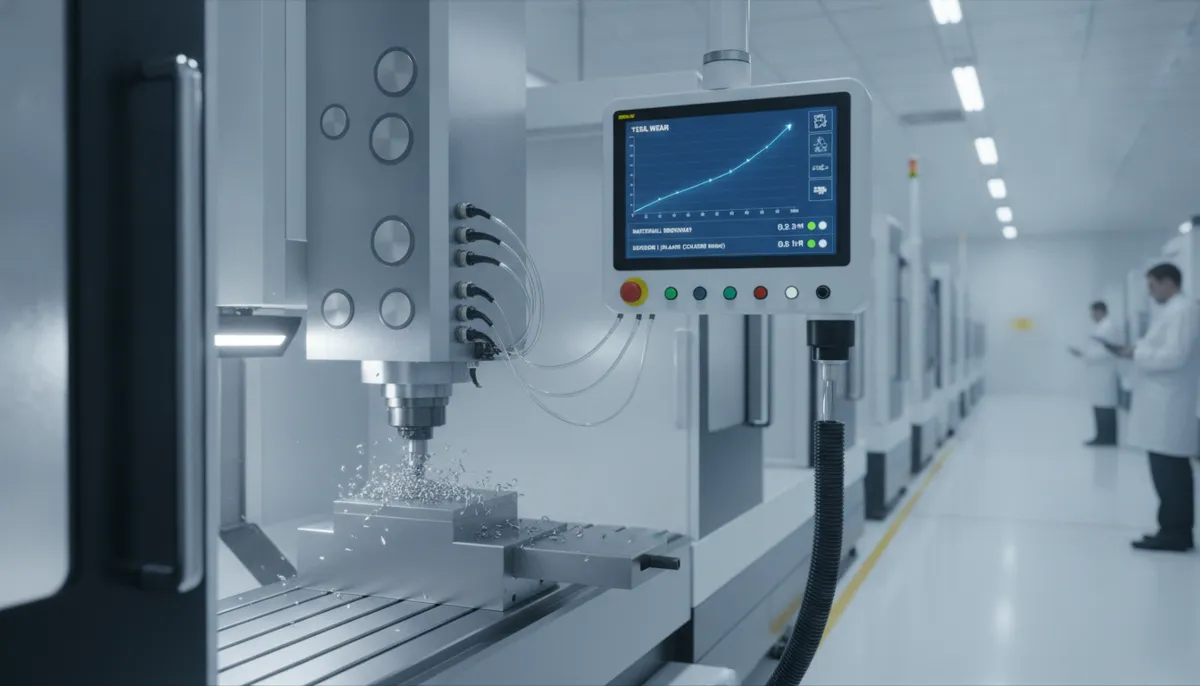
Yes, but not as efficiently. Milling machines typically run at lower spindle speeds than dedicated drilling machines, resulting in longer cycle times, higher tool wear, and potentially rougher hole finishes. For workshops where drilling accounts for the majority of operations, a dedicated CNC drilling machine will outperform a milling machine on both speed and cost-per-hole.
Q3: What is a combination milling-drilling CNC machine?
A combination machine integrates both milling and drilling capabilities in a single unit, typically with one spindle and an automatic tool changer. It offers SMEs the flexibility to handle varied job types without the capital outlay of two separate machines. QiaoFeng’s combination models are particularly popular among startups and job shops serving diverse industries.
Q4: How do I decide between a CNC drilling machine and a CNC milling machine for my factory?
Start with a part-mix analysis: review your last 90 days of production orders and categorize each operation. If hole making accounts for 70% or more, a CNC drilling machine offers the best ROI. If your orders regularly require surfacing, complex profiles, or 3D work, a milling machine or combination unit is the better fit. QiaoFeng offers free consultations — contact our team for a no-obligation production analysis.
Q5: What certifications do QiaoFeng machines carry, and what is the warranty?
All QiaoFeng CNC machines are CE and ISO 9001 certified, meeting international safety and quality management standards. Every machine comes with a 2-year warranty covering manufacturing defects and component failures. Please note: returns are supported for confirmed quality issues; we do not accept no-reason returns for machines in working condition.
Q6: Where is QiaoFeng located and how long have you been in business?
QiaoFeng has been manufacturing CNC machines since 2010, operating from our factory in Daling Mountain Town, Dongguan, Guangdong, China. Over 15 years, we have supplied 750+ factories in more than 40 countries across the automotive, aerospace, furniture, electronics, and medical device sectors.
Ready to Upgrade Your Workshop?
Get a free consultation from QiaoFeng’s application engineers. We will analyze your part mix, recommend the right machine, and provide a detailed ROI projection — at no cost and no obligation. Trusted by 750+ factories across Europe, the USA, and Southeast Asia since 2010.
References
- Mordor Intelligence. Machining Centers Market Size, Share and Growth Trends Report. 2024. Available at: mordorintelligence.com