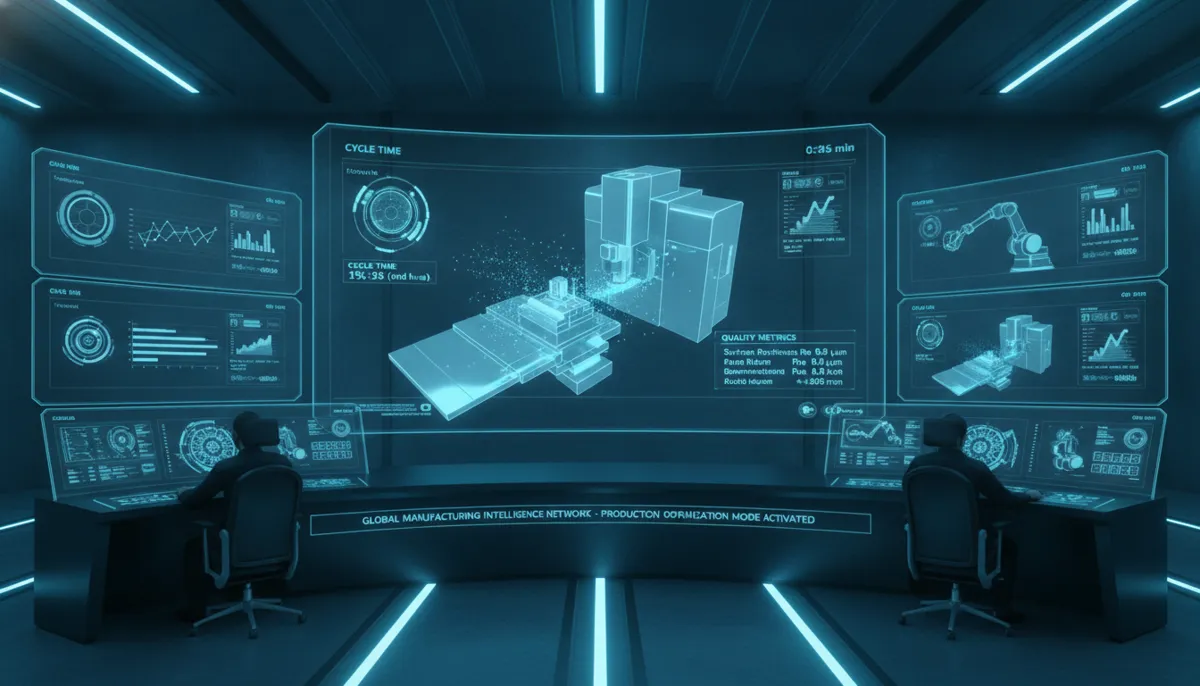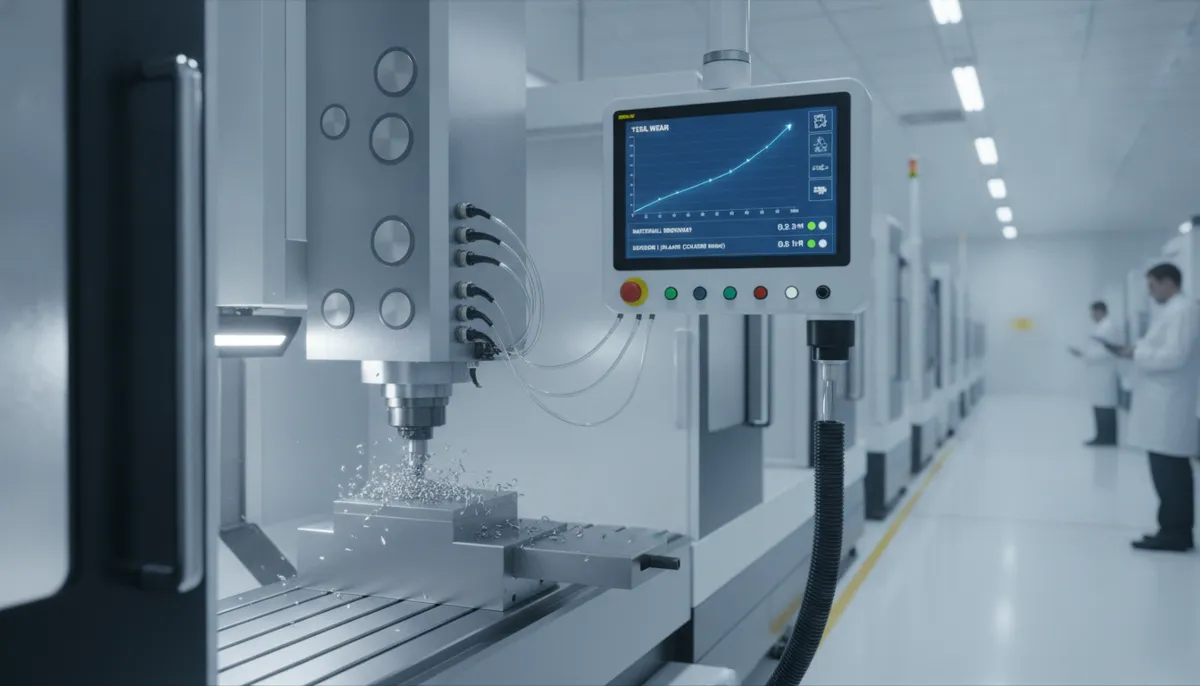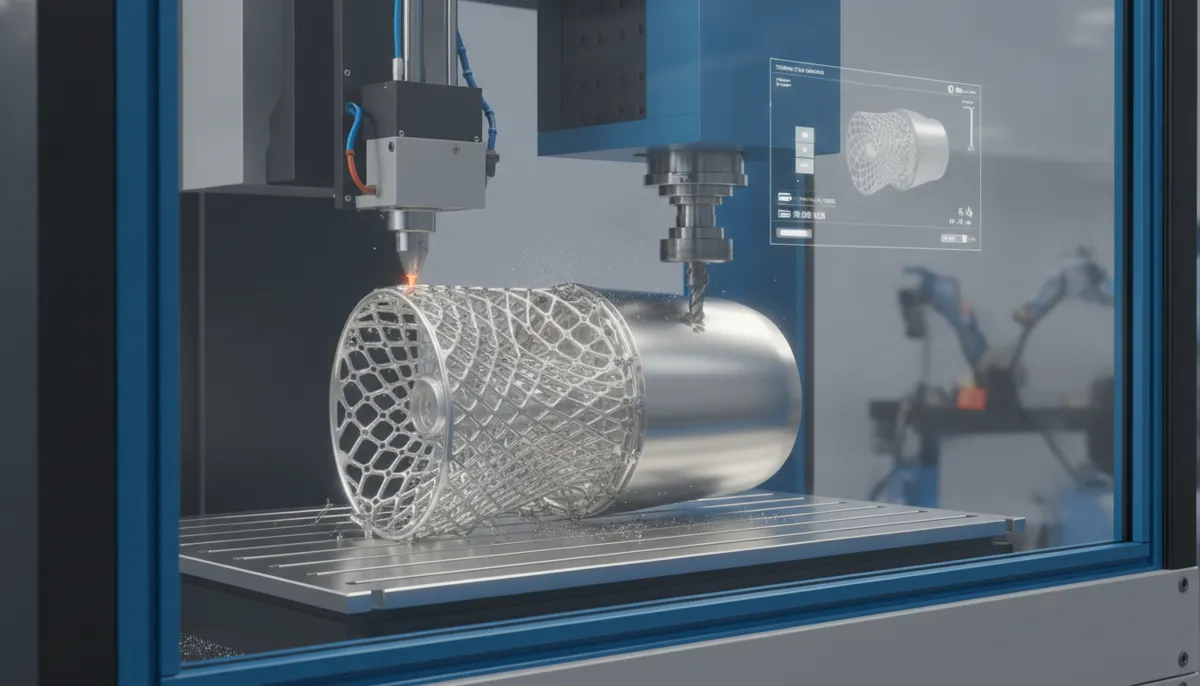
The hybrid CNC machine is redefining what’s possible in precision manufacturing — and for R&D leaders, it represents one of the most significant capability upgrades available today. Unlike traditional CNC machines that rely solely on subtractive methods, a hybrid CNC machine integrates additive manufacturing (3D printing via DED or WAAM) and CNC milling into a single platform, enabling geometries, lead times, and material efficiencies that are simply impossible with conventional machining alone. This guide provides a comprehensive comparison of hybrid CNC machines vs traditional CNC — covering specifications, real-world use cases, ROI data, and the key questions R&D teams need answered before investing. At QiaoFeng — founded in 2010 in Daling Mountain Town, Dongguan, Guangdong — we’ve supported 750+ B2B clients across Europe, North America, and Southeast Asia in advancing their manufacturing capabilities over 15 years.
Whether you’re prototyping aerospace brackets, developing medical implants, or optimizing injection mold tooling, understanding the trade-offs between hybrid and traditional CNC is essential to making the right technology investment. This article gives you the data, use cases, and expert context to make that decision with confidence.
1. Why Hybrid CNC Machine Technology Is Growing Fast
The global hybrid additive manufacturing market — the core technology subsegment behind hybrid CNC machines — was valued at USD 191.3 million in 2022 and is projected to reach USD 948.6 million by 2030, growing at a CAGR of 22.2%, according to Grand View Research.[1] This near-5× growth over eight years reflects the manufacturing sector’s accelerating recognition that additive-subtractive integration is not a niche technology — it is the next standard for complex, high-value part production.
It is important to distinguish this figure from the broader additive manufacturing market. The full additive manufacturing market — which encompasses all 3D printing and additive technologies across industries — was valued at USD 30.55 billion in 2025 and is projected to reach USD 168.93 billion by 2033 (CAGR 23.9%), also per Grand View Research.[2] Hybrid CNC systems represent a high-growth subsegment of this larger market, specifically targeting precision metal manufacturing applications where additive and subtractive processes must work in concert to achieve final part specifications.
By contrast, the traditional CNC machining and turning centers market — the established baseline technology — was valued at USD 25.99 billion in 2023 and is projected to grow at a CAGR of only 6.6% through 2030, per Grand View Research.[3] The Machining Centers market specifically is projected to grow from USD 23.67 billion in 2026 to USD 30.75 billion by 2031 at a CAGR of 5.37%, per Mordor Intelligence.[4] The contrast is stark: hybrid CNC technology is growing at 3–4× the rate of traditional CNC machining markets, signaling a clear technology transition underway in precision manufacturing.
The primary growth drivers for hybrid CNC machines are aerospace lightweighting requirements, medical device customization, and the defense sector’s need for rapid repair and part replacement without long supply chains. For R&D leaders evaluating capital investment, these growth trajectories signal that hybrid CNC machine technology is moving rapidly down the cost curve — making now an optimal entry point before the technology becomes a competitive baseline.
2. Hybrid CNC Machine vs Traditional CNC: Full Specification Comparison
| Feature | Hybrid CNC Machine | Traditional CNC Machine |
|---|---|---|
| Manufacturing Process | Additive (DED/WAAM) + Subtractive (milling/turning) | Subtractive only (milling, turning, drilling) |
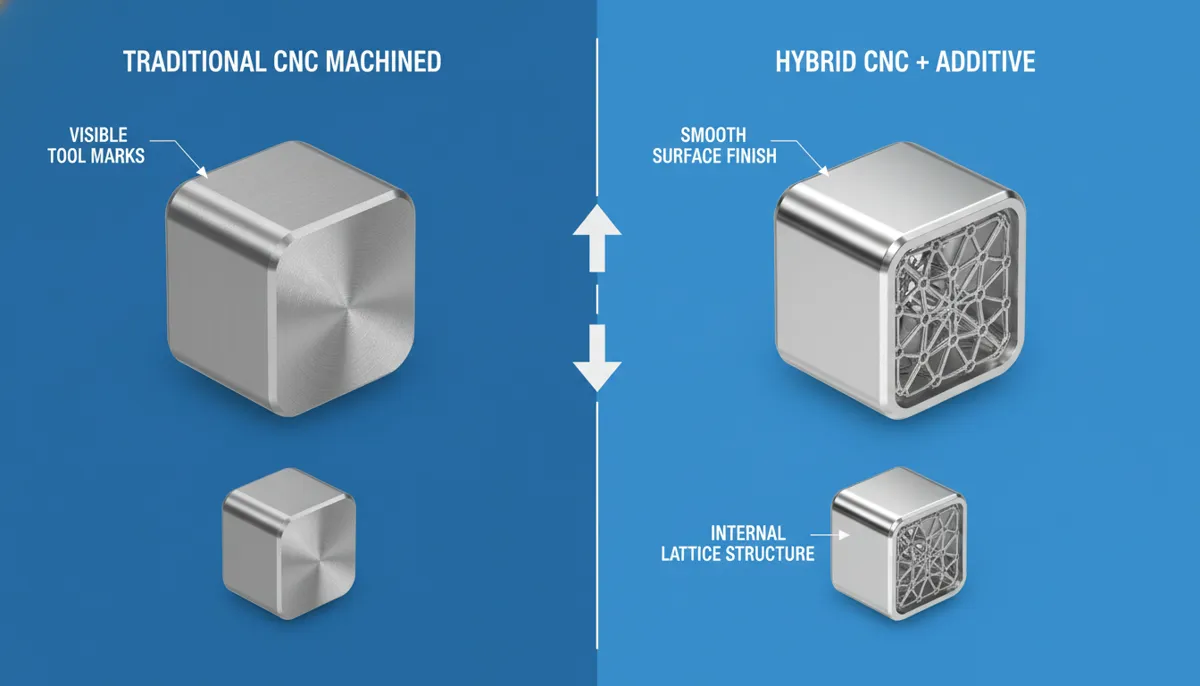
| Geometric Complexity | Unlimited — internal cavities, lattice structures, undercuts | Limited by tool access and fixturing |
| Material Utilization | Up to 90% (near-net-shape deposition) | Typically 30–70% (subtractive waste) |
| Setup Requirement | Single setup for additive + subtractive operations | Multiple setups for complex multi-operation parts |
| Surface Finish | As-milled finish: Ra 0.4 µm typical on machined surfaces | As-milled finish: Ra 0.4 µm typical |
| Prototype Lead Time | 1–3 days (print + machine in one cycle) | 5–10 days (separate operations, multiple setups) |
| Part Repair Capability | ✅ Yes — deposit material on worn areas, re-machine to spec | ❌ No — replacement part required |
| Part Consolidation | Multiple components printed as one, then finished | Assembly required for multi-component structures |
| Titanium / Inconel Capability | High — near-net-shape reduces expensive material waste | High waste — expensive billet machined away |
| Operator Skill Requirement | Higher — requires additive (DED/WAAM) + CNC programming expertise | Standard CNC programming |
| Initial Investment | Higher (premium over traditional CNC) | Lower upfront cost |
| Best Application | Complex prototypes, repair, titanium/Inconel, R&D iteration | High-volume production of standard geometries |
* Performance figures are based on typical production conditions. Results vary by material, part geometry, and process parameters. Contact QiaoFeng for an application-specific assessment.
Is a Hybrid CNC Machine Right for Your R&D Application?
Our engineers — with 15 years of advanced manufacturing experience — can evaluate your specific part requirements and recommend the optimal hybrid or traditional CNC configuration.
3. Real-World Use Cases: Where Hybrid CNC Machines Deliver Maximum Value
3.1 Hybrid CNC Machine for Aerospace Bracket Redesign
Pain Point: A critical aerospace bracket needed to be redesigned for weight reduction while maintaining structural integrity. Traditional CNC required multiple setups and welding, achieving only a 15% weight reduction — insufficient for next-generation airframe requirements.
Solution: Using a hybrid CNC machine, engineers printed a titanium lattice core structure via DED and then CNC-finished all mating and datum surfaces in a single setup. The result: a 40% weight reduction with full structural compliance, no welding joints, and a prototype delivered in 3 days vs the 3-week traditional process. The part passed all stress and fatigue tests on the first iteration.
3.2 Hybrid CNC Machine for Medical Implant Prototyping
Pain Point: A medical device startup needed to develop a custom titanium implant with internal drug-delivery channels. Traditional CNC could not produce the internal geometry without multi-part assembly and welding — introducing contamination risks and structural weak points unacceptable for implant applications.
Solution: The hybrid CNC machine printed the implant body with fully enclosed internal channels, then CNC-finished all mating surfaces and bone-interface features to tight tolerances. Prototype lead time dropped from 4 weeks to 5 days, enabling rapid design iteration across 6 design variants in the time traditional methods would have produced one. The consolidated single-piece construction eliminated all assembly-related failure modes.
3.3 Hybrid CNC Machine for Automotive Conformal Cooling Tooling
Pain Point: An automotive OEM needed conformal cooling channels in an injection mold insert to reduce cycle time and improve part quality. Traditional CNC drilling could only produce straight-line channels, leaving significant cooling efficiency on the table.
Solution: The hybrid CNC machine printed the insert with complex conformal cooling channels following the exact contour of the mold cavity, then CNC-finished all mating and sealing surfaces. The result: a 30% reduction in injection molding cycle time and a 20% improvement in part dimensional consistency — directly reducing scrap and increasing press throughput without any additional capital investment in molding equipment.
3.4 Hybrid CNC Machine for Defense Component Repair
Pain Point: A defense contractor required urgent repair of a damaged gearbox housing. Traditional replacement required new casting tooling and an 8-week lead time — operationally unacceptable for field-deployed equipment.
Solution: The damaged component was 3D-scanned, material was deposited via the hybrid CNC machine’s WAAM additive head onto the worn and damaged areas, and the component was then re-machined to original dimensional specifications. The repair was completed in 3 days at approximately 60% of replacement cost — with full dimensional compliance and no compromise to structural integrity.
4. What R&D Leaders Say About Hybrid CNC Machines
“We were spending 3 weeks per prototype iteration on our titanium aerospace brackets — most of that time was setup, fixturing, and waiting for separate additive and subtractive operations to complete on different machines. After switching to a hybrid CNC machine from QiaoFeng, we’re turning around design iterations in 3 days. We’ve compressed a 6-month development program into 10 weeks. The geometric freedom alone — being able to print internal lattice structures and machine the interfaces in one setup — has changed how we approach design from the very beginning.”
“Our medical device team was stuck on a titanium implant design because we couldn’t produce the internal channel geometry with traditional CNC. We were looking at a 4-week lead time per prototype and couldn’t afford the iteration cycles. QiaoFeng’s hybrid CNC machine solved both problems simultaneously — we get the internal geometry we need and the CNC-quality surface finish on the mating surfaces, all in one machine, in under a week. We’ve now run 8 design iterations in the time our previous process would have produced two. The 2-year warranty gave our procurement team confidence in the investment.”
“We manufacture precision mold tooling for the electronics and automotive sectors here in Johor Bahru. Conformal cooling has always been the answer to our cycle time problems, but traditional CNC couldn’t produce the channel geometry we needed. The hybrid CNC machine from QiaoFeng changed that completely — we now deliver conformal-cooled inserts as a standard offering, and our customers are seeing 25–35% cycle time reductions. It’s become a genuine competitive differentiator for our shop. QiaoFeng’s support team in Dongguan has been responsive throughout the installation and commissioning process.”
5. Pros and Cons of Hybrid CNC Machines vs Traditional CNC
✅ Pros of Hybrid CNC Machine
- Single setup for additive (DED/WAAM) + subtractive — no re-fixturing
- Unlimited geometric complexity (internal cavities, lattice structures)
- Up to 90% material utilization — critical for titanium/Inconel cost control
- Prototype lead time 1–3 days vs 5–10 days traditional
- Part repair capability — extend component life, reduce replacement cost
- Part consolidation — reduce assembly count and failure modes
- Faster R&D iteration — compress development timelines significantly
- CNC-quality surface finish (Ra 0.4 µm) on all machined surfaces
❌ Cons / Considerations
- Higher initial capital investment vs traditional CNC
- Requires operators skilled in both DED/WAAM additive and CNC programming
- Slower deposition rate for large solid sections vs dedicated 3D printers
- Build volume limited vs large-format dedicated additive systems
- Process planning more complex (additive-subtractive sequencing)
- Not cost-justified for simple, standard-geometry high-volume parts
6. Frequently Asked Questions About Hybrid CNC Machines
What exactly is a hybrid CNC machine?
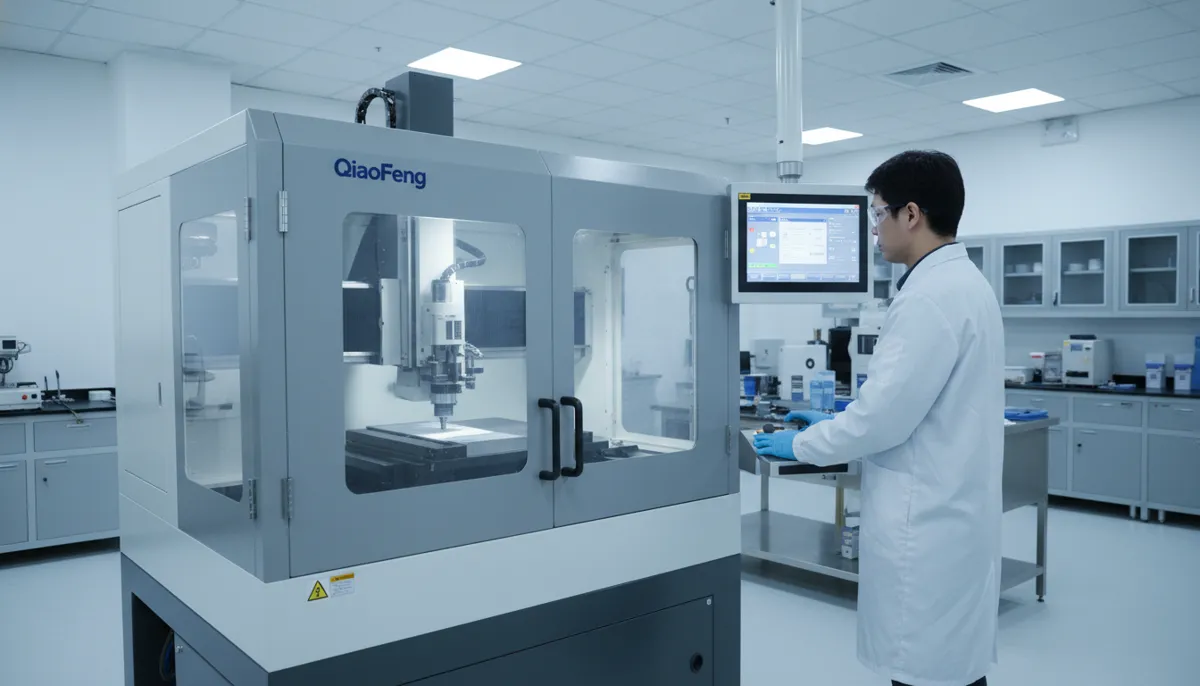
A hybrid CNC machine integrates additive manufacturing — typically Directed Energy Deposition (DED) or Wire Arc Additive Manufacturing (WAAM) — with conventional CNC subtractive machining (milling, turning, drilling) in a single platform. The machine can deposit material to build up geometry, then immediately switch to milling or turning to achieve precise dimensions and surface finish — all without removing the part from the machine. This eliminates the re-fixturing errors and lead time losses that occur when additive and subtractive operations are performed on separate machines.
Is a hybrid CNC machine better than a traditional CNC for all applications?
No. Hybrid CNC machines deliver the highest ROI for applications involving complex internal geometries, expensive materials (titanium, Inconel), rapid prototyping, part repair, or part consolidation. For high-volume production of standard geometries from common materials like aluminum or mild steel, traditional CNC remains more cost-effective. The key question is whether your application’s geometric complexity, material cost, or lead time requirements justify the higher investment in hybrid capability. Contact QiaoFeng for an honest application-specific assessment.
What materials can a hybrid CNC machine process?
Hybrid CNC machines can process a wide range of metals including titanium alloys (Ti-6Al-4V), Inconel, stainless steel, tool steel, aluminum alloys, and cobalt-chrome. The additive process deposits material via laser-directed energy (DED) or wire arc (WAAM), while the subtractive process machines it to final dimensions. Titanium and Inconel are particularly well-suited to hybrid processing because the near-net-shape additive deposition dramatically reduces the expensive material waste inherent in machining these alloys from billet.
How does hybrid CNC machining reduce prototype lead time?
Traditional prototyping requires separate additive and subtractive operations on different machines, with fixturing, re-setup, and queue time between each step. A hybrid CNC machine performs all operations in a single setup — the part is printed and machined in one continuous cycle without leaving the machine. For a complex titanium bracket, this typically compresses lead time from 3–4 weeks to 3–5 days. For R&D teams running multiple design iterations, this compression multiplies: what was a 6-month development program can be completed in 6–8 weeks.
Can a hybrid CNC machine repair existing components?
Yes — this is one of the most compelling and often overlooked applications of hybrid CNC machines. Worn or damaged components can be 3D-scanned, the hybrid machine deposits fresh material onto the worn areas via its DED or WAAM additive head, and the component is then re-machined to original dimensional specifications. This is particularly valuable for defense, aerospace, and heavy industry components where replacement parts have long lead times or high costs. Repair via hybrid CNC typically costs 40–60% less than replacement and can be completed in days rather than weeks.
What is QiaoFeng’s warranty and support policy on hybrid CNC machines?
All QiaoFeng CNC machines — including hybrid models — come with a 2-year warranty covering all major components including the additive deposition head, CNC spindle, and control system. Our team works closely with each client before purchase to ensure the right machine configuration is selected for their specific application — significantly reducing the risk of mismatched expectations. Warranty support is provided for all confirmed quality defects. For warranty claims, technical support, or application consultation, contact us at bella@qfcncmachine.com or call +86 151 1824 3737.
Ready to Transform Your R&D Capabilities with a Hybrid CNC Machine?
QiaoFeng has supported 750+ B2B manufacturing operations since 2010. Our engineers will guide you through a custom application analysis — evaluating your part complexity, material requirements, and development timelines to determine whether hybrid CNC is the right investment for your team.
References
- Grand View Research, Hybrid Additive Manufacturing Market Size & Share Report, 2023–2030, 2023. View Report →
- Grand View Research, Additive Manufacturing Market Size & Share Report, 2025–2033, 2025. View Report →
- Grand View Research, CNC Machining and Turning Centers Market Size & Share Report, 2024–2030, 2024. View Report →
- Mordor Intelligence, Machining Centers Market Size, Share & Growth Trends Report, 2026–2031, 2024. View Report →