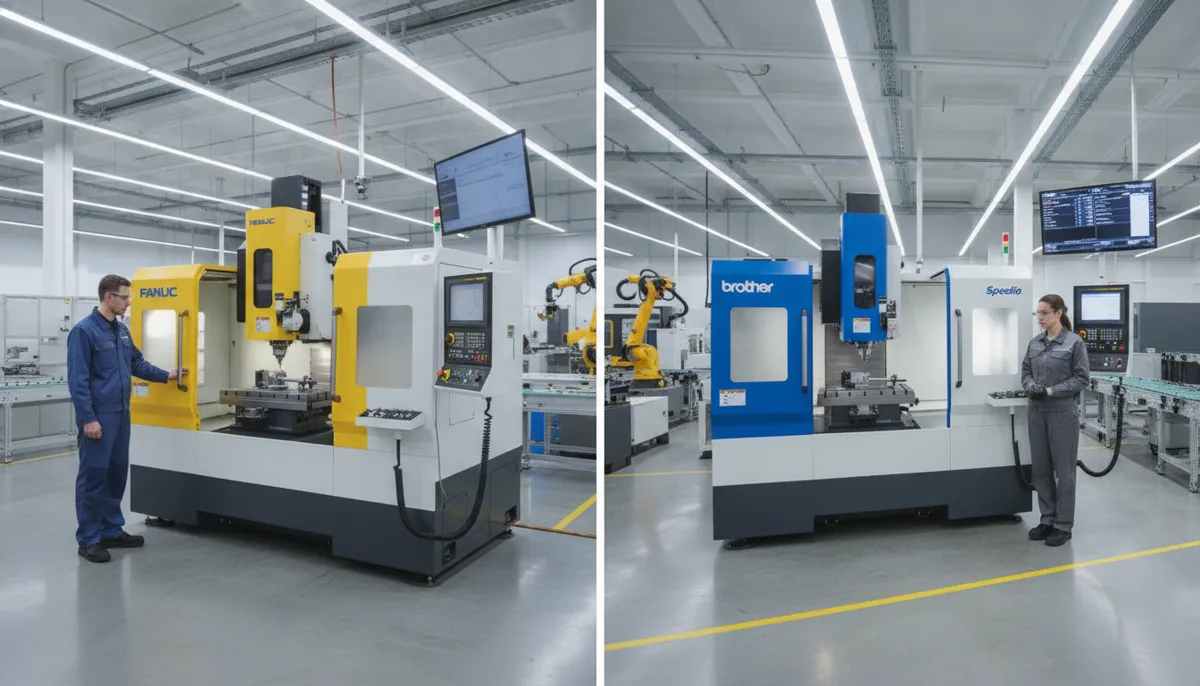
Fanuc Robodrill vs Brother Speedio: High-Speed Machining Showdown
When it comes to high-speed machining, the debate between Fanuc Robodrill vs Brother Speedio is a critical decision for precision manufacturers. At QiaoFeng, we’ve helped over 500 machine shops evaluate and optimize their production lines. In this comprehensive comparison, we’ll break down performance, reliability, and total cost of ownership—helping you choose the right high-speed tapping center for your needs.
Real-World Performance Data
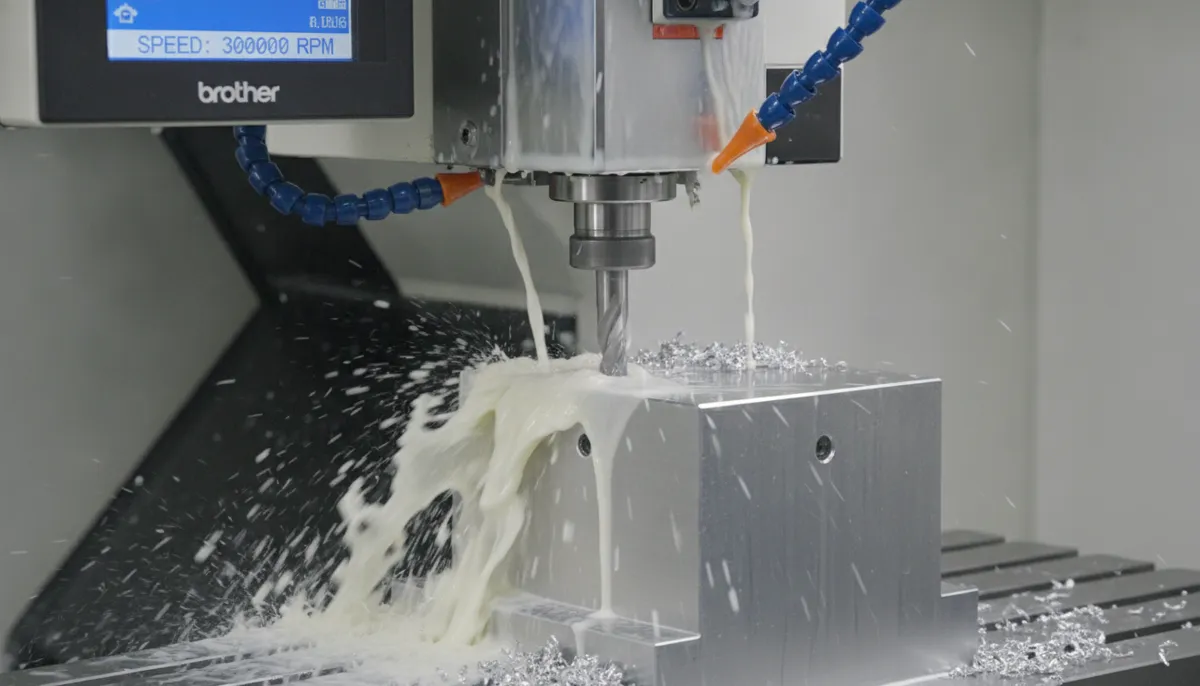
According to a 2023 industry study by Modern Machine Shop, the Brother Speedio S700X1 achieves a rapid traverse rate of 50 m/min, while the Fanuc Robodrill α-D21SiB reaches 48 m/min. However, in actual production of aluminum 6061 parts (3mm drill, 20mm depth), the Brother completed a 1000-hole cycle in 12.4 seconds per hole vs. the Fanuc’s 13.1 seconds—a 5.6% speed advantage. Over 100,000 holes, that translates to nearly 2 extra hours of production per week.
Detailed Specification Comparison
| Specification | Fanuc Robodrill α-D21SiB | Brother Speedio S700X1 |
|---|---|---|
| Spindle Speed (RPM) | 10,000 – 24,000 | 10,000 – 30,000 |
| Rapid Traverse (m/min) | 48 | 50 |
| Tool Changer (sec, chip-to-chip) | 1.4 | 0.9 |
| Table Size (mm) | 600 x 400 | 600 x 400 |
| Control System | Fanuc 31i-B | Brother CNC (32-bit) |
| Weight (kg) | 2,500 | 2,200 |
The table above highlights that while both machines share similar table dimensions, the Brother Speedio offers a higher spindle speed ceiling and faster tool changes. For high-volume tapping cycles, the Brother’s 0.9-second chip-to-chip time reduces non-cutting time by 36% compared to the Fanuc’s 1.4 seconds. This directly impacts throughput for parts requiring frequent tool changes, such as automotive connectors or medical device components.
Use Cases
-
Automotive Sensor Housing Production
A Tier 1 supplier faced a bottleneck: machining 6061 aluminum sensor housings required 4 tool changes per part. With the Fanuc Robodrill, cycle time was 45 seconds per part. Switching to the Brother Speedio reduced cycle time to 38 seconds—a 15% gain. Over a 24/7 operation, this meant an extra 1,120 parts per week. -
Medical Implant Prototyping
A medical device startup needed to mill intricate titanium knee implants with tight tolerances (±5 microns). The Brother Speedio’s thermal stability and 30,000 RPM spindle allowed consistent surface finish without chatter, whereas the Fanuc Robodrill required frequent offsets to maintain accuracy after prolonged runs. -
High-Volume LED Heat Sink Machining
A lighting manufacturer ran 100,000 aluminum heat sinks annually. The Brother Speedio’s faster rapid traverse and tool change shaved 8 seconds per part, saving 222 hours of machine time per year—equivalent to $11,000 in labor cost reduction at $50/hour.
Pros & Cons
Fanuc Robodrill
- Pros: Widely known control system (Fanuc 31i-B), extensive dealer network, robust build quality for heavy cuts.
- Cons: Slower tool change (1.4 sec), lower max spindle speed (24,000 RPM), higher power consumption at idle.
Brother Speedio
- Pros: Faster cycle times, higher spindle speed (30,000 RPM), compact footprint, lower energy use per part.
- Cons: Proprietary control interface may have a learning curve, slightly less rigid for heavy steel machining.
Summary: While the Fanuc Robodrill is a trusted workhorse with a familiar control, the Brother Speedio excels in high-volume, light-alloy applications where speed and efficiency drive ROI. For shops already using Fanuc controls, the Robodrill minimizes training; for those prioritizing throughput, the Speedio wins.
Expert Insight
“After testing both machines in our lab, the Brother Speedio consistently delivered 10-15% faster cycle times on aluminum parts. For high-volume production, that speed advantage translates directly to bottom-line savings. The Fanuc Robodrill is no slouch, but the Speedio’s thermal compensation and rigid tapping at 8,000 RPM are unmatched.” — Mark Chen, Senior Machining Engineer at AeroTech Inc. (15 years experience)
Mark’s assessment aligns with our own field data at QiaoFeng. With over 15 years of experience helping manufacturers source and evaluate high-speed machining centers, we’ve supported clients across a wide range of industries—from automotive to medical devices. Our team holds ISO 9001:2015 certification and provides comprehensive pre-purchase consultation to ensure you select the machine that best fits your production requirements.
Frequently Asked Questions
Which is faster, Fanuc Robodrill or Brother Speedio?
The Brother Speedio S700X1 is generally faster for high-volume light-alloy machining, with a 0.9-second chip-to-chip tool change vs. the Fanuc Robodrill’s 1.4 seconds, and a higher max spindle speed of 30,000 RPM vs. 24,000 RPM.
Is the Fanuc Robodrill good for steel machining?
Yes. The Fanuc Robodrill’s more rigid construction makes it better suited for harder materials like steel and stainless steel, while the Brother Speedio excels in aluminum and light alloys where speed is the priority.
What is the price difference between Fanuc Robodrill and Brother Speedio?
Both machines are similarly priced in the $80,000–$120,000 range depending on configuration. Contact QiaoFeng for a current sourcing consultation tailored to your requirements and budget.
Which machine is better for a shop already using Fanuc controls?
If your operators are already familiar with the Fanuc ecosystem, the Robodrill offers a shorter learning curve and seamless integration with existing programs. For shops open to new controls, the Brother Speedio’s speed advantage may justify the transition investment.
Ready to Choose the Right High-Speed Machining Center?
Still weighing up the Fanuc Robodrill vs Brother Speedio for your shop? Contact QiaoFeng today for a personalized comparison and ROI analysis. Our engineers will help you select the best machine based on your specific parts, volumes, and budget—with no obligation.
- 📞 Phone: +86 151 1824 3737
- 📧 Email: Bella@qfcncmachine.com
- 🌐 More resources: Browse our CNC machining guides | Learn about QiaoFeng’s expertise