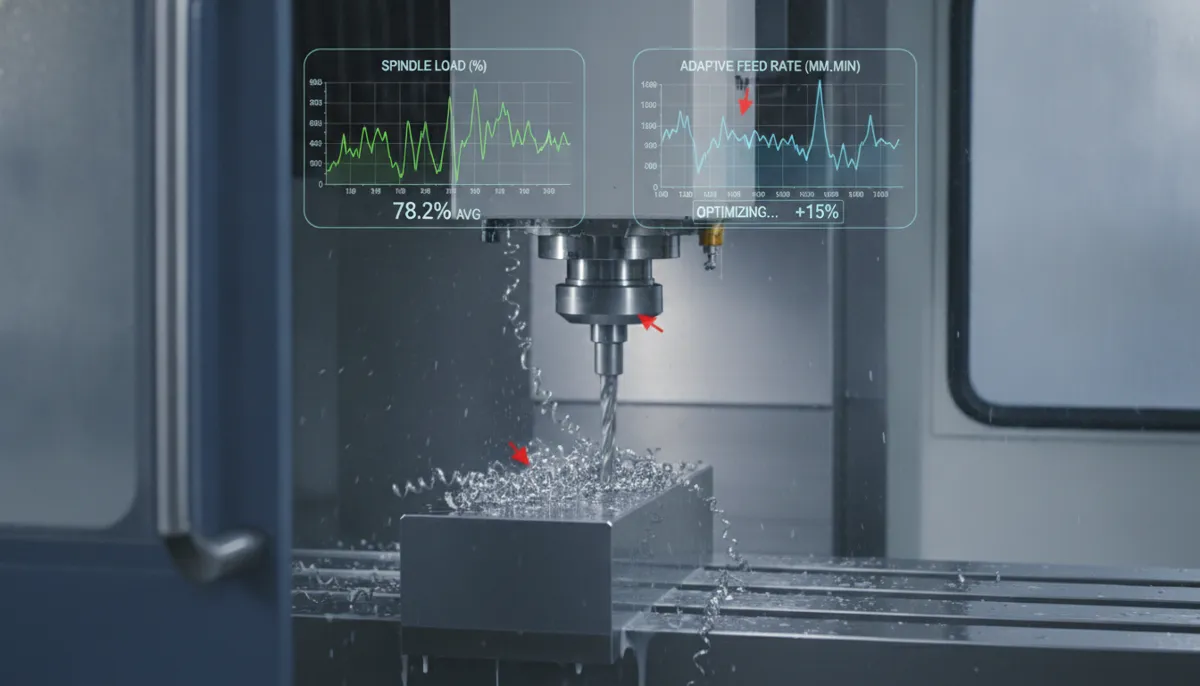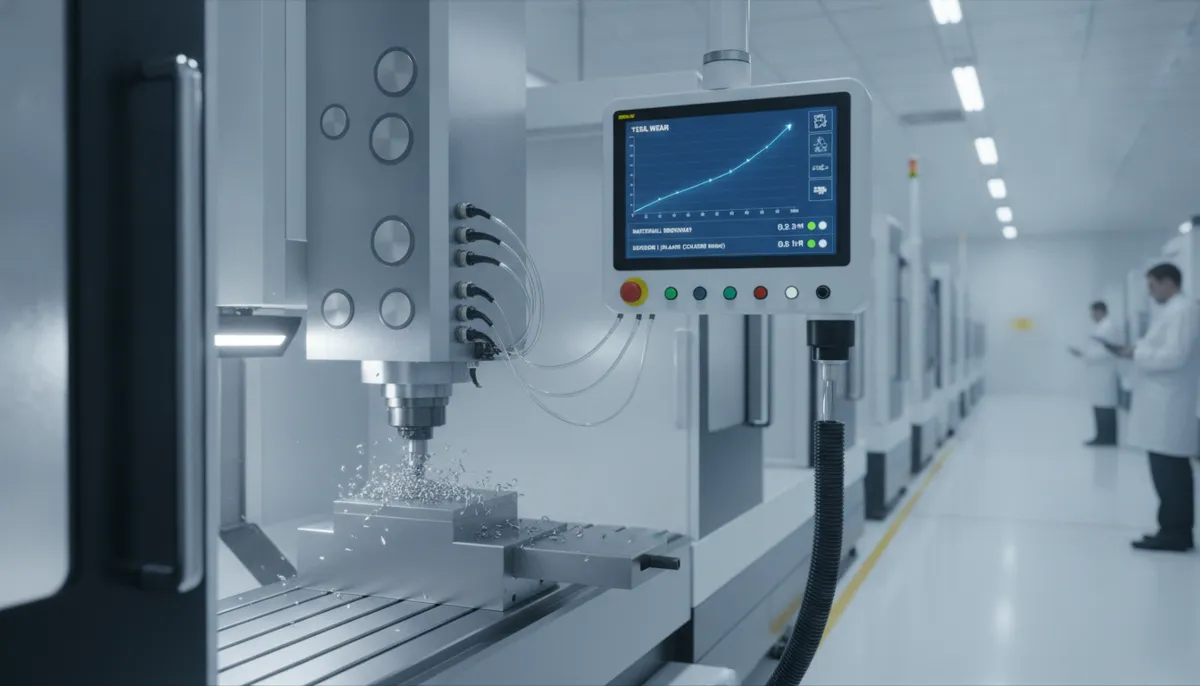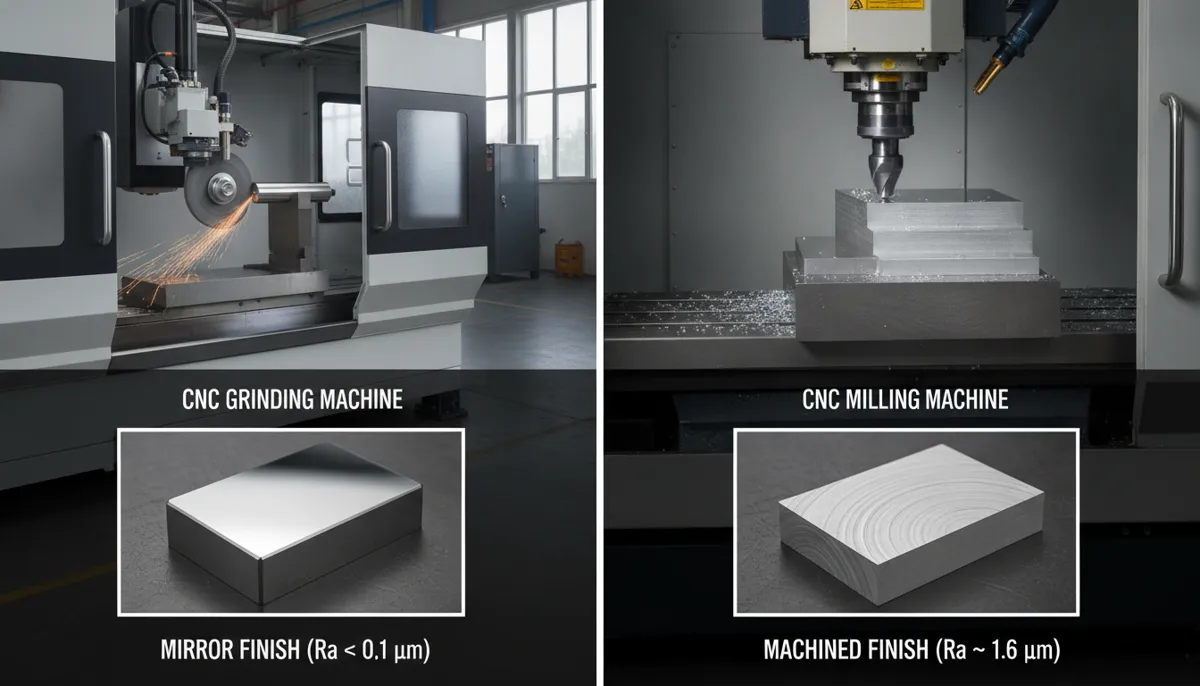
For precision mold factories, achieving a flawless surface finish is non-negotiable — and choosing between a CNC grinding machine and CNC milling is one of the most consequential process decisions a mold shop manager can make. While CNC milling is versatile and efficient for bulk material removal, a CNC grinding machine delivers the superior surface quality, dimensional accuracy, and hardened-material capability that high-end mold finishing demands. This guide compares CNC grinding vs milling across every key parameter — surface finish, tolerances, material compatibility, cost, and ROI — to help you decide when to use each process for maximum productivity. At QiaoFeng — founded in 2010 in Daling Mountain Town, Dongguan, Guangdong — we’ve supplied precision CNC grinding solutions to 750+ B2B clients across Europe, North America, and Southeast Asia over 15 years.
The decision between grinding and milling is rarely binary. Most high-performance mold shops use both: milling for roughing and semi-finishing, and a CNC grinding machine for final surface finishing and tight-tolerance features. Understanding where each process excels — and where it falls short — is the foundation of an efficient, cost-effective mold production workflow.
1. Why CNC Grinding Machine Demand Is Growing in Mold Manufacturing
The global grinding machines market was valued at USD 6.47 billion in 2025 and is projected to reach USD 8.59 billion by 2031 (CAGR 4.8%), according to Mordor Intelligence.[1] Growth is driven primarily by the mold and die, automotive, and aerospace sectors — all of which require increasingly tight surface finish and dimensional tolerances that only precision CNC grinding can reliably deliver.
Grand View Research reports the global grinding machinery market at USD 6.18 billion in 2025, projected to reach USD 8.93 billion by 2033 at a CAGR of 4.8%.[2] The report highlights CNC-controlled grinding centers as the fastest-growing segment, driven by mold shops transitioning from manual polishing workflows to fully automated CNC grinding finishing — reducing labor dependency while improving surface consistency.
Fortune Business Insights projects the grinding machines market to grow from USD 7.28 billion in 2026 to USD 11.42 billion by 2034 — with precision surface finishing for injection mold tooling cited as a primary demand driver alongside automotive powertrain components.[3]
2. Core Features of QiaoFeng’s CNC Grinding Machine
2.1 Ultra-Precision Hydrostatic Spindle
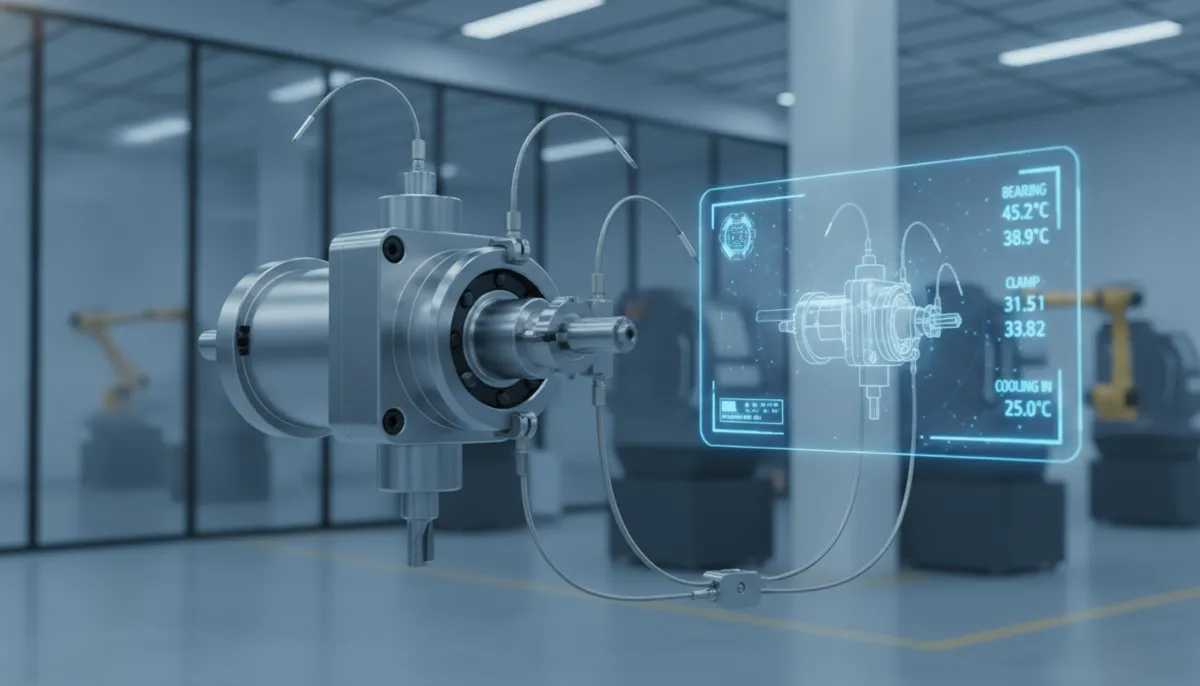
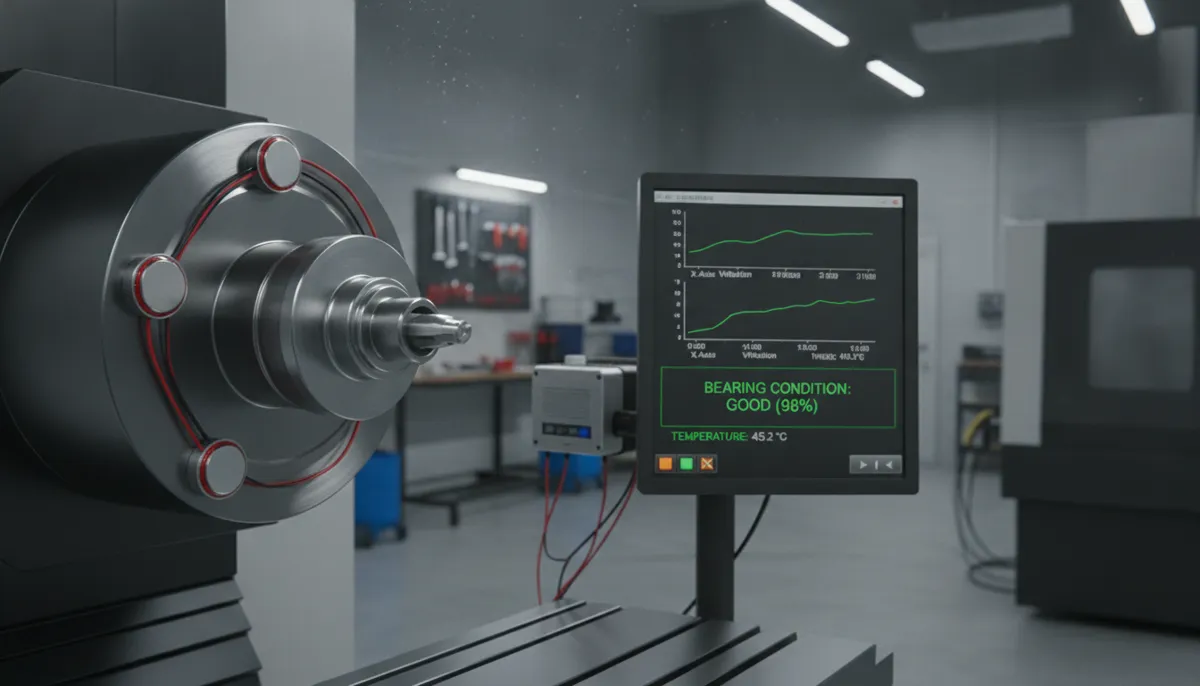
QiaoFeng’s CNC grinding machines feature a hydrostatic spindle with less than 0.5 µm runout — the foundation of consistent surface finish on complex mold contours. This precision eliminates the spindle-induced surface variation that causes inconsistent Ra readings across a mold cavity, reducing the need for manual touch-up after grinding. For mold cores and cavities where surface consistency directly affects part appearance and release characteristics, spindle precision is non-negotiable.
2.2 Intelligent Automatic Wheel Dressing System
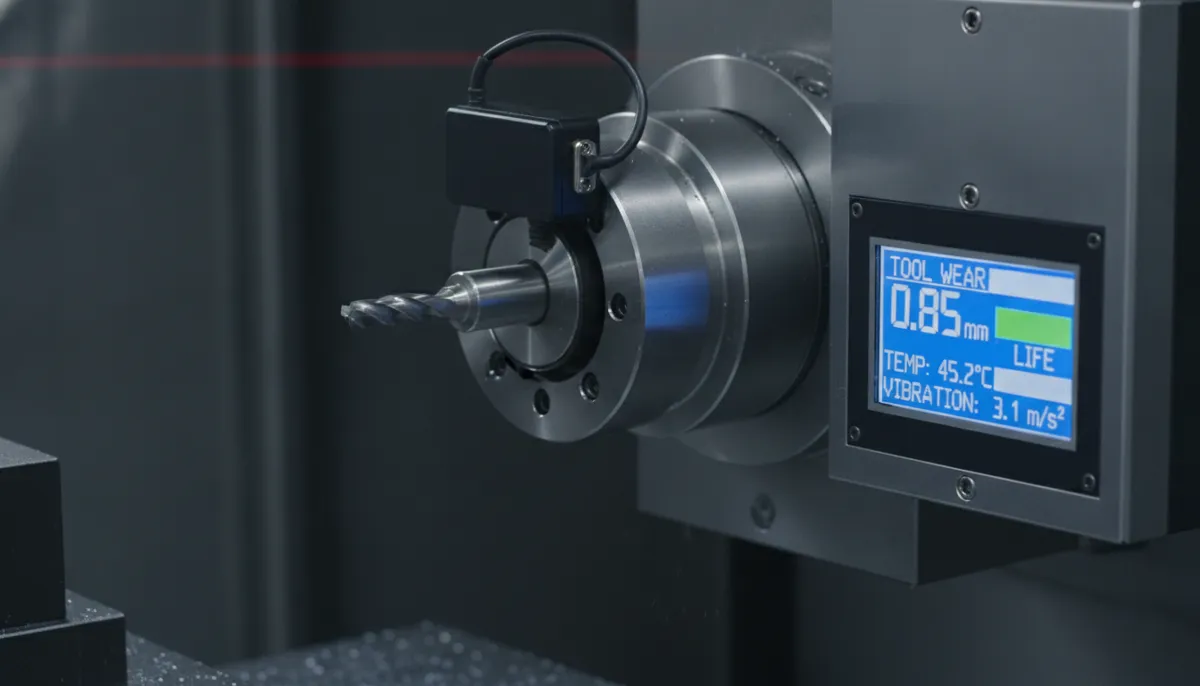
The automatic wheel dressing system compensates for grinding wheel wear in real time, maintaining grinding accuracy throughout long production runs without operator intervention. This means fewer interruptions, more consistent Ra values across a batch, and higher throughput for your mold shop. Manual wheel dressing — the standard on lower-specification grinders — introduces variability every time an operator dresses the wheel, which compounds into surface finish inconsistency across a production run.
2.3 Thermal Stability: Polymer Concrete Base + Oil-Cooled Spindle
Built with a polymer concrete base and oil-cooled spindle, QiaoFeng’s CNC grinding machines maintain dimensional stability even during extended 8–12 hour production runs. Thermal expansion is the primary cause of tolerance drift in precision grinding — a machine that heats up during operation will produce parts that drift out of tolerance as the shift progresses. The polymer concrete base has 6–8× better vibration damping than cast iron, and the oil-cooled spindle maintains consistent operating temperature from the first part to the last.
2.4 CNC Grinding Machine: User-Friendly Control with Pre-Loaded Mold Steel Cycles
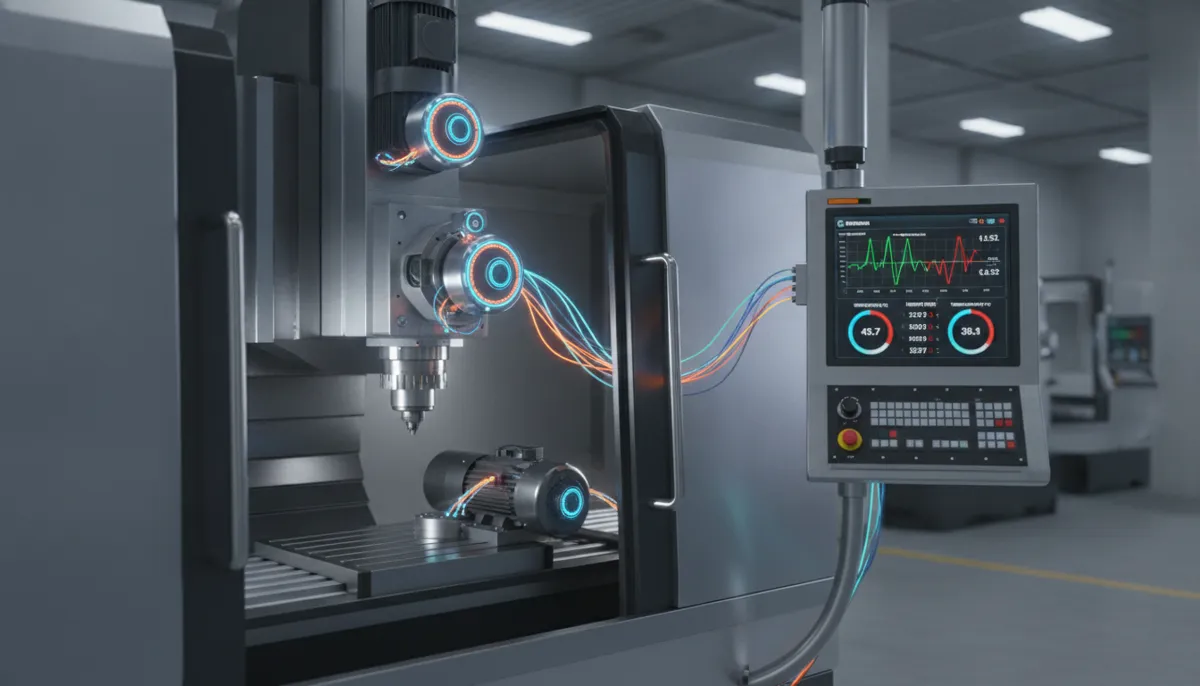
The proprietary CNC interface includes pre-loaded grinding cycles optimized for common mold steel grades — P20, H13, S136, NAK80 — allowing operators to set up jobs in minutes rather than hours. This reduces programming time, minimizes human error in parameter selection, and ensures that less experienced operators can consistently achieve the correct grinding parameters for each material. For mold shops running multiple steel grades across shifts, this feature alone can eliminate a significant source of surface finish variability.
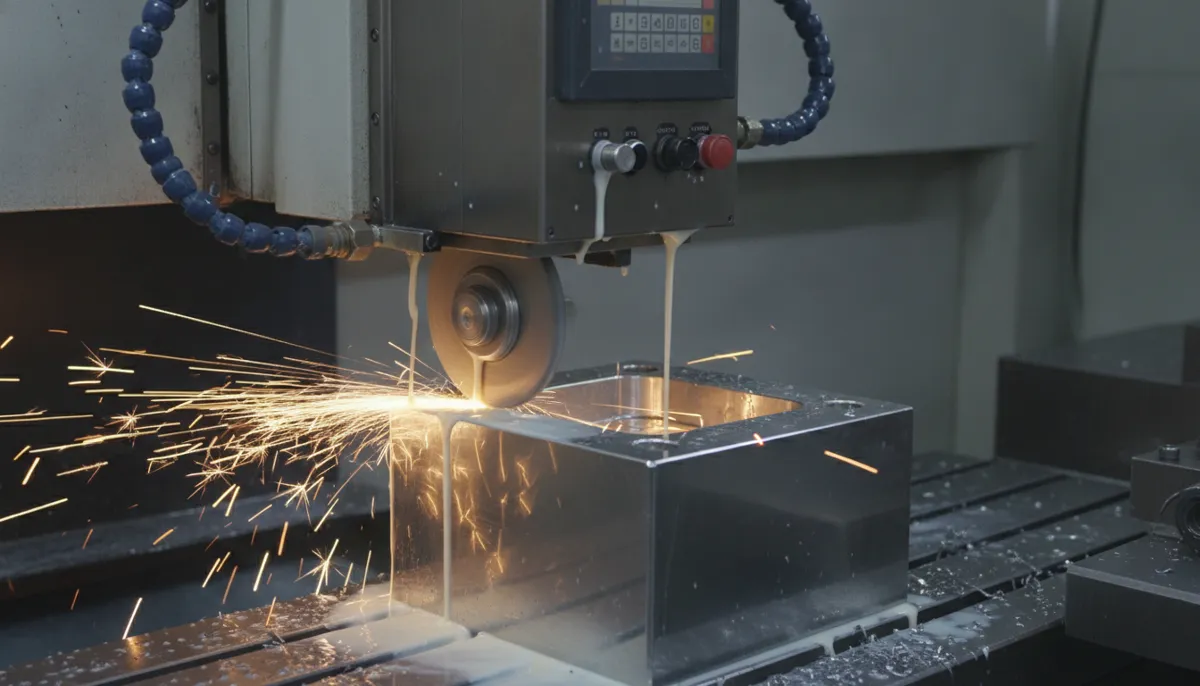
3. CNC Grinding Machine vs CNC Milling: Full Comparison
| Parameter | CNC Grinding Machine | CNC Milling Machine |
|---|---|---|
| Surface Finish (Ra) | Ra 0.1–0.4 µm (mirror-quality possible) | Ra 0.8–3.2 µm (requires polishing for mold finish) |
| Dimensional Tolerance | ±0.002 mm typical | ±0.005–0.02 mm typical |
| Hardened Material Capability | Excellent — HRC 58–65 steel, carbide | Limited — rapid tool wear above HRC 55 |
| Material Removal Rate | Low — finishing process only | High — efficient for bulk roughing |
| Manual Polishing Required After? | Rarely — grinding achieves final finish directly | Yes — typically 4–20 hours per cavity |
| Complex 3D Contours | Excellent with form/profile grinding wheels | Excellent with ball end mills |
| Deep Cavities / Slots | Limited by wheel geometry | Excellent — long-reach tooling available |
| Internal Channels / Pockets | Limited | Excellent |
| Tool / Wheel Life | Long — grinding wheels last hundreds of hours | Shorter — end mills wear faster on hard steel |
| Initial Investment | 20–50% higher than equivalent CNC mill | Lower upfront cost |
| Typical ROI Payback Period | 12–18 months (from polishing labor savings) | N/A (baseline process) |
| Best Application | Mold cavity finishing, hardened steel, tight tolerances | Roughing, deep pockets, aluminum, soft materials |
* Performance figures are based on typical mold shop production conditions. Results vary by material grade, part geometry, and grinding parameters. Contact QiaoFeng for application-specific guidance.
Not Sure Whether CNC Grinding or Milling Is Right for Your Mold Application?
Our engineers — with 15 years of precision mold finishing experience — can review your surface finish requirements, material specs, and production volume to recommend the optimal process configuration.
4. When a CNC Grinding Machine Delivers Maximum ROI: Real-World Use Cases
4.1 CNC Grinding Machine for Core and Cavity Finishing in Injection Molds
Pain Point: CNC milling leaves visible tool marks on mold cavity surfaces that require 15–20 hours of manual polishing per cavity — a labor-intensive, inconsistent process that is the single largest bottleneck in most mold shops.
Solution: A CNC grinding machine achieves Ra 0.1 µm finish directly, eliminating manual polishing entirely. A medical device mold maker reduced finishing time from 20 hours to 4 hours per cavity — a 5× throughput improvement — while achieving more consistent surface finish across the entire cavity than manual polishing had ever delivered.
4.2 CNC Grinding Machine for Hardened Steel Stamping Dies
Pain Point: Milling hardened tool steel (HRC 58–62) is slow, generates excessive heat, and wears carbide end mills rapidly — making the process both expensive and inconsistent for tight-tolerance die components.
Solution: CNC grinding handles hardened materials efficiently with consistent tolerances. An automotive die shop switched their finishing operations to a CNC grinding machine and extended effective tooling life by 300% while reducing scrap from 15% to under 2% — a direct result of the grinding process’s ability to hold ±0.002 mm on hardened steel without the thermal distortion that milling introduces.
4.3 CNC Grinding Machine for Complex 3D Contours with Tight Radii
Pain Point: Ball end mills cannot achieve sharp internal corners without leaving scallop marks, and the tool radius limits the minimum achievable corner radius — a critical limitation for lens molds, optical components, and precision connector molds.
Solution: Form grinding uses profiled wheels to create exact contours in a single pass. A consumer electronics mold maker achieved ±0.003 mm on a complex lens cavity with Ra 0.15 µm surface finish — meeting optical-grade requirements directly from the CNC grinding machine without any secondary polishing or EDM operations.
4.4 CNC Grinding Machine for High-Volume Small Mold Insert Production
Pain Point: Small mold inserts require multiple setups on a milling machine for ID, OD, and face operations — each setup introducing re-fixturing errors that accumulate into dimensional inconsistency across a batch.
Solution: A CNC grinding machine with a rotary table performs ID, OD, and face grinding in a single setup, eliminating re-fixturing errors. A connector mold manufacturer increased throughput by 35% while achieving consistent dimensional accuracy across batches of 50+ inserts — quality that manual polishing after milling had never been able to match.
5. What Mold Shop Managers Say About CNC Grinding Machines
“We were spending 18–20 hours polishing each injection mold cavity by hand after milling — it was our biggest bottleneck and our most inconsistent process. After installing a QiaoFeng CNC grinding machine, we finish cavities in 3–4 hours with Ra 0.12 µm directly off the machine. We’ve eliminated manual polishing entirely for our standard mold steels. The ROI was 13 months, and we’ve since ordered a second machine. The 2-year warranty and spare parts availability from Dongguan gave us confidence to commit.”
“Our shop in Ohio machines stamping dies for the automotive sector — all hardened H13 and D2 steel, HRC 58–62. We were burning through carbide end mills trying to finish these components on our mills, and the surface consistency was never where it needed to be. The QiaoFeng CNC grinding machine changed that completely. We hold ±0.002 mm on hardened steel consistently, our tooling costs dropped by over 60%, and our scrap rate on die components went from 12% to under 1.5%. Best capital investment we’ve made in five years.”
“We manufacture precision injection molds for the electronics and medical device sectors here in Penang. Surface finish is everything for our clients — they specify Ra 0.1–0.2 µm on optical and medical components and there’s zero tolerance for manual polishing inconsistency. The QiaoFeng CNC grinding machine delivers that finish directly and consistently, batch after batch. We’ve reduced our finishing cycle time by 70% and our reject rate on finished mold surfaces dropped from 8% to under 0.5%. The technical support from QiaoFeng’s team in Dongguan has been excellent throughout.”
6. Pros and Cons of CNC Grinding Machine vs CNC Milling
✅ Pros of CNC Grinding Machine
- Superior surface finish: Ra 0.1–0.4 µm directly
- High dimensional accuracy: ±0.002 mm typical
- Handles hardened steel HRC 58–65 and carbide
- Eliminates or drastically reduces manual polishing
- Long wheel life — hundreds of hours per dress
- Consistent finish across entire production batch
- Form grinding for complex contours in one pass
- ROI typically 12–18 months from polishing savings
❌ Cons / Considerations
- Slower material removal — finishing process only
- 20–50% higher initial investment vs CNC mill
- Limited for deep cavities and internal pockets
- Wheel geometry constrains minimum corner radii
- Requires skilled setup for complex profile grinding
- Not cost-justified for soft materials or rough operations
7. Frequently Asked Questions About CNC Grinding Machine vs Milling
What is the main difference between a CNC grinding machine and a CNC mill?
A CNC grinding machine uses an abrasive wheel to remove material in very fine increments, achieving extremely fine surface finishes (Ra 0.1–0.4 µm) and tight tolerances (±0.002 mm). A CNC mill uses rotating cutting tools to shape material, offering faster material removal but typically achieving rougher finishes (Ra 0.8–3.2 µm) that require secondary polishing for mold applications. For mold cavities requiring mirror-like surfaces or hardened steel finishing, a CNC grinding machine is the correct process choice.
When should I use a CNC grinding machine instead of milling?
Use a CNC grinding machine when your mold requires a surface finish better than Ra 0.4 µm, when tolerances are below ±0.005 mm, or when the material is hardened steel (HRC 55+) or carbide. Milling is preferred for rough shaping, deep cavities, and softer materials like aluminum or pre-hardened P20 below HRC 40. The most efficient workflow for most mold shops is to mill the cavity to near-net shape, then use a CNC grinding machine for all critical surfaces — combining the speed of milling with the precision of grinding.
Can a CNC grinding machine replace milling entirely?
No — and it shouldn’t. Grinding is a finishing process with a low material removal rate, making it inefficient for bulk stock removal. However, for finishing operations in mold making, a CNC grinding machine often eliminates the need for manual polishing entirely, saving significant labor costs and improving surface consistency. The optimal strategy is to use both: CNC milling for roughing and semi-finishing, and a CNC grinding machine for final surface finishing and tight-tolerance features.
How much does a CNC grinding machine cost compared to a CNC mill?
CNC grinding machines typically cost 20–50% more than comparable CNC mills due to higher-precision spindle components, thermal management systems, and wheel dressing technology. However, the ROI is typically realized within 12–18 months through reduced secondary polishing operations, fewer rejected parts, and the ability to charge premium prices for superior surface finishes. For shops currently spending 15–20 hours per cavity on manual polishing, the payback can be significantly faster. Contact QiaoFeng for a personalized ROI calculation based on your current polishing workflow.
Does QiaoFeng provide training and support for CNC grinding machines?
Yes — every QiaoFeng CNC grinding machine purchase includes a comprehensive operator training program covering machine setup, grinding parameter selection for common mold steels, wheel dressing procedures, and preventive maintenance. We also provide ongoing technical support and process optimization services. Our team in Dongguan is available for remote diagnostics and troubleshooting to ensure you achieve consistent results from day one.
What is QiaoFeng’s warranty and return policy on CNC grinding machines?
All QiaoFeng CNC grinding machines come with a 2-year warranty covering all major components including the spindle, wheel dressing system, and CNC control. Warranty support is provided for confirmed quality defects. Returns without a verified quality issue are not accepted under our refund policy. For warranty claims or technical support, contact us at bella@qfcncmachine.com or call +86 151 1824 3737.
Ready to Eliminate Manual Polishing and Elevate Your Mold Finishing?
QiaoFeng has supplied precision CNC grinding solutions to 750+ mold shops and manufacturing operations since 2010. Our engineers will help you determine the right grinding configuration for your materials, tolerances, and production volume — and calculate your exact polishing labor savings.
References
- Mordor Intelligence, Grinding Machines Market Size, Share & Growth Trends Report, 2025–2031, 2026. View Report →
- Grand View Research, Grinding Machinery Market Size & Share Report, 2025–2033, 2025. View Report →
- Fortune Business Insights, Grinding Machines Market Size, Share & Industry Analysis, 2026–2034, 2026. View Report →
- Mordor Intelligence, Machining Centers Market Size, Share & Growth Trends Report, 2024. View Report →