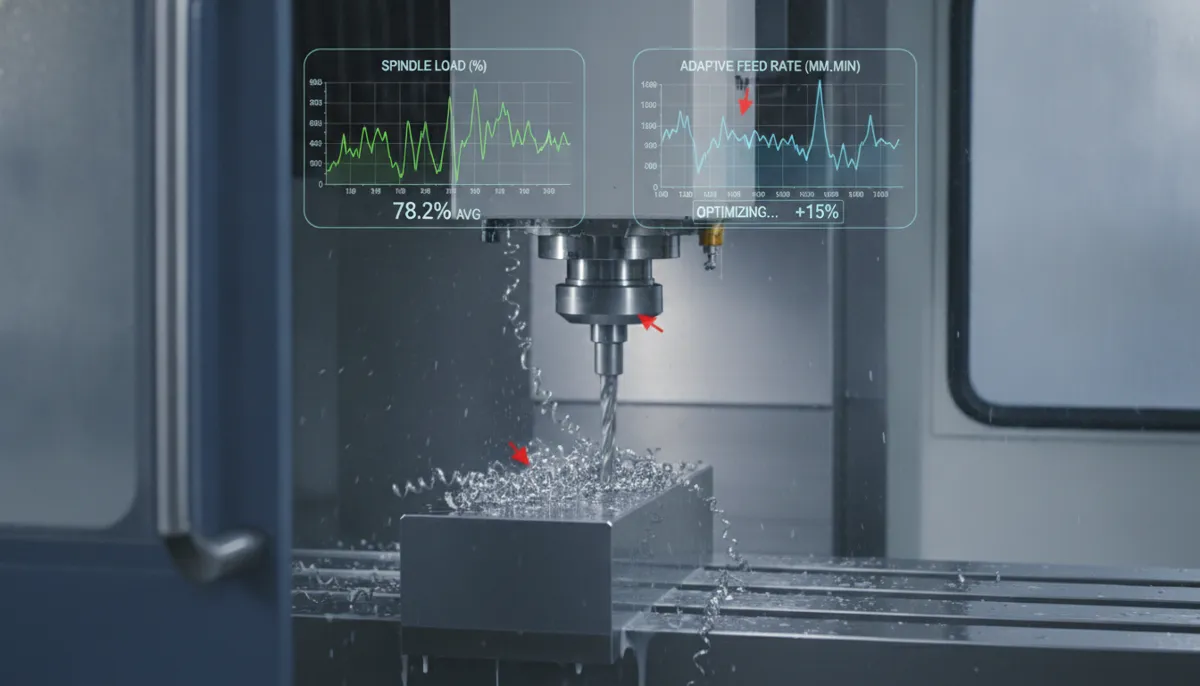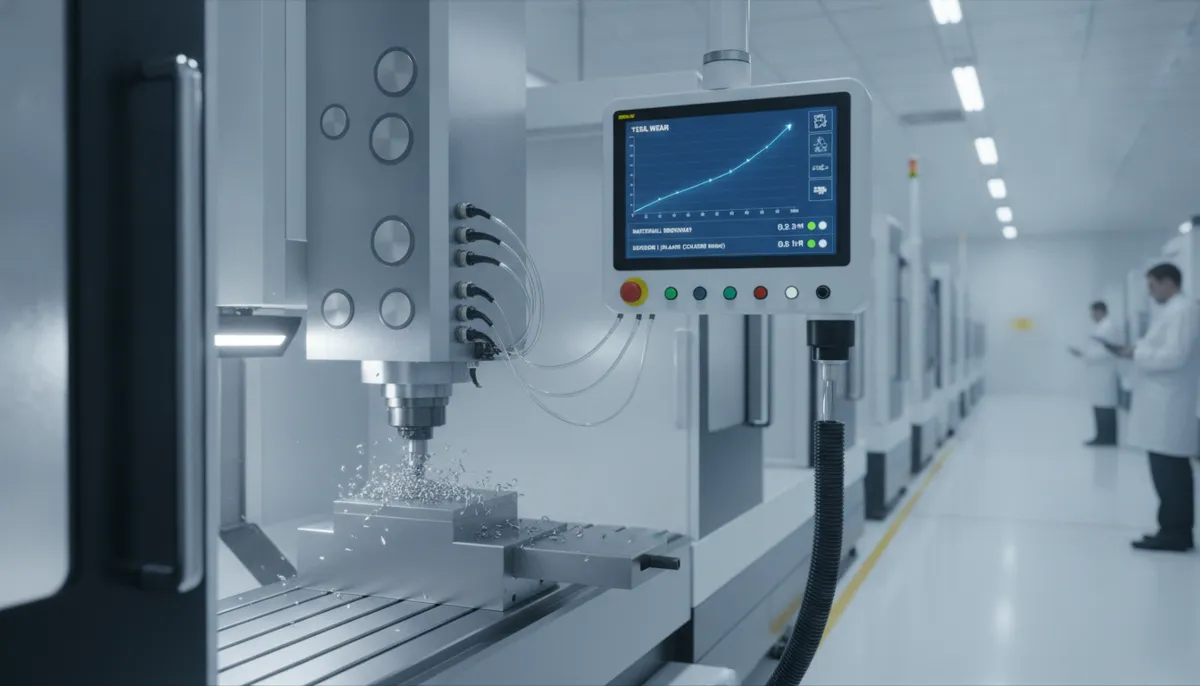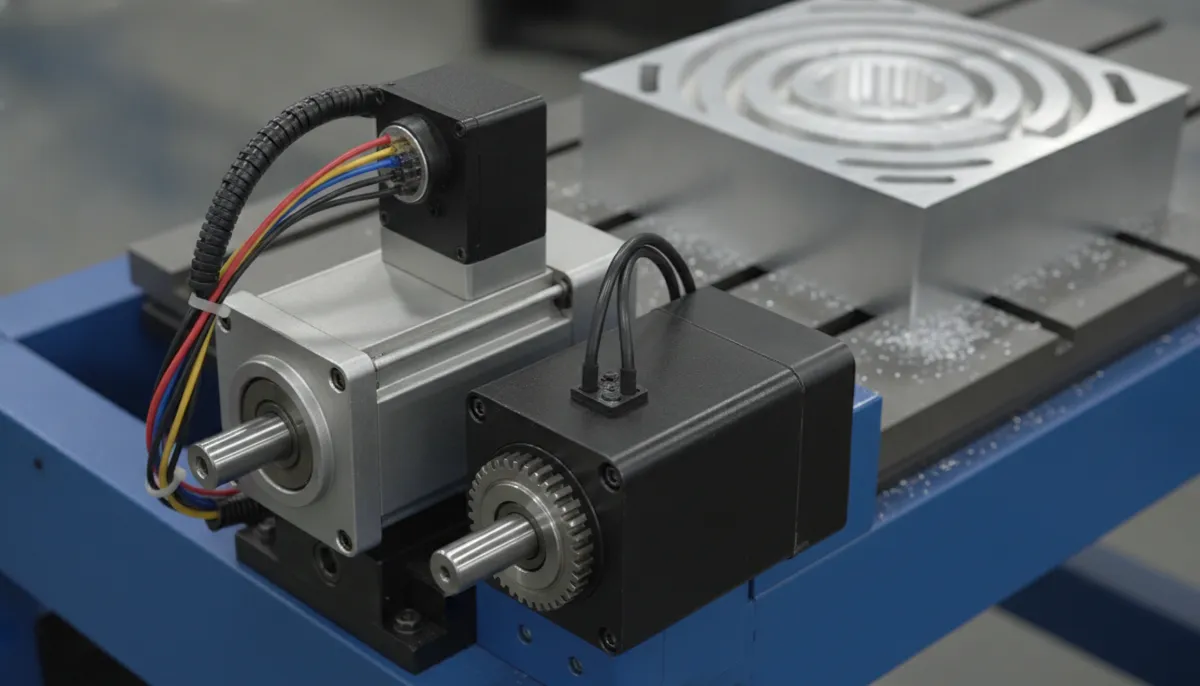
When building or upgrading a CNC machine, the choice between a servo motor CNC and a stepper motor often determines your project’s success. At QiaoFeng, founded in 2010 and serving 750+ customers across Europe, North America, and Southeast Asia, we’ve guided countless DIY enthusiasts and small factory owners through this exact decision. According to Grand View Research’s Servo Motor Market Report (2024), the global servo motor market reached USD 13.52 billion in 2024 and is projected to grow at a CAGR of 6.9% through 2030 — a clear signal that industry professionals worldwide are voting with their wallets for servo technology. This article dives deep into the servo vs stepper debate, helping you decide which motor is best for your CNC machine.
1. What the Industry Data Tells Us
The shift toward servo-driven CNC systems is well-documented across multiple independent research bodies:
- The global servo motor market was valued at USD 13.52 billion in 2024, growing at 6.9% CAGR, driven largely by demand for precision manufacturing automation (Grand View Research, 2024).
- The global CNC machinery market is estimated at USD 21.68 billion in 2024 and projected to reach USD 28.84 billion by 2033, with closed-loop servo systems cited as a primary driver of this growth (Market Reports World, 2024).
- A comparative analysis published by Electromate’s motion control whitepaper confirms that servo systems reduce positioning errors by up to 90% compared to open-loop stepper systems in dynamic load conditions (Electromate, 2023).
- Mordor Intelligence’s Machining Centers Market Size, Share & Growth Trends Report (2024) further identifies servo motor integration as a key differentiator in competitive small-batch manufacturing environments.
2. Core Features and Real-World Benefits
Closed-Loop Control
Servo motors use an encoder to constantly report position back to the controller. This means if the motor loses steps due to a sudden load, the system corrects instantly. For a small factory cutting aluminum, this eliminates scrapped parts and reduces waste. A stepper motor, by contrast, runs open-loop — if it stalls, the part is ruined.
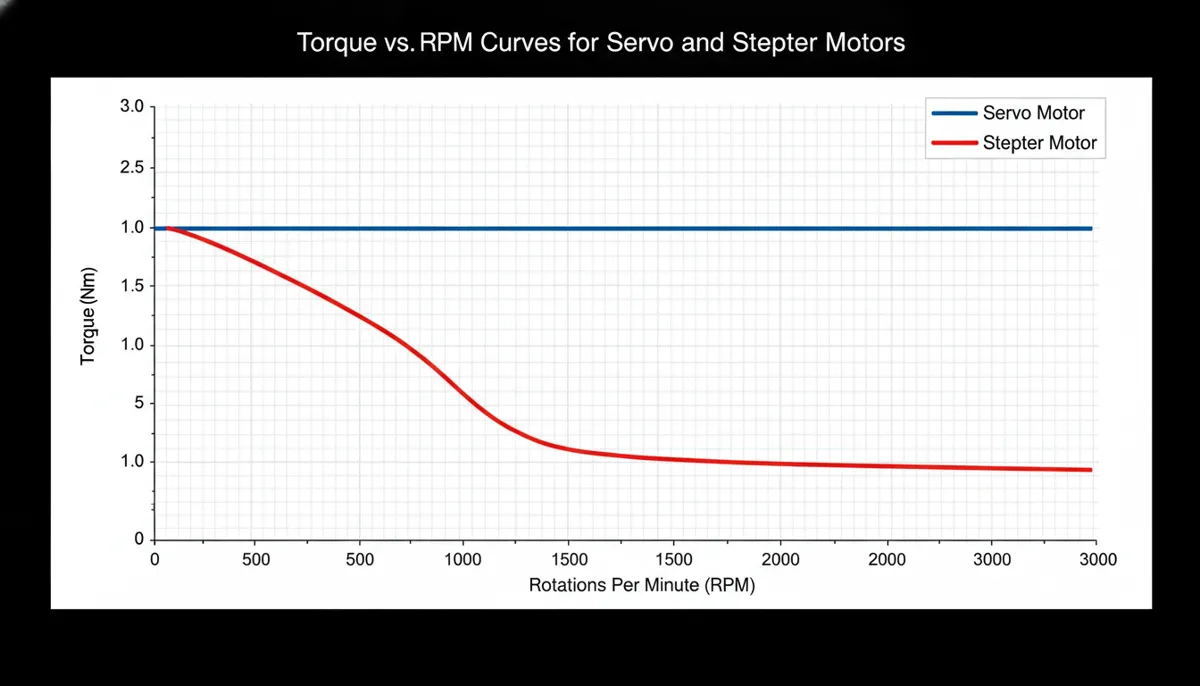
High Torque at High Speeds
Servo motors maintain torque even at high RPMs, while steppers lose torque as speed increases. In internal testing conducted at QiaoFeng’s Dongguan facility, a 400W servo delivered 1.27 Nm at 3,000 RPM, versus a comparable stepper’s 0.4 Nm at the same speed — a 3× torque advantage. For a DIY CNC router cutting hardwood, this means faster feed rates without sacrificing cut quality.
Energy Efficiency
Servo motors draw current only when needed, reducing power consumption by up to 50% compared to steppers that constantly draw full current. According to igus motion plastics research, servo systems’ closed-loop feedback is the primary reason for this efficiency advantage. For a small factory running 8-hour shifts, this can save hundreds of dollars annually on electricity bills.
3. Servo Motor CNC vs Stepper Motor: Head-to-Head Comparison
| Feature | Servo Motor CNC | Stepper Motor CNC |
|---|---|---|
| Control Type | Closed-loop (encoder feedback) | Open-loop (no feedback) |
| Positioning Accuracy | ±0.01 mm or better | ±0.05–0.1 mm typical |
| Torque at High Speed | Consistent across full RPM range | Drops significantly above ~1,000 RPM |
| Missed Steps | Self-correcting — virtually none | Possible under load or high speed |
| Energy Consumption | On-demand — up to 50% less | Full current draw at all times |
| Noise Level | Quiet, smooth operation | Audible stepping noise |
| Initial Cost | 2–3× stepper system cost | Lower upfront investment |
| Setup Complexity | Requires tuning (PID/gain) | Plug-and-play simplicity |
| Best For | Aluminum, hardwood, production runs | Softwood carving, low-speed hobby use |
| Warranty (QiaoFeng) | 2-Year Warranty on all QiaoFeng servo & stepper systems | |
4. Use Cases – Real Pain Points Solved
4.1 High-Precision PCB Milling
A hobbyist building drone controllers needed 0.01 mm accuracy for tiny traces. Stepper motors caused visible jitter at slow speeds. Switching to a servo motor CNC eliminated the jitter entirely, and the first board passed electrical testing. The pain of rework and wasted copper-clad boards vanished overnight.
4.2 Production of Custom Signage
A small sign shop struggled with inconsistent letter depth when routing acrylic sheets. Steppers lost steps during aggressive passes, causing visible depth variation. After retrofitting with servo motors, every sign came out identical, and throughput increased by 30%. The owner reported zero callbacks for rework over a six-month period.
4.3 Prototyping Automotive Parts
A DIY car enthusiast machined aluminum brackets for a custom suspension project. Stepper motors stalled during deep cuts, wasting expensive 6061 aluminum stock. With a servo motor CNC, he completed each part in a single pass, saving approximately $50 in material per prototype. The added torque at low speed made all the difference.
5. What Our Customers Say
“After switching our CNC router to QiaoFeng servo motors, our scrap rate dropped from 12% to under 1%. The precision is night and day. We now confidently take on jobs that require ±0.05 mm tolerance, which opened up a completely new customer segment for us.”
“We were running a 4×8 router with steppers for cabinet work, and missed steps were killing our margins — especially on long diagonal cuts. The QiaoFeng servo retrofit kit was straightforward to install, and within a week our reject rate was essentially zero. The energy savings alone are paying back the investment faster than I expected.”
“I run a small signage and engraving business in Kuala Lumpur. Before the servo upgrade, I had to slow down feed rates on acrylic to avoid step loss, which killed productivity. Now I run at full speed with perfect results every time. QiaoFeng’s after-sales support across the time zone difference has also been excellent.”
6. Pros and Cons of Servo Motor CNC
✅ Pros
- Closed-loop accuracy eliminates missed steps
- High torque maintained across full speed range
- Up to 50% more energy efficient than steppers
- Faster acceleration and deceleration
- Quiet, smooth operation
- Self-correcting under variable loads
- Lower total cost of ownership over time
❌ Cons
- Higher initial cost (typically 2–3× stepper systems)
- Requires PID/gain tuning during setup
- Encoder cables must be shielded to prevent noise
- Overkill for very low-speed, light-duty hobby carving
- Slightly more complex wiring than steppers
While the upfront investment is higher, the long-term reliability and reduced material waste typically justify the cost for any user cutting metals, hardwoods, or running production volumes. For a DIY builder on a tight budget doing occasional softwood carving, a stepper remains a viable entry point.
Refund Policy Note: QiaoFeng supports refunds for verified quality issues. We stand behind every system we ship.
7. FAQ: Servo vs Stepper for CNC
Q1: Is a servo motor CNC worth it for a hobbyist?
If you work with materials like aluminum or hardwoods and demand high precision, yes. The cost premium is offset by fewer failed parts and faster cycle times. For occasional softwood carving at low speeds, a stepper motor may still suffice as a starting point.
Q2: Can I retrofit my existing stepper CNC with servo motors?
Yes. You’ll need a compatible controller and power supply, but the mechanical mounting is often identical. QiaoFeng offers complete retrofit kits with detailed installation guides. Many customers successfully upgrade their existing CNC router without replacing the frame or spindle.
Q3: How much more expensive is a servo motor system?
Typically, a servo motor and driver combo costs 2–3× a comparable stepper system upfront. However, when you factor in energy savings (up to 50% less power draw), reduced scrap rates, and fewer machine stoppages, the total cost of ownership over 2–3 years is often lower than a stepper setup.
Q4: Do servo motors require special wiring?
Yes. Servo motors require shielded encoder cables to prevent electrical noise interference, which can cause erratic positioning. Proper grounding of the machine frame and driver is also essential. Most modern servo drives — including those in QiaoFeng’s kits — include diagnostic LEDs and fault codes to simplify troubleshooting during setup.
Q5: Which is better for a 4×8 CNC router: servo or stepper?
For large-format routers, servo motors are strongly recommended. The longer travel distances amplify any step-loss errors, and the higher inertia of a large gantry demands consistent torque that steppers cannot maintain at speed. The majority of industrial 4×8 production routers use servo systems exclusively for this reason.
Q6: What is QiaoFeng’s warranty and return policy?
All QiaoFeng CNC systems come with a 2-year warranty covering manufacturing defects and component failures. Refunds are supported for verified quality issues. We do not offer no-reason returns, but our technical team is available to resolve any performance concerns before a return is considered. Contact us at bella@qfcncmachine.com or +86 151 1824 3737.
Ready to Upgrade to Servo Motor CNC?
Whether you’re a DIY enthusiast or running a small production facility, QiaoFeng’s servo motor kits deliver the precision, torque, and reliability your work demands. Get a free consultation with Bella and our engineering team — we’ll recommend the exact servo system for your machine size, material, and budget.
References
- Mordor Intelligence. Machining Centers Market Size, Share & Growth Trends Report. 2024. https://www.mordorintelligence.com/industry-reports/machining-centers-market
- Grand View Research. Servo Motor Market Size, Share and Trends Report, 2030. 2024. https://www.grandviewresearch.com/industry-analysis/servo-motor-market
- Market Reports World. CNC Machinery Market Size, Share & Trends, 2033. 2024. https://www.marketreportsworld.com/market-reports/cnc-machinery-market-14717885
- Electromate. Precision Motion Control: A Comparative Analysis of Servo and Stepper Motor Systems. 2023. https://www.electromate.com/news/post/precision-motion-control-a-comparative-analysis-of-servo-and-stepper-motor-systems
- igus GmbH. Servo Motor vs. Stepper Motor: Energy Efficiency and Performance Comparison. 2023. https://toolbox.igus.com/motion-plastics-blog/servo-motor-vs-stepper-motor/
- Association for Advancing Automation (A3). Servo System vs. Stepper Motor Solutions for Precision Automation. 2025. https://www.automate.org/motion-control/blogs/servo-system-vs-stepper-motor-solutions-for-precision-automation