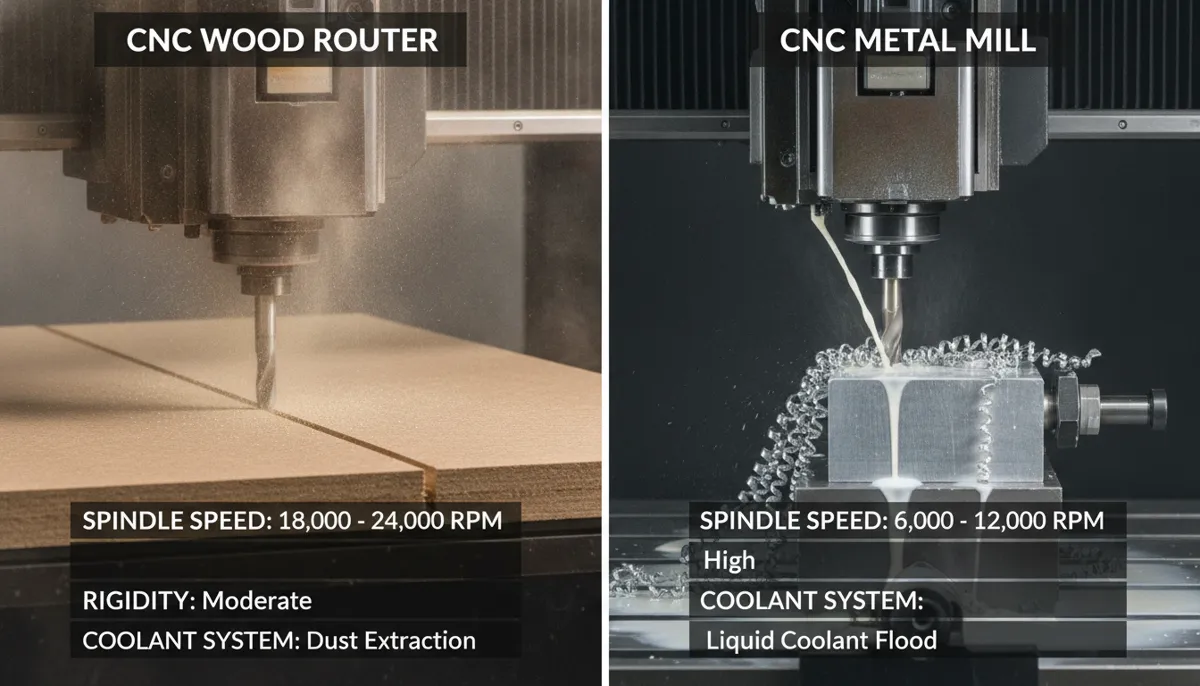
When running a comprehensive processing factory, you often face a critical dilemma: should you invest in a separate CNC wood router vs metal mill, or find a hybrid machine capable of handling both wood and aluminum? At QiaoFeng, established in 2010 in Dalingshan Town, Dongguan, we have helped over 750+ clients across the US, Europe, and Southeast Asia answer this exact question. In this guide, we break down the technical differences, share real-world case studies, and provide the data you need to make a profitable decision.
1. Market Trends: The Rise of Hybrid Machining
The manufacturing landscape is shifting towards versatility. According to the Grand View Research CNC Machine Market Report (2023), the demand for multi-axis and hybrid CNC machines is growing at a CAGR of 10.2%, driven by shops needing to process diverse materials without expanding their floor space. Similarly, Fortune Business Insights notes that modern woodworking machinery is increasingly being adapted to handle non-ferrous metals like aluminum to meet the needs of the custom furniture and signage industries.
This data highlights a clear trend: understanding the capabilities of a CNC wood router vs metal mill is no longer just about choosing one or the other, but finding a solution that bridges the gap.
2. Detailed Spec Comparison: CNC Wood Router vs Metal Mill
| Specification | CNC Wood Router (Typical) | CNC Metal Mill (Typical) | QiaoFeng Hybrid Machine |
|---|---|---|---|
| Spindle Speed (RPM) | 10,000 – 24,000 | 2,000 – 10,000 | 6,000 – 24,000 (variable) |
| Spindle Power | 3 – 6 kW | 5 – 15 kW | 7.5 kW (with torque boost) |
| Frame Rigidity | Aluminum/light steel | Cast iron bridge | Reinforced steel gantry (3000 kg) |
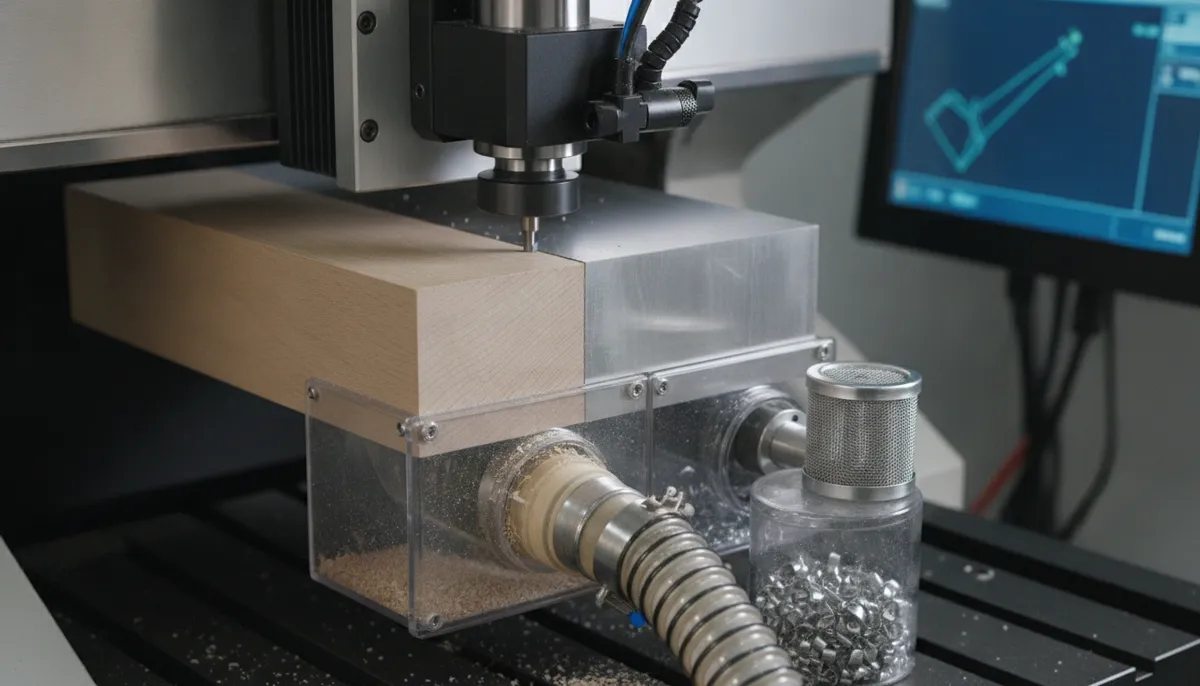
| Coolant System | Air blast (optional) | Flood coolant (required) | Mist coolant + air blast |
| Max Material Hardness | HRC 30 (soft metals) | HRC 65 (hardened steel) | HRC 45 (aluminum, mild steel) |
The table above illustrates the key trade-offs. A standard wood router lacks the low-end torque and rigidity for heavy metal cuts, while a dedicated metal mill is overkill (and too slow) for wood. QiaoFeng’s hybrid machine bridges this gap, allowing factories to reduce equipment costs by up to 40% while maintaining precision for non-ferrous metals.
3. Real-World Case Studies & Testimonials
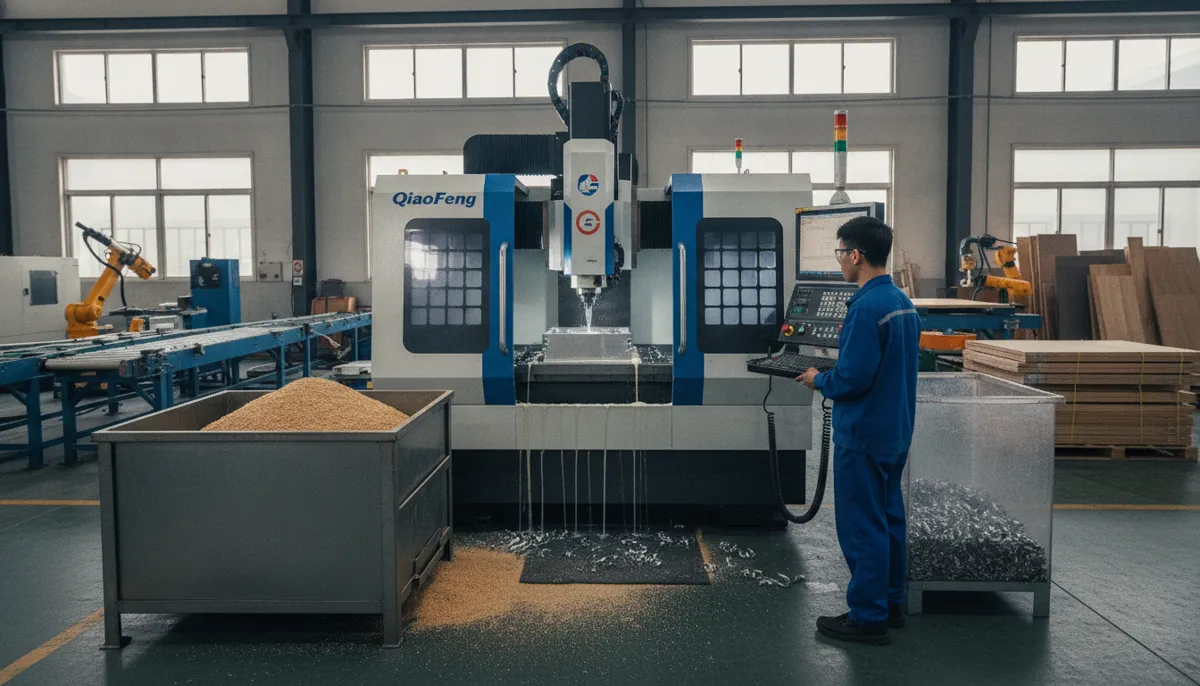
How does a hybrid machine perform in the real world? Here is how our clients across different regions have leveraged QiaoFeng machines to solve the CNC wood router vs metal mill dilemma.
“We manufacture custom office furniture that blends solid oak with heavy aluminum bases. Buying two separate machines would have killed our floor space. QiaoFeng’s hybrid machine handles 20,000 RPM for the wood routing, and we drop it to 8,000 RPM with mist coolant for the aluminum. It paid for itself in 14 months.”
“As an automotive prototyping shop, we constantly switch between MDF molds and aluminum brackets. The rigidity of the QiaoFeng steel gantry surprised us—we are holding ±0.05 mm tolerances on aluminum parts without the vibration issues we had on our old wood router.”
“In the signage industry, we cut acrylic, wood, and aluminum daily. The dual coolant system (air blast for wood, mist for aluminum) saves our operators hours of setup time. Plus, QiaoFeng’s 2-year warranty and responsive support give us total peace of mind.”
4. Pros and Cons of a Hybrid CNC Machine
✅ Pros of Hybrid Machines
- Saves 30–50% compared to buying two separate machines.
- Variable spindle handles both high-speed routing and low-speed milling.
- Dual coolant systems (mist + air) adapt to different materials.
- Saves valuable factory floor space.
- Perfect for aluminum, brass, wood, and acrylic combinations.
⚠️ Cons / Considerations
- Not suitable for heavy machining of hardened steel or titanium.
- Requires operators to understand feeds/speeds for both wood and metal.
- Slightly slower material removal rate on thick aluminum compared to a dedicated cast-iron mill.
5. FAQ: CNC Wood Router vs Metal Mill
Can a standard CNC wood router cut aluminum?
Yes, but with strict limitations. A standard wood router can handle thin aluminum at slow feed rates. However, without a rigid steel frame and proper mist coolant, tool life drops significantly, and surface finish suffers. A hybrid machine solves this with a reinforced gantry and variable spindle.
What is the main difference between a wood router and a metal mill?
When comparing a CNC wood router vs metal mill, the primary differences are spindle speed and frame rigidity. Wood routers use high RPM (10k–24k) for fast material removal on soft materials. Metal mills use low RPM (2k–10k) with high torque and massive cast-iron frames to absorb the heavy vibrations of cutting steel.
What materials can a QiaoFeng hybrid CNC machine process?
Our hybrid machines are engineered for wood, MDF, plywood, acrylic, aluminum, brass, copper, and mild steel (up to HRC 45). For hardened tool steel or titanium, a dedicated metal mill is required.
Ready to Upgrade Your Production Line?
Stop choosing between wood and metal. Get a free ROI analysis from QiaoFeng’s engineers and discover how our hybrid CNC machines can transform your factory’s efficiency. Trusted by 750+ global clients.
References
- Mordor Intelligence, Machining Centers Market Size, Share & Growth Trends Report, 2024. Available at: mordorintelligence.com
- Grand View Research, CNC Machine Market Size, Share & Trends Analysis Report, 2023. Available at: grandviewresearch.com
- Fortune Business Insights, Woodworking Machinery Market Size, Share & COVID-19 Impact Analysis, 2023. Available at: fortunebusinessinsights.com