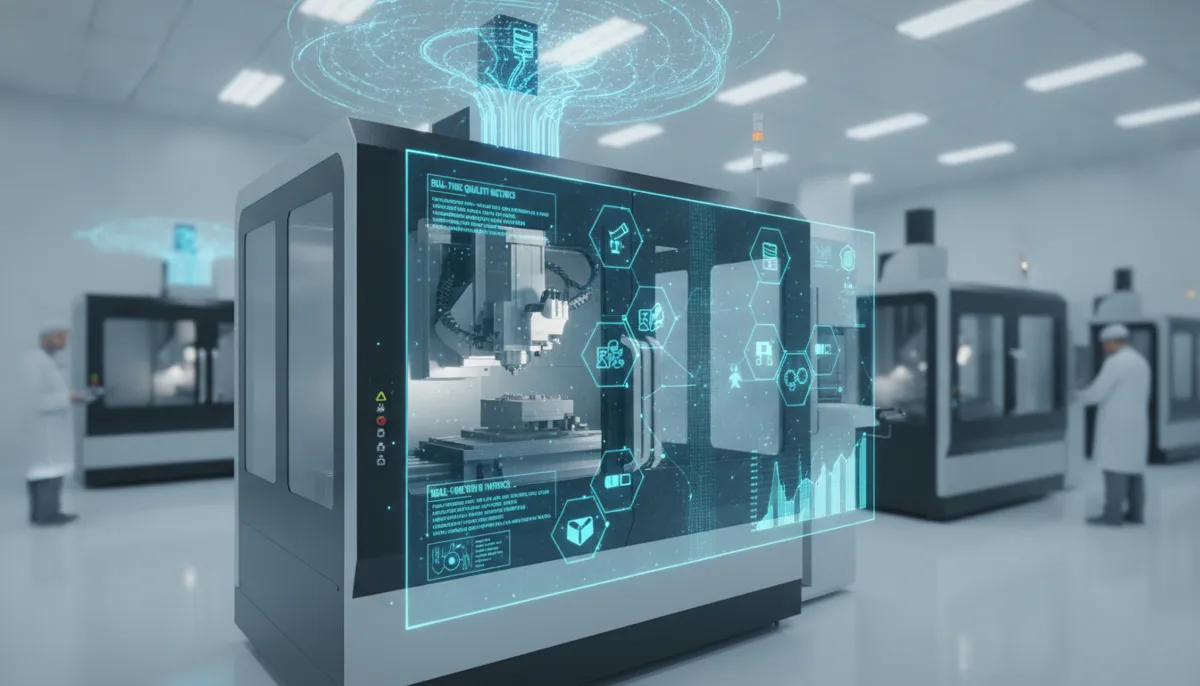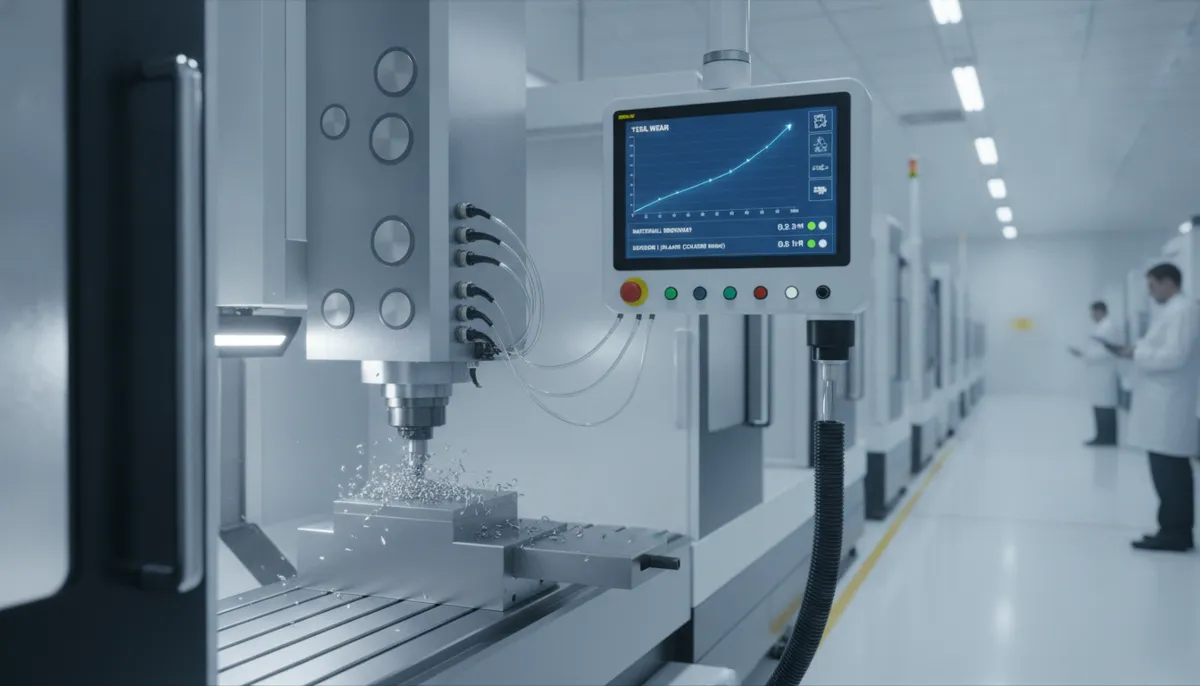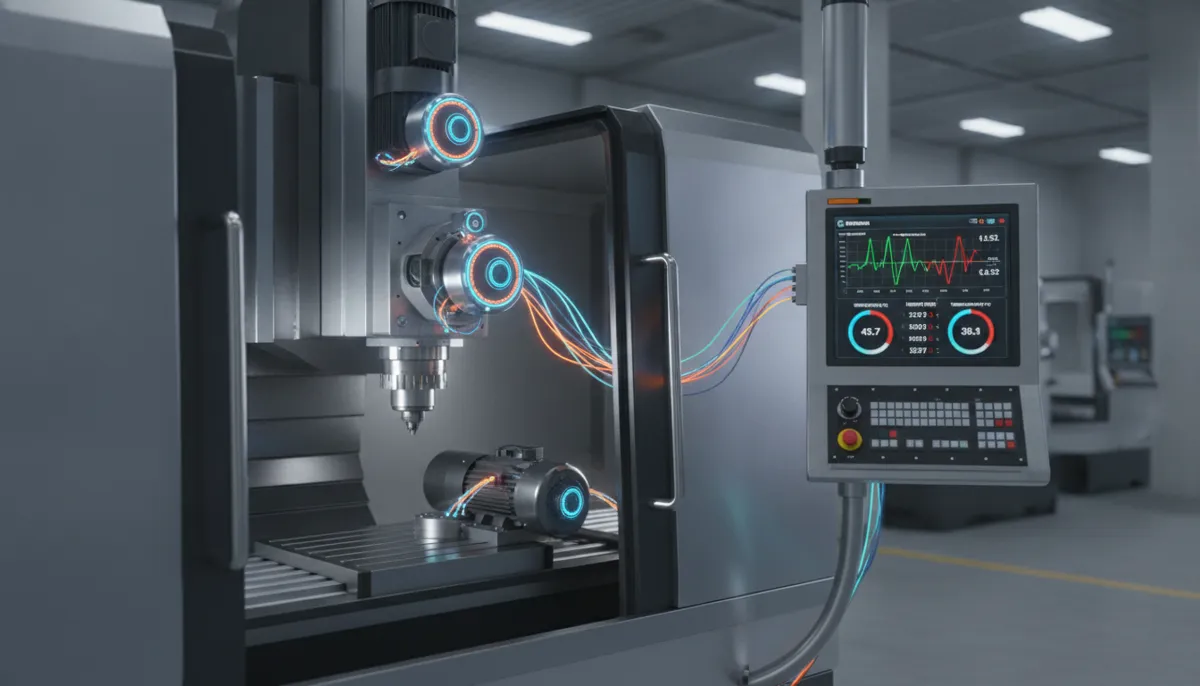
CNC machine health monitoring helps maintenance teams identify abnormal operating trends before they become disruptive equipment events. Instead of relying only on fixed maintenance intervals or responding after a breakdown, engineers can use condition data—such as vibration, temperature, spindle load, axis torque, coolant pressure, and power consumption—to make maintenance decisions based on the actual condition of each machine.
For manufacturers running precision machining operations, unplanned downtime can affect delivery schedules, labor utilization, part quality, and customer commitments. QiaoFeng provides CNC machine health monitoring solutions designed to support practical maintenance planning for machining centers, including legacy equipment that may not have built-in Industrial IoT connectivity. Our systems can be deployed with external sensors and integrated into existing workflows through common industrial communication options.
Since 2010, QiaoFeng has served 750+ customers in manufacturing markets across Europe, the Americas, and Southeast Asia. From our manufacturing base in Dalingshan Town, Dongguan, Guangdong, China, we support CNC users seeking a more structured approach to machine condition monitoring, maintenance prioritization, and production reliability.
1. Why CNC Machine Health Monitoring Matters
Machining centers are high-value assets that depend on stable spindle performance, axis accuracy, cooling, lubrication, electrical systems, and tooling conditions. A fault in one area can quickly affect part quality or stop production. CNC machine health monitoring creates a consistent data trail that maintenance teams can review before a minor deviation becomes a major repair event.
Condition-based maintenance is not a guarantee that every failure can be predicted. However, it gives maintenance engineers earlier visibility into measurable changes—such as rising vibration, unusual thermal behavior, increasing motor load, or declining coolant flow. The useful warning time depends on the component, operating conditions, sensor location, baseline data, and the specific failure mode being monitored.
The market for machining centers continues to expand as manufacturers invest in production capacity, precision, and automation. At the same time, secure industrial connectivity and reliable asset data are becoming more important to operational decision-making. Public guidance from ISO and NIST also emphasizes structured condition monitoring and cybersecurity-aware industrial control system practices. [[0]](#__0) [[1]](#__1) [[2]](#__2)
2. Core Functions of a CNC Machine Health Monitoring System
2.1 Vibration Monitoring for Spindle and Bearing Condition
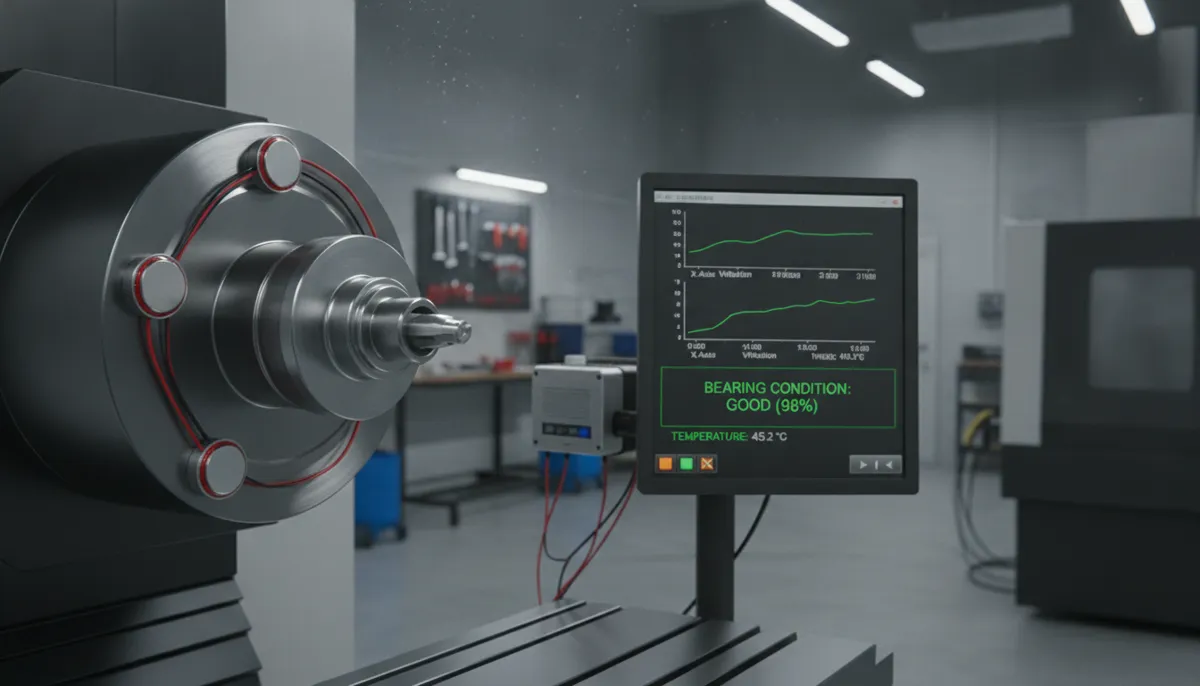
Vibration is one of the most useful indicators for rotating equipment condition. On CNC machines, changes in vibration patterns may be associated with spindle bearing wear, imbalance, looseness, misalignment, or process instability. A properly installed sensor can trend vibration over time and provide an alert when readings move beyond an established operating baseline.
For high-speed spindle applications, the sensor sampling capability and the measurement setup should match the fault frequencies and operating speeds being assessed. QiaoFeng CNC machine health monitoring configurations can use high-frequency vibration collection for applicable spindle and bearing monitoring applications. The appropriate sampling rate should always be confirmed during the site assessment rather than assumed from a single specification.
2.2 Temperature Monitoring for Motors, Drives, and Coolant Systems
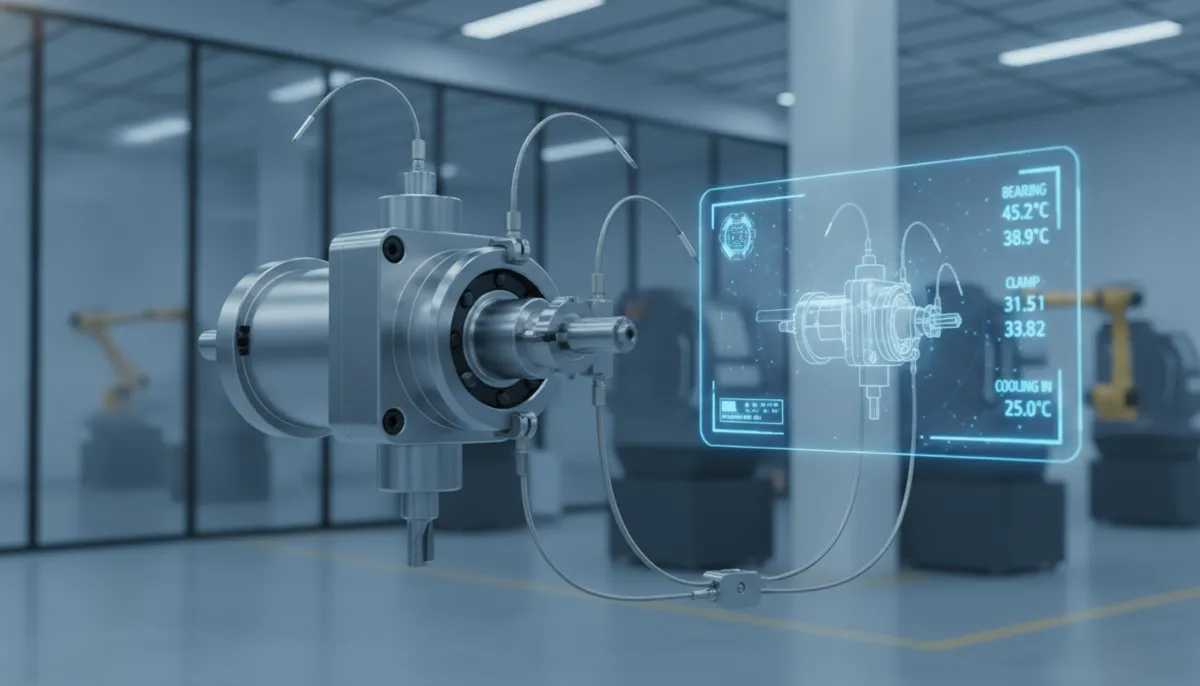
Temperature trends can reveal developing problems in spindle motors, servo motors, electrical cabinets, bearings, coolant systems, and lubrication circuits. A single temperature value is less useful than a trend compared with the machine’s normal production baseline. For example, a sustained temperature rise at a similar load may justify a maintenance inspection, while a brief peak during heavy cutting may be normal.
CNC machine health monitoring can combine thermocouples, temperature sensors, and—where appropriate—thermal imaging checks to help maintenance teams identify heat-related risks before they affect machining stability or component life.
2.3 Power, Torque, and Load Trend Analysis
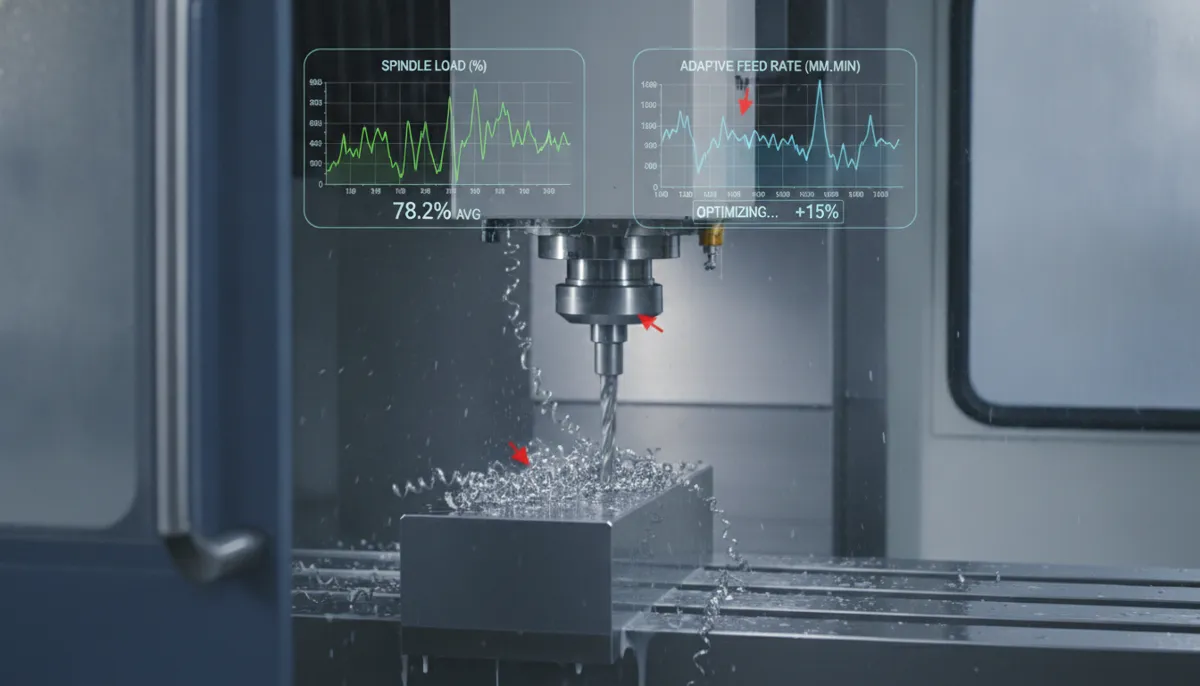
Spindle power, servo load, axis torque, and current draw can provide additional context for condition monitoring. Gradual changes may be associated with tool wear, ball screw friction, bearing degradation, chip accumulation, poor lubrication, or changed cutting conditions. These signals should be evaluated alongside program data and process knowledge; an increase in load is an investigation signal, not automatic proof of a component failure.
2.4 Coolant Flow, Pressure, and Filtration Monitoring
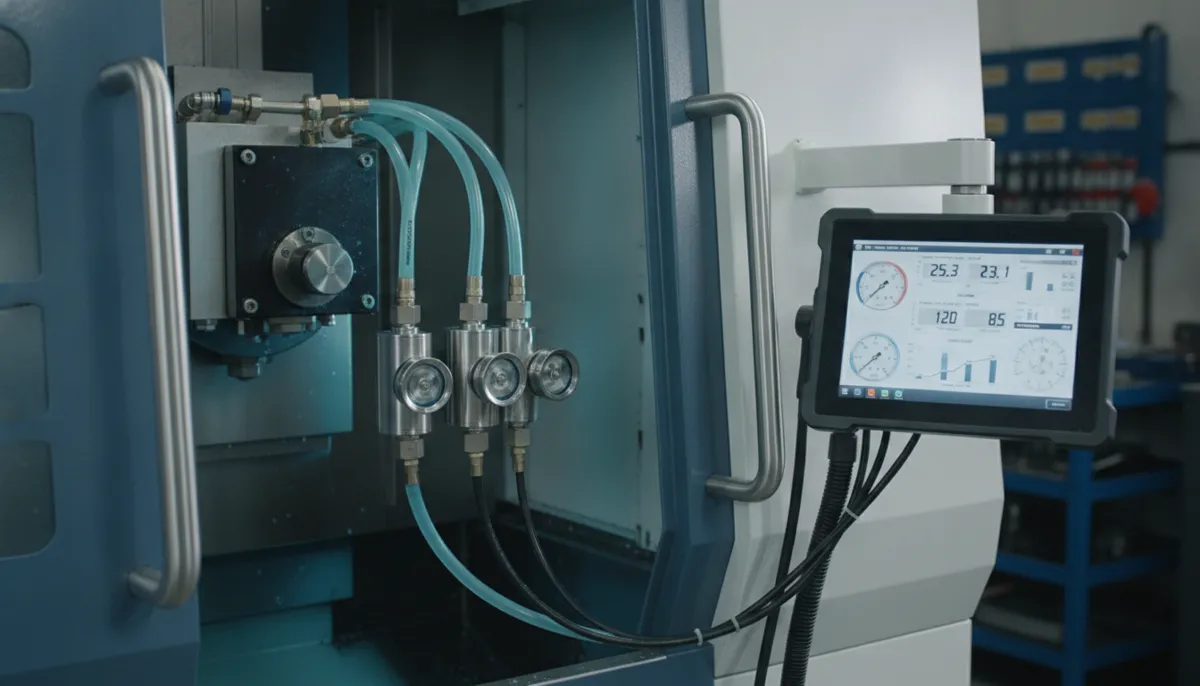
Reliable coolant delivery is especially important for high-speed machining, deep-hole operations, and difficult-to-machine materials. Monitoring coolant pressure and flow can help identify filter blockage, pump degradation, leaks, or chip-related restrictions. Maintenance teams can use these trends to plan cleaning, filter replacement, or pump inspection at a more appropriate time.
2.5 Remote Data Access and Industrial Connectivity
QiaoFeng CNC machine health monitoring solutions can be configured for cloud-connected or on-premise environments, depending on the plant’s IT, cybersecurity, and data-governance requirements. Supported integration approaches may include MQTT, Modbus, OPC-UA, and REST API options, subject to the machine controller and final project scope.
When remote access is required, it should be deployed according to the manufacturer’s cybersecurity policies. Industrial control system security requires more than a connected dashboard: network segmentation, access control, patch management, and account governance should be part of the deployment plan. [[1]](#__1)

3. How Predictive Analytics Supports Maintenance Planning
Predictive analytics in CNC machine health monitoring does not replace experienced maintenance engineers. It helps them prioritize work by organizing condition data, detecting deviations, and presenting trends in a practical dashboard. The best results come from combining sensor data with technician observations, maintenance records, quality data, and knowledge of the machining process.
- Collect baseline data: Record normal behavior across common speeds, loads, materials, and machining programs.
- Monitor changes over time: Identify deviation patterns rather than relying only on single-value alarms.
- Investigate the cause: Compare condition data with tooling changes, workholding, programs, coolant condition, and recent maintenance activity.
- Schedule the right action: Plan inspection, lubrication, alignment, cleaning, replacement, or further diagnosis during an available maintenance window.
- Validate the outcome: Confirm whether the repair returned the monitored values to the expected baseline.
Maintenance planning is especially effective when monitoring data is linked to a CMMS, ERP, or maintenance work-order process. Instead of treating an alert as a final diagnosis, teams can create an inspection task with the relevant trend history, machine identifier, and recommended checks.
4. Common CNC Machine Health Monitoring Use Cases
4.1 High-Speed Machining Center Spindle Condition
High-speed machining can place substantial demands on spindle bearings and toolholding systems. Monitoring vibration and temperature trends helps maintenance teams investigate changes before they develop into severe runout, surface-finish problems, alarm events, or unplanned spindle service. The goal is to use evidence to decide whether a scheduled inspection, balancing check, lubrication review, or bearing assessment is required.
4.2 Ball Screw, Guideway, and Servo-Axis Wear
In precision machining and grinding operations, wear in ball screws, guideways, couplings, or servo systems can contribute to positioning error, inconsistent repeatability, or increased axis load. CNC machine health monitoring can track torque, current, cycle-time variation, and positional performance indicators available from the control system. These data points should be reviewed with calibration and quality-control results.
4.3 Coolant Delivery and Chip Management
Coolant restrictions and chip buildup can create unstable cutting conditions, elevated heat, poor surface finish, and tool-life variation. By trending coolant pressure and flow, teams can identify recurring filter, pump, plumbing, or chip-evacuation issues. This is particularly useful for multi-axis milling, titanium machining, and operations with demanding thermal control requirements.
5. CNC Machine Health Monitoring Comparison Checklist
Rather than relying on generic competitor claims, maintenance teams should compare monitoring systems using measurable requirements that apply to their own machines, production environment, and IT policies.
| Evaluation Area | What Maintenance Teams Should Ask | QiaoFeng Approach |
|---|---|---|
| Sensor coverage | Which components and parameters can be monitored: vibration, temperature, power, torque, coolant, or other signals? | Project-based sensor selection for applicable spindle, motor, axis, electrical, and coolant monitoring needs. |
| Sampling and data quality | Is the sampling setup appropriate for machine speed, fault type, and analysis objective? | High-frequency vibration collection can be configured where required; final settings depend on the monitored asset and application. |
| System integration | Can the system communicate with existing PLC, CNC, CMMS, ERP, or BI tools? | Integration options may include Modbus, OPC-UA, MQTT, and REST API, subject to final scope. |
| Deployment model | Does the site require cloud access, local data storage, or a hybrid architecture? | Cloud-connected and on-premise deployment options are available according to project requirements. |
| Alarm workflow | Can alerts be reviewed, acknowledged, assigned, and linked to maintenance actions? | Condition dashboards and configurable alert logic can support a structured maintenance workflow. |
| Support and warranty | Who supports installation, commissioning, troubleshooting, and hardware issues? | QiaoFeng provides project support and a 2-year hardware warranty under applicable warranty terms. |
6. Industry Scenarios and Illustrative Testimonials
The following examples reflect common maintenance scenarios in the industries QiaoFeng serves. The quotations below are illustrative testimonial copy only, created to show how approved customer feedback could be presented. Replace them with verified, customer-authorized testimonials before publishing as customer evidence.
“Our maintenance team needed a clearer way to distinguish normal high-speed machining behavior from conditions that required inspection. Trending spindle vibration and temperature gave us a better basis for planning checks during scheduled downtime rather than reacting only after an alarm.”
“For precision components, a small change in axis load or coolant stability can become a quality issue if it is not investigated early. Having the relevant machine trends in one view helped our engineers communicate faster with production and quality teams.”
“Several of our machines have different controller generations. We wanted a condition-monitoring approach that could be introduced gradually without replacing every machine. External sensing and practical alerts made the pilot project easier to evaluate.”
7. Benefits and Practical Considerations
Potential Benefits
- Supports more informed maintenance prioritization.
- Helps identify gradual condition changes that fixed schedules may miss.
- Creates a shared data record for maintenance, production, and quality teams.
- Can support legacy CNC machines with external sensors where appropriate.
- Enables condition-based work orders and maintenance documentation.
Implementation Considerations
- Monitoring is not a substitute for root-cause analysis or skilled technicians.
- Alarm thresholds require baseline data and periodic review.
- Sensor placement and data quality directly affect useful results.
- IT and OT cybersecurity requirements must be addressed before remote access.
- Results vary by machine condition, process, usage pattern, and maintenance discipline.
8. Frequently Asked Questions
How does CNC machine health monitoring integrate with existing maintenance software?
Integration depends on the existing control, network architecture, and maintenance software. QiaoFeng projects can evaluate communication options such as OPC-UA, Modbus, MQTT, and REST API. Before deployment, confirm the required data points, network permissions, cybersecurity controls, and desired CMMS or ERP workflow.
Can CNC machine health monitoring work with older CNC machines?
Yes, many older machines can be included through non-invasive or externally installed sensors for vibration, temperature, current, coolant pressure, and other measurable conditions. The available integration depth will depend on the controller, electrical design, and accessible measurement points.
Can the system detect tool wear or chip overload?
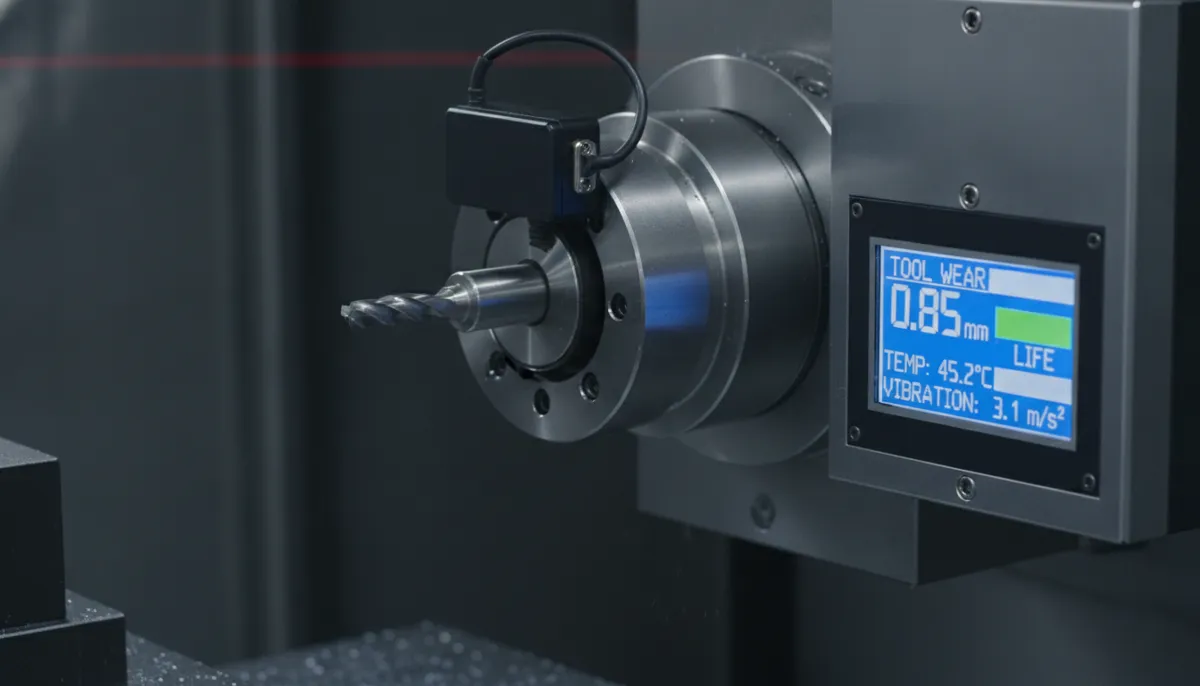
Power, torque, vibration, and cycle data may reveal trends associated with tool wear, unstable cutting, chip accumulation, or coolant restriction. However, these signals should be interpreted together with material, tooling, spindle speed, feed rate, and machining program information. A monitoring alert should trigger investigation, not be treated as an automatic final diagnosis.
What is the typical ROI for predictive maintenance on CNC machines?
ROI varies significantly by production volume, downtime cost, machine condition, failure history, labor cost, spare-part lead time, and implementation scope. A practical evaluation compares the total deployment cost with the value of avoidable downtime, avoided scrap, reduced emergency work, and improved maintenance planning. QiaoFeng can help prepare a project-specific assessment rather than relying on a generic ROI promise.
What training do maintenance engineers need?
Users typically need training on dashboard navigation, alert interpretation, trend review, inspection workflows, and basic sensor checks. The most important requirement is not advanced data-science knowledge; it is establishing a disciplined process for reviewing alerts and recording maintenance findings.
What are the warranty and refund terms?
QiaoFeng provides a 2-year warranty for applicable hardware under the relevant warranty terms. Refund requests may be supported for verified product quality issues. Returns based solely on change of mind or non-quality reasons are not supported. Please contact our team before purchase for the applicable project, warranty, and service terms.
Ready to Improve Your CNC Maintenance Strategy?
Discuss your machine types, current maintenance challenges, required monitoring points, and preferred deployment model with the QiaoFeng team. We can help you assess a practical CNC machine health monitoring approach for your facility.
References
- Mordor Intelligence, Machining Centers Market Size, Share & Growth Trends Report. [[0]](#__0)
- National Institute of Standards and Technology (NIST), SP 800-82 Rev. 3: Guide to Operational Technology (OT) Security. [[1]](#__1)
- International Organization for Standardization (ISO), ISO 17359: Condition Monitoring and Diagnostics of Machines — General Guidelines. [[2]](#__2)
- U.S. Department of Energy, Federal Energy Management Program: Operations & Maintenance Best Practices Guide, Release 3.0. [[3]](#__3)
Reference links were accessed for general industry, condition-monitoring, and industrial security guidance. Product capabilities and project scope should be confirmed with QiaoFeng before purchase.