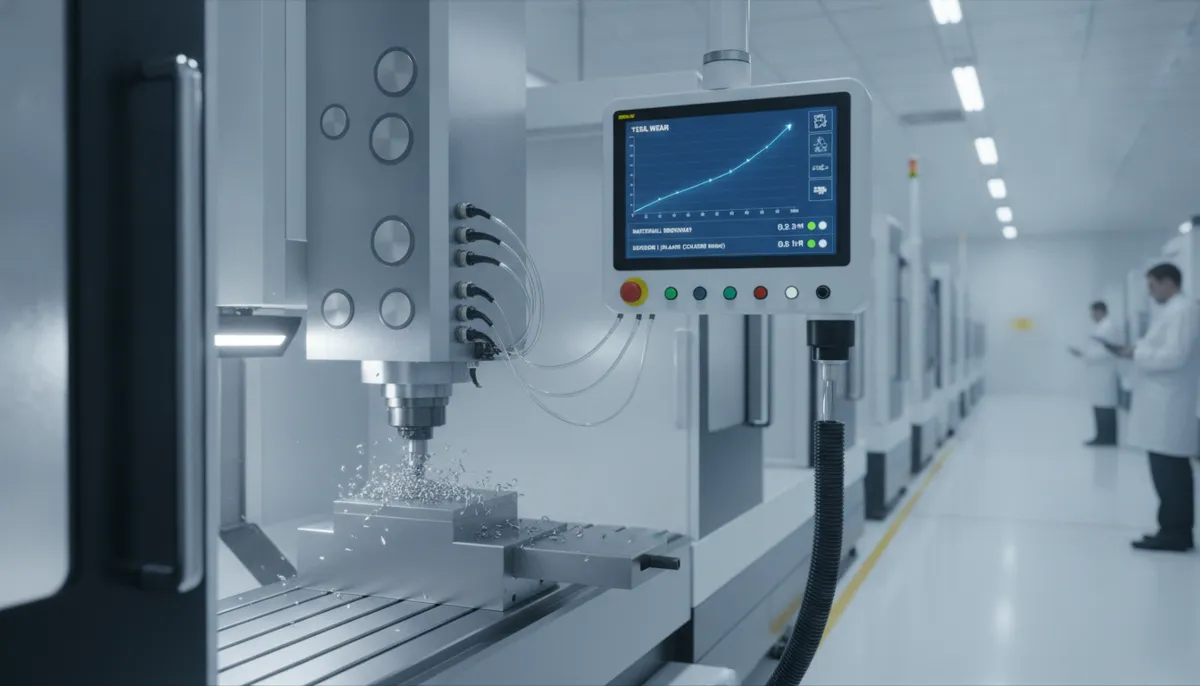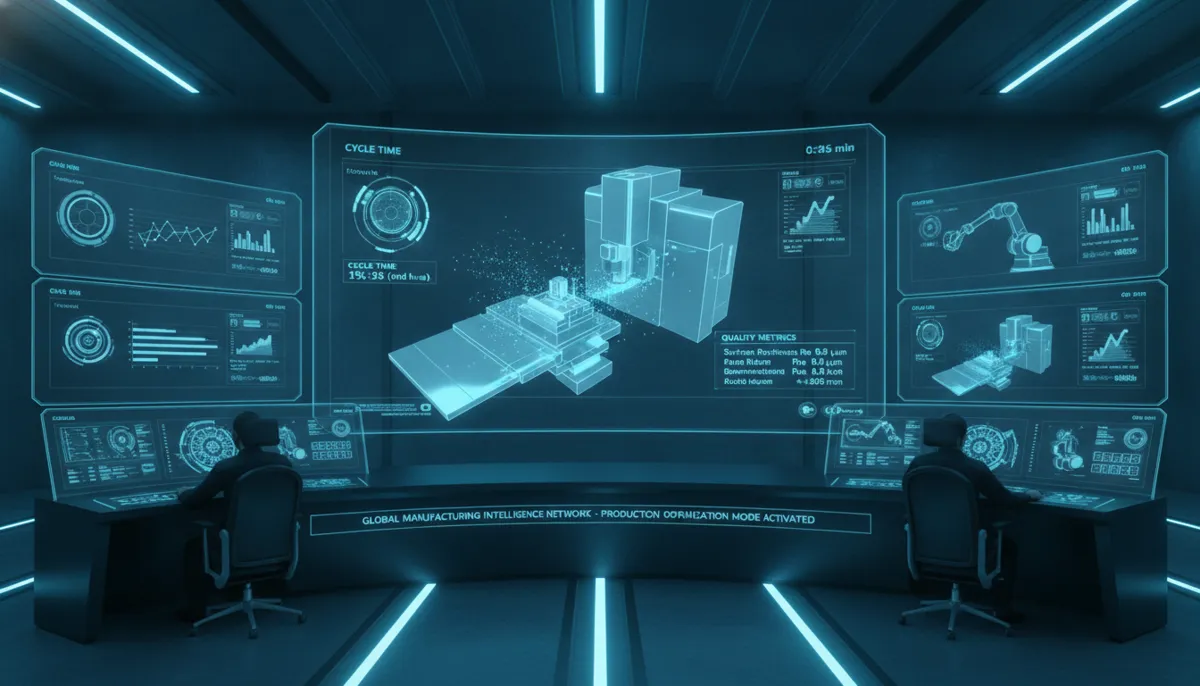
The CNC digital twin process is rapidly becoming the cornerstone of modern smart manufacturing. As an IT architect or manufacturing decision-maker, you understand the value of data-driven decisions — and the CNC digital twin process bridges the physical and digital worlds, enabling real-time simulation, predictive analytics, and continuous optimization of CNC machining operations without touching a single piece of metal. QFCNCMACHINE.COM, founded in 2010 and headquartered in Dalingshan, Dongguan, Guangdong, China, has spent over 15 years engineering and delivering ISO 9001-certified CNC solutions to 750+ customers across Europe, North America, and Southeast Asia.
1. Why the CNC Digital Twin Process Matters: Industry Data
The business case for adopting a CNC digital twin process has never been stronger, and the data from multiple authoritative sources confirms it:
- Explosive market growth: McKinsey analysis indicates the global digital twin technology market will grow approximately 60% annually over the next five years, reaching $73.5 billion by 2027 — driven largely by manufacturing and industrial applications. (McKinsey & Company, 2024)
- C-suite investment surge: McKinsey research shows that 70% of C-suite technology executives at large enterprises are already exploring or actively investing in digital twin technology. (McKinsey & Company, 2024)
- Long-term market expansion: Deloitte’s analysis forecasts the global digital twin market to grow from ~$13 billion in 2023 to $259 billion by 2032, as IoT sensors, cloud computing, and AI converge to make the CNC digital twin process accessible across all manufacturing sectors. (Deloitte, 2025)
- Near-term market size: Grand View Research values the digital twin market at $35.8 billion in 2025, projected to reach $328.5 billion by 2033, with manufacturing and industrial automation as the primary growth segments. (Grand View Research, 2026)
- Machining centers sector: The global machining centers market continues to expand, with CNC simulation and digital twin capabilities cited as key differentiators for manufacturers targeting precision-critical sectors such as aerospace, automotive, and medical devices. (Mordor Intelligence, 2024)
- Proven operational gains: In McKinsey’s experience, companies deploying digital twin-enabled production systems have reduced costs by as much as 10% while improving delivery reliability by up to 20%. (McKinsey & Company, 2024)
2. What Is a CNC Digital Twin Process?
A CNC digital twin process is a continuously updated virtual replica of the physical CNC machining environment. It simulates every aspect of the machining operation in real time — including tool paths, material removal, machine kinematics, thermal behavior, and tool deflection — enabling engineers to optimize parameters and validate programs before production begins.
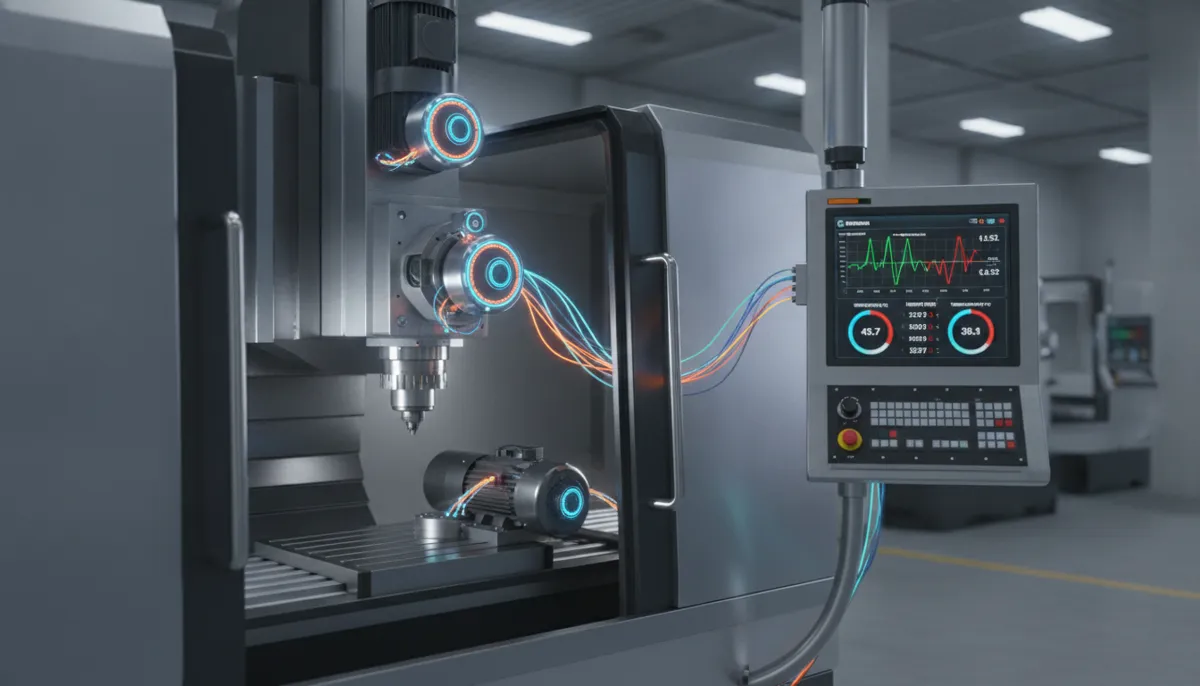
Unlike traditional offline simulation software, a true CNC digital twin process is continuously synchronized with live sensor data from the physical machine, creating a closed-loop feedback system. This means the virtual model reflects actual machine wear, thermal drift, and spindle load in real time — not just at program creation time. The result is a living digital model that improves with every cycle.
How Does the CNC Digital Twin Process Integrate with Existing IT Infrastructure?
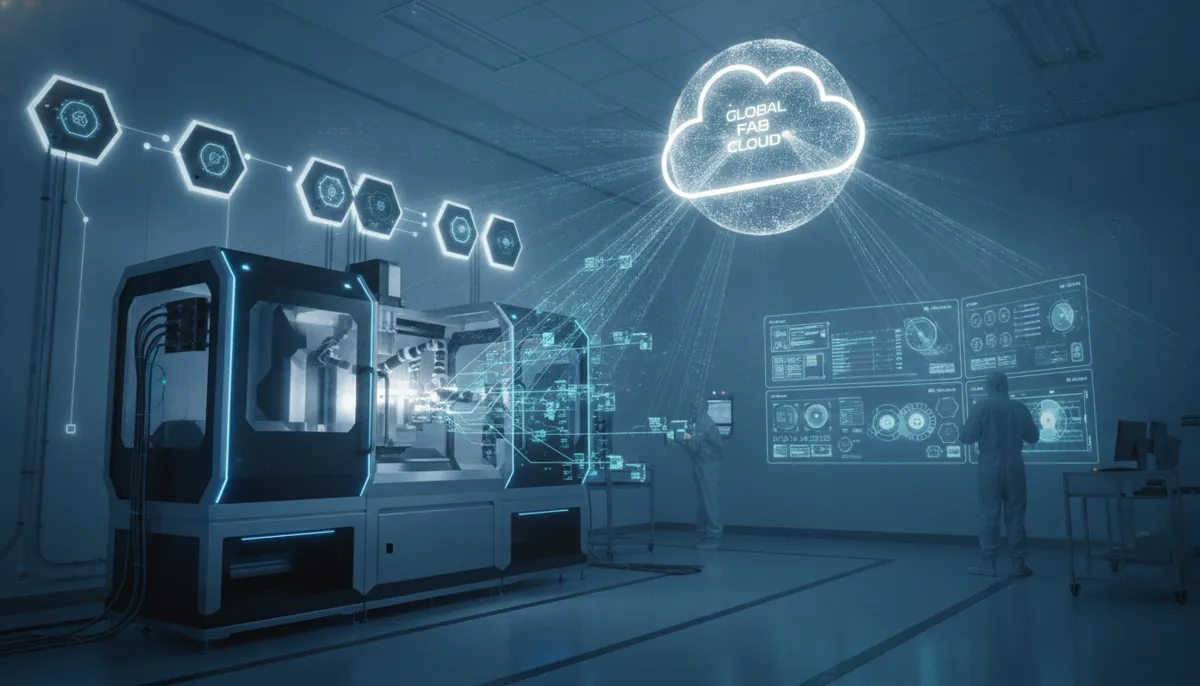
QFCNCMACHINE’s CNC digital twin solution uses standard industrial protocols — OPC UA and MTConnect — to connect with CNC controllers (FANUC, Siemens, Mitsubishi, SYNTEC, LNC) and enterprise systems (MES, ERP, IoT platforms). Deployment options include on-premises, private cloud, or hybrid, with open REST APIs for custom integrations. Pre-built connectors for common CAD/CAM and ERP platforms are included, eliminating costly custom development work.
3. Core Features of the QFCNCMACHINE CNC Digital Twin Process
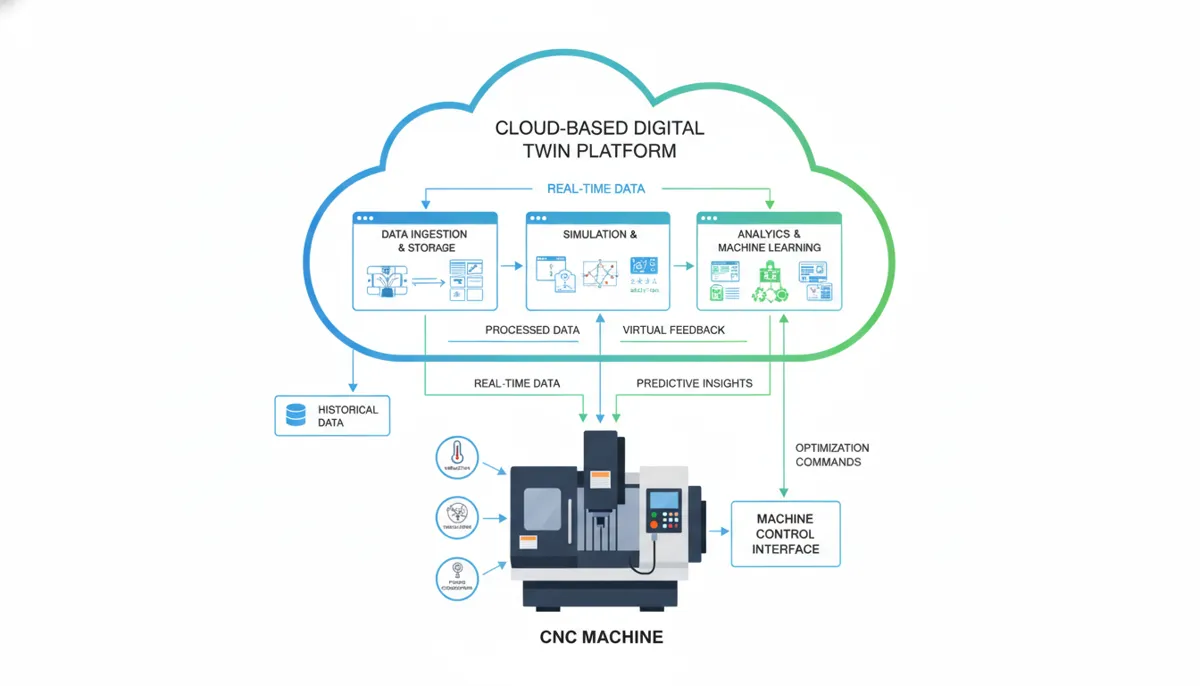
3.1 Real-Time Machining Simulation
Run the entire CNC digital twin process in a virtual environment before production begins. The system detects collisions, gouges, and fixture interferences with sub-millimeter accuracy — validated to within 0.01 mm for aerospace and medical applications. New part programs can be fully validated in hours instead of days, dramatically accelerating time-to-first-part and reducing costly first-article failures.
3.2 Automated Process Optimization
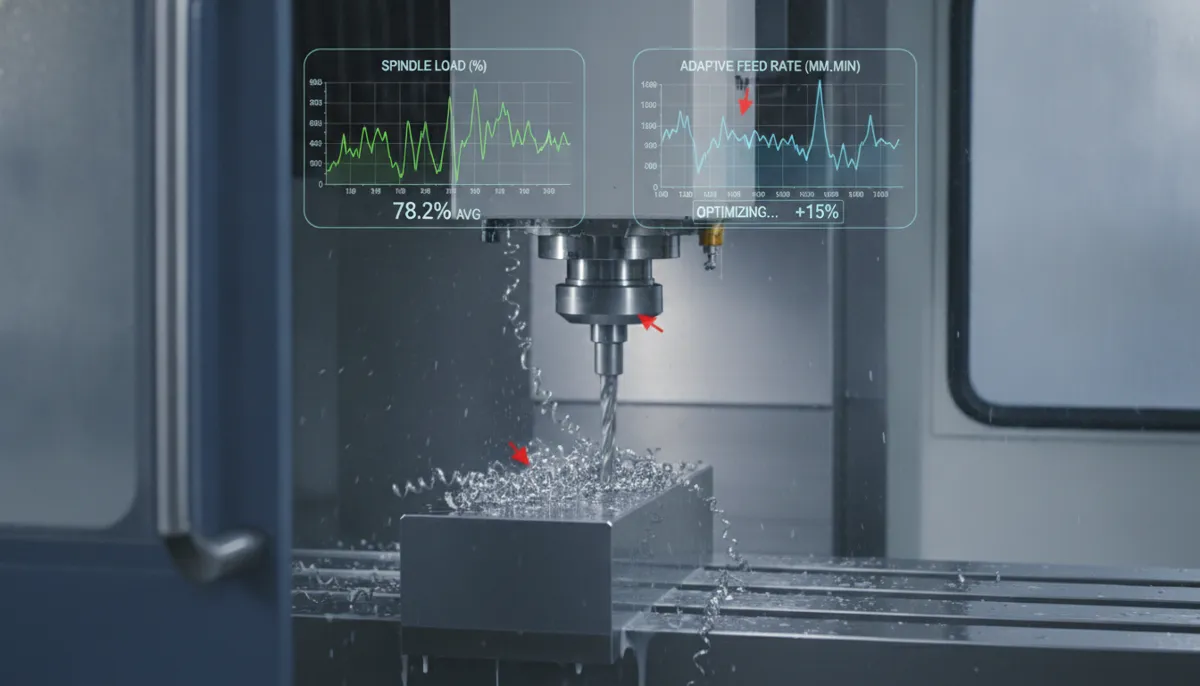
The digital twin automatically analyzes simulation results and recommends adjustments to feed rates, spindle speeds, depth of cut, and tool paths. Customers implementing the CNC digital twin process consistently achieve 15–20% cycle time reduction without compromising surface finish or dimensional accuracy — a direct improvement to machine throughput and profitability.
3.3 Predictive Maintenance & Tool Wear Analytics
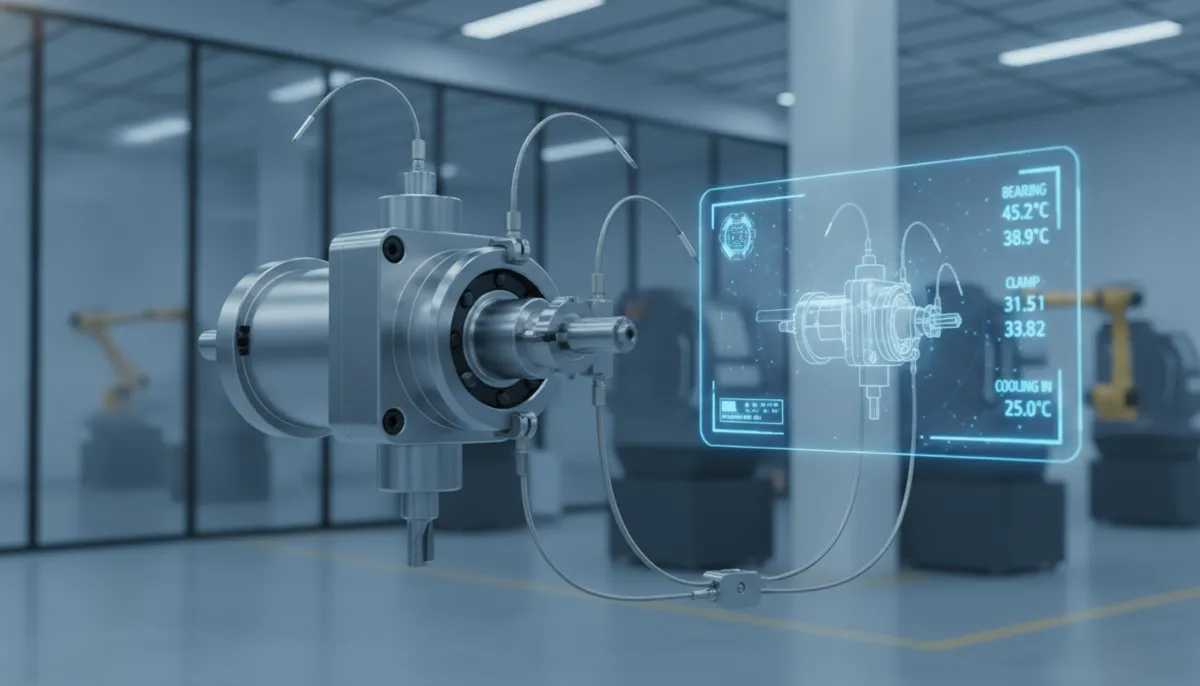
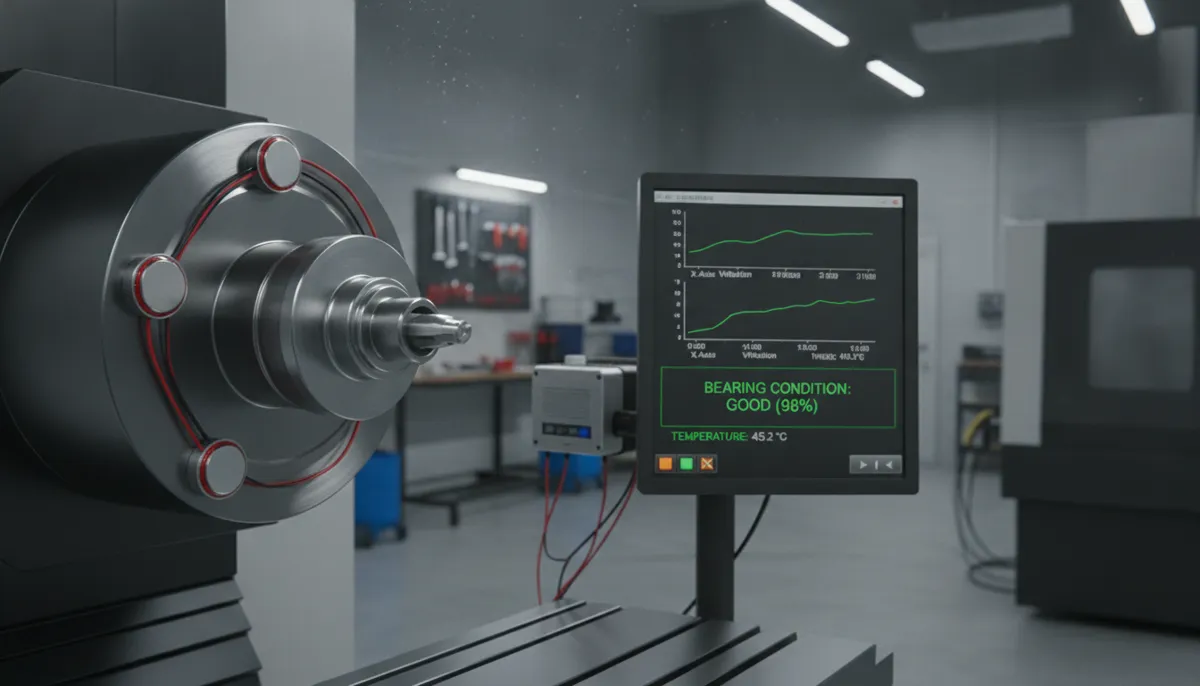
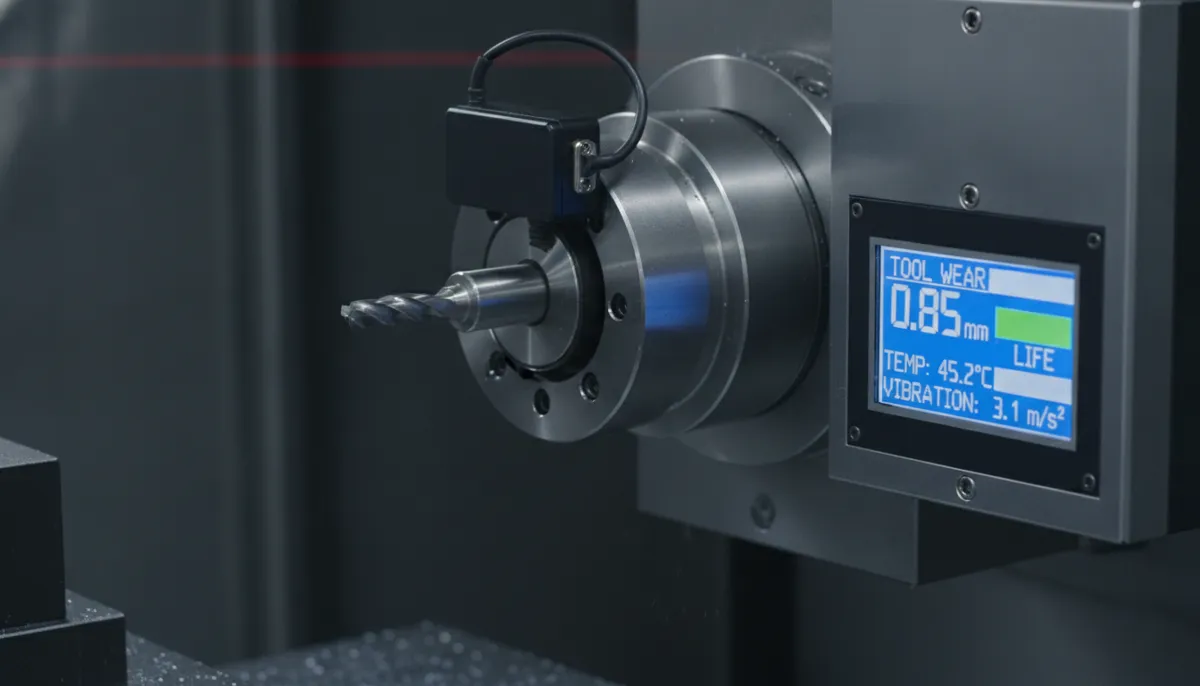
By continuously monitoring spindle load, vibration signatures, and thermal data through the CNC digital twin process, the system predicts tool wear and remaining useful life with high accuracy. Maintenance can be scheduled during planned downtime windows — eliminating unexpected breakdowns and the costly unplanned stoppages that disrupt production schedules.
3.4 Seamless Data Integration (Digital Thread)
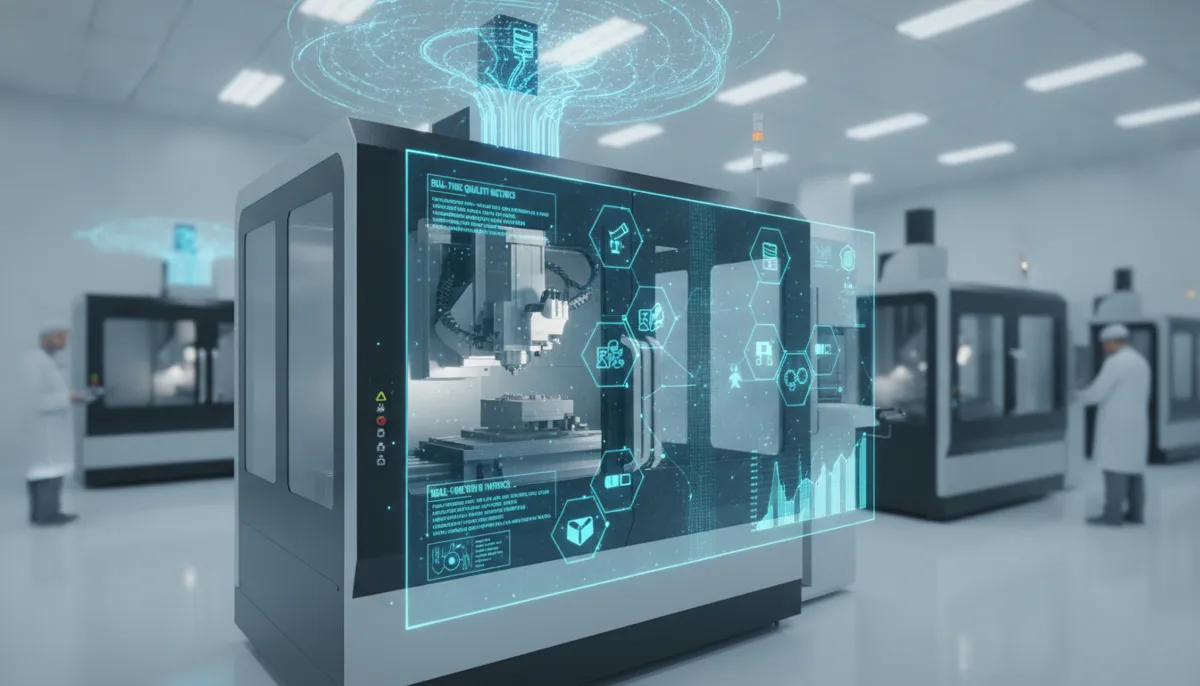
Connect the CNC digital twin process with your existing MES, IoT platforms, and ERP via open APIs. QFCNCMACHINE provides pre-built connectors for major platforms, ensuring you enhance your overall digital thread without a rip-and-replace infrastructure overhaul. The system runs on-premises or in the cloud to match your IT governance and data security requirements.
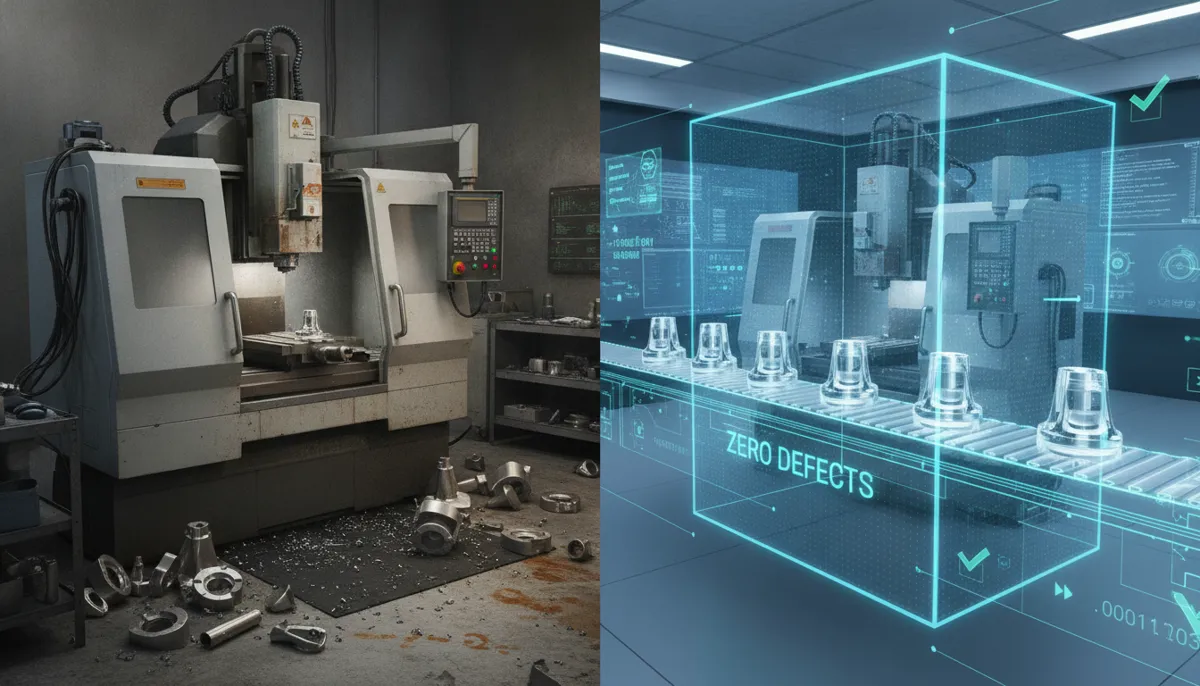
4. CNC Digital Twin Process vs. Traditional Machining Approach
| Dimension | Traditional CNC Approach | CNC Digital Twin Process |
|---|---|---|
| Program Validation | Trial cuts on real material; high scrap risk | Full virtual simulation; zero material waste |
| Collision Detection | Operator experience; reactive | Automated pre-run detection; proactive |
| Tool Life Management | Fixed change intervals or reactive replacement | Predictive wear analytics; optimized intervals |
| Setup / Ramp-Up Time | Days to weeks for new parts | Hours; validated before first cut |
| Scrap Rate | Typically 3–8% on complex parts | Reduced to under 1.5% (customer data) |
| Machine Utilization | 60–75% typical OEE | Up to 20% improvement in utilization |
| IT Integration | Siloed machine data | OPC UA / MTConnect / REST API; full digital thread |
| ROI Timeline | N/A | Typical break-even within 6–9 months |
5. Real-World Applications & Customer Testimonials
Case Study 1: Aerospace Component Manufacturer — Germany 🇩🇪
A leading European aerospace parts supplier was experiencing frequent tool breakage and scrap rates above 5% on titanium structural components. After implementing the QFCNCMACHINE CNC digital twin process, the engineering team simulated the entire machining workflow — identifying suboptimal feed rates and inefficient tool paths causing chatter and premature tool failure. Within three months of go-live:
- Tool changes reduced by 40%
- Scrap rate dropped from 5%+ to under 1.5%
- Setup time for new part programs reduced by 30%
- Full ROI achieved in 7 months
“Implementing the CNC digital twin process from QFCNCMACHINE was a turning point for our titanium machining line. We eliminated trial-and-error entirely — every new program is validated virtually before it touches the machine. Our scrap rate is now below 1.5%, and our engineers have more confidence than ever.”
Case Study 2: Automotive Powertrain Supplier — United States 🇺🇸
A Tier 1 automotive supplier in the US Midwest producing high-volume powertrain components needed to reduce cycle times and improve machine utilization across a 12-machine VMC cell. By deploying the QFCNCMACHINE CNC digital twin process across the entire cell, they optimized spindle speeds and feed rates simultaneously — achieving a 17% cycle time reduction and a 22% improvement in OEE within the first quarter of deployment.
“We were skeptical about the ROI at first, but the numbers don’t lie. The CNC digital twin process paid for itself in under six months. Our production planners now simulate every new part program before it hits the floor — it has become a non-negotiable part of our workflow.”
Case Study 3: Precision Parts Contract Manufacturer — Vietnam 🇻🇳
A fast-growing precision parts contract manufacturer in Vietnam serving Japanese and Korean electronics OEMs was struggling with long setup times and inconsistent quality on complex 4-axis parts. After integrating QFCNCMACHINE’s CNC digital twin process with their existing MES via OPC UA, they reduced average setup time from 3 days to under 6 hours for new part families, and achieved first-article acceptance rates above 98% — a result that directly won them two new long-term OEM contracts.
“As a contract manufacturer competing on quality and speed, the CNC digital twin process gave us a real competitive edge. Our customers noticed the improvement in first-article quality immediately. QFCNCMACHINE’s support team in Dongguan was always responsive — they truly understand the Southeast Asian manufacturing environment.”
6. Pros & Cons of the CNC Digital Twin Process
✅ Pros
- Reduced Unplanned Downtime: Simulate operations to prevent collisions and tool failures before they occur, keeping machines productive and schedules on track.
- Significant Cost Savings: Minimize material waste and extend tool life by optimizing parameters virtually — no trial-cut scrap costs.
- Faster Program Ramp-Up: New part programs validated in hours instead of days, accelerating time-to-market for new products.
- Validated Precision: Simulation accuracy within 0.01 mm — suitable for aerospace, medical, and defense applications.
- IT-Friendly Integration: OPC UA, MTConnect, REST APIs; works with existing MES/ERP without rip-and-replace overhaul.
- Flexible Deployment: On-premises, cloud, or hybrid — fits any IT governance and data security model.
- Proven ROI: Typical break-even within 6–9 months, validated across 750+ global customer deployments since 2010.
⚠️ Cons & Mitigations
- Initial Investment: Software licensing and staff training required — however, ROI is typically achieved within 6–9 months, and QFCNCMACHINE offers phased onboarding plans to reduce upfront commitment.
- Data Integration Effort: Connecting with legacy CAD/CAM and ERP systems requires upfront mapping — mitigated by QFCNCMACHINE’s pre-built connectors and dedicated integration support team.
- Organizational Change: Engineers need to adopt simulation-first workflows — addressed through comprehensive training and ongoing technical support from our Dongguan engineering team.
- Network Infrastructure: Real-time data sync requires stable plant network — QFCNCMACHINE provides deployment assessment and network recommendations as part of standard onboarding.
7. FAQ: CNC Digital Twin Process
What exactly is a CNC digital twin process?
A CNC digital twin process is a continuously updated virtual replica of your physical CNC machining environment. It simulates every aspect of the machining operation — tool paths, material removal, machine kinematics, thermal behavior, and tool deflection — in real time, enabling full optimization and program validation without risk to real parts or machines.
How does the CNC digital twin process integrate with existing IT infrastructure?
QFCNCMACHINE’s solution uses standard industrial protocols — OPC UA and MTConnect — to connect with CNC controllers and enterprise systems. It supports on-premises, cloud, and hybrid deployment, with REST APIs for custom integrations. Pre-built connectors for major MES, ERP, and CAD/CAM platforms minimize integration effort and time-to-value.
What is the typical ROI for a CNC digital twin process implementation?
Based on data from 750+ customer deployments, typical ROI metrics include: 30% reduction in setup time, 25% decrease in scrap rate, and 20% improvement in machine utilization. Most customers achieve break-even within 6–9 months of go-live, making the CNC digital twin process one of the highest-return investments in Industry 4.0.
Is the CNC digital twin process accurate enough for aerospace or medical applications?
Yes. QFCNCMACHINE’s digital twin models incorporate full machine kinematics, thermal behavior, and tool deflection physics. Simulation accuracy has been validated to within 0.01 mm for aerospace and medical applications, meeting the requirements of AS9100 and ISO 13485 production environments.
Which CNC controller brands are compatible with the digital twin process?
The CNC digital twin process is compatible with all major CNC controller brands including FANUC, Siemens, Mitsubishi, SYNTEC, and LNC. Custom controller integration is available upon request through our Dongguan engineering team.
What is QFCNCMACHINE’s warranty and return policy?
All QFCNCMACHINE equipment comes with a 2-year warranty. Returns are supported for confirmed quality issues — we do not support no-reason returns for non-defective products. For any quality concerns, contact our team at bella@qfcncmachine.com or via WhatsApp at +86 15118243737.
Which industries and regions does QFCNCMACHINE serve?
QFCNCMACHINE serves customers across aerospace, automotive, electronics, medical devices, and precision contract manufacturing sectors. Our primary export markets include Europe (Germany, UK, Italy, France), North America (USA, Canada, Mexico), and Southeast Asia (Vietnam, Thailand, Malaysia, Indonesia). With 750+ global customers since 2010, we have deep experience in the regulatory and quality requirements of each region.
Ready to Optimize Your Machining with the CNC Digital Twin Process?
Join 750+ manufacturers worldwide who trust QFCNCMACHINE. Schedule a personalized demo with our engineering team in Dongguan — we’ll show you exactly how the CNC digital twin process can reduce your costs, improve quality, and accelerate time-to-market.
References
- Mordor Intelligence, Machining Centers Market Size, Share & Growth Trends Report, 2024. https://www.mordorintelligence.com/industry-reports/machining-centers-market
- McKinsey & Company, What is digital-twin technology?, August 2024. https://www.mckinsey.com/featured-insights/mckinsey-explainers/what-is-digital-twin-technology
- Deloitte Center for Integrated Research, From manufacturing to medicine: How digital twins can unlock new industry advantages, June 2025. https://www.deloitte.com/us/en/insights/topics/business-strategy-growth/digital-twin-strategy.html
- Grand View Research, Digital Twin Market Size, Share & Trend Analysis Report, 2026–2033, June 2026. https://www.grandviewresearch.com/industry-analysis/digital-twin-market