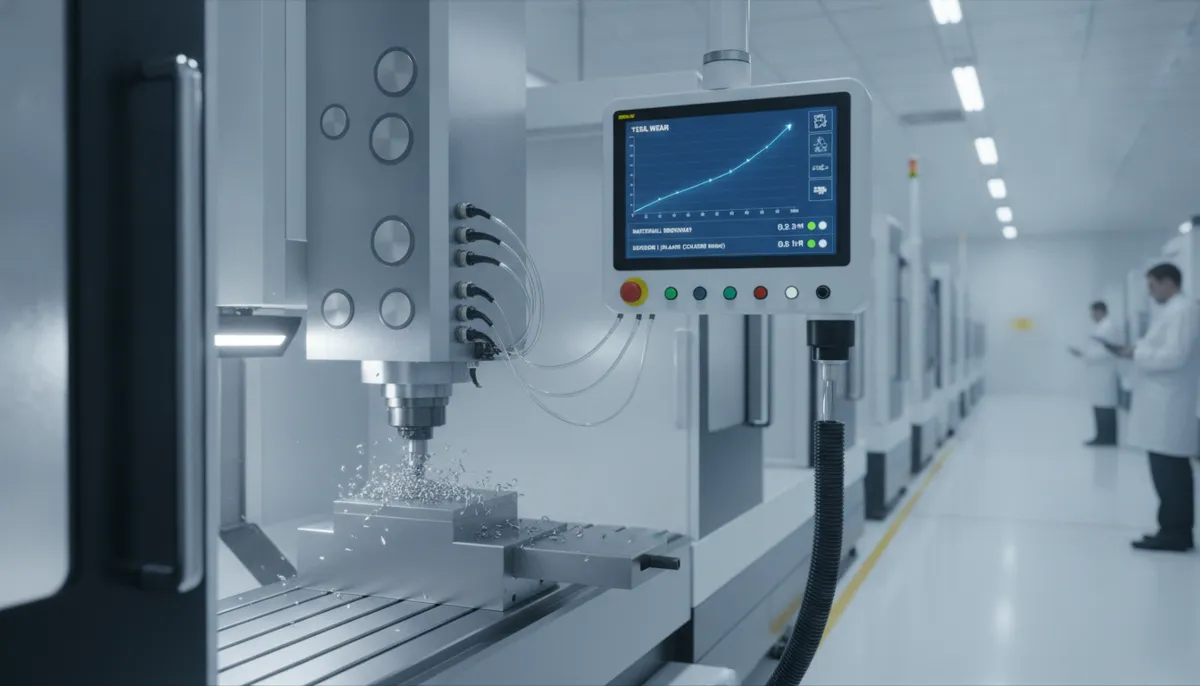
CNC lubrication analysis helps metrology, maintenance, and manufacturing engineers evaluate the condition of lubricants used in precision machine tools. By monitoring particles, water contamination, viscosity change, oxidation indicators, and wear-metal trends, a structured oil-analysis program can help teams investigate conditions that may affect spindle reliability, hydraulic performance, guideway lubrication, and machining consistency.
For high-value CNC parts, micron-level variation can lead to rework, rejected components, delayed shipments, and difficult root-cause investigations. QiaoFeng supports customers in Europe, North America, and Southeast Asia with CNC machine solutions and maintenance guidance. A well-planned CNC lubrication analysis program gives engineers objective fluid-condition information that can be reviewed alongside vibration, temperature, dimensional, surface-finish, and maintenance data.
1. Industry Standards and Data Behind CNC Lubrication Analysis
Oil condition monitoring is a recognized component of condition-based maintenance. Rather than changing every lubricant strictly by calendar time, maintenance teams can use representative samples and trend data to evaluate whether a fluid remains suitable for service or whether contamination, degradation, or abnormal machine wear requires investigation.
ISO 4406 provides a widely used coding method for reporting the level of solid particulate contamination in hydraulic fluids and other applicable liquid systems. ASTM standards also describe established laboratory methods for water determination and elemental analysis of lubricating oils. These methods do not replace OEM maintenance instructions; instead, they help create a consistent basis for monitoring changes over time. [1][2][3]
For water-miscible metalworking fluids, contamination control and fluid management also matter for machining quality, workplace hygiene, and fluid stability. NIOSH identifies appropriate management of metalworking fluids as an important industrial health and maintenance consideration. [4] The wider machining-center market continues to be shaped by automation and data-driven manufacturing practices, increasing the value of reliable maintenance information. [5]
2. What Is CNC Lubrication Analysis?
CNC lubrication analysis is the structured sampling, testing, trending, and interpretation of fluids used in a CNC machine tool. The purpose is to identify changes that may indicate contamination, incorrect lubricant mixing, water ingress, oxidation, additive depletion, filtration issues, or possible internal wear.
An effective program does not depend on a single laboratory result. It compares samples taken from the same machine and system over time, using consistent sampling locations and procedures. This trend-based approach helps maintenance teams distinguish normal operating variation from a meaningful shift that needs inspection or corrective action.
3. Which CNC Fluids Should Be Tested?
Precision machine tools can use several different fluids. Each fluid has a different purpose, contamination route, and test priority. For this reason, CNC lubrication analysis should identify the exact system being sampled before results are interpreted.
3.1 Spindle Lubrication Oil
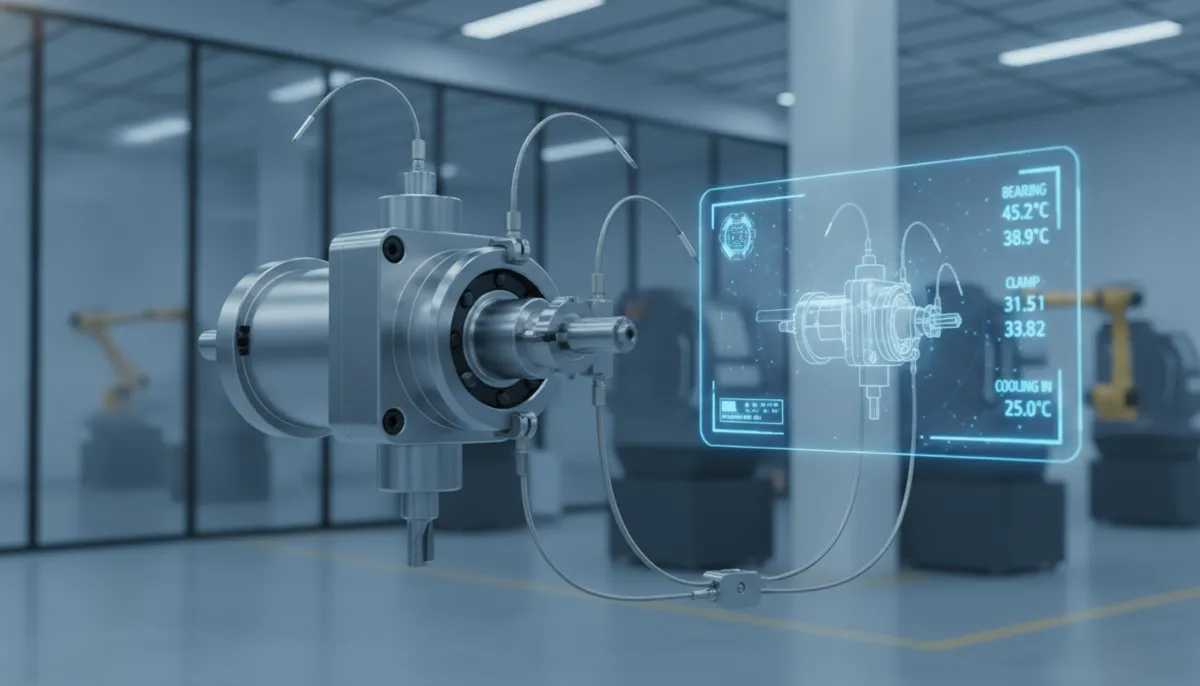
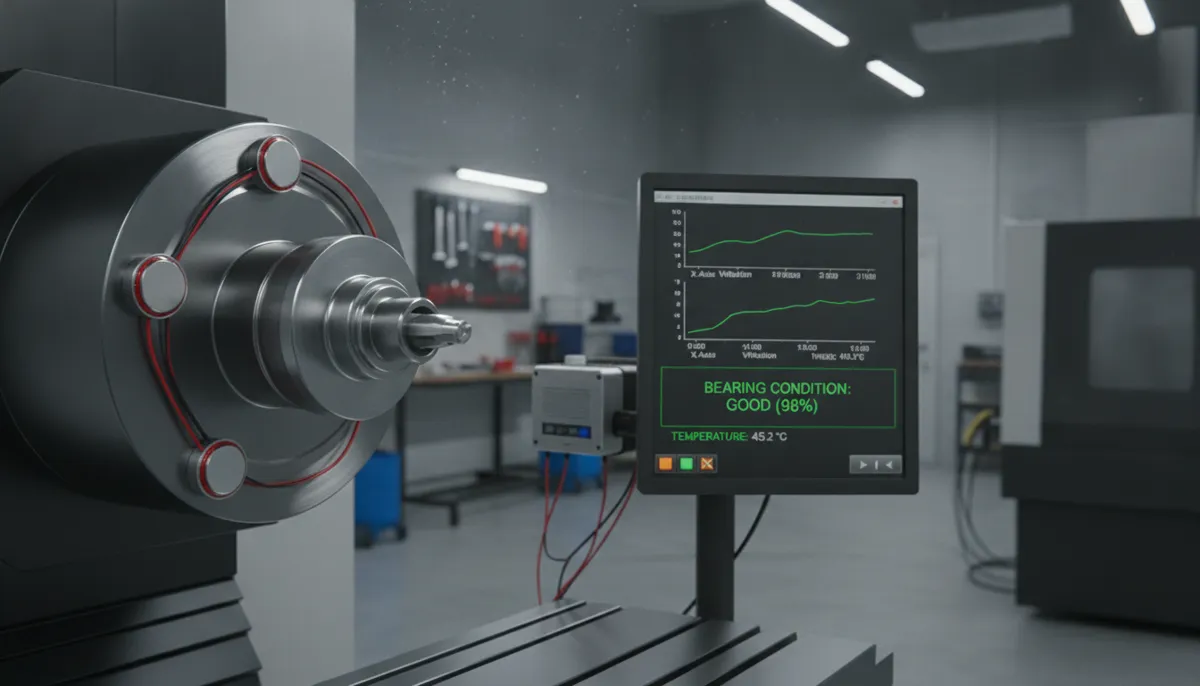
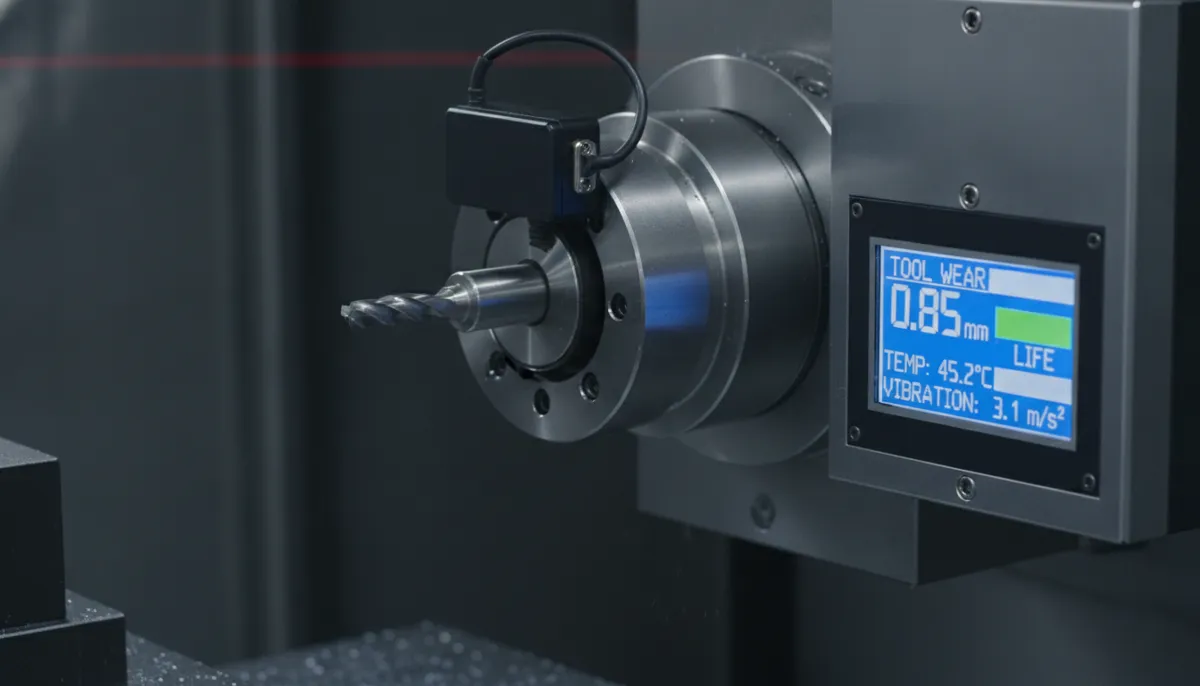
Spindle oil supports high-speed bearing lubrication and thermal stability where an oil-lubricated spindle system is used. Engineers may assess viscosity, water contamination, oxidation condition, particle trends, and wear elements. Any abnormal result should be reviewed together with spindle temperature, vibration, noise, lubrication delivery, and OEM service requirements.
3.2 Hydraulic Oil
Hydraulic oil is commonly used in clamping, pallet, counterbalance, tool-change, and auxiliary systems. Particle cleanliness, water content, viscosity, and oxidation indicators can be important because hydraulic components may be sensitive to contamination. ISO 4406 coding is frequently relevant to this type of fluid system.
3.3 Guideway and Centralized Lubrication Oil
Guideway lubricant supports controlled motion and helps protect slideways, ballscrews, and centralized lubrication circuits. An investigation may focus on lubricant grade, visible contamination, possible coolant ingress, supply performance, and signs that the wrong product has been added during maintenance.
3.4 Gearbox and Transmission Oil
Gearbox oil analysis can help monitor viscosity, oxidation, particle debris, and wear-metal trends. The significance of iron, copper, or other elements depends on machine design, lubricant formulation, component metallurgy, sample history, and the particle size range measured by the selected test method.
3.5 Water-Miscible Cutting Fluid
Water-miscible cutting fluid should be managed separately from machine lubricating oil. Useful checks may include concentration, pH, conductivity or water hardness, tramp oil, microbial condition, odor, foaming, corrosion control, and visible contamination. Microbial testing is generally relevant to water-based coolant systems rather than to sealed spindle-oil systems.
4. Core Tests Used in CNC Lubrication Analysis
The scope of a CNC lubrication analysis report should match the machine system and the suspected risk. The following tests are commonly considered when evaluating CNC lubricants and related industrial fluids.
- Particle Count and ISO 4406 Reporting: Measures solid contamination in suitable liquid systems. Results can help evaluate filtration effectiveness and cleanliness trends, but the target code should be selected according to the machine and component requirements.
- Elemental Analysis: Methods such as ICP-based elemental testing can detect dissolved or fine wear-related elements and contaminants. Results are most useful when compared with a baseline and prior samples from the same system.
- Viscosity Testing: A significant deviation from the approved lubricant’s expected viscosity may indicate contamination, incorrect top-up oil, thermal degradation, shear effects, or another process issue that requires confirmation.
- Water Content Testing: Water can enter through condensation, damaged seals, poor storage practices, washdown, or coolant leakage. The correct water limit depends on the lubricant, component, system design, and OEM guidance.
- Oxidation and Acid-Number Trend Review: Acid number and oxidation-related tests can support an assessment of lubricant aging. A change should be evaluated as a trend against the new-oil baseline and the lubricant supplier’s guidance, not as a stand-alone universal replacement trigger.
- Coolant Condition Checks: For water-miscible metalworking fluids, concentration, pH, tramp oil, and microbial condition can help identify fluid-management issues that may influence tool life, corrosion control, odor, and operator comfort.
5. How Lubricant Condition Can Affect Precision Machining
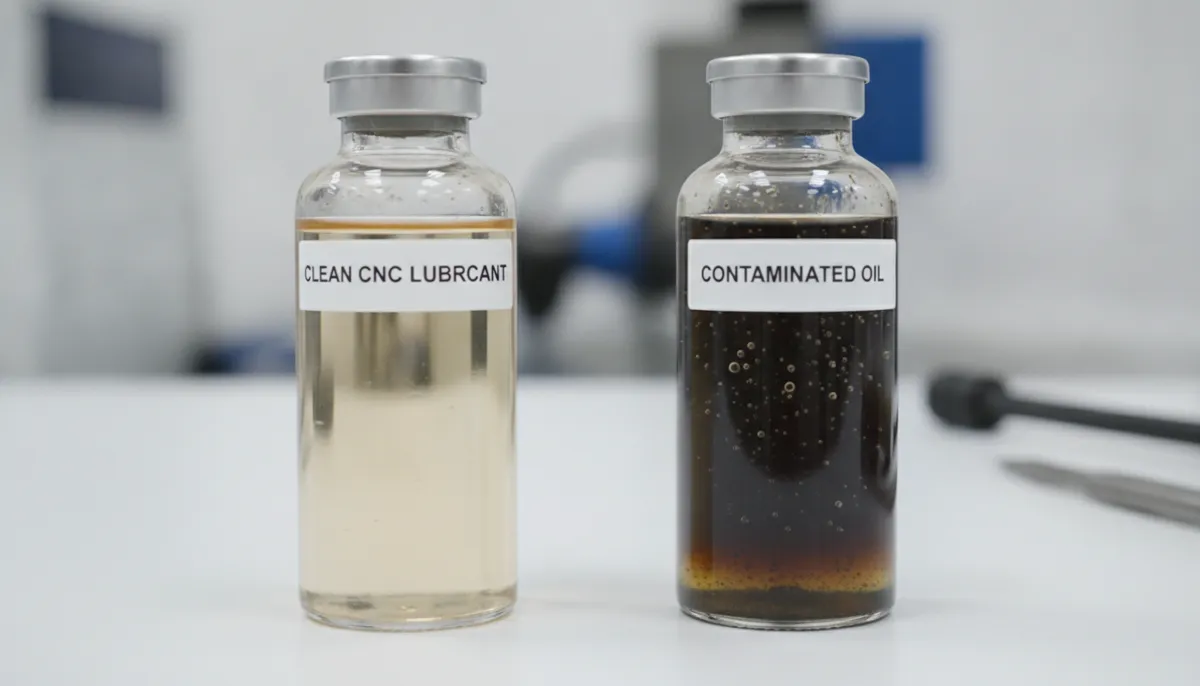
Lubricant condition is only one factor in machining accuracy, but it can be relevant when engineers are investigating unexplained variation. For example, contamination in a hydraulic system may affect the reliable function of associated components, while lubricant supply problems in guideway systems can contribute to friction-related motion issues. In an oil-lubricated spindle, changes in lubrication condition should be reviewed alongside thermal behavior, vibration trends, bearing condition, and machine operating history.
CNC lubrication analysis is therefore best used as part of a wider precision-maintenance process. It should complement—not replace—laser calibration, ballbar testing, vibration monitoring, thermal checks, alignment verification, part inspection, and preventive maintenance procedures.
6. Manual Inspection vs. Scheduled Oil Analysis vs. Condition-Based Monitoring
| Maintenance Approach | How It Works | Strengths | Limitations |
|---|---|---|---|
| Visual inspection | Operators check oil level, color, leaks, odor, foam, and visible contamination. | Fast, low cost, and useful for identifying obvious issues. | Cannot reliably quantify particles, water, viscosity, or early wear trends. |
| Calendar-based oil change | Lubricant is replaced on a fixed schedule. | Simple planning and easy compliance tracking. | May replace usable fluid early or miss contamination between service intervals. |
| Scheduled oil analysis | Samples are collected at defined intervals and compared over time. | Provides objective trend data for critical systems. | Depends on representative sampling, laboratory scope, and timely corrective action. |
| CNC lubrication analysis with condition monitoring | Oil data is reviewed alongside machine condition, maintenance records, and process observations. | Supports root-cause investigation and more informed maintenance planning. | Requires disciplined data review and machine-specific engineering judgment. |
7. Typical Application Scenarios for CNC Lubrication Analysis
7.1 High-Speed Spindle Reliability
In high-speed machining, an abnormal temperature trend, vibration increase, or surface-finish change may require a broad investigation. Where the spindle uses an applicable oil-lubrication system, lubricant sampling can help assess contamination, water ingress, or viscosity change alongside mechanical and thermal diagnostic checks.
7.2 Hydraulic and Clamping System Protection
Hydraulic systems for workholding, tool change, pallets, and auxiliary functions can be affected by particle contamination, water ingress, or incorrect fluid mixing. A targeted CNC lubrication analysis review can support filtration checks, seal inspections, and maintenance planning when machine response becomes inconsistent.
7.3 Guideway Lubrication and Motion Consistency
When engineers investigate stick-slip, abnormal axis behavior, visible way contamination, or coolant intrusion, guideway lubricant condition is one of several factors to review. The investigation should also verify metering units, lubrication delivery, wipers, covers, machine geometry, and axis-drive condition.
7.4 Coolant Management for Precision Parts
For medical, aerospace, automotive, and mold-making operations, coolant condition can influence chip evacuation, corrosion protection, tool performance, and surface appearance. Testing water-miscible coolant separately from lubricating oil helps maintenance teams choose the correct corrective action.
8. Illustrative Customer Scenarios and Testimonials
Transparency note: The following quotations are fictional, illustrative customer scenarios based on common maintenance priorities in QiaoFeng’s key export regions. They are not verified testimonials from named customers and should be replaced with authorized customer feedback when available.
“For aerospace components with long cycle times, we would use CNC lubrication analysis as one input in our reliability review. It is especially useful when we need to investigate a change in spindle temperature, vibration, or part-finish consistency before it turns into a larger maintenance event.”
“Our metrology and maintenance teams need traceable information, not assumptions. Trending lubricant condition alongside inspection results would help us organize corrective actions and better understand whether a machine condition issue is affecting repeatability.”
“For an established production line, a practical sampling routine is important. We would want clear guidance on where to sample, what the result means, and which action should be taken first when oil or coolant conditions move outside the normal trend.”
Potential Benefits
- Supports earlier identification of particles, water, viscosity shifts, and abnormal wear trends.
- Provides objective data for maintenance and root-cause investigations.
- Helps distinguish fluid-condition concerns from unrelated machine or process issues.
- Can support more targeted filtration, sealing, oil-change, or inspection decisions.
- Useful for critical spindles, hydraulic systems, guideways, and gearbox applications.
- Complements precision-maintenance and quality-control programs.
Implementation Considerations
- Results depend on correct sampling location, clean containers, and repeatable procedures.
- One sample rarely provides a complete diagnosis; trend data is more valuable.
- Different CNC fluids require different tests, limits, and interpretation methods.
- Laboratory results must be reviewed with machine context and OEM requirements.
- Corrective action may involve lubrication, filtration, seals, cooling, or mechanical inspection.
9. Frequently Asked Questions About CNC Lubrication Analysis
How often should CNC lubrication analysis be performed?
Sampling frequency should be based on machine criticality, lubricant volume, operating hours, production risk, OEM guidance, and past sample trends. Critical or heavily used systems may justify more frequent sampling, while lower-risk equipment may be reviewed at longer intervals. Establish a baseline first, then adjust the schedule according to actual results.
What is ISO 4406, and does it apply to every CNC fluid?
ISO 4406 is a coding method for reporting solid particle contamination in applicable fluid systems. It is commonly relevant to hydraulic and circulating lubrication systems. It is not a general certification for every oil-analysis service, and it should not be used as the only condition indicator for spindle oil, guideway oil, or water-miscible coolant.
Can CNC lubrication analysis detect coolant contamination in oil?
It can help identify evidence consistent with water ingress, viscosity change, or contamination, depending on the selected tests and fluid type. If coolant contamination is suspected, engineers should also inspect seals, wipers, piping, machine covers, lubricant supply systems, and possible cross-contamination routes.
Can oil analysis confirm that a spindle bearing is failing?
Oil analysis may reveal a trend that warrants further investigation, but it should not be used as the sole confirmation of bearing failure. Review lubrication results together with vibration analysis, temperature, acoustic behavior, spindle load, runout, and OEM diagnostic procedures.
What is the correct viscosity or cleanliness target for a CNC machine?
Use the machine builder’s documentation and lubricant supplier recommendations as the starting point. The appropriate target depends on the machine system, component design, fluid specification, filtration, operating environment, and production requirements. Avoid applying a single limit across all CNC machines.
How should oil samples be collected?
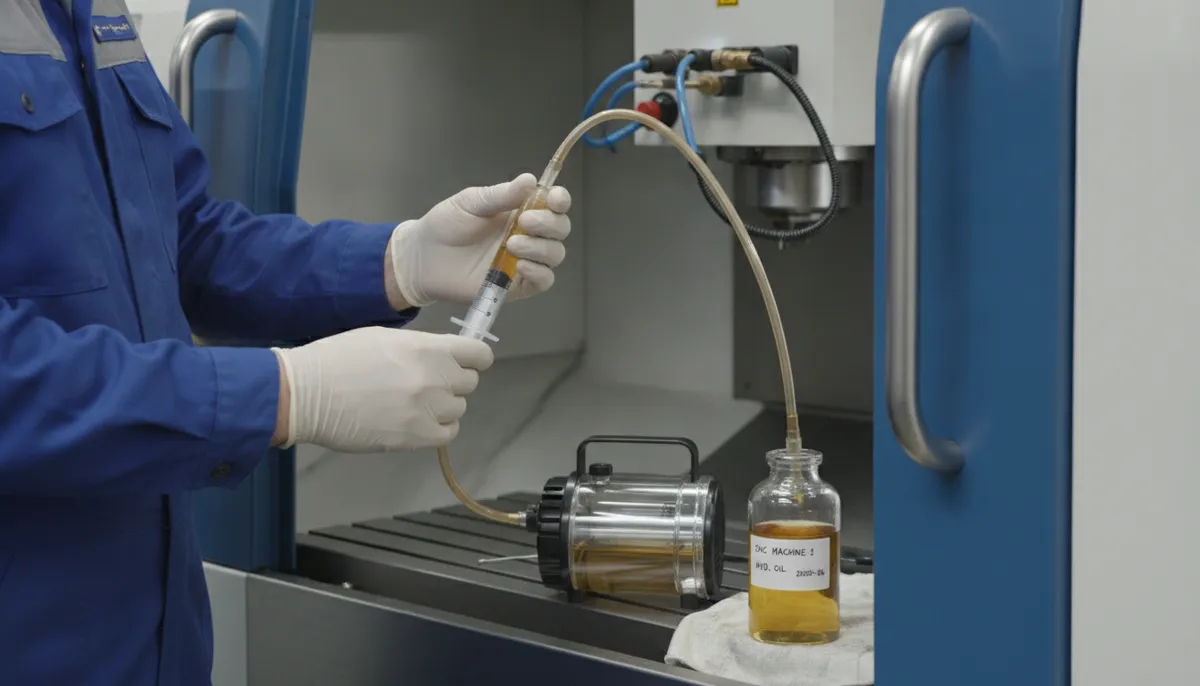
Samples should be taken from a representative live zone where possible, using clean and compatible bottles, documented sampling points, and repeatable procedures. Avoid collecting from tank bottoms, drain plugs, or recently topped-up fluid unless the purpose is specifically to investigate those locations.
What warranty and refund policy does QiaoFeng provide?
QiaoFeng provides a 2-year warranty for applicable products, subject to the agreed warranty terms. Returns or refunds are not supported for non-quality reasons. Where a confirmed product quality issue exists, QiaoFeng will assess the case and provide an appropriate solution according to the applicable agreement and policy.
Protect Your CNC Machine Health With QiaoFeng
Discuss your CNC lubrication analysis requirements, critical machine systems, maintenance concerns, and export project needs with QiaoFeng. Established in 2010, we have served 750+ customers across Europe, North America, and Southeast Asia.
References
- International Organization for Standardization (ISO), ISO 4406:2017 Hydraulic Fluid Power — Fluids — Method for Coding the Level of Contamination by Solid Particles. View ISO standard overview.
- ASTM International, ASTM D6304 — Standard Test Method for Determination of Water in Petroleum Products, Lubricating Oils, and Additives by Coulometric Karl Fischer Titration. View ASTM standard overview.
- ASTM International, ASTM D5185 — Standard Test Method for Multielement Determination of Used and Unused Lubricating Oils and Base Oils by Inductively Coupled Plasma Atomic Emission Spectrometry. View ASTM standard overview.
- National Institute for Occupational Safety and Health (NIOSH), Criteria for a Recommended Standard: Occupational Exposure to Metalworking Fluids, Publication No. 98-102. View NIOSH publication.
- Mordor Intelligence, Machining Centers Market Size, Share & Growth Trends Report, 2024. View report overview.