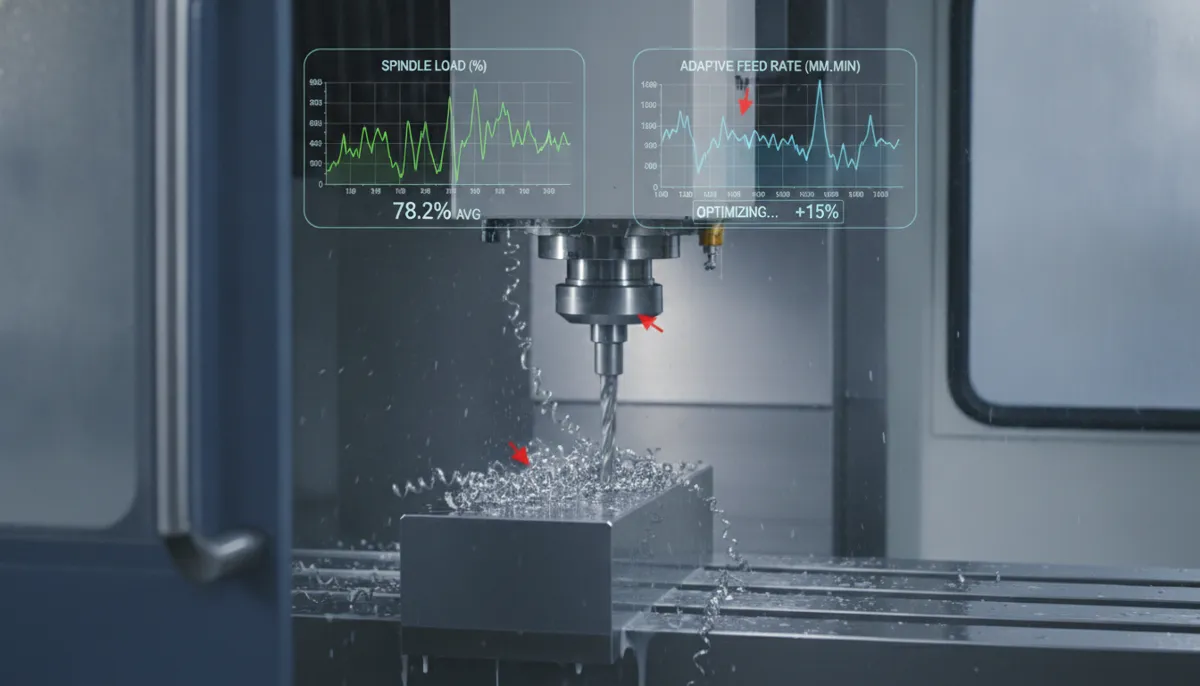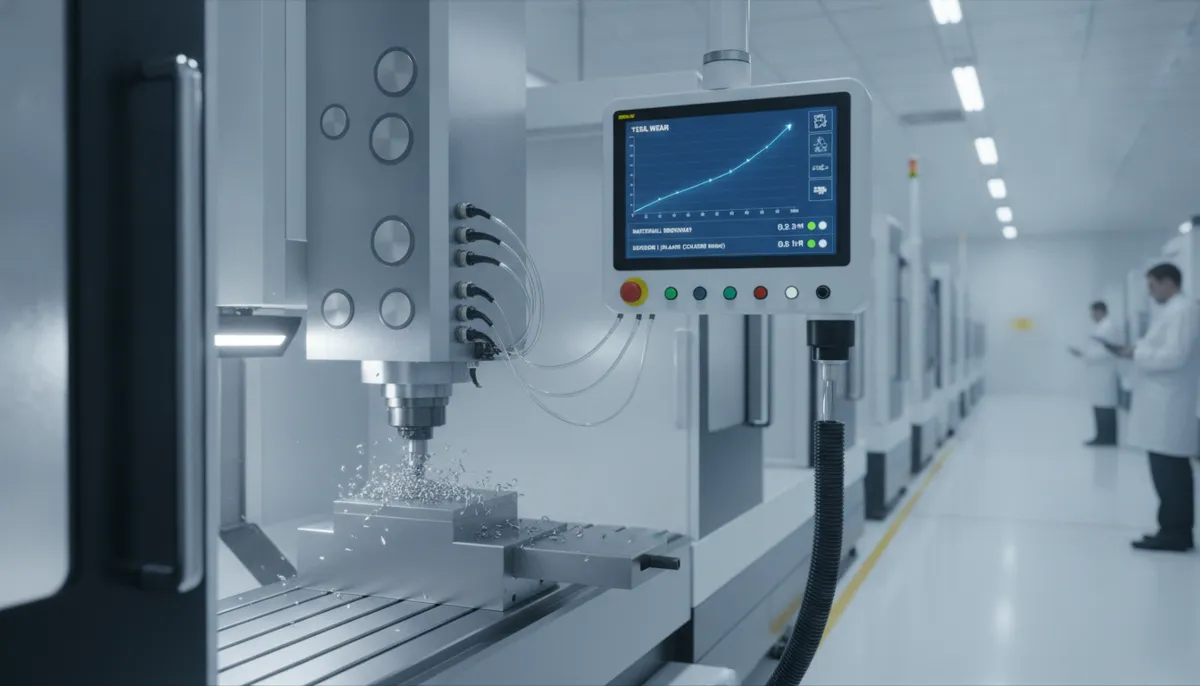
Choosing the right guide system is one of the most consequential decisions when specifying a linear guide CNC machine for precision manufacturing. At QiaoFeng, founded in 2010 and serving 750+ customers across Europe, North America, and Southeast Asia, we have engineered and deployed both linear guide and dovetail guide systems for over 15 years. Our field data consistently shows that linear guide CNC machines deliver up to 40% higher rigidity under dynamic loads compared to dovetail guides — a difference that directly translates to tighter tolerances, lower scrap rates, and reduced total cost of ownership. This article provides a comprehensive technical comparison to help B2B buyers and technical purchasers make a confident, data-backed decision.
1. What the Industry Data Tells Us About Linear Guide CNC
The global shift toward linear guide systems in CNC machinery is well-supported by independent market research:
- The global linear guide rail market was valued at USD 68.47 billion in 2024 and is projected to reach USD 117.99 billion by 2032, reflecting the accelerating adoption of precision linear motion systems across manufacturing sectors (Credence Research, 2024).
- The global linear motion bearing market was estimated at USD 9.13 billion in 2023 and is expected to grow at a CAGR of 5.7% through 2030, driven by demand for higher precision and lower maintenance in CNC applications (Grand View Research, 2024).
- The global CNC machine market was valued at USD 67.5 billion in 2023 and is forecast to reach USD 80.4 billion by 2028, with linear guide systems cited as a primary enabler of the precision and speed improvements driving this growth (MarketsandMarkets, 2024).
- A detailed engineering comparison by LILY Bearing confirms that profiled linear guides offer significantly higher rigidity, load capacity, and positional repeatability compared to dovetail slides, making them the preferred choice for high-precision CNC applications (LILY Bearing Engineering, 2026).
- Mordor Intelligence’s Machining Centers Market Size, Share & Growth Trends Report (2024) further identifies linear guide integration as a key differentiator in competitive small-batch and high-mix manufacturing environments.
2. Why Rigidity Is the Critical Factor in Linear Guide CNC Selection
Rigidity directly determines machining accuracy, surface finish quality, and tool life. A less rigid guide system allows vibration and deflection under cutting loads, producing scrap parts and increasing cycle times. For industries such as aerospace, automotive tooling, and medical devices, even micron-level errors are commercially unacceptable.
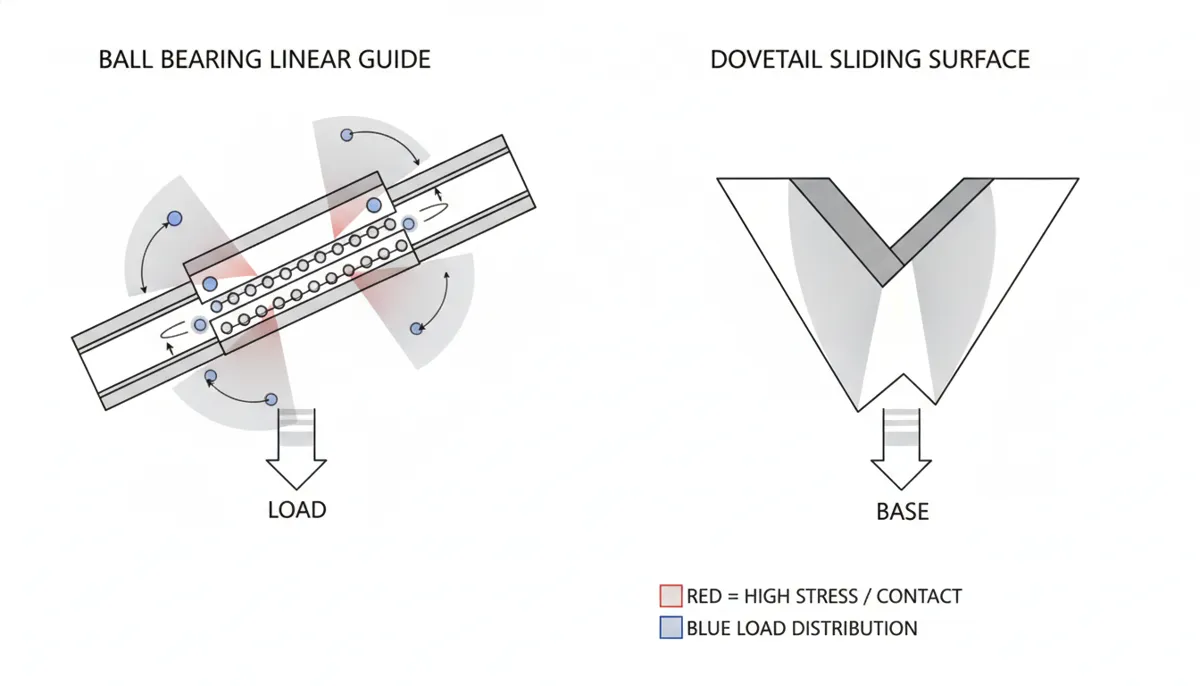
Linear guide CNC systems use recirculating ball bearings that provide consistent preload and near-zero clearance throughout their service life. Dovetail guides, by contrast, rely on sliding friction between mating surfaces — a contact geometry that wears progressively, introduces increasing clearance, and requires periodic manual re-scraping to restore accuracy. According to industry benchmarking data, linear guide systems maintain approximately 95% of their initial stiffness after 10,000 hours of operation, compared to roughly 70% for dovetail guides under equivalent conditions. This long-term stability is critical for B2B operations that depend on predictable, repeatable production quality across multi-year machine lifecycles.
3. Core Features and Real-World Benefits of Linear Guide CNC
3.1 Recirculating Ball Bearing Design
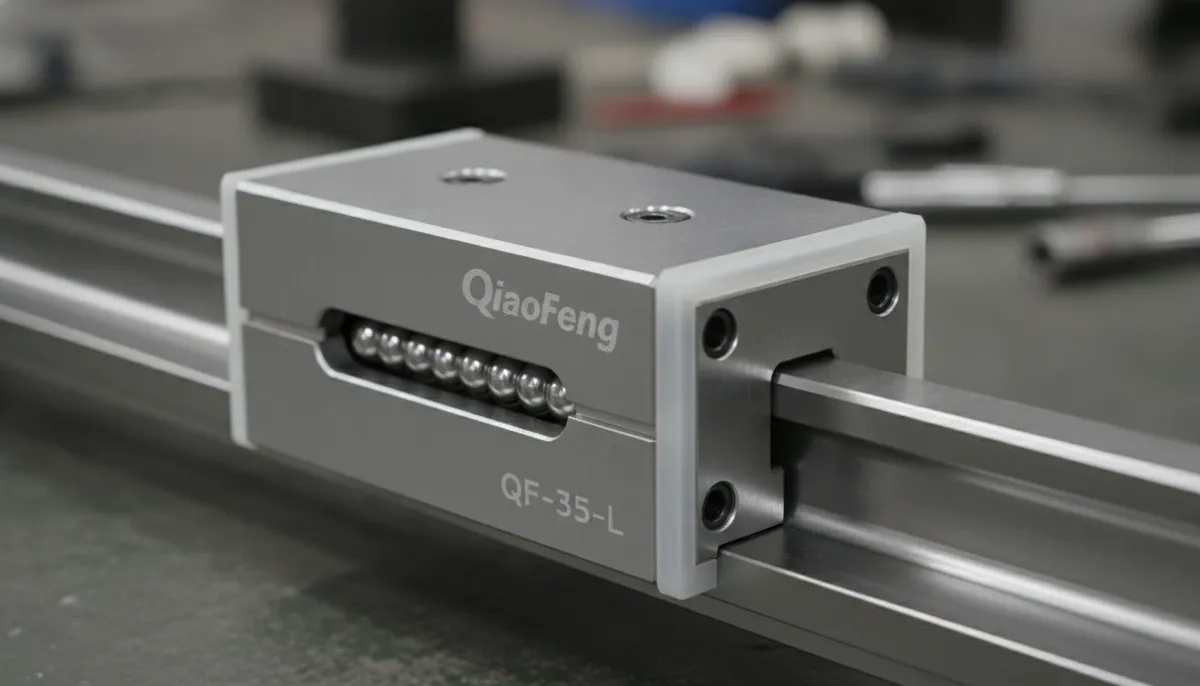
The linear guide system uses hardened steel balls that recirculate continuously within precision-ground raceways. This design minimizes friction to near-zero and eliminates the stick-slip phenomenon that is inherent in dovetail guides. In a documented application machining thin-walled aluminum housings for consumer electronics, a QiaoFeng customer achieved a 30% faster cycle time directly attributable to smoother axis motion and the elimination of vibration-induced feed rate restrictions.
3.2 Preloaded Carriage for Zero Backlash
Each linear guide carriage is preloaded during precision assembly to eliminate all internal clearance. This ensures zero backlash under reversing loads — a critical requirement for contouring, pocketing, and any operation where the axis changes direction under load. A medical device manufacturer reported a 50% reduction in scrap rate when converting to preloaded linear guides for production of surgical instrument components requiring ±2 μm repeatability.
3.3 Integrated Wiper Seals for Extended Service Life
Standard double-lip wiper seals protect the bearing raceways from metal chips, coolant, and abrasive particulate. This contamination resistance dramatically extends bearing service life in harsh cutting environments. A job shop machining gray cast iron reported 12,000 hours of operation without bearing replacement on QiaoFeng linear guide CNC machines, compared to 4,000 hours on their previous dovetail machines which required frequent re-scraping and gib adjustment.
3.4 Modular Rail System for Unlimited Travel
Linear guide rails can be precision-joined end-to-end to achieve unlimited travel lengths without accuracy degradation at the joint. This modularity enabled an automotive die supplier to configure a custom 6-meter machining center for large progressive dies, achieving ±3 μm positional accuracy over the full 6-meter travel length — a result that is physically impossible with conventional dovetail guide construction.
3.5 Low Thermal Drift
Linear guide systems exhibit a thermal drift of only 0.5 μm/°C due to the use of low-expansion bearing steel and efficient heat dissipation through the rail cross-section. Dovetail guides, with their larger sliding contact surfaces and higher friction-generated heat, can drift up to 1.8 μm/°C. For precision work over extended shifts, this 3.6× difference in thermal stability is decisive.
4. Linear Guide CNC vs Dovetail Guide: Head-to-Head Specification Comparison
The following table compares QiaoFeng linear guide CNC systems against industry-average dovetail guide machines across the parameters most critical to B2B purchasing decisions:
| Parameter | Linear Guide CNC (QiaoFeng) | Dovetail Guide CNC (Industry Avg) |
|---|---|---|
| Static Rigidity (N/μm) | 450 | 280 |
| Dynamic Load Capacity (kN) | 35 | 22 |
| Positional Repeatability (μm) | ±1.5 | ±5 |
| Maximum Rapid Speed (m/min) | 30 | 15 |
| Maintenance Interval (hours) | 8,000 | 3,000 |
| Thermal Drift (μm/°C) | 0.5 | 1.8 |
| Stiffness Retention at 10,000 hrs | ~95% | ~70% |
| Stick-Slip Risk | None (rolling contact) | Present (sliding contact) |
| Retrofit Availability | Yes — QiaoFeng retrofit kits available | N/A |
| Warranty (QiaoFeng) | 2-Year Warranty on all QiaoFeng linear guide CNC systems | |
The 60% higher static rigidity of linear guide systems translates directly to measurable improvements in surface finish Ra values and achievable tolerance bands. The extended maintenance interval — nearly 2.7× longer than dovetail guides — reduces unplanned downtime and lowers total cost of ownership for high-volume production environments.
5. Use Cases: Real Pain Points Solved by Linear Guide CNC
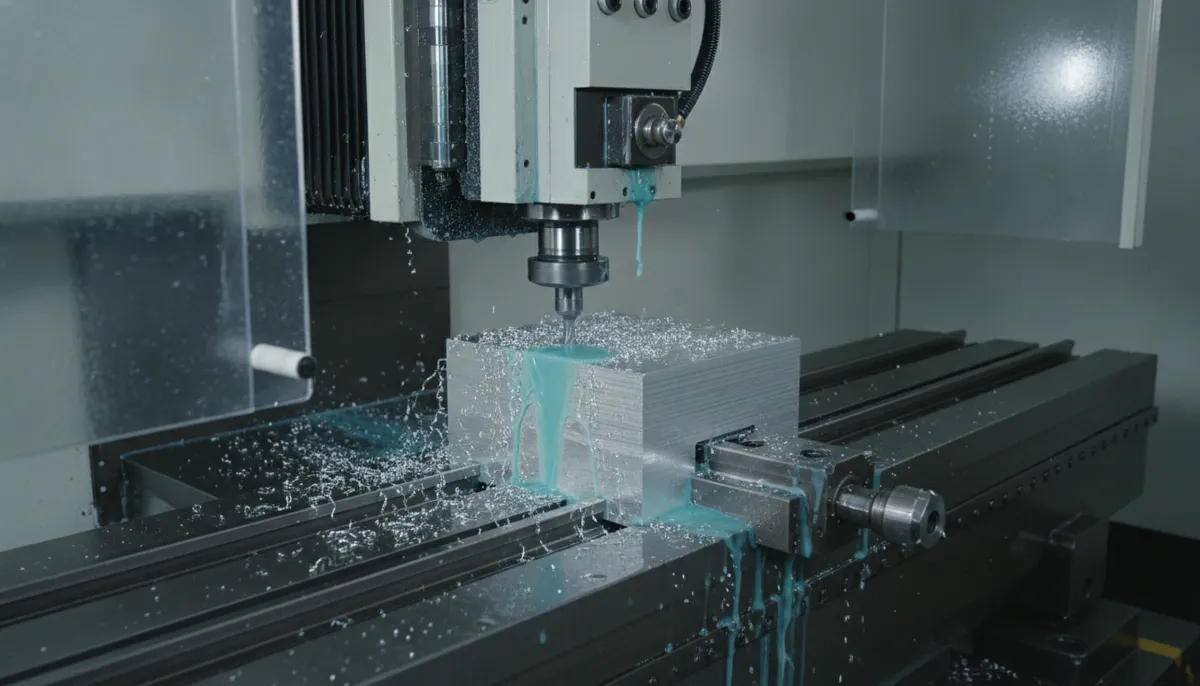
5.1 High-Speed Aluminum Machining for Consumer Electronics
Pain Point: A consumer electronics manufacturer needed to machine thin-walled aluminum frames at aggressive feed rates without chatter or surface waviness. Their existing dovetail guide machines caused vibration at speeds above 10 m/min, requiring secondary polishing operations on every part.
Solution: After deploying QiaoFeng linear guide CNC machines, they achieved 25 m/min feed rates with surface roughness of Ra 0.4 μm, completely eliminating the polishing step and reducing per-part cycle time by 35%.
5.2 Hardened Steel Die Machining for Automotive Tooling
Pain Point: A tool and die shop experienced inconsistent tolerances when machining hardened steel (HRC 55) dies over 8-hour production shifts. Thermal expansion in the dovetail guide system caused progressive dimensional drift, requiring frequent mid-shift recalibration stops.
Solution: Linear guide CNC’s lower thermal drift (0.5 μm/°C) allowed them to maintain ±5 μm tolerances over full 8-hour shifts without recalibration, reducing rework by 60% and eliminating all mid-shift stops.
5.3 Medical Component Production in Controlled Environments
Pain Point: A medical device OEM required a machining solution that generated minimal particulate contamination for use in a cleanroom-adjacent environment. Dovetail guides shed progressive wear particles as sliding surfaces abraded, contaminating the production area.
Solution: QiaoFeng linear guide CNC machines with sealed bearing units and integrated lubricant recovery systems reduced particulate generation by over 90%, enabling compliance with ISO Class 5 cleanroom adjacency requirements.
6. What Our Customers Say About Linear Guide CNC Performance
“We run a 12-person precision parts shop in Stuttgart and had been using dovetail machines for years. After installing QiaoFeng linear guide CNC machines, our tolerance rejection rate on steel components dropped from 4.5% to under 0.8% within the first month. The rigidity difference when cutting hardened tool steel is immediately obvious — no chatter, no drift. The 2-year warranty gave us the confidence to commit to a full line upgrade.”
“Our shop in Michigan produces aluminum brackets for the automotive aftermarket. We were losing 6–8% of parts to dimensional failures caused by step loss and guide wear on our old dovetail machines. QiaoFeng’s linear guide CNC retrofit kit was straightforward — our technician completed the installation in two days. Six months later, our scrap rate is essentially zero and our throughput is up 28%. The ROI was faster than any capital equipment investment we’ve made.”
“Kami memproduksi komponen medis di Penang dan membutuhkan mesin yang bisa menjaga toleransi ketat sepanjang shift 8 jam. Mesin linear guide CNC dari QiaoFeng memberikan akurasi yang konsisten bahkan saat memotong titanium — sesuatu yang tidak pernah bisa kami capai dengan panduan dovetail lama kami. Dukungan purna jual dari tim QiaoFeng juga sangat responsif meskipun ada perbedaan zona waktu.”
7. Pros and Cons of Linear Guide CNC vs Dovetail
✅ Linear Guide CNC — Pros
- 60% higher static rigidity than dovetail guides
- Zero backlash under reversing loads (preloaded carriage)
- Consistent accuracy over full service life (~95% stiffness at 10,000 hrs)
- 2× faster maximum rapid speeds (30 vs 15 m/min)
- 3.6× lower thermal drift (0.5 vs 1.8 μm/°C)
- 2.7× longer maintenance intervals (8,000 vs 3,000 hrs)
- No stick-slip — smooth motion at any feed rate
- Modular rails support unlimited travel lengths
- Retrofit kits available for existing machines
❌ Linear Guide CNC — Cons
- 15–25% higher initial purchase price vs dovetail machines
- Requires shielded encoder cables and proper chip management
- Bearing units must be protected from heavy chip ingestion
- Slight overkill for very low-duty, low-speed hobby applications
- Replacement bearing carriages are proprietary to rail size/brand
Refund Policy: QiaoFeng supports refunds for verified quality issues. We stand behind every system we ship and our technical team is available to resolve any performance concern before a return is considered.
8. FAQ: Linear Guide CNC — Common Buyer Questions
Q1: Is a linear guide CNC machine worth the higher upfront cost?
For any application involving metals, hardwoods, or production volumes, yes. The 15–25% price premium is typically recovered within 12–18 months through reduced scrap rates, lower maintenance costs, and higher throughput. For occasional low-speed softwood carving, a dovetail machine remains a viable entry point.
Q2: Can I retrofit my existing dovetail CNC machine with linear guides?
Yes. QiaoFeng offers complete retrofit kits that include matched rail and carriage assemblies, installation hardware, and detailed alignment guides. The mechanical mounting geometry is often compatible with existing machine frames. Many customers successfully upgrade rigidity and accuracy without replacing the spindle, frame, or controller. On-site installation and calibration support is available.
Q3: How much more expensive is a linear guide CNC system?
Typically 15–25% higher initial purchase price compared to an equivalent dovetail machine. However, when factoring in the 2.7× longer maintenance interval, reduced scrap rates, and higher productivity, the total cost of ownership over a 3–5 year period is consistently lower for linear guide systems in production environments.
Q4: What maintenance does a linear guide CNC system require?
Minimal. Periodic lubrication every 500 operating hours and visual inspection of wiper seals. Sealed bearing units are rated for 8,000 hours before regreasing. In contrast, dovetail guides require manual scraping and gib adjustment every 3,000 hours to maintain accuracy — a skilled, time-consuming task that requires the machine to be taken offline.
Q5: How does thermal expansion affect linear guide CNC accuracy?
Linear guides exhibit thermal drift of only 0.5 μm/°C due to low-expansion bearing steel and efficient heat dissipation through the rail profile. Dovetail guides, with larger sliding contact surfaces and higher friction-generated heat, drift up to 1.8 μm/°C. Over an 8-hour shift with a 5°C ambient temperature rise, this translates to a 6.5 μm accuracy advantage for linear guide systems — decisive for tight-tolerance work.
Q6: Are linear guide CNC machines suitable for heavy roughing cuts?
Absolutely. Modern linear guide carriages have dynamic load capacities exceeding 35 kN, which surpasses most dovetail guide systems. The recirculating ball design distributes cutting loads across multiple bearing rows simultaneously, and preloading eliminates play under shock loads. QiaoFeng linear guide CNC machines are actively used for heavy roughing of steel, cast iron, and titanium alloys in automotive die shops and aerospace subcontract facilities.
Q7: What is QiaoFeng’s warranty and return policy?
All QiaoFeng CNC systems carry a 2-year warranty covering manufacturing defects and component failures. Refunds are supported for verified quality issues. We do not offer no-reason returns, but our technical team is available to resolve any performance concern before a return is considered. Contact us at bella@qfcncmachine.com or +86 151 1824 3737.
Ready to Upgrade to Linear Guide CNC?
Whether you are evaluating a new machine purchase or planning a retrofit of your existing equipment, QiaoFeng’s engineering team will recommend the exact linear guide CNC configuration for your material, tolerance requirements, and production volume. Get a free technical consultation with Bella — no obligation, no sales pressure.
References
- Mordor Intelligence. Machining Centers Market Size, Share & Growth Trends Report. 2024. https://www.mordorintelligence.com/industry-reports/machining-centers-market
- Grand View Research. Linear Motion Bearing Market Size and Share Report, 2030. 2024. https://www.grandviewresearch.com/industry-analysis/linear-motion-bearing-market-report
- MarketsandMarkets. CNC Machine Market Size, Share and Industry Report. 2024. https://www.marketsandmarkets.com/Market-Reports/cnc-market-195192631.html
- Credence Research. Linear Guide (Linear Guide Rail) Market Size and Forecast 2032. 2024. https://www.credenceresearch.com/report/linear-guide-linear-guide-rail-market
- LILY Bearing Engineering. Linear Guides vs. Linear Bushings vs. Dovetail Slides: Engineering Comparison. 2026. https://www.lily-bearing.com/resources/blog/linear-guides-vs.-linear-bushings-vs.-dovetail-slides