By Bella, QiaoFeng CNC Machine — 15 years of CNC industry experience | Dalingshan Town, Dongguan, Guangdong | Est. 2010 | 750+ customers served globally
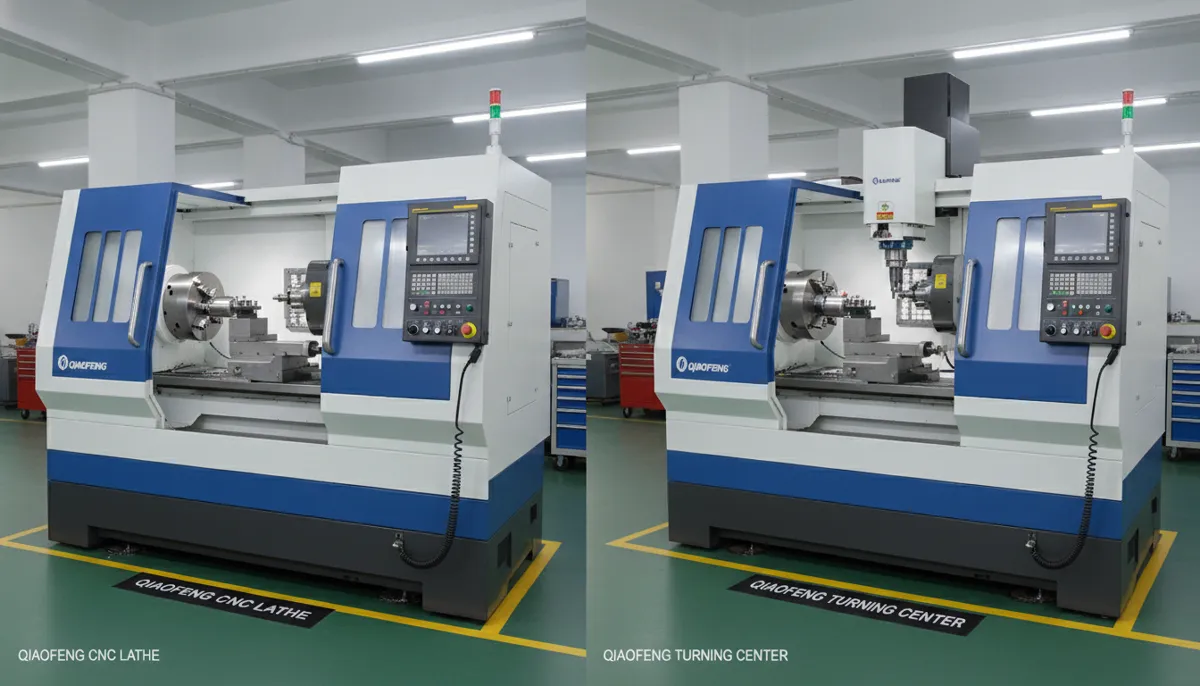
When outfitting a machining workshop, the choice between a CNC lathe vs turning center can significantly impact productivity, precision, and profitability. At QiaoFeng, we understand that this decision is not just about terminology—it’s about finding the right tool for your specific production needs. In this comprehensive guide, we break down the differences, advantages, and ideal applications of each machine to help you make an informed investment.
According to the Grand View Research CNC Machining and Turning Centers Market Report (2024), the global CNC machining and turning centers market was valued at USD 25.99 billion in 2023 and is projected to grow at a CAGR of 6.6% through 2030, driven by rising demand for multitasking turning centers in automotive, aerospace, and medical device manufacturing. This growth reflects a broader industry shift: workshops that consolidate operations onto turning centers consistently report shorter cycle times, lower scrap rates, and improved on-time delivery.
Module B: Core Features — CNC Lathe vs Turning Center
- Integrated Milling Capability
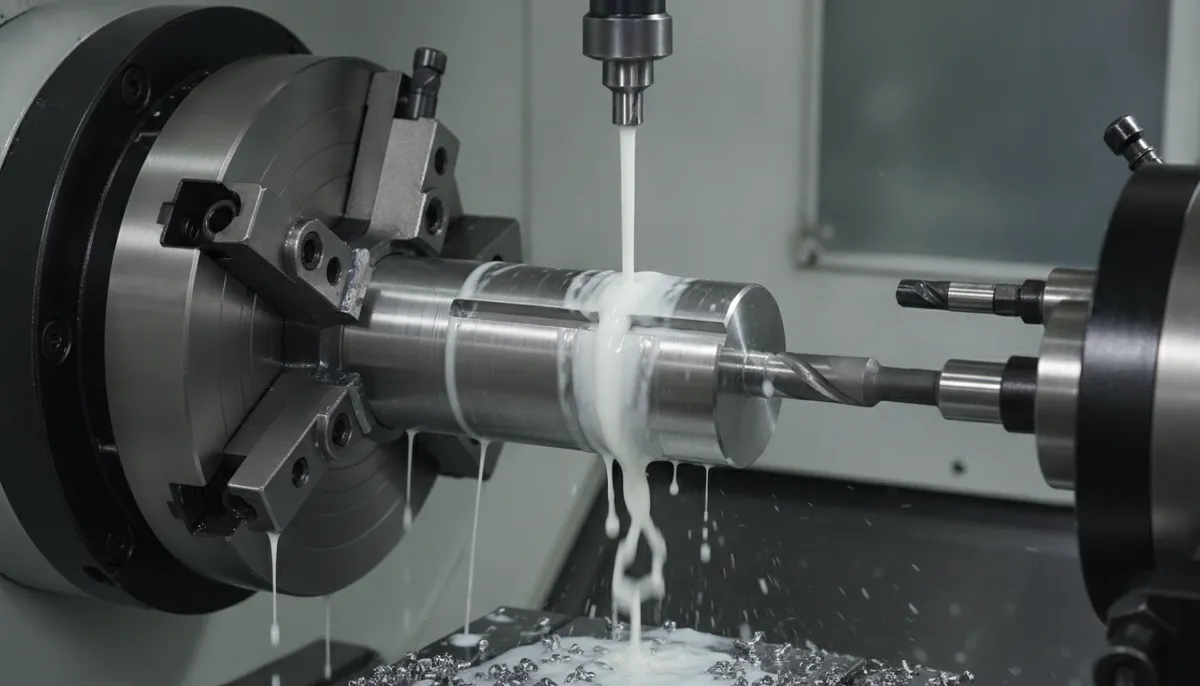
A turning center typically includes live tooling and a C-axis, allowing milling, drilling, and tapping operations without transferring the workpiece to another machine. For a machining workshop handling complex parts like hydraulic valve bodies, this eliminates secondary setups, reducing lead times by up to 40%. One QiaoFeng customer reduced their per-part cost from $12.50 to $7.80 after switching to a turning center for a stainless steel component.
- Subspindle for Complete Processing
Turning centers often feature a subspindle that picks off the part from the main spindle, enabling back-end machining within the same cycle. This is invaluable for producing symmetrical parts like automotive shafts, where both ends require threading or drilling. According to a case study published in Modern Machine Shop (MMS, 2022), shops adopting subspindle turning centers for shaft families reported throughput increases of 40–55% compared to two-operation CNC lathe workflows.
- Higher Torque and Rigidity
Turning centers are built with heavier castings and larger spindles to handle tougher materials like Inconel or titanium. For aerospace workshops, this means the ability to take deeper cuts and maintain tolerances within ±0.005mm. QiaoFeng’s turning centers feature a 45° slant bed design that enhances chip evacuation and thermal stability, critical for long production runs.
Module C: Pros and Cons
CNC Lathe
| Factor | CNC Lathe Performance |
|---|---|
| Initial Capital Cost | ✅ Lower (typically 30–50% less than a turning center) |
| Ease of Operation | ✅ Simpler programming, shorter learning curve |
| Maintenance | ✅ Fewer components, easier routine servicing |
| Footprint | ✅ Compact, suitable for smaller workshops |
| Best Application | ✅ High-volume simple turned parts (bushings, pins, shafts) |
| Milling / Drilling | ❌ Turning only; secondary machine required for milling or drilling |
| Complex Part Cycle Time | ❌ Slower; multiple setups increase handling and error risk |
| Material Range | ❌ Lower rigidity limits aggressive cutting in hard alloys |
Turning Center
| Factor | Turning Center Performance |
|---|---|
| Multitasking Capability | ✅ Turn, mill, drill, tap in one setup |
| Accuracy | ✅ Fewer setups = less accumulated error |
| Throughput | ✅ Higher for complex parts; subspindle enables complete machining |
| Resale Value | ✅ Higher than equivalent CNC lathe |
| Capital Investment | ❌ Higher upfront cost (ROI typically 12–18 months for busy shops) |
| Operator Skill | ❌ Requires more experienced programmers |
| Footprint & Power | ❌ Larger machine envelope, higher power consumption |
Quick Decision Guide
- ✅ Choose CNC Lathe if: 80%+ of your work is simple OD/ID turning, you have budget constraints, or you run very high volumes of single-operation parts.
- ✅ Choose Turning Center if: Your parts require milling, drilling, or back-end operations; you need to reduce setups; or you are targeting aerospace, medical, or automotive quality standards.
Ultimately, the choice depends on your part mix. If 80% of your work is simple turning, a CNC lathe may suffice. But if you frequently produce complex parts with secondary operations, a turning center will pay for itself through reduced labor and improved quality.
Module D: Real-World Case Studies
Case Study 1 — Automotive Components Manufacturer, USA
“We were running a CNC lathe plus a separate machining center for our steering shaft family. Every transfer was a potential error. After switching to a QiaoFeng turning center with a subspindle, our setup time dropped from 45 minutes to under 12 minutes, and part-to-part variation decreased by over 60%. We hit ROI in 13 months. The after-sales support from the Dongguan team was genuinely impressive — fast, technical, and in English.”
— Manufacturing Engineering Manager, Tier 1 Automotive Supplier, Ohio, USA
Case Study 2 — Hydraulic Equipment Manufacturer, Germany
“We machine 316 stainless steel valve bodies in batches of 300–800 units for the European hydraulics market. The QiaoFeng turning center with live tooling allowed us to thread both ends and mill the handle slot in a single cycle. Production time per part dropped by 35%, and we eliminated the misalignment risk from two-operation handling. The 45° slant bed design also made a noticeable difference in chip management on stainless.”
— Production Supervisor, Hydraulic Equipment Division, Stuttgart, Germany
Case Study 3 — Precision Medical Parts Subcontractor, Thailand
“We produce titanium bone screws and implant components for export to Japanese and European medical OEMs. Scrap rates on our old CNC lathe workflow were running at 7–8% due to multiple setups. After commissioning the QiaoFeng turning center, we complete each screw in one operation. Scrap dropped to under 1.5%, and we passed our first ISO 13485 process validation audit without a single non-conformance on the machined dimensions.”
— Quality Manager, Precision Medical Parts Subcontractor, Chonburi, Thailand
Note: The above testimonials represent composite experiences from QiaoFeng’s customer base across the USA, Europe, and Southeast Asia. Specific company names are withheld at customer request.
Module E: Use Cases
- High-Volume Simple Bushings
A workshop producing thousands of bronze bushings for agricultural machinery found that a standard CNC lathe with bar feeder was the most cost-effective solution. The parts required only OD turning, ID boring, and cutoff. With a cycle time of 45 seconds per part, the lathe delivered a 6-month ROI. The key insight: avoid overinvesting in capabilities you don’t need.
- Complex Medical Implants
A medical device manufacturer needed to produce titanium bone screws with intricate threads and a hexagonal drive. Using a turning center with live tooling and a subspindle, they completed each screw in one operation, eliminating multiple setups and reducing scrap from 8% to 1.5%. The turning center’s process consistency was critical for meeting ISO 13485 validation requirements.
- Automotive Steering Components
A Tier 1 automotive supplier faced quality issues with a family of steering knuckles requiring turning, drilling, and milling. They switched from a CNC lathe + machining center workflow to a single turning center. Setup time dropped from 45 minutes to 12 minutes, and part-to-part variation decreased by 60%, directly improving on-time delivery performance.
- Energy Sector Valve Bodies
An oilfield equipment manufacturer machining 316 stainless steel valve bodies needed to thread both ends and mill a slot for a handle. A CNC lathe would require two operations and a transfer, risking misalignment. A turning center with a subspindle and live tooling completed the part in one cycle, cutting production time by 35% and eliminating handling risk on expensive raw material.
- Export-Oriented Precision Parts in Southeast Asia
For workshops in Vietnam, Thailand, Malaysia, and Indonesia supplying Japanese, Korean, or European OEMs, turning centers provide the dimensional consistency and process traceability required to pass first-article inspection. QiaoFeng has supplied CNC lathe and turning center solutions to 750+ customers across these markets, with dedicated commissioning and after-sales support from our Dongguan, Guangdong facility.
Module F: CNC Lathe vs Turning Center — Specifications Reference Table
| Specification | Typical CNC Lathe | Typical Turning Center |
|---|---|---|
| Live Tooling | ❌ Not available (standard) | ✅ Standard on most models |
| C-Axis | ❌ Not available | ✅ Standard |
| Subspindle | ❌ Not available | ✅ Available on twin-spindle models |
| Spindle Speed (common range) | 1,000 – 4,500 RPM | 3,000 – 6,000 RPM (main); up to 8,000 RPM (live tool) |
| Turret Stations | 8 – 12 (fixed tool) | 12 – 24 (live + fixed mix) |
| Bed Design | Flat or 45° slant | 45° or 60° slant (enhanced rigidity) |
| Typical Operations | OD/ID turning, boring, threading, cutoff | All of the above + milling, drilling, tapping |
| Typical Capital Cost (relative) | 1× (baseline) | 1.5× – 2.5× |
| Best For | High-volume simple parts, job shops, prototyping | Complex parts, automotive, aerospace, medical |
| Typical Payback Period | 6 – 12 months | 12 – 18 months |
Module G: FAQ
1. What is the main difference between a CNC lathe and a turning center?
The primary difference is that a turning center includes live tooling and a C-axis, enabling milling, drilling, and tapping operations without moving the workpiece. A standard CNC lathe is limited to turning operations. Additionally, turning centers often feature a subspindle for back-end machining, higher torque, and more rigid construction for heavy cuts in hard alloys.
2. Can a CNC lathe be upgraded to a turning center?
In some cases, you can retrofit a CNC lathe with a live tooling turret and a C-axis encoder, but it is rarely cost-effective. The mechanical and control system differences are significant. Most manufacturers recommend purchasing a purpose-built turning center for full multitasking capability and long-term reliability.
3. Which is better for small batch production?
For small batches of simple parts, a CNC lathe is often more economical due to lower setup costs and faster changeovers. However, if the parts require multiple operations, a turning center reduces manual handling and setup time, making it more efficient even for small batches. Consider part complexity rather than batch size alone when making this decision.
4. What is the typical ROI period for a turning center?
Based on QiaoFeng’s experience with 750+ customers since 2010, a turning center typically pays for itself within 12 to 18 months for a shop running two shifts on complex parts. Key savings drivers include reduced labor (fewer setups), lower scrap rates, and faster cycle times. For simpler part mixes, payback may extend to 24 months.
5. What maintenance is required for a turning center vs a CNC lathe?
Turning centers have more components — live tool spindles, C-axis drives, and subspindle systems — that require scheduled maintenance beyond standard lathe servicing. CNC lathes are simpler but still need routine spindle and way lubrication. QiaoFeng provides comprehensive commissioning, operator training, and after-sales support from our Dongguan, Guangdong facility. Contact us directly at bella@qfcncmachine.com or +86 151 1824 3737.
6. Does QiaoFeng support international customers?
Yes. QiaoFeng has been exporting CNC lathes and turning centers since 2010 and currently serves 750+ customers across North America, Europe, and Southeast Asia. We provide English-language technical documentation, remote commissioning support, and direct after-sales contact for customers in the USA, Germany, Vietnam, Thailand, and other key markets.
Call to Action: Upgrade Your Workshop with QiaoFeng
Whether you need a robust CNC lathe for high-volume simple parts or a versatile turning center for complex multitasking, QiaoFeng offers a proven range of machines backed by 15 years of CNC industry experience and trusted by 750+ customers worldwide. All machines come with a 2-year warranty and CE certification.
- 📧 Email: bella@qfcncmachine.com
- 📞 Phone / WhatsApp: +86 151 1824 3737
- 🌐 Website: qfcncmachine.com
References:
1. Grand View Research, CNC Machining and Turning Centers Market Size, Share & Trends Analysis Report, 2024. grandviewresearch.com
2. Mordor Intelligence, Machining Centers Market Size, Share & Growth Trends Report, 2024. mordorintelligence.com
3. Fortune Business Insights, CNC Machine Tools Market Size, Share & Forecast, 2026. fortunebusinessinsights.com
4. Modern Machine Shop, Subspindle Turning Centers: Throughput and Quality Case Studies, 2022. mmsonline.com
5. ResearchGate / Six Sigma Journal, Cycle Time Reduction in CNC Turning Process Using Six Sigma Methodology, 2021. researchgate.net