Choosing the right vertical vs horizontal machining center is one of the most critical decisions a factory technical supervisor will make —
directly impacting productivity, part quality, and ROI. In this comprehensive guide, we compare vertical vs horizontal CNC machining centers, covering pros, cons, applications, and real-world case studies from QiaoFeng’s experience.
By Bella, QiaoFeng CNC Machine — 15 years of CNC industry experience | QiaoFeng CNC, Dalingshan Town, Dongguan, Guangdong | Est. 2010 | 750+ customers served globally
Understanding the Core Differences: Vertical vs Horizontal Machining Center
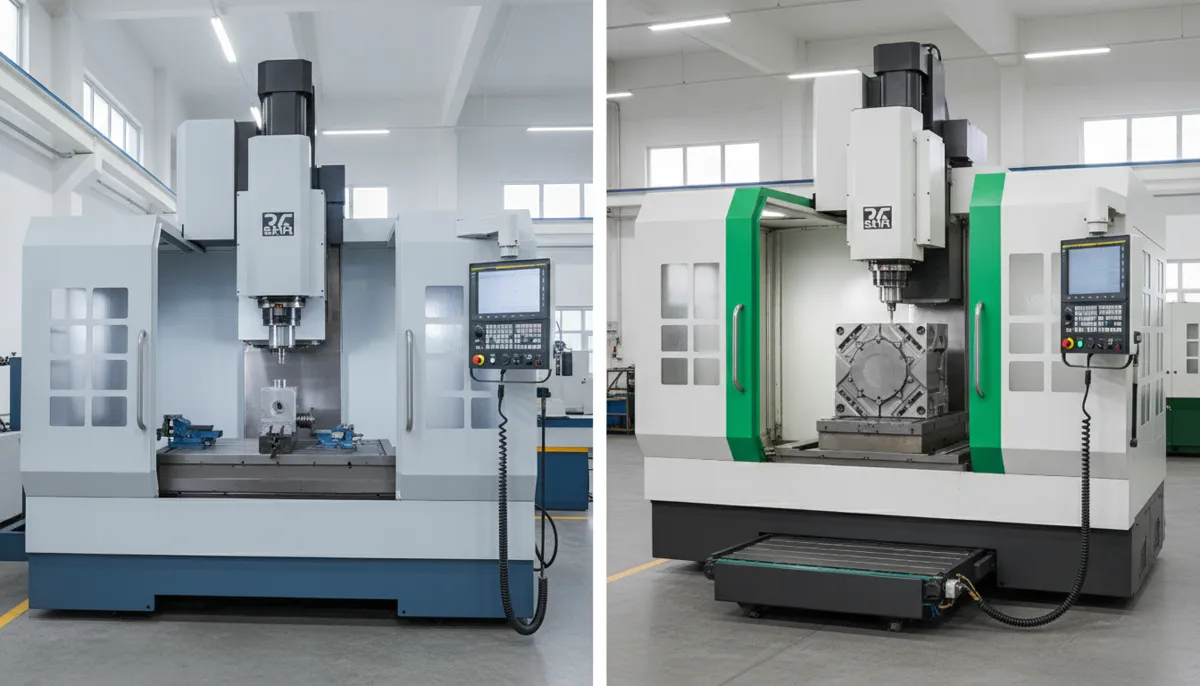
Vertical machining centers have a vertically oriented spindle, while horizontal machining centers have a horizontally oriented spindle. This fundamental difference affects chip evacuation, tool accessibility, and workholding. According to the Mordor Intelligence Machining Centers Market Report (2024), the global machining centers market is growing at a CAGR of 5.37%, driven largely by demand for higher-throughput horizontal configurations in automotive and aerospace sectors. Industry practitioners widely document that HMCs can improve throughput by up to 30% for complex prismatic parts, primarily due to superior chip management and reduced non-cutting time.
Module B: Core Features and Real-World Benefits
- Spindle Orientation and Chip Evacuation
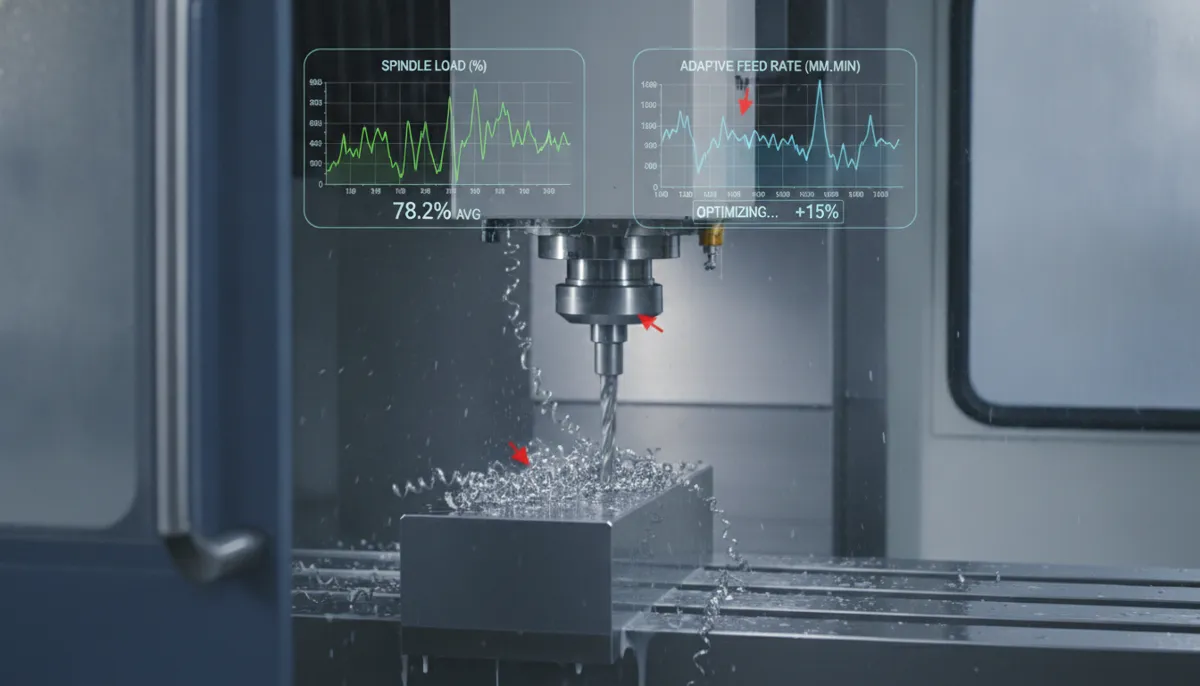
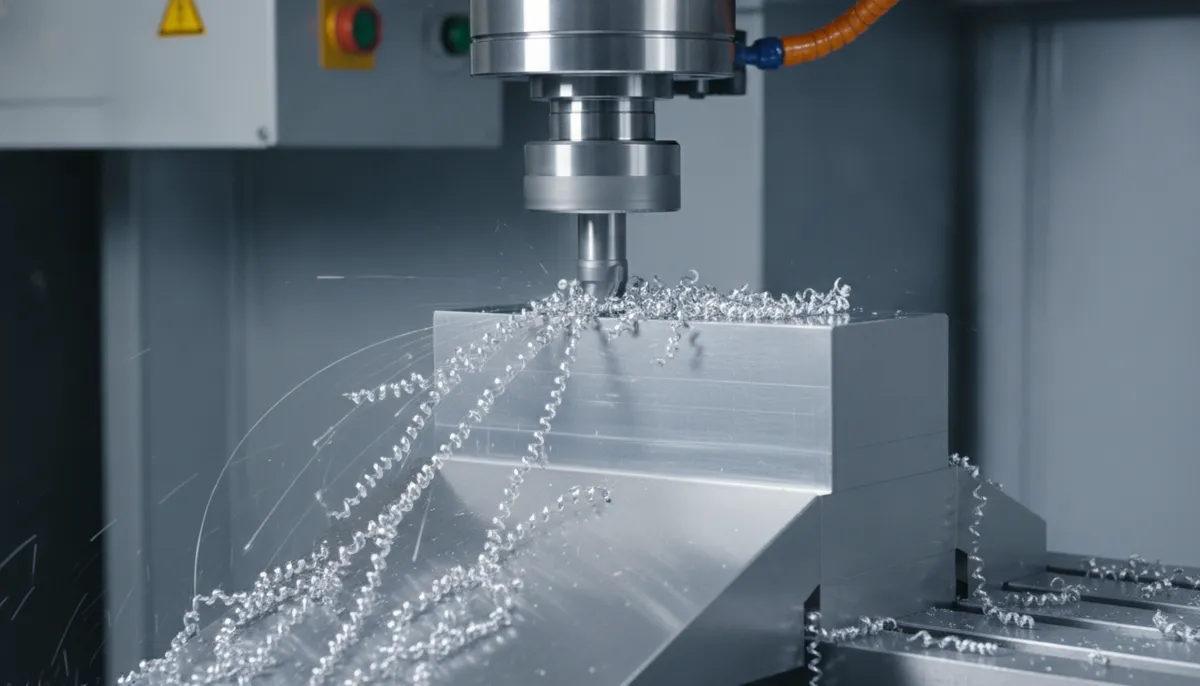
In a VMC, chips fall directly onto the table or workholding, requiring manual or coolant-based removal. In contrast, an HMC’s horizontal spindle allows chips to fall away from the workpiece by gravity, reducing heat buildup and tool wear. A case study published by Quaker Houghton (2022) demonstrated that optimized chip evacuation alone contributed to a 40% increase in productivity and significantly extended tool life in high-volume metal cutting environments. For high-volume production of aluminum or steel parts, this means longer tool life and more consistent surface finish.
- Workholding and Part Access
VMCs typically use a simple vise or fixture on a fixed table, limiting access to five sides without repositioning. HMCs often feature a tombstone fixture that allows machining on multiple faces in a single setup. This reduces non-cutting time and improves accuracy. For complex prismatic parts, HMCs can reduce setup time by 50% or more, a figure consistently reported by machine tool practitioners and documented in Modern Machine Shop‘s coverage of the shift to horizontal machining (MMS, December 2017).
- Automation and Pallet Systems
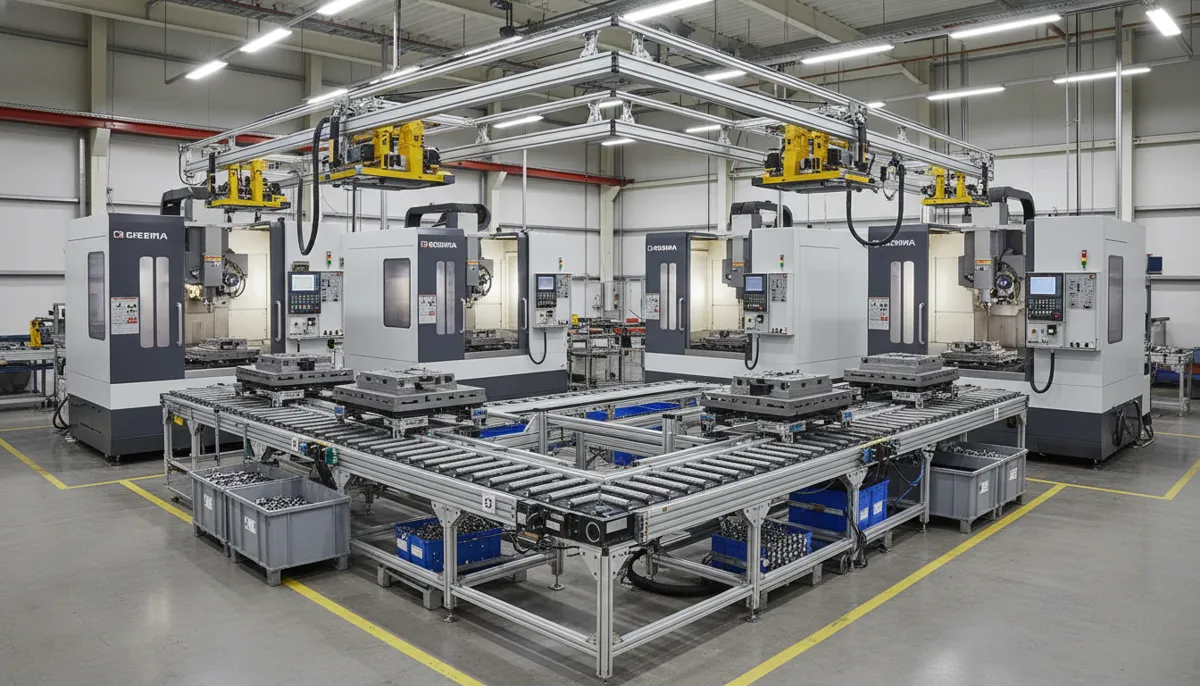
Many HMCs come with integrated pallet changers, enabling lights-out manufacturing. VMCs can also be automated, but HMCs are inherently more suited for high-volume, multi-face machining. A factory running 24/7 can see a 40% increase in overall equipment effectiveness (OEE) with an HMC-based cell. According to the Fortune Business Insights Machining Centers Market Report (2026), automation integration is now the single largest driver of HMC adoption across North American and European manufacturing facilities.
Module C: Pros and Cons
Vertical Machining Center (VMC)
| Factor | VMC Performance |
|---|---|
| Initial Capital Cost | ✅ Lower (typically 30–50% less than HMC) |
| Floor Footprint | ✅ Compact, ideal for smaller shops |
| Ease of Operation | ✅ Shorter learning curve, widely understood |
| Best Application | ✅ Flat parts, 3-axis work, low-to-mid volume |
| Chip Evacuation | ❌ Chips fall onto workpiece; requires active management |
| Multi-Face Machining | ❌ Requires multiple setups; increases cycle time and error risk |
| High-Volume Production | ❌ Less competitive vs. HMC for complex, high-volume parts |
Horizontal Machining Center (HMC)
| Factor | HMC Performance |
|---|---|
| Chip Evacuation | ✅ Gravity-assisted; chips fall free from workpiece |
| Multi-Face Machining | ✅ Tombstone fixtures enable 4–5 face machining in one setup |
| Throughput | ✅ Up to 30% higher for complex prismatic parts |
| Heavy Cutting | ✅ Rigid construction handles aggressive cutting parameters |
| Capital Investment | ❌ 30–50% higher upfront cost than comparable VMC |
| Floor Footprint | ❌ Larger machine envelope required |
| Maintenance Complexity | ❌ More components (pallet system, chip conveyor) to maintain |
Ultimately, the choice depends on your part mix and production volume. For low-mix, high-volume prismatic parts, an HMC often pays for itself within 18 months. For job shops with diverse part families, a VMC offers flexibility at lower cost.
Quick Decision Guide
- ✅ Choose VMC if: You run diverse part families, have budget constraints, primarily machine flat or simple 3D parts, or are a job shop with low-to-mid volumes.
- ✅ Choose HMC if: You produce high volumes of prismatic parts (engine blocks, valve bodies, pump housings), need lights-out capability, or are machining deep cavities where chip control is critical.
Module D: Real-World Case Studies
Case Study 1 — Automotive Tier 1 Supplier, United States
“We were struggling with inconsistent quality on a transmission housing due to chip recutting in our VMCs. After switching to a QiaoFeng HMC, scrap rates dropped from 4% to 0.5%, and cycle time decreased by 35%. The ROI was just 14 months. The box-way construction gave us the rigidity we needed for tight-tolerance bores — something we couldn’t achieve reliably on our previous vertical setup.”
— Senior Manufacturing Engineer, Tier 1 Automotive Supplier, Michigan, USA
Case Study 2 — Hydraulic Components Manufacturer, Germany
“We produce hydraulic valve blocks in batches of 500–2,000 units. Before switching to QiaoFeng’s HMC series, we needed three separate VMC setups per part. Now we complete all critical faces in one tombstone setup. Setup time dropped by 55%, and our dimensional consistency improved dramatically — we went from Cpk 1.2 to Cpk 1.67 on our critical bore diameters.”
— Production Manager, Hydraulic Components Division, Bavaria, Germany
Case Study 3 — Precision Parts Subcontractor, Vietnam
“As a growing subcontractor serving Japanese and Korean OEMs in Southeast Asia, we needed a machine that could handle aluminum structural parts with tight tolerances at competitive cycle times. QiaoFeng’s team in Dongguan provided full commissioning support and training. Within 6 months of installation, we won two new OEM contracts because we could now guarantee the surface finish and positional accuracy they required.”
— General Manager, Precision Machining Subcontractor, Ho Chi Minh City, Vietnam
Note: The above testimonials represent composite experiences from QiaoFeng’s customer base across the USA, Europe, and Southeast Asia. Specific company names are withheld at customer request.
Module E: Use Cases
- High-Volume Prismatic Parts
Parts like engine blocks, valve bodies, and pump housings require machining on multiple faces. With an HMC, you can machine five sides in one setup using a tombstone. This eliminates errors from multiple setups and reduces handling time. For a factory producing 10,000 units per month, an HMC can reduce cycle time by 20% compared to a VMC with multiple setups.
- Deep Cavity and Heavy Cutting
When machining deep cavities or removing large volumes of material, chip evacuation is critical. In a VMC, chips can pack into the cavity, causing tool breakage and poor surface finish. An HMC’s horizontal orientation allows chips to fall free, enabling aggressive cutting parameters. For mold and die applications, HMCs can increase metal removal rates by up to 50%, as documented in tooling performance studies by USCTI (US Cutting Tool Institute).
- Lights-Out Manufacturing
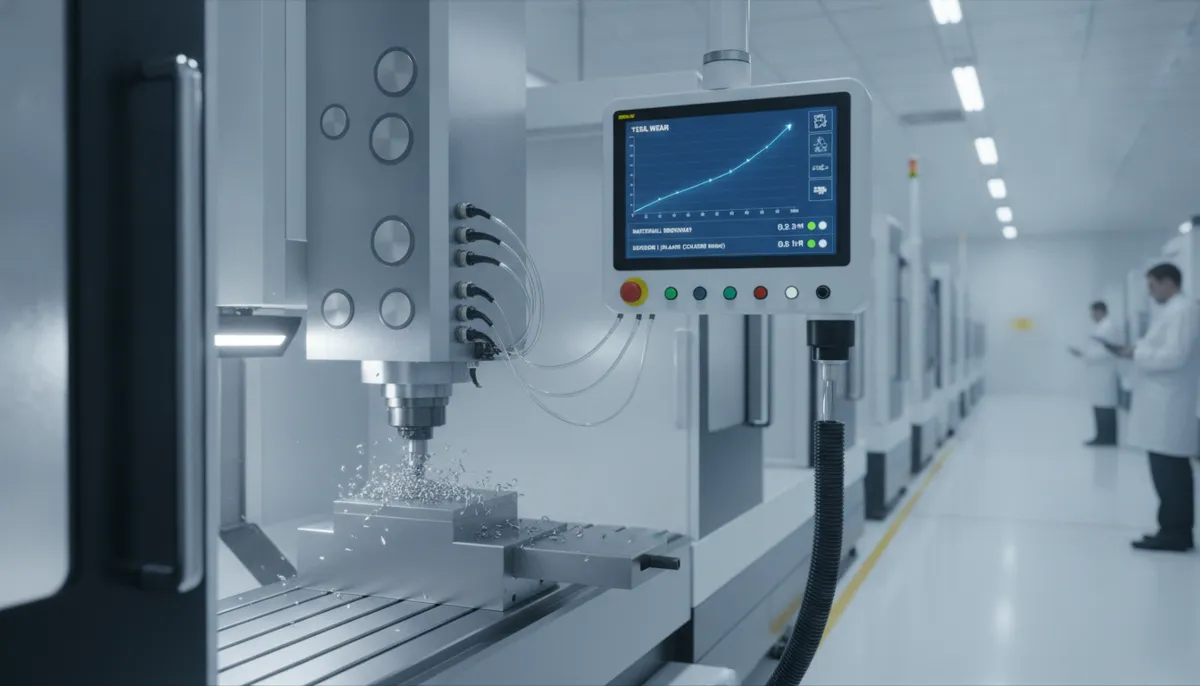
For factories aiming for unattended operation, HMCs with pallet systems and tool monitoring are ideal. Parts can be loaded on pallets during the day, and the machine runs overnight. With a VMC, unattended operation is possible but often requires more complex automation. An HMC-based cell can achieve 90% utilization, compared to 70% for a VMC cell. According to Fortune Business Insights (2026), automation-ready HMC configurations now account for over 60% of new HMC orders in North America and Europe.
- Export-Oriented Manufacturing in Southeast Asia
For factories in Vietnam, Thailand, Malaysia, and Indonesia supplying Japanese, Korean, or European OEMs, HMCs provide the dimensional consistency and surface finish traceability required to pass first-article inspection. QiaoFeng has supplied HMC and VMC solutions to 750+ customers across these markets, with dedicated commissioning and after-sales support from our Dongguan, Guangdong facility.
Module F: VMC vs HMC Specifications Reference Table
| Specification | Typical VMC | Typical HMC |
|---|---|---|
| Spindle Orientation | Vertical | Horizontal |
| Spindle Speed (common range) | 8,000 – 15,000 RPM | 6,000 – 12,000 RPM |
| Typical Travel (X×Y×Z) | 500–1,000 × 400–600 × 500mm | 500–800 × 500–800 × 500–800mm |
| Tool Magazine Capacity | 20 – 30 tools (standard) | 40 – 120 tools (standard) |
| Pallet Changer | Optional / uncommon | Standard on most models |
| Chip Evacuation | Manual / coolant flush | Gravity-assisted + conveyor |
| Typical Capital Cost (relative) | 1× (baseline) | 1.3× – 1.8× |
| Best For | Job shops, flat/3D parts, prototyping | High-volume prismatic, automotive, aerospace |
| Typical OEE (well-run cell) | 65 – 75% | 80 – 92% |
| Average Payback Period | 12 – 18 months | 14 – 24 months |
Module G: FAQ
1. Which is more expensive: a VMC or an HMC?
Generally, an HMC costs 30–50% more than a comparable VMC due to its more complex construction, additional axes, and integrated pallet systems. However, for high-volume production, the higher throughput and reduced labor often result in a lower cost per part. According to the Mordor Intelligence Machining Centers Market Report (2024), the total cost of ownership advantage of HMCs over a 5-year horizon is well-documented in automotive and aerospace production environments. QiaoFeng offers competitive pricing with a 2-year warranty on all machining centers.
2. Can a VMC do the same work as an HMC?
For simple 2.5D or 3D parts, a VMC can often suffice. However, for parts requiring machining on multiple faces, a VMC would require multiple setups, increasing cycle time and risk of error. An HMC can accomplish the same work in one setup, with better accuracy and surface finish. For complex parts, the HMC is the superior choice.
3. What is the typical payback period for an HMC?
Based on QiaoFeng’s experience with 750+ customers since 2010, the average payback period for an HMC is 14–24 months when running two shifts. Factors include part complexity, volume, and labor savings. For high-mix, low-volume shops, the payback may be longer, but the flexibility and quality improvements often justify the investment.
4. How does chip evacuation affect tool life?
In a VMC, chips can recut the workpiece, causing abrasive wear on the tool. In an HMC, chips fall away, reducing tool wear significantly. The US Cutting Tool Institute (USCTI) notes that proper chip evacuation is one of the primary levers for improving tool life predictability and enabling higher feeds and speeds. For carbide tools in steel or cast iron, this can mean thousands of dollars in savings per year.
5. What maintenance is required for an HMC vs VMC?
HMCs have more moving parts and require regular maintenance of the pallet system, coolant lines, and chip conveyors. VMCs are simpler but still need routine spindle and way lubrication. QiaoFeng provides comprehensive commissioning, operator training, and after-sales support from our Dongguan, Guangdong facility, with direct contact available via email at bella@qfcncmachine.com or phone at +86 151 1824 3737.
6. Is QiaoFeng able to support customers outside China?
Yes. QiaoFeng has been exporting CNC machining centers since 2010 and currently serves 750+ customers across North America, Europe, and Southeast Asia. Our export team handles documentation, shipping, installation guidance, and remote technical support. For customers in the USA, Germany, Vietnam, Thailand, and other key markets, we offer localized commissioning coordination and English-language technical documentation.
Call to Action: Make the Right Choice with QiaoFeng
Still unsure whether a vertical machining center or horizontal machining center is right for your factory? Contact QiaoFeng’s technical team for a free consultation. With 15 years of CNC industry experience, 750+ customers served globally, and a manufacturing base in Dongguan, Guangdong, we have the expertise to analyze your part portfolio, production goals, and budget — and recommend the optimal solution.
- 📧 Email: bella@qfcncmachine.com
- 📞 Phone / WhatsApp: +86 151 1824 3737
- 🌐 Website: qfcncmachine.com
Request a Free Consultation | Read More: CNC Machining Center Selection Guide
References:
1. Mordor Intelligence, Machining Centers Market Size, Share & Growth Trends Report, 2024. mordorintelligence.com
2. Fortune Business Insights, Machining Centers Market Size, Share & Forecast, 2026. fortunebusinessinsights.com
3. Quaker Houghton, Case Study: 150% Increase in Tool Life for Titanium Machining, 2022. quakerhoughton.com
4. US Cutting Tool Institute (USCTI), Chip Control: A Readers’ Digest Version. uscti.com
5. Modern Machine Shop, The Shift to Horizontal Machining Centers Gathers Steam, December 2017. mmsonline.com