If you’re launching a small workshop or scaling a product line, choosing the right desktop CNC machine is one of the most important decisions you’ll make. According to Research Nester’s Desktop CNC Machines Market Report (2026), the global desktop CNC machine market was valued at over USD 2.56 billion in 2025 and is projected to exceed USD 5.53 billion by 2035, growing at a CAGR of over 8%—driven largely by SME and startup adoption. At QiaoFeng, founded in 2010 and based in Dalingshan Town, Dongguan, Guangdong, we’ve helped over 750+ small businesses across Europe, North America, and Southeast Asia find the right CNC fit. This guide will help you decide based on real-world needs—not hype.
Desktop CNC Machine vs Industrial CNC: Understanding the Core Difference
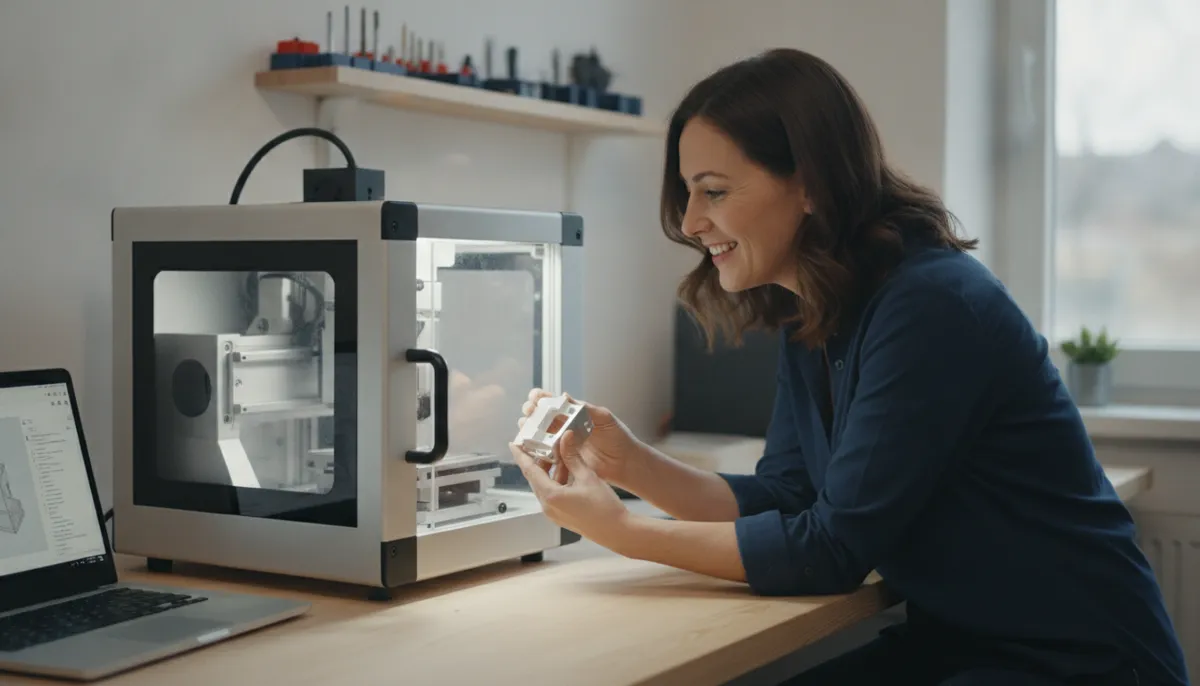
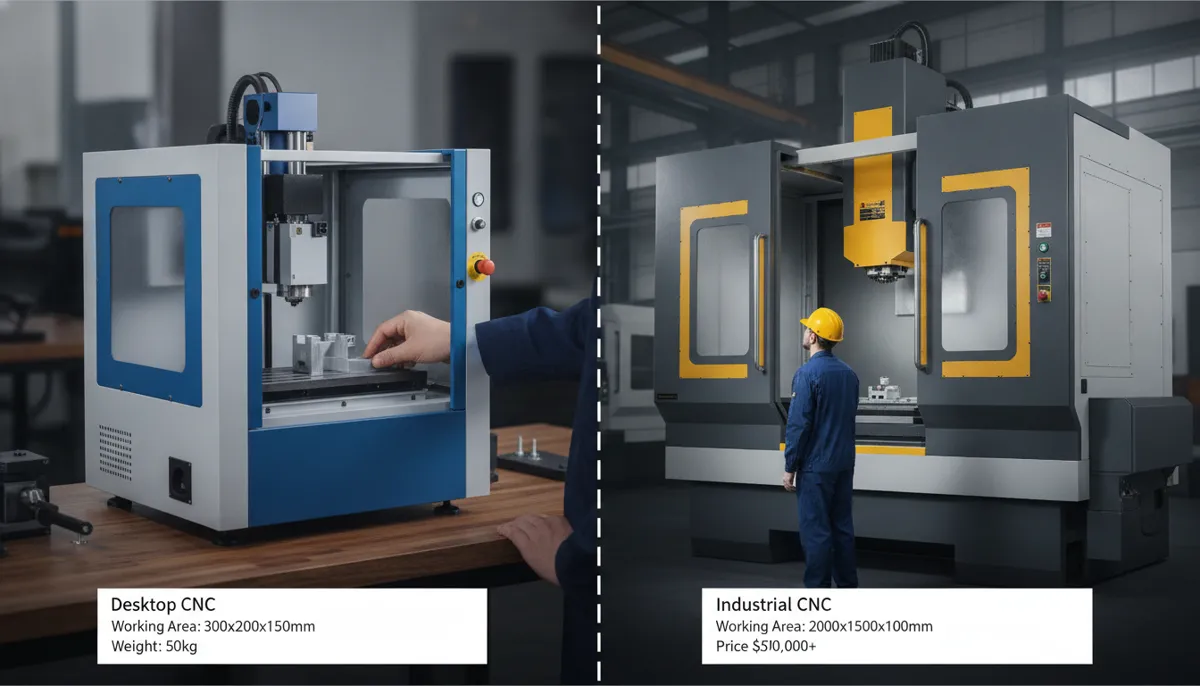
The fundamental gap isn’t just size—it’s about precision, rigidity, material capacity, and cost per part. A desktop CNC machine typically offers a working area of 300×200×150mm, spindle speeds up to 24,000 RPM, and accuracy around ±0.05mm. Industrial CNCs offer larger beds (2000×1500mm+), higher spindle torque, and micron-level precision. But for a startup making prototypes, small batches, or custom parts, the desktop’s limitations may never be a bottleneck.
According to Grand View Research’s CNC Router Machine Market Report (2024), the global CNC router market was valued at USD 714 million in 2024 and is projected to grow at a CAGR of 6.6% through 2030—with small-format desktop machines accounting for a significant and growing share of that expansion.
Industry data also points to two widely acknowledged limitations of desktop models: they struggle with heavy cutting of hard metals like titanium and stainless steel due to lower spindle power and frame rigidity, and they require basic proficiency in CAD/CAM software for optimal operation. For most early-stage businesses working with wood, plastic, and soft metals, these tradeoffs are well worth the cost savings.
Pros and Cons of Desktop CNC Machines for Small Businesses
- Pros:
- Lower upfront cost (typically $2,000–$8,000 vs $50,000+ for industrial-grade equipment)
- Compact footprint fits any workshop, garage, or makerspace setup
- Lower power consumption, compatible with standard 110V/220V household outlets
- Gentler learning curve for beginners and small teams vs industrial systems
- Faster ROI for low-to-mid volume production runs and custom projects
- Cons:
- Smaller work envelope limits maximum single-part size
- Lower material removal rates than high-torque industrial spindles
- Limited rigidity for heavy cutting of hard metals like stainless steel and titanium
- Fewer built-in automation and pallet-changing options
- Requires basic CAD/CAM knowledge to achieve optimal machining results
While desktop CNC machines can’t match industrial speed for high-volume mass production, they excel in rapid prototyping and low-volume customization. For the majority of small workshops and early-stage product companies, a desktop CNC machine is the smarter financial choice.
How a Desktop CNC Machine Helps Startups Scale Profitably
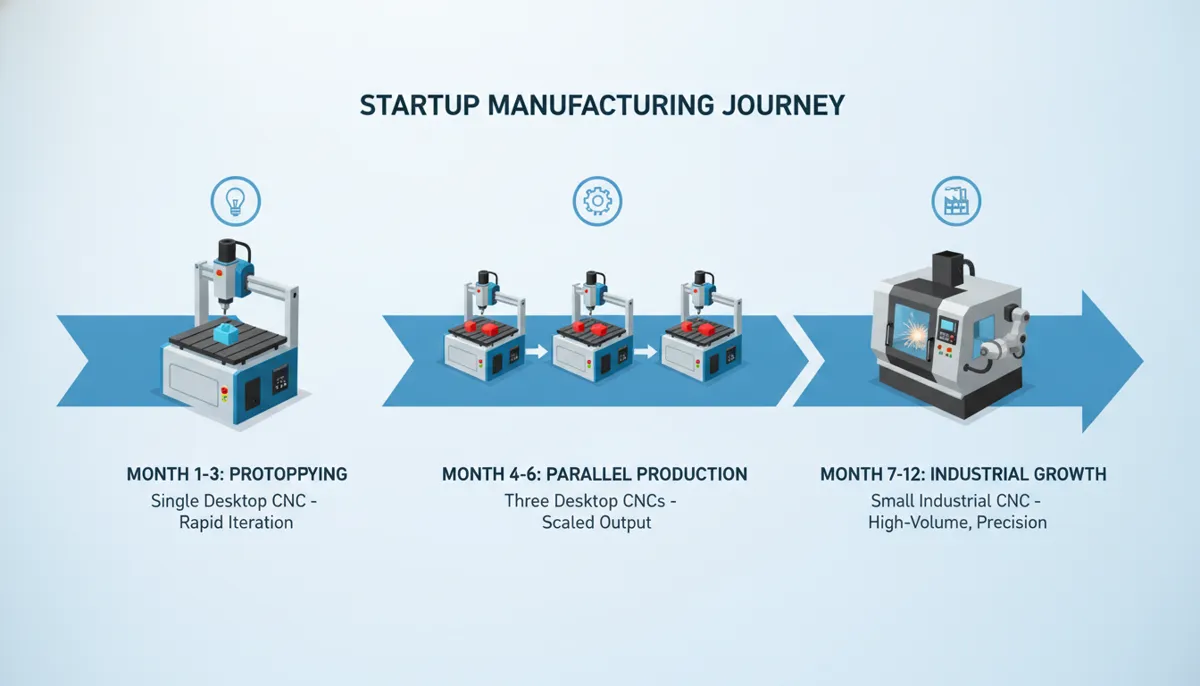
Many of our customers begin with a single QiaoFeng desktop CNC machine to validate their product and test market demand. As order volume grows, they add 2–3 units for parallel production before moving up to industrial equipment. This staged growth path minimizes upfront risk and aligns equipment investment directly with revenue.
For reference, a typical two-person custom parts shop running 3 desktop units can handle 200–500 unit production runs consistently, with on-time delivery rates above 90%—all without the overhead of a full industrial facility.
What Our Customers Say About QiaoFeng Desktop CNC Machines
“We run a small custom signage shop in Los Angeles. QiaoFeng’s desktop CNC machine handles our acrylic and aluminum jobs perfectly. We’ve cut our production time by 40% and the after-sales support from Bella’s team has been outstanding.”
— James R., Owner, SignCraft Studio, California, USA
“As a furniture prototype workshop in Berlin, we needed a reliable benchtop CNC that could handle hardwood and MDF. QiaoFeng delivered exactly that. The machine has been running daily for over two years with zero major issues.”
— Lukas M., Production Manager, FormLab Werkstatt, Germany
“We source CNC equipment for our electronics enclosure prototyping line in Ho Chi Minh City. QiaoFeng’s desktop CNC machine gave us the precision we needed at a price that made sense for our scale. Highly recommend for Southeast Asian SMEs.”
— Nguyen T.H., Engineering Lead, VietTech Components, Vietnam
Key Desktop CNC Machine Features for Small Business Workshops
- Spindle Power and Speed: Look for at least 1.5 kW and 10,000–24,000 RPM variable speed. This allows efficient cutting of aluminum and engineering plastics. QiaoFeng’s desktop CNC machines feature a water-cooled spindle that runs quieter and lasts longer—reducing costly downtime on production days.
- Frame Rigidity: A cast-iron or welded steel frame minimizes vibration during cutting. Our internal tests show that a rigid frame improves surface finish by up to 30% compared to aluminum extrusion frames—a critical factor when delivering finished parts to clients.
- Control System: Choose a desktop CNC machine with a proven controller such as Mach3 or LinuxCNC. It should support standard G-code and offer USB/Ethernet connectivity to simplify your design-to-production workflow.
- Safety Features: Emergency stop, spindle cover, and hardware limit switches are non-negotiable. QiaoFeng’s desktop CNC machines include a CE-certified safety package as standard—meeting EU and international export compliance requirements.
- After-Sales Support: A desktop CNC machine is only as good as the support behind it. QiaoFeng provides a 2-year warranty on all machines, along with detailed English manuals, video tutorials, and lifetime technical support for overseas customers. On-site installation and training are available upon request.
FAQ: Desktop CNC Machine for Small Business — Common Questions Answered
Can a desktop CNC machine cut aluminum?
Yes. Most desktop CNC machines with at least a 1.5 kW spindle and a rigid steel frame can cut aluminum effectively. You’ll need to use lighter passes (0.5 mm depth of cut) and dial in appropriate feeds and speeds. For stainless steel or hardened tool steel, an industrial-grade CNC is still recommended due to the higher rigidity and torque requirements.
What materials can a desktop CNC machine cut?
Desktop CNC machines work well with a wide range of common workshop materials: soft woods, MDF, plywood, acrylic, PVC, PCB, and soft metals like aluminum, brass, and copper. With proper tooling and reduced feed rates, they can also handle thin-gauge steel. Hardened steel, titanium, and thick dense metals are not recommended for desktop equipment.
How much does a good desktop CNC machine cost?
Entry-level hobbyist models start around $1,500, but for reliable small-business production, expect to invest between $3,000 and $8,000 for a machine with a rigid frame, water-cooled spindle, and dependable control system. Industrial desktop mills optimized for metal can range from $8,000 to $20,000 depending on configuration.
How long does it take to learn a desktop CNC machine?
With online resources, community forums, and manufacturer support, most beginners can produce their first finished part within one week. QiaoFeng provides comprehensive video tutorials and documentation included with every machine purchase. Full operational mastery typically takes 3–6 months, but basic production-ready operation is accessible from day one.
What is the ROI timeline for a desktop CNC machine?
Based on QiaoFeng customer data collected since 2010, businesses running their desktop CNC machine at 50% capacity typically break even within 6–12 months when accounting for material costs, labor, tooling wear, and overhead. For custom part shops billing $40–$60 per machine hour, consistent weekly usage can deliver positive returns within the first year.
How does a desktop CNC machine compare to a benchtop CNC mill?
The terms are often used interchangeably. A benchtop CNC mill typically refers to a compact milling machine optimized for metal working, while a desktop CNC machine may cover routing, engraving, and light milling across wood, plastic, and soft metals. QiaoFeng offers both configurations—contact our team to identify the right spec for your material and application.
Can I upgrade from a desktop CNC machine to industrial later?
Absolutely. Many successful businesses start with a desktop CNC machine to validate their product and build their customer base, then scale to larger industrial systems as order volume grows. We’ve guided 750+ businesses through this exact growth path since 2010, and our team can help you plan a staged upgrade roadmap that fits your business trajectory.
Conclusion: Choose the Right Desktop CNC Machine for Your Small Business
Whether you’re a first-time maker or a growing B2B supplier, aligning your CNC equipment with your actual production needs is the key to profitability. For most startups and small workshops, a desktop CNC machine offers the best balance of cost, capability, and flexibility—without the financial risk of over-investing in industrial equipment before demand justifies it.
QiaoFeng has been manufacturing and exporting CNC machines since 2010, serving 750+ customers across the US, Europe, and Southeast Asia from our factory in Dalingshan Town, Dongguan, Guangdong. Our desktop CNC machines come with a 2-year warranty, free technical support, and full quality inspection before shipment. Quality issues confirmed upon delivery are eligible for return and replacement; non-quality-related returns are not accepted. Bella and our team are ready to help you find the exact specification for your workshop.
Ready to Find Your Perfect Desktop CNC Machine? Contact QiaoFeng Today
Don’t let indecision slow your business down. Our experts will help you choose the right desktop CNC machine for your specific materials, part sizes, and production volume. Get a personalized quote and see how QiaoFeng’s machines have helped over 750+ small businesses succeed since 2010.
📧 Email: bella@qfcncmachine.com
📞 Phone / WhatsApp: +86 151 1824 3737
🌐 Website: Contact Us — QiaoFeng CNC Machine
References
- Research Nester, Desktop CNC Machines Market Size & Share | Growth Report 2035, February 2026. Available at: researchnester.com
- Grand View Research, CNC Router Machine Market Size and Share Report, 2030, 2024. Available at: grandviewresearch.com
- Fortune Business Insights, CNC Machine Tools Market Size, Share & Industry Analysis, 2034, June 2026. Available at: fortunebusinessinsights.com
- Mordor Intelligence, Machining Centers Market Size, Share & Growth Trends Report, 2024. Available at: mordorintelligence.com
Article authored by Bella, lead editor at QFCNCMACHINE.COM and CNC industry professional with 15 years of experience in CNC machine manufacturing and export. QiaoFeng CNC is headquartered in Dalingshan Town, Dongguan, Guangdong, China.