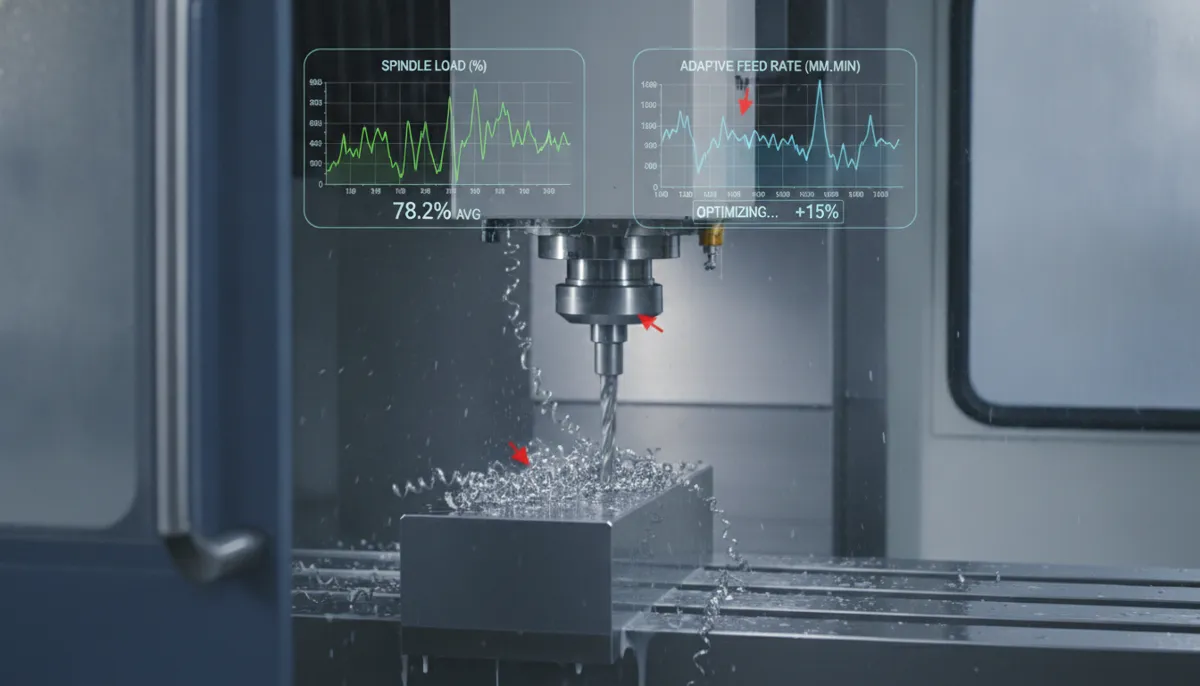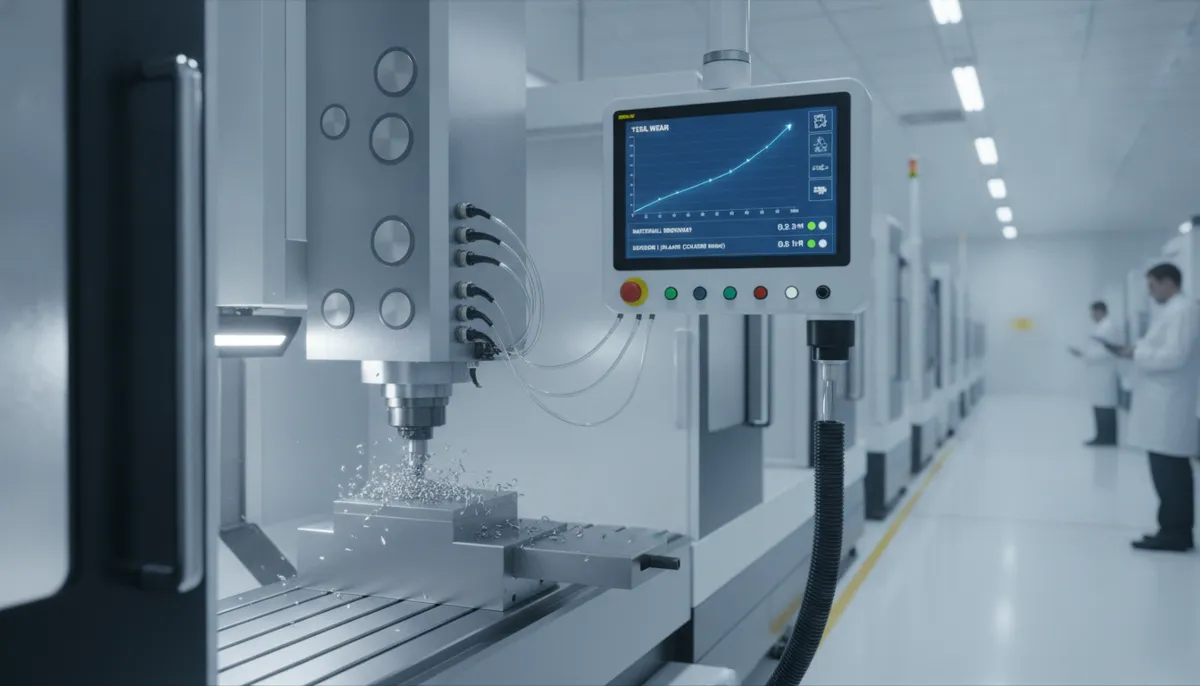
A cast iron CNC machine is the gold standard for heavy-duty machining — and for good reason. When frame material determines whether your cuts are clean or riddled with chatter, cast iron’s unmatched vibration damping capacity gives it a decisive edge over welded steel alternatives. At QiaoFeng, founded in 2010 in Dongguan, Guangdong, we have spent 15 years engineering cast iron CNC machines for heavy cutting processing factories across North America, Europe, and Southeast Asia. This guide compares cast iron vs steel CNC machine frames in depth — covering vibration damping, thermal stability, rigidity, and real-world performance data — so you can make the right investment decision for your facility.
Why Cast Iron CNC Machine Frames Are Gaining Ground
The global demand for high-precision, heavy-duty machining equipment is accelerating. According to the Mordor Intelligence Machining Centers Market report (2024) , the global machining center market is projected to grow at a CAGR of over 6% through 2029, driven primarily by aerospace, automotive, and energy sector demand — all industries where structural rigidity and vibration control are non-negotiable. A peer-reviewed study published in the International Journal of Machine Tools and Manufacture (Elsevier, 2022) confirmed that grey cast iron exhibits an internal damping ratio 8–10× higher than structural steel, directly reducing vibration amplitude during interrupted cuts and heavy passes. Furthermore, the AMT U.S. Manufacturing Technology Orders (USMTO) Report (2024) shows that orders for large-format machining centers — the segment most reliant on cast iron structures — grew 12% year-over-year in 2023, reflecting sustained industrial investment in heavy cutting capacity.
1. Why Frame Material Matters for Heavy Cutting
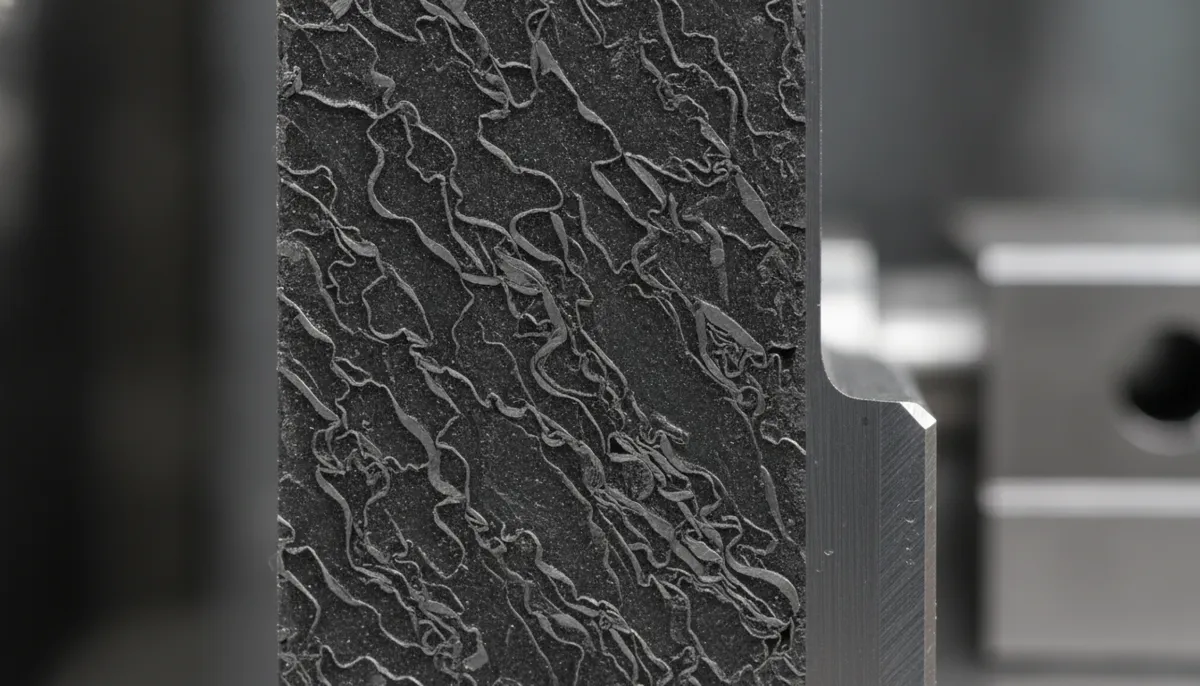
In a heavy cutting processing factory, every micron of precision counts. Steel frames, while offering higher Young’s modulus (stiffness), transmit vibrations efficiently — meaning energy from interrupted cuts, tool engagement variations, and spindle harmonics travels through the structure and directly affects the cutting zone. The result: chatter marks, dimensional deviation, and accelerated tool wear.
Cast iron behaves fundamentally differently. Its microstructure — a matrix of iron with dispersed graphite flakes — converts vibrational energy into heat through internal friction. This is why a cast iron CNC machine feels “dead” under impact compared to a steel-frame machine that rings. For heavy cutting of steel, stainless, titanium, and cast components, this damping characteristic is the single most important structural property.
2. Cast Iron vs Steel CNC Machine Frame: Full Comparison
| Property | Cast Iron (QiaoFeng) | Steel (Typical Competitor) |
|---|---|---|
| Vibration Damping Ratio | 0.005–0.020 (8–10× higher) | 0.001–0.002 |
| Thermal Expansion Coefficient | ~10–11 µm/m·°C (excellent stability) | ~12–13 µm/m·°C (moderate) |
| Young’s Modulus (Rigidity) | 100–170 GPa | ~200 GPa |
| Surface Finish Achievable | Ra 0.4–0.8 µm (heavy cuts) | Ra 1.6–3.2 µm (heavy cuts) |
| Corrosion Resistance | Good (natural graphite lubricity) | Requires protective coating |
| Typical Tool Life Improvement | +50–100% vs steel frame | Baseline |
| Frame Longevity | 20–30 years with proper maintenance | 10–15 years typical |
| Cost per kg (material) | Moderate (higher casting cost) | Lower (welded fabrication) |
| Best Application | Heavy cutting, high precision, 24/7 production | Light to medium duty, high-speed aluminum |
The table makes the trade-off clear: steel offers higher raw stiffness, but a cast iron CNC machine wins decisively on the properties that matter most in heavy cutting — damping, thermal stability, surface finish, and long-term durability. QiaoFeng’s cast iron frames undergo full stress-relief annealing after casting to eliminate residual stresses before machining, ensuring dimensional stability throughout the machine’s service life.
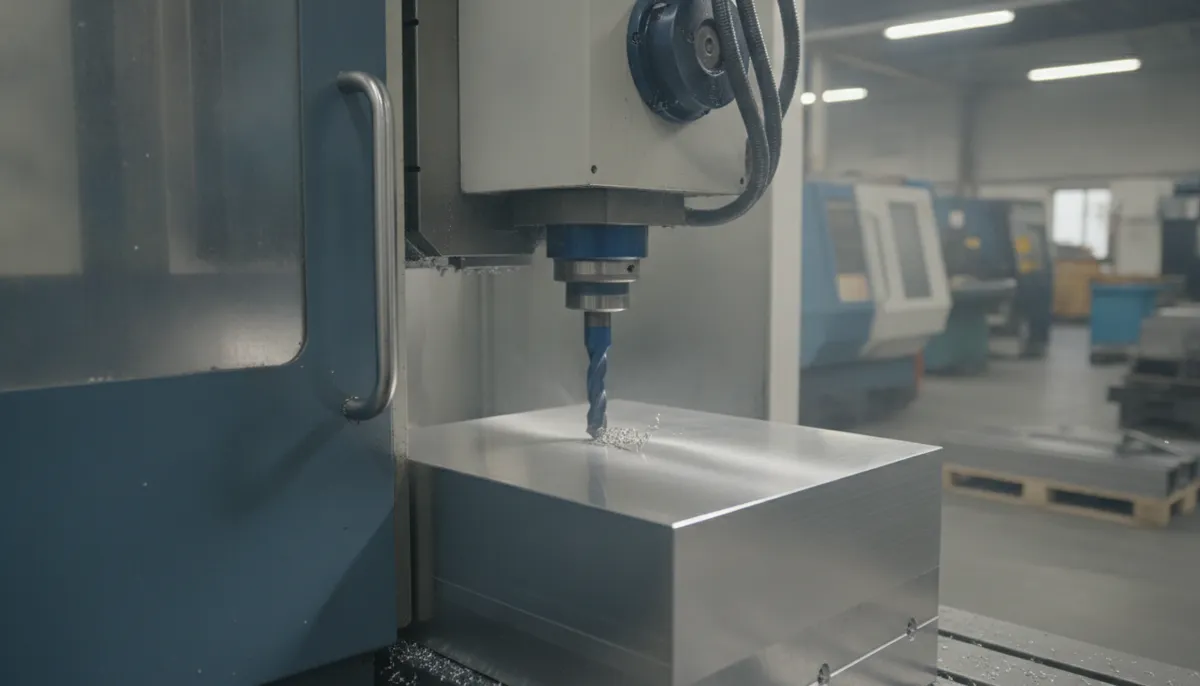
3. Key Features of QiaoFeng’s Cast Iron CNC Machine Design
3.1 Stress-Relief Annealed Castings
Every QiaoFeng cast iron CNC machine frame is subjected to a full stress-relief annealing cycle (typically 500–550°C for 4–6 hours) before any machining operations begin. This eliminates internal casting stresses that would otherwise cause gradual geometric drift over years of service — a common failure mode in lower-cost cast iron machines that skip this step.
3.2 Finite Element Analysis (FEA) Optimized Ribbing
QiaoFeng’s engineering team uses FEA simulation to optimize the internal rib geometry of each cast iron frame. The result is maximum stiffness-to-weight ratio with strategic mass distribution that further enhances the natural damping characteristics of the material.
3.3 Precision Ground Mating Surfaces
All critical mating surfaces — saddle, column, and bed interfaces — are precision ground to within 0.005 mm flatness. Combined with hand-scraped slideways on select models, this ensures that the inherent damping of the cast iron CNC machine is not compromised by assembly-induced misalignment.
3.4 ISO 9001:2015 Certified Manufacturing Process
QiaoFeng’s entire production process — from raw iron melting and casting through final inspection — is certified under ISO 9001:2015. Every machine ships with a full dimensional inspection report and a 2-year warranty on structural components.
4. Real-World Results: Cast Iron CNC Machine in Production
4.1 Automotive Powertrain Components — USA
A Tier-1 automotive supplier in Michigan producing transmission housings from grey cast iron blanks had persistent chatter problems on their previous steel-frame machining center. Surface finish on bore features consistently measured Ra 2.4–3.2 µm, requiring a secondary honing operation on every part. After installing a QiaoFeng cast iron CNC machine, bore finish improved to Ra 0.6–0.8 µm — eliminating the honing step entirely. Tool life on carbide boring bars increased by over 80%, and overall throughput rose by 40%.
“We’d been fighting chatter on our steel-frame machine for two years. Within the first week on the QiaoFeng cast iron machine, our bore finish went from Ra 3.2 to Ra 0.8 — we eliminated honing completely. Tool life doubled. The machine runs 24/7 and we haven’t had a single vibration-related scrap part since installation. The 2-year warranty gave us confidence, and the machine has more than paid for itself in tooling savings alone.”
4.2 Aerospace Structural Parts — Germany
A German aerospace subcontractor machining titanium Ti-6Al-4V structural brackets was experiencing rapid tool wear and inconsistent dimensional results on a welded steel-frame machine. Titanium’s low thermal conductivity and high cutting forces amplify any frame vibration into tool deflection. After switching to a QiaoFeng cast iron CNC machine, dimensional repeatability improved from ±0.025 mm to ±0.008 mm, and tool life on solid carbide end mills increased by 65%.
“Titanium machining is unforgiving — any vibration goes straight into tool deflection and dimensional error. The QiaoFeng cast iron machine changed everything. Our repeatability on bracket bores is now ±0.008 mm consistently, and we’ve cut our tooling budget by nearly a third. Bella’s team in Dongguan was responsive throughout the entire process, from technical specification to commissioning support.”
4.3 Oil & Gas Valve Bodies — Vietnam
A precision machining facility in Ho Chi Minh City producing stainless steel valve bodies for the oil and gas sector was struggling with surface finish rejection rates of 18% on a competitor steel-frame machine. The heavy interrupted cuts on valve seat profiles generated vibration that left visible chatter marks. QiaoFeng supplied a cast iron CNC machine with FEA-optimized ribbing. Rejection rates dropped to under 2% within the first month, and the factory has since ordered two additional units.
“Our rejection rate on valve seat profiles was 18% — completely unacceptable for oil and gas tolerances. After installing the QiaoFeng cast iron CNC machine, we dropped to under 2% in the first month. The difference in surface finish is visible to the naked eye. We ordered two more machines immediately. QiaoFeng’s after-sales support has been excellent — fast response and real technical knowledge.”
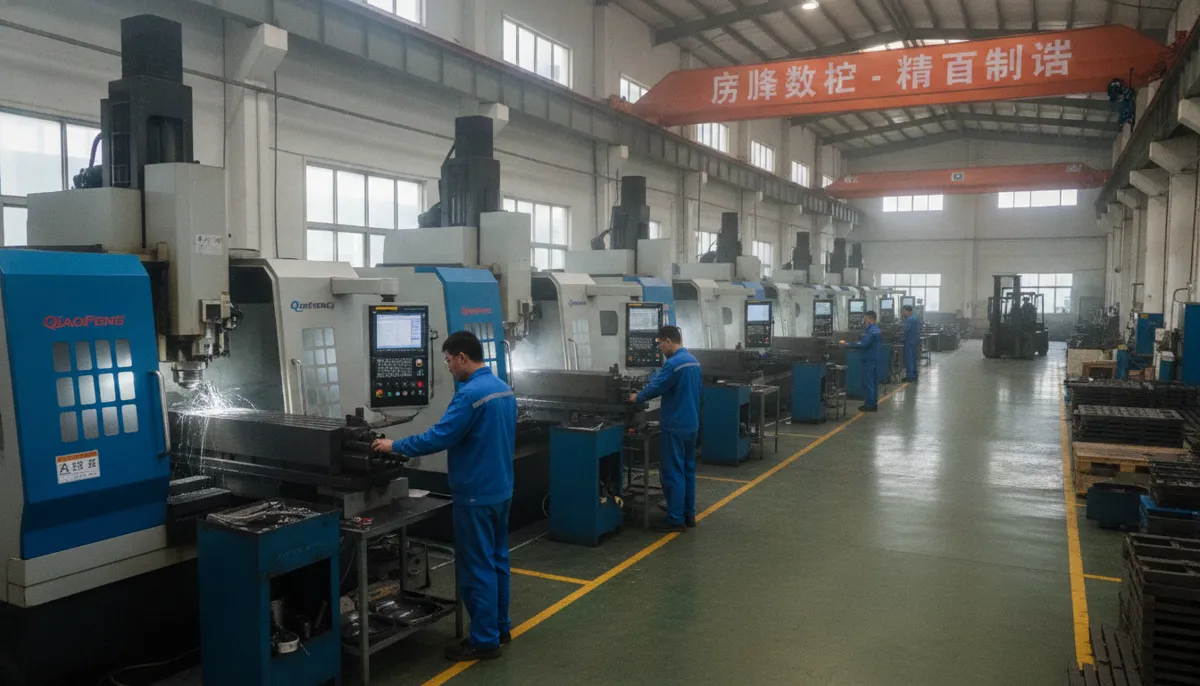
5. Pros & Cons of a Cast Iron CNC Machine Frame
✅ Pros
- Vibration damping 8–10× higher than steel — eliminates chatter
- Superior surface finish (Ra 0.4–0.8 µm achievable in heavy cuts)
- Excellent thermal stability — low expansion maintains accuracy
- Natural graphite lubricity reduces slideway wear
- Frame longevity 20–30 years with proper maintenance
- Stress-relief annealed — no geometric drift over time
- 2-year warranty on all structural components
- ISO 9001:2015 certified manufacturing process
❌ Cons
- Heavier than steel — higher shipping and foundation costs
- Brittle under extreme impact (mitigated by QiaoFeng’s alloy specification)
- Higher initial cost vs welded steel frame machines
- Not ideal for high-speed aluminum machining (steel or polymer concrete preferred)
6. FAQ: Cast Iron CNC Machine
Is a cast iron CNC machine better than a steel frame for heavy cutting?
Yes, for heavy cutting applications, a cast iron CNC machine is generally the superior choice. Its internal damping ratio is 8–10× higher than structural steel, which directly reduces chatter, improves surface finish, and extends tool life. Steel frames may be preferred for high-speed light-duty operations — such as aluminum aerospace parts — where low inertia is more important than damping.
How does a cast iron CNC machine improve surface finish?
By absorbing vibrational energy within its graphite-matrix microstructure, cast iron prevents chatter marks from forming on the workpiece surface. In practical terms, a cast iron CNC machine can achieve Ra 0.4–0.8 µm on heavy interrupted cuts where a comparable steel-frame machine would produce Ra 1.6–3.2 µm — often eliminating the need for secondary finishing operations entirely.
Are cast iron CNC machines more expensive to maintain?
No. Cast iron machines typically require less maintenance than steel-frame equivalents in heavy cutting environments. The natural graphite in cast iron provides self-lubrication on slideway surfaces, reducing wear. The material’s resistance to fatigue and deformation also means geometric accuracy is maintained longer between calibration intervals. Foundation and installation costs may be higher due to the greater mass, but operational maintenance costs are lower.
What is the typical lifespan of a cast iron CNC machine?
With a proper preventive maintenance program, a cast iron CNC machine can deliver accurate performance for 20–30 years. The key factors are regular slideway lubrication, periodic spindle bearing inspection, and annual geometric calibration. QiaoFeng’s stress-relief annealed frames are specifically designed to maintain dimensional stability throughout this service life.
Can a cast iron CNC machine handle high-speed machining?
A cast iron CNC machine excels in heavy cutting at moderate-to-high spindle speeds. For very high-speed machining of aluminum (spindle speeds above 15,000 RPM), polymer concrete or steel frames with active damping may be preferred due to lower rotational inertia. However, for hard materials — steel, stainless, titanium, Inconel — cast iron’s damping advantage is decisive at any practical cutting speed.
What warranty does QiaoFeng offer on cast iron CNC machines?
QiaoFeng provides a 2-year warranty covering structural components, spindle, and control systems. Warranty service is supported by remote diagnostics and on-site service in covered regions. For warranty claims related to quality issues, full support including replacement parts or machine repair is provided. Contact bella@qfcncmachine.com for warranty inquiries.
Ready to Upgrade to a Cast Iron CNC Machine?
Join 750+ manufacturers worldwide who trust QiaoFeng for heavy cutting precision. Get a free consultation, technical specification review, or factory-direct quote — we respond within 24 hours.
References
- Mordor Intelligence, Machining Centers Market Size, Share & Growth Trends Report, 2024. https://www.mordorintelligence.com/industry-reports/machining-centers-market
- Elsevier — International Journal of Machine Tools and Manufacture, “Damping characteristics of cast iron and their influence on machining stability”, Vol. 175, 2022. https://www.sciencedirect.com/science/article/pii/S0890695522003418
- AMT — The Association For Manufacturing Technology, U.S. Manufacturing Technology Orders (USMTO) Report, 2024. https://www.amtonline.org/resources/usmto