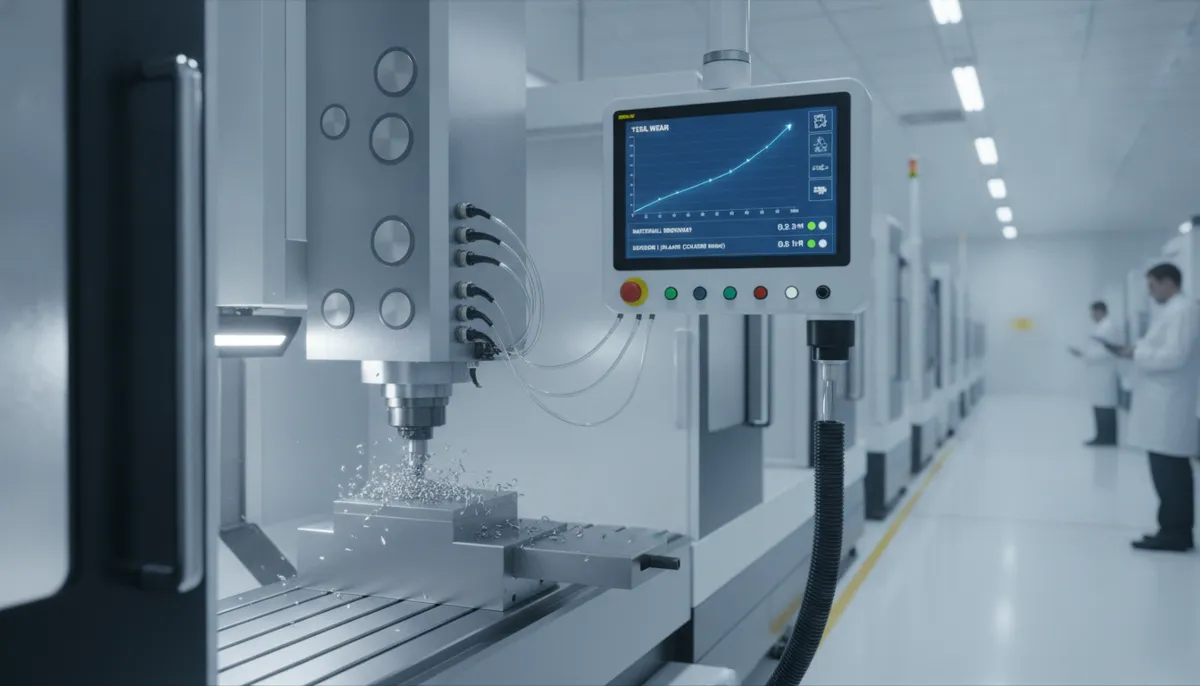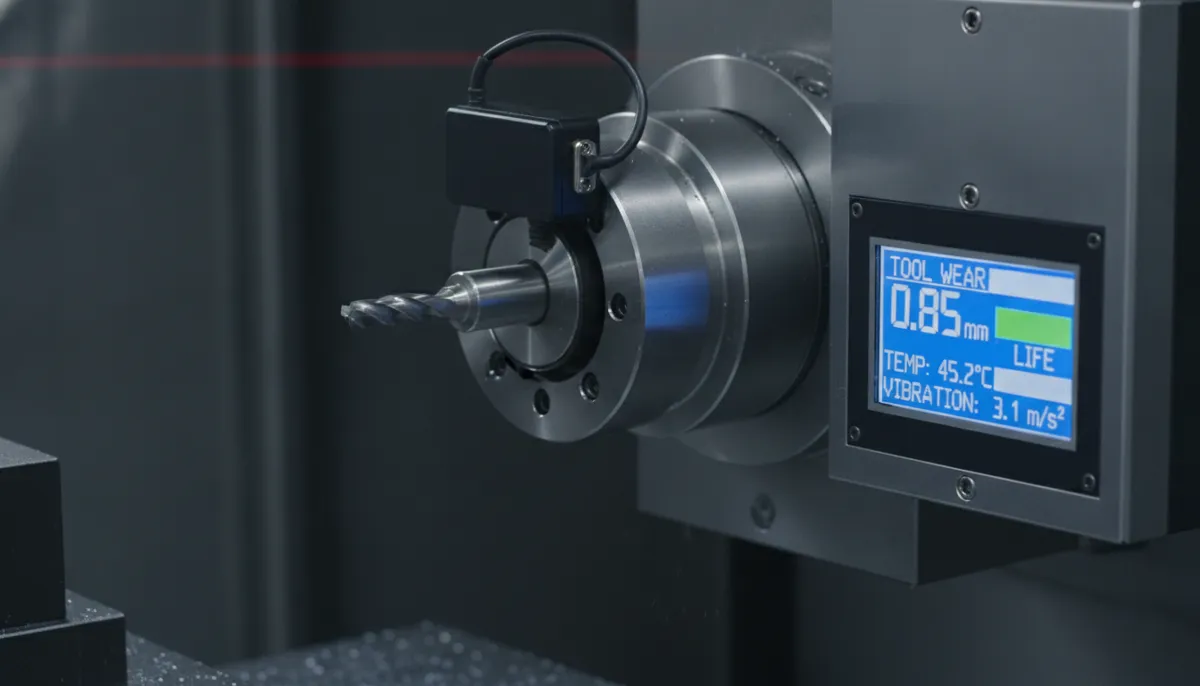
CNC tool condition monitoring helps manufacturers identify progressive tool wear, chipping, abnormal cutting conditions, and potential tool breakage before they create scrap, spindle damage, or unplanned downtime. For production teams machining high-value parts, the objective is not simply to replace a tool later—it is to make a better-informed tool-change decision at the right time.
QiaoFeng provides CNC machining solutions for customers in Europe, North America, and Southeast Asia. Our tool monitoring approach combines acoustic emission, vibration, cutting-force or spindle-load signals, and CNC process data to support more stable machining decisions. Whether you operate a new machining center or need a retrofit solution for an established shop floor, CNC tool condition monitoring can support a more proactive maintenance strategy.
1. Why CNC Tool Condition Monitoring Matters in Modern Machining
Tool condition is directly connected to surface finish, dimensional consistency, cycle stability, spindle protection, and production scheduling. A worn tool can gradually raise cutting forces and heat generation; a chipped or broken tool can damage a workpiece within seconds. Manual inspections and fixed tool-life counters remain useful, but they do not always reflect actual cutting conditions such as material variation, interrupted cuts, coolant changes, tool overhang, or changes in feed and speed.
CNC tool condition monitoring adds an in-process layer of visibility. Instead of relying only on elapsed machining time, operators and engineers can use signal changes and process trends to investigate potential wear or abnormal events. NIST publications describe process monitoring and tool-condition monitoring as important elements of on-machine measurement, process control, and manufacturing data use. [1][2]
The broader machining-center market is also evolving toward higher automation, connected production, and data-driven operational control. Public market research identifies automation and advanced manufacturing adoption among the factors shaping machining-center demand. [3]
2. How QiaoFeng CNC Tool Condition Monitoring Works
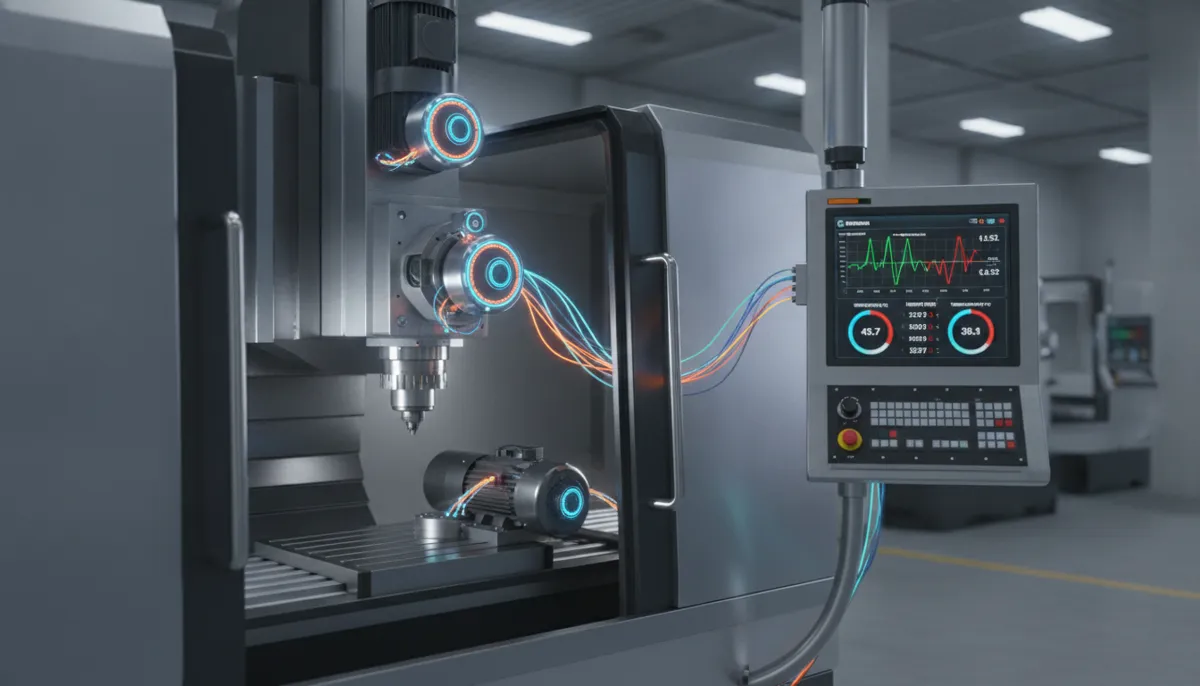
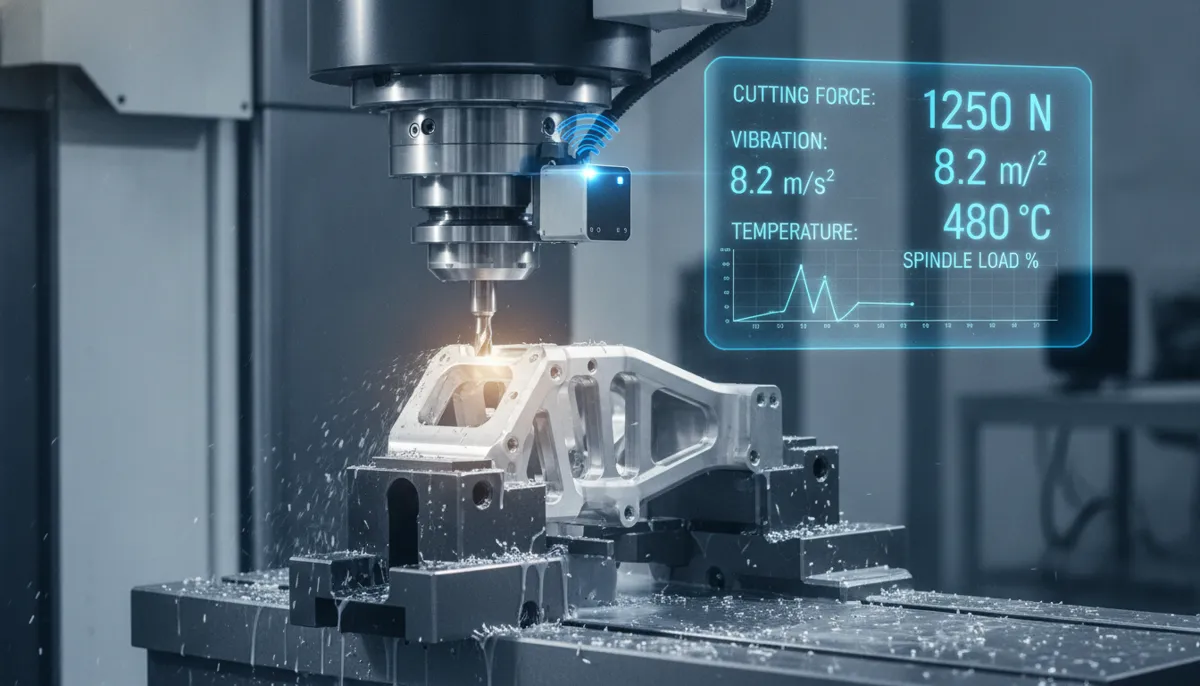
QiaoFeng’s CNC tool condition monitoring solution is designed to collect and interpret multiple machining signals in real time. A single signal can be affected by background noise or a changing process. Combining several data sources gives engineers a more complete view of the cutting process and helps distinguish normal variation from conditions that require attention.
2.1 Acoustic Emission Monitoring
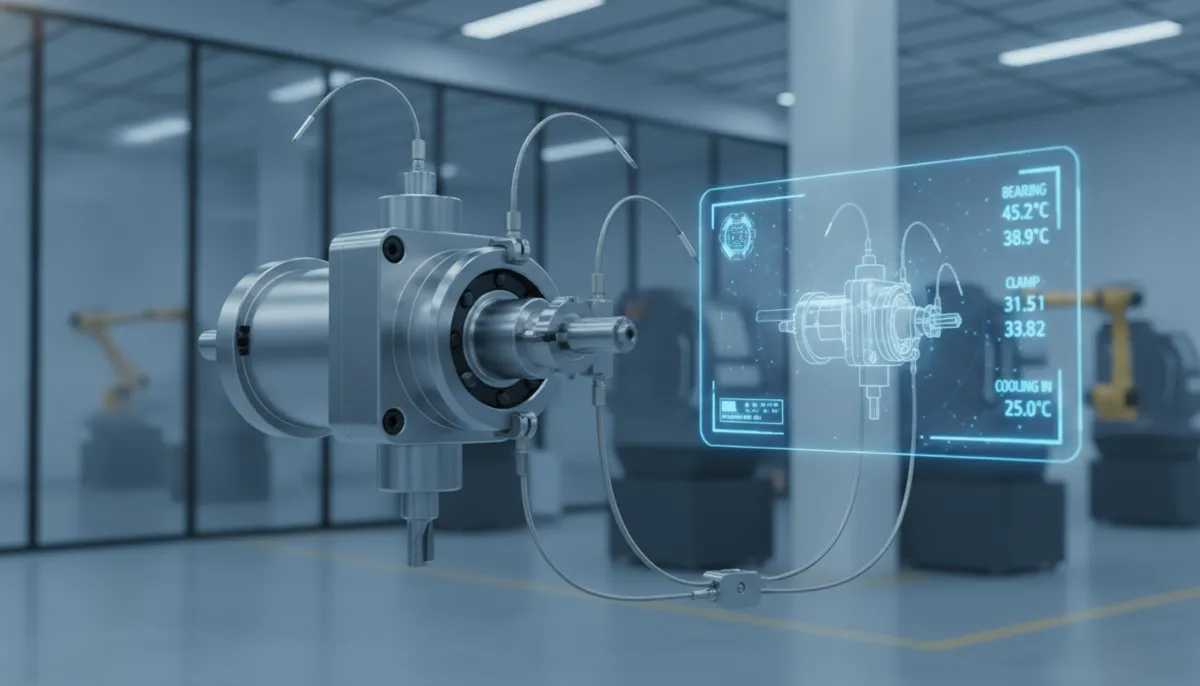
Acoustic emission sensors capture high-frequency elastic waves generated during machining. These signals can be useful for detecting sudden events such as edge chipping, micro-crack propagation, friction changes, or tool breakage. Acoustic emission is especially relevant where visual inspection is difficult or where a rapidly developing failure could cause costly scrap.
2.2 Vibration and Process Signal Monitoring
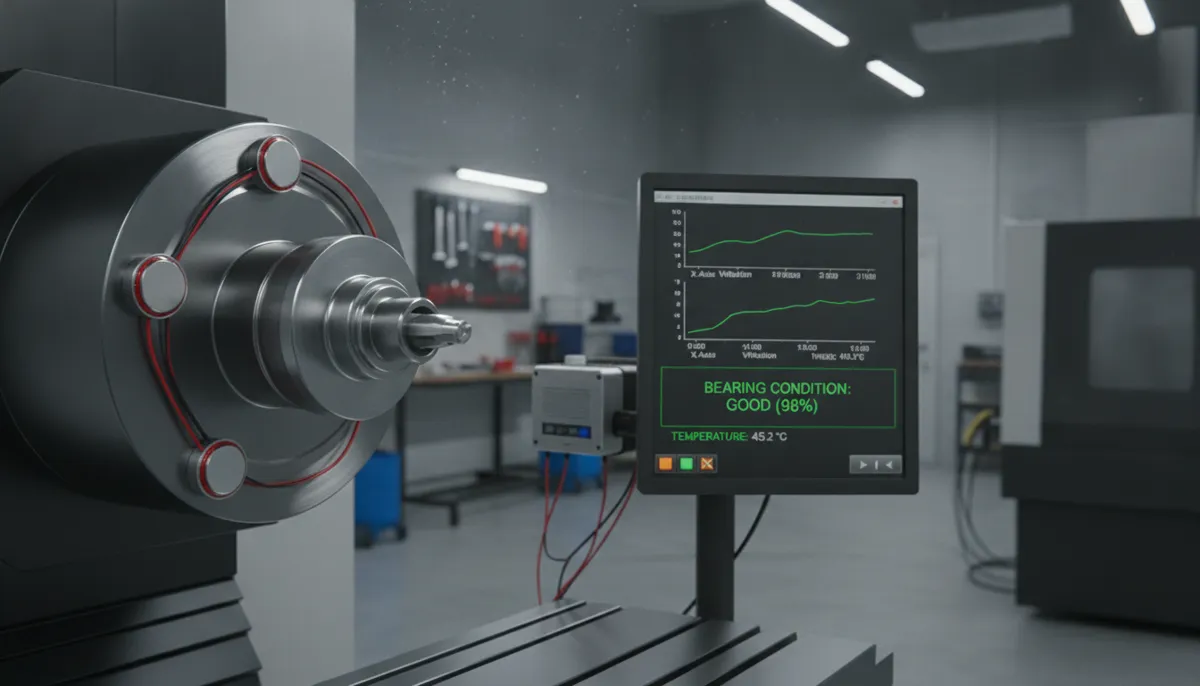
Vibration data can help identify abnormal cutting behavior, chatter risk, imbalance, or changes in machine-tool dynamics. Depending on the machine configuration, the system may also use spindle load, cutting-force data, power consumption, feed rate, spindle speed, tool number, and program status. These parameters provide essential context for interpreting sensor signals.
2.3 Multi-Sensor Fusion and Baseline Learning
Before alarms are configured, the system should establish a baseline for a stable cutting process. The baseline may differ by tool type, workpiece material, operation, spindle speed, coolant condition, and cutting parameters. The monitoring logic then evaluates deviations, trends, and abrupt signal events against this operating baseline.
This multi-sensor approach supports a practical goal: reduce false alarms while improving the chance of identifying relevant process changes. It does not eliminate the need for engineering judgment; rather, it gives operators and maintenance teams earlier information for decision-making.
3. What Can a CNC Tool Condition Monitoring System Detect?
A properly configured CNC tool condition monitoring system can support the detection and investigation of several machining conditions. The exact detection capability must be confirmed during commissioning for each process.
- Progressive tool wear: gradual changes in force, load, vibration, or acoustic signal characteristics that may indicate flank wear or deteriorating cutting performance.
- Edge chipping: sudden signal changes that can occur when a carbide cutting edge begins to fail.
- Tool breakage: high-priority abnormal events that may require an alarm, process pause, or operator inspection.
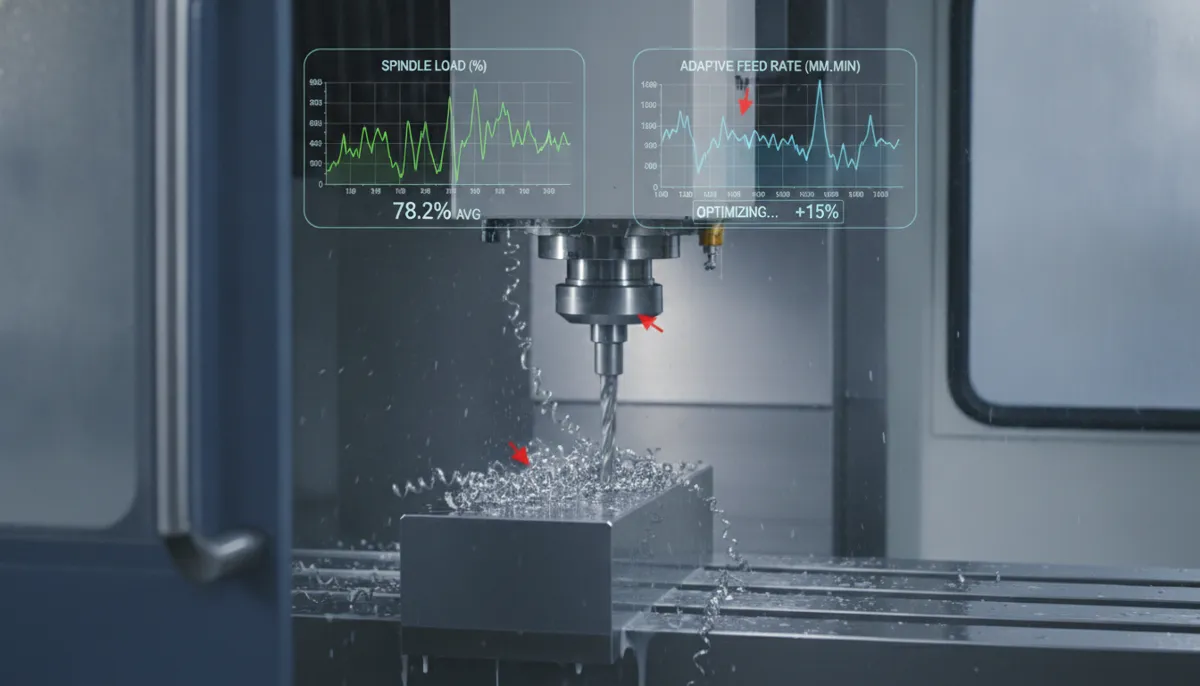
- Abnormal cutting load: load changes associated with excessive engagement, material inconsistency, chip evacuation issues, or tool damage.
- Chatter-related instability: vibration patterns that may help engineers investigate unstable machining conditions.
- Unexpected process variation: deviations from the normal signal baseline for a qualified operation.
4. Traditional Tool-Life Management vs. Real-Time Monitoring
Fixed tool-life counters are simple to implement and remain appropriate for many stable, high-volume processes. However, they may cause premature tool replacement when conditions are favorable or create risk when cutting conditions change unexpectedly. CNC tool condition monitoring adds process-specific evidence to the tool management decision.
| Approach | How It Works | Advantages | Limitations |
|---|---|---|---|
| Manual inspection | Operator visually checks the tool at intervals. | Low equipment cost; direct visual confirmation. | Interrupts production; may miss early-stage wear or events inside the machine. |
| Fixed tool-life counter | Tool is replaced after a preset number of parts, minutes, or cutting distance. | Easy to program; effective for stable and proven jobs. | Does not directly measure actual tool condition; can lead to early replacement or unexpected failure. |
| Single-sensor monitoring | Uses one signal, such as spindle load or vibration. | Lower complexity; can provide useful trend data. | May be more sensitive to process noise and operating changes. |
| CNC tool condition monitoring | Combines acoustic emission, vibration, force/load, and process data. | Supports real-time insight, event investigation, and more informed tool-change decisions. | Requires installation, signal validation, calibration, and process-specific setup. |
5. Integration, Commissioning, and Daily Use
QiaoFeng designs solutions to support integration with many CNC machining environments. The practical integration method depends on the machine model, controller, available communication interfaces, safety requirements, and desired alarm action. A retrofit may use external sensors and a standalone monitoring unit, while other projects may integrate selected machine data through available CNC communication channels.
5.1 Typical Implementation Steps
- Process review: identify critical tools, materials, operations, existing failure modes, and the cost of scrap or downtime.
- Sensor selection and placement: select suitable acoustic emission, vibration, and available machine/process signals.
- Installation: mount sensors and connect the data acquisition or monitoring hardware according to the approved machine plan.
- Baseline data collection: record stable machining cycles across representative production conditions.
- Alarm configuration: define alert thresholds, warning logic, escalation steps, and response responsibility.
- Validation: compare monitoring results with tool inspection, part quality records, and actual process outcomes.
- Continuous improvement: refine thresholds when tools, materials, programs, or machining conditions change.
Installation time varies by machine condition and integration scope. A straightforward sensor installation may be completed quickly, but a responsible deployment should always include validation time. For unusual materials, highly interrupted cuts, ceramic or diamond tooling, or complex five-axis toolpaths, additional calibration may be required.

6. Applications for Aerospace, Medical, Automotive, and General Precision Machining
CNC tool condition monitoring is most valuable when tool failure creates a high cost, such as expensive workpiece materials, tight-tolerance components, unattended production, long cycle times, or operations where a broken tool can damage a spindle or fixture.
- Aerospace machining: titanium, Inconel, stainless steel, and structural components with demanding material-removal requirements.
- Medical manufacturing: precision components where surface finish, traceability, and repeatability are important.
- Automotive and EV components: higher-volume machining where stable tool life and cycle consistency affect throughput.
- Mold and die machining: long finishing cycles and complex surfaces where tool condition can influence final quality.
- General precision machining: shops seeking earlier warning of abnormal cutting behavior or opportunities to improve tool-use consistency.
7. Customer Scenarios and Illustrative Testimonials
Transparency note: The following quotations are illustrative scenarios written to show common implementation goals in QiaoFeng’s key service regions. They are not presented as verified quotations from named customers. Replace them with authorized customer testimonials before using them as proof of performance.
“On titanium aerospace work, our main concern is not simply tool cost—it is avoiding an unexpected event late in a long machining cycle. We would use monitoring alerts as an additional decision point for operator inspection and planned tool replacement.”
“For precision components, we would want to compare monitoring trends with our inspection records. If the system helps us identify abnormal cutting behavior earlier, it can support more consistent quality planning across shifts.”
“A retrofit-friendly tool monitoring solution is attractive when we need more production visibility without replacing an existing machining center. The most important requirement is a clear alarm workflow that our operators can use confidently.”
Potential Benefits
- Supports earlier investigation of wear, chipping, and abnormal cutting events.
- Helps reduce reliance on fixed tool-life assumptions alone.
- Can support lower scrap risk on high-value parts when correctly configured.
- Provides useful process data for maintenance and manufacturing engineering teams.
- May help protect spindles, fixtures, and workpieces from severe tool-failure events.
- Can be applied to selected legacy machines through retrofit-oriented configurations.
Implementation Considerations
- Requires upfront investment in sensors, integration, software, and commissioning.
- Performance must be validated for each tool, material, and machining operation.
- Exotic materials or highly variable processes may require additional calibration.
- Monitoring is most effective when paired with a defined operator response procedure.
- It complements, rather than replaces, tool inspection and quality-control processes.
8. Frequently Asked Questions About CNC Tool Condition Monitoring
What is CNC tool condition monitoring?
CNC tool condition monitoring is the use of real-time machining signals—such as acoustic emission, vibration, force, spindle load, power, and CNC process parameters—to assess whether a cutting tool and machining process are operating within an expected condition range.
How is CNC tool condition monitoring different from manual tool wear measurement?
Manual inspection requires a planned pause and depends on visual access and inspection frequency. Real-time monitoring observes process signals while machining is taking place. It can provide earlier warning of a trend or sudden abnormal event, while manual inspection remains important for confirming physical wear and making final tool decisions.
Can the system be retrofitted to older CNC machines?
In many cases, yes. Retrofit feasibility depends on machine condition, access for sensor installation, available power and communication interfaces, safety requirements, and the level of integration required. QiaoFeng can review the machine and application before recommending a configuration.
Which cutting tools and materials can be monitored?
The approach is commonly applicable to carbide and HSS tooling. It may also be evaluated for ceramic, CBN, PCD, or diamond tooling, subject to application-specific signal validation. Material, coolant, cutting strategy, and tool geometry all influence the monitoring baseline.
Does the system automatically stop the CNC machine?
Alarm actions should be configured according to the customer’s safety and production requirements. Depending on the approved integration scope, the system may provide visual alerts, data logging, operator notifications, or a defined machine response. Any automatic stop logic should be validated during commissioning.
What maintenance is required for monitoring sensors?
Sensor condition, mounting integrity, cables, connectors, and signal quality should be checked periodically. Recommended calibration and verification intervals depend on the sensor type, operating environment, and production criticality. The monitoring plan should be included in the facility’s preventive maintenance procedure.
What warranty and refund policy does QiaoFeng offer?
QiaoFeng provides a 2-year warranty for applicable hardware, subject to the agreed warranty terms. Returns or refunds are not offered for non-quality reasons; where a confirmed product quality issue exists, QiaoFeng will assess and support an appropriate remedy according to the applicable agreement and policy.
Optimize Your Tool Monitoring Strategy With QiaoFeng
Discuss your critical machining operation, tool-failure risks, machine compatibility, and monitoring requirements with QiaoFeng. Established in 2010, we have served 750+ customers and support CNC projects for customers across Europe, North America, and Southeast Asia.
References
- National Institute of Standards and Technology (NIST), On-Machine Measurement Use Cases and Information for Manufacturing, NIST AMS 400-1. Discusses process monitoring, control, and tool-condition monitoring in manufacturing measurement use cases. View publication.
- National Institute of Standards and Technology (NIST), Estimation of Online Tool Wear in Turning Processes Using Force Measurements. Addresses online flank-wear estimation based on cutting-process dynamics and force measurements. View publication.
- Mordor Intelligence, Machining Centers Market Size, Share & Growth Trends Report. Public market overview covering machining-center market trends and growth factors. View report overview.
- World Economic Forum, 6 Ways to Unleash the Power of AI in Manufacturing. Discusses the role of data analysis and predictive maintenance in manufacturing operations. Read article.