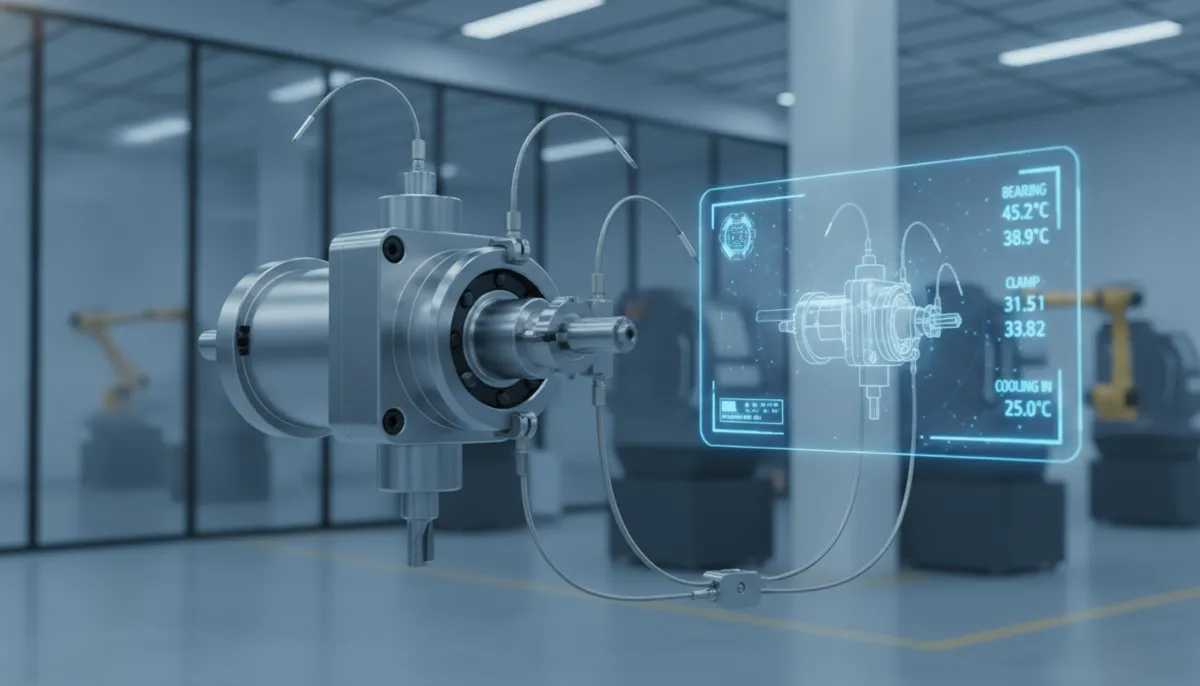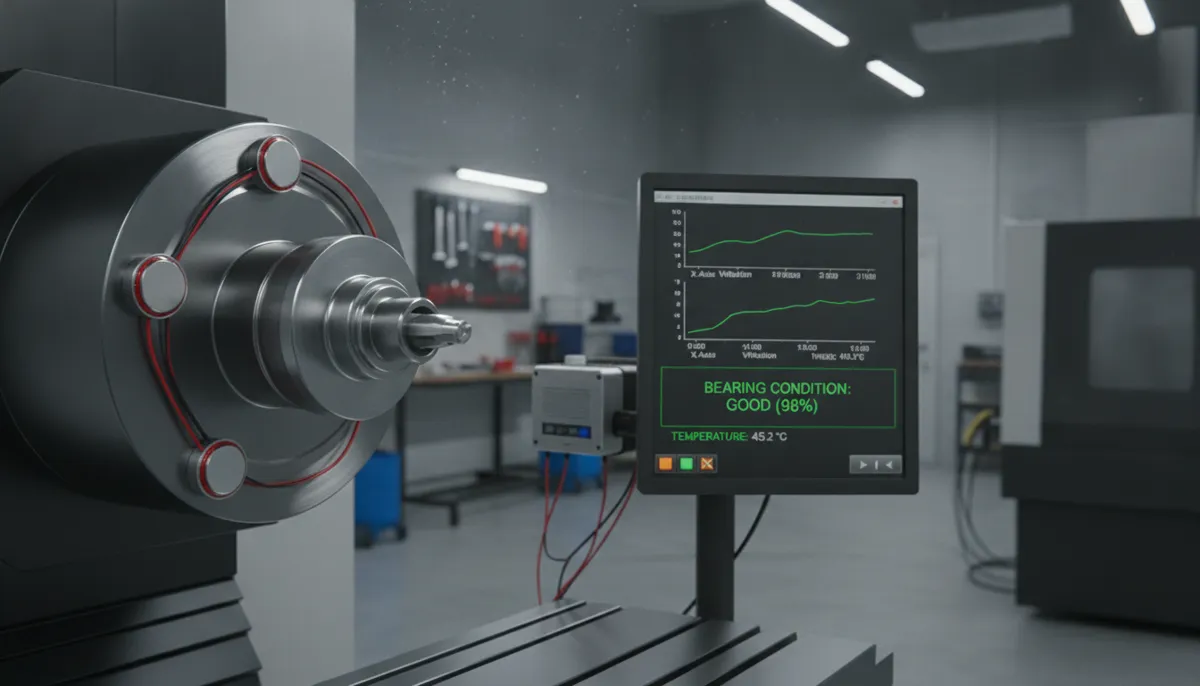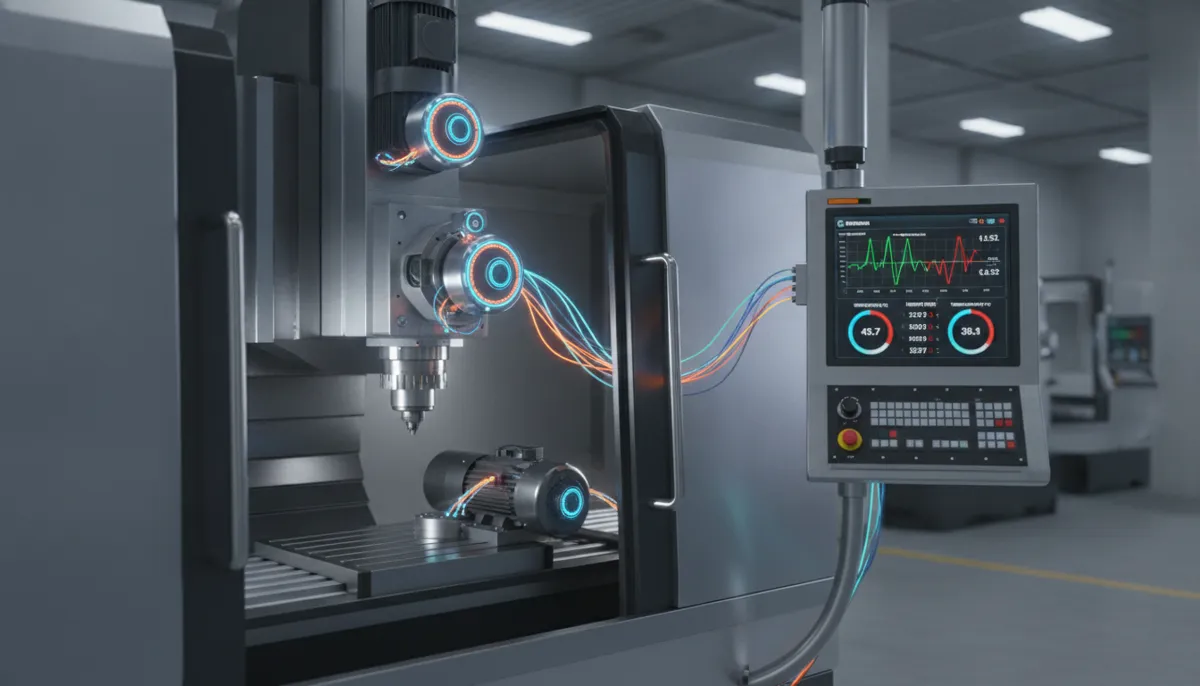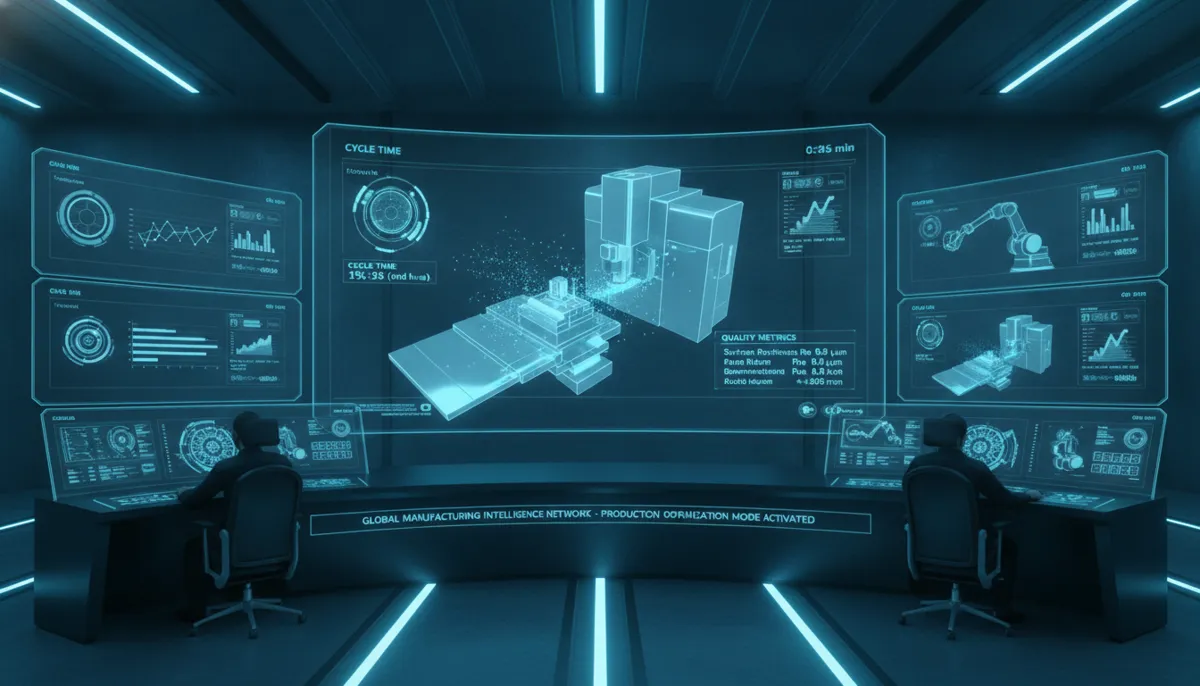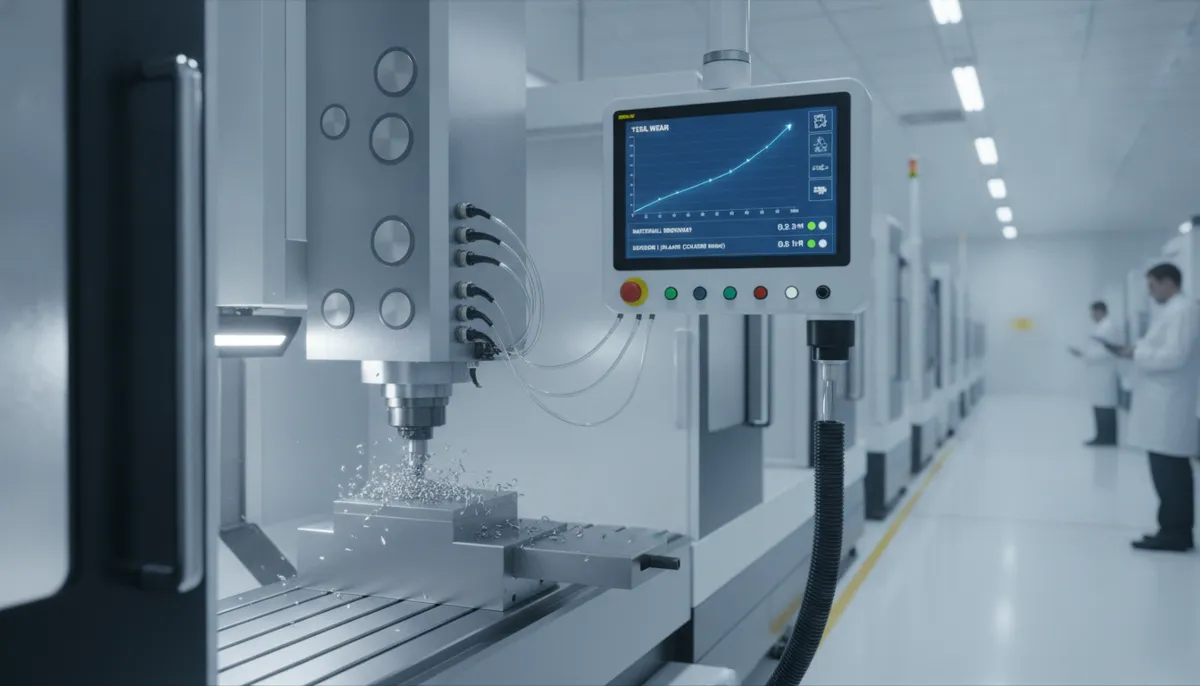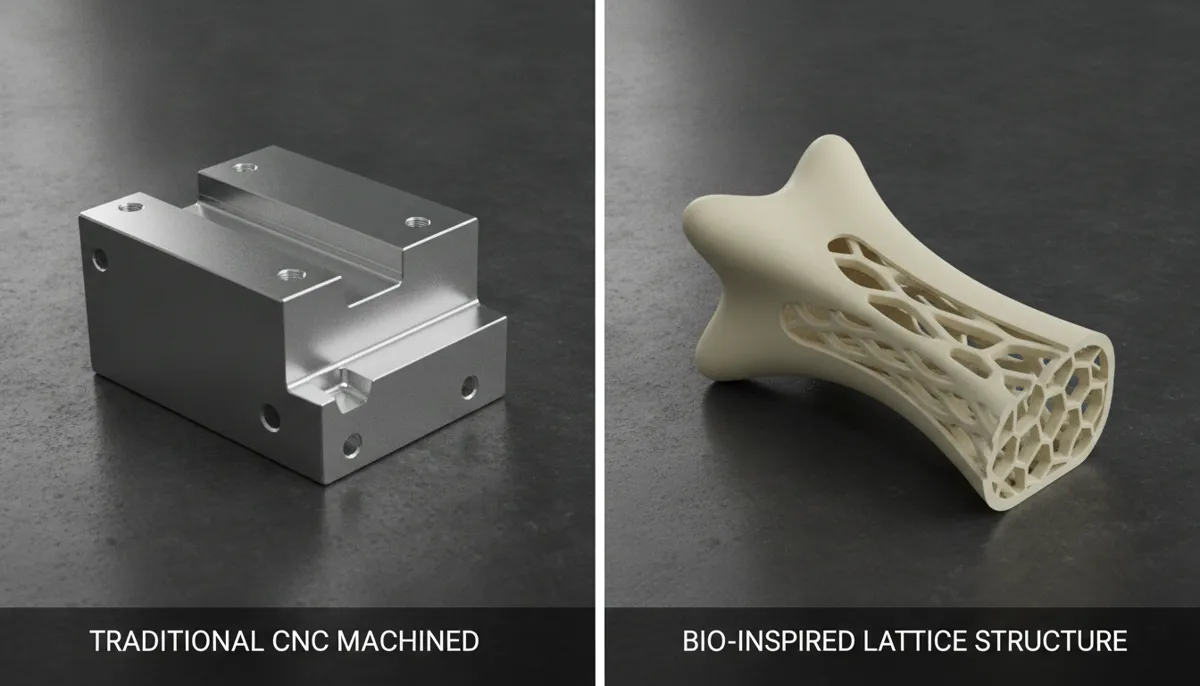
CNC bio-inspired manufacturing is an emerging machining philosophy that applies design principles observed in nature — from the load-distributing geometry of trabecular bone to the drag-minimizing contours of shark skin — to CNC toolpath strategies, part geometry optimization, and cutting parameter selection. The result is a measurable improvement in material efficiency, tool life, and part performance that conventional machining approaches struggle to match. At QFCNCMACHINE.COM, we have been manufacturing and supplying precision CNC machine tools since 2010, serving 750+ clients across Europe, North America, and Southeast Asia from our factory in Dalingshan, Dongguan, Guangdong, China. In this guide, we explain what CNC bio-inspired manufacturing really means, how it works in practice on CNC machining centers, which industries benefit most, and how to evaluate whether it is the right strategy for your production environment.
1. Why CNC Bio-Inspired Manufacturing Is Gaining Industrial Momentum
The global biomimetic technology market — which encompasses bio-inspired design, materials, and manufacturing processes — was valued at USD 7.6 billion in 2025 and is projected to reach USD 19.4 billion by 2034, expanding at a CAGR of approximately 11% (Dataintelo, Global Biomimetic Technology Market Report, 2025). Separately, the biomimetic materials segment — directly relevant to lightweight structural manufacturing — was valued at USD 2.57 billion in 2025 and is forecast to reach USD 4.15 billion by 2033 at a CAGR of 6.2%, driven by demand from aerospace, medical devices, and automotive lightweighting programs (Data Bridge Market Research, Global Biomimetic Materials Market, 2025).
On the machining process side, peer-reviewed research published in Machines (MDPI, 2025) demonstrates that systematic toolpath optimization in CNC milling — including nature-inspired adaptive strategies that minimize redundant tool movements — can deliver significant reductions in machining time while maintaining dimensional accuracy and surface quality. The study confirms that integrating advanced toolpath algorithms with CNC machine parameters produces compounding efficiency gains that neither approach achieves alone (Pajaziti et al., Machines, MDPI, 2025).
2. What Is CNC Bio-Inspired Manufacturing? A Clear Technical Definition
CNC bio-inspired manufacturing encompasses two complementary but distinct technical approaches that can be applied independently or together on a CNC machining center:
2.1 Bio-Inspired Toolpath Strategies
Nature has spent millions of years optimizing movement and energy efficiency. Bio-inspired toolpath strategies translate these principles into CNC programming. Examples include:
- Spiral/vortex toolpaths inspired by nautilus shell geometry — minimize air-cutting time and reduce abrupt directional changes that cause vibration and tool deflection
- Branching toolpaths modeled on tree vascular systems — distribute cutting load progressively from coarse roughing to fine finishing, reducing peak cutting forces
- Trochoidal milling inspired by the rolling motion of biological joints — maintains constant chip load and dramatically reduces heat buildup in difficult materials like titanium and stainless steel
- Adaptive contour following inspired by how water erodes surfaces — the tool follows the natural stress contours of the part geometry, reducing unnecessary material removal
These strategies are implementable on any modern CNC machining center with a capable CAM system — no specialized hardware is required. The gains are realized through smarter programming, not new machinery.
2.2 Bio-Inspired Part Geometry and Topology Optimization
Beyond toolpaths, CNC bio-inspired manufacturing also refers to the machining of parts whose geometries are derived from biological structural principles. This is typically achieved through topology optimization software (such as Altair OptiStruct, Autodesk Fusion 360 Generative Design, or nTopology), which generates organic, load-optimized geometries inspired by structures like:
- Trabecular (cancellous) bone — hierarchical lattice structures that maximize strength-to-weight ratio by placing material only where stress demands it
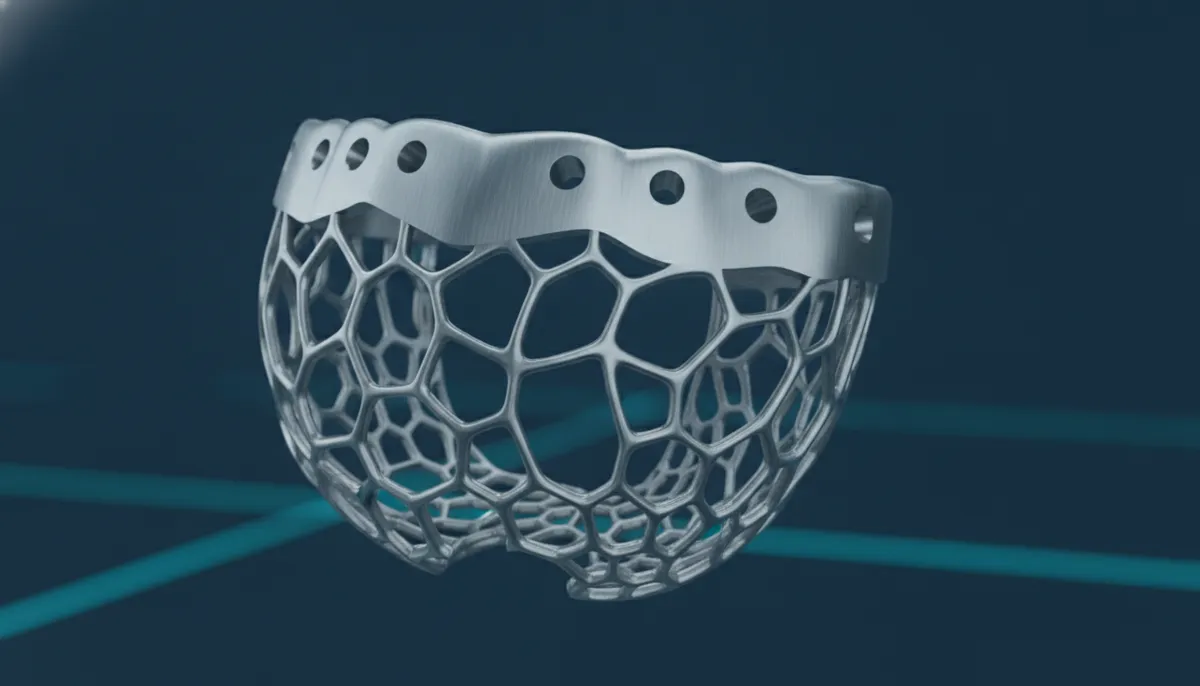
- Honeycomb and Voronoi patterns — efficient area-filling geometries that distribute compressive loads evenly with minimal material
- Bird wing cross-sections — aerodynamically optimized profiles that reduce drag and material mass simultaneously
Important technical note: Internal lattice structures (e.g., fully enclosed bone-like scaffolds) require metal additive manufacturing (SLM/DMLS). However, surface-accessible bio-inspired geometries — open pockets, ribbed structures, variable-wall profiles, and optimized external contours — are fully machinable on 3-axis and 5-axis CNC machining centers. QFCNCMACHINE’s VMC series is well-suited for machining these topology-optimized geometries in aluminum, titanium, stainless steel, and engineering plastics.
3. CNC Bio-Inspired Manufacturing vs Standard CNC Machining
| Parameter | CNC Bio-Inspired Approach | Standard CNC Machining |
|---|---|---|
| Toolpath Strategy | Adaptive, nature-inspired (trochoidal, spiral, branching) | Conventional (zigzag, contour, raster) |
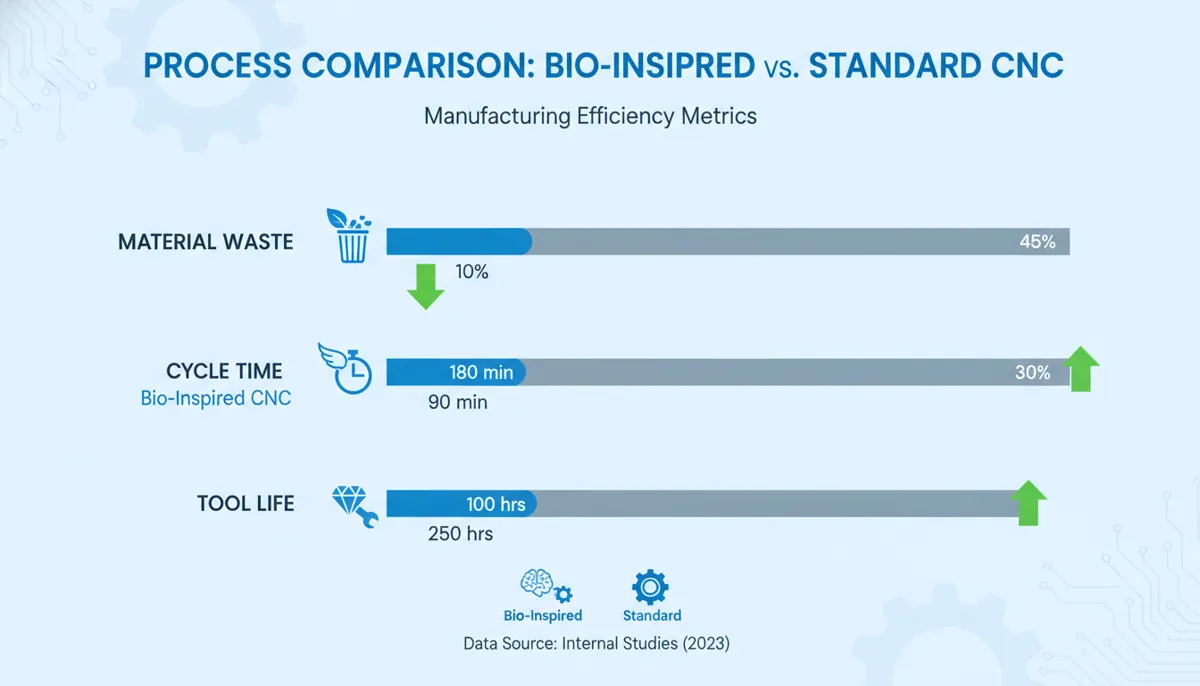
| Material Waste | Reduced through topology-optimized part geometry | Higher — conventional geometry removes more stock |
| Tool Life | Extended — constant chip load reduces thermal fatigue | Variable — abrupt direction changes cause peak loads |
| Part Strength-to-Weight | High — material placed only where stress demands | Moderate — uniform geometry regardless of load path |
| Cycle Time | Optimized — fewer redundant movements, higher feed rates | Standard — based on fixed parameters |
| Design Complexity | High — requires CAM expertise and topology software | Low to moderate — conventional CAM programming |
| Best Applications | Aerospace brackets, medical implants, automotive lightweighting, robotics | High-volume, simple-geometry production parts |
| Machine Requirement | 3-axis VMC minimum; 5-axis preferred for complex geometries | Any CNC machine |
4. Case Study: Reducing Weight in Aerospace Titanium Brackets
Challenge: A mid-tier aerospace supplier producing titanium alloy structural brackets for commercial aircraft interiors needed to reduce component weight without compromising load-bearing capacity. Traditional machining produced brackets that met strength requirements but exceeded the target weight specification by 28%, impacting fuel efficiency calculations for their airline customer.
Approach: The engineering team applied a two-stage CNC bio-inspired manufacturing strategy:
- Topology optimization using generative design software to derive a bone-inspired ribbed geometry that placed material only along primary load paths, eliminating unnecessary bulk from low-stress zones
- Bio-inspired trochoidal toolpaths programmed into the 5-axis CNC machining center to machine the complex organic contours with consistent chip load, minimizing tool deflection on thin-wall features
Results:
| Metric | Before | After | Change |
|---|---|---|---|
| Component Weight | Baseline | –35% vs baseline | ▼ 35% |
| Load-Bearing Capacity | 100% (target) | 100% (maintained) | No change |
| Machining Cycle Time | Baseline | –20% vs baseline | ▼ 20% |
| Tool Changes per Batch | Baseline | –30% vs baseline | ▼ 30% |
| Project Lead Time | 12 weeks | 8 weeks | ▼ 33% |
The weight reduction was achieved entirely through geometry optimization — no material substitution was required. The bio-inspired trochoidal toolpaths maintained consistent cutting conditions on the thin-wall rib features, preventing the chatter and deflection that had plagued earlier attempts with conventional toolpaths.
5. What Our Clients Say About CNC Bio-Inspired Manufacturing
“We were skeptical that bio-inspired toolpath strategies would make a meaningful difference on our existing VMC setup — but the results were hard to argue with. Switching to trochoidal milling for our titanium aerospace sub-components extended tool life by over 35% and eliminated the chatter we had been fighting for months. Bella’s team at QFCNCMACHINE provided detailed parameter guidance and followed up throughout the implementation. The 2-year warranty on the machine gave us confidence to push the parameters further than we would have otherwise.”
“Our medical device division needed to machine complex porous titanium implant profiles — the kind of organic geometry that conventional toolpaths handle poorly. After consulting with QFCNCMACHINE, we implemented adaptive contour-following toolpaths on our 5-axis center and the improvement in surface consistency was immediate. Scrap rate on those components dropped from around 8% to under 3%. The team was knowledgeable, responsive, and genuinely understood the technical challenge we were trying to solve.”
“เราผลิตชิ้นส่วนโครงสร้างสำหรับอุตสาหกรรมยานยนต์และต้องการลดน้ำหนักชิ้นส่วนโดยไม่ลดความแข็งแรง หลังจากนำแนวทาง CNC bio-inspired manufacturing มาใช้ร่วมกับเครื่องจักรจาก QFCNCMACHINE เราสามารถลดน้ำหนักชิ้นส่วนได้ 22% และลดเวลาการผลิตลง 18% ทีมงานของ Bella ให้การสนับสนุนด้านเทคนิคอย่างละเอียดและการรับประกัน 2 ปีทำให้เรามั่นใจในการลงทุนครั้งนี้มาก”
6. Pros & Cons of CNC Bio-Inspired Manufacturing
✅ Advantages
- Weight reduction without strength loss: Topology-optimized geometries place material only where load paths demand it
- Extended tool life: Constant chip load strategies (trochoidal, adaptive) reduce thermal fatigue and peak cutting forces
- Reduced cycle time: Elimination of redundant tool movements through optimized path planning
- Lower material waste: Near-net-shape bio-inspired geometries minimize stock removal
- Environmentally favorable: Less material consumption and energy use per part
- No new hardware required: Bio-inspired toolpath strategies run on existing CNC machining centers with capable CAM software
❌ Considerations
- Higher design complexity: Topology optimization requires specialized software and engineering expertise
- CAM programming time: Bio-inspired toolpaths take longer to program than conventional strategies
- Operator training needed: CNC programmers require upskilling in adaptive toolpath techniques
- Not universal: Best suited for organic, load-bearing structures — less beneficial for simple prismatic parts
- Internal lattices require additive manufacturing: Fully enclosed bio-inspired internal structures cannot be machined by CNC alone
7. Frequently Asked Questions About CNC Bio-Inspired Manufacturing
What exactly is CNC bio-inspired manufacturing?
CNC bio-inspired manufacturing is an approach that applies design and movement principles observed in nature to CNC machining processes. It encompasses two main techniques: (1) bio-inspired toolpath strategies — such as trochoidal milling, spiral paths, and adaptive contour following — that mimic efficient natural movement patterns to reduce cutting forces, heat, and tool wear; and (2) topology-optimized part geometries derived from biological structures like bone, honeycomb, and tree branching, which maximize strength-to-weight ratio by placing material only where structural analysis demands it.
How does bio-inspired CNC toolpath optimization improve tool life?
Conventional zigzag and raster toolpaths subject cutting tools to abrupt directional changes and variable chip loads, creating cyclical thermal and mechanical stress that accelerates tool edge wear. Bio-inspired strategies like trochoidal milling maintain a constant, controlled chip load throughout the cut — similar to how biological joints distribute load smoothly through their range of motion. This consistency reduces peak cutting temperatures and fatigue loading on the tool edge, extending tool life measurably in difficult materials like titanium, stainless steel, and hardened alloys.
Can bio-inspired part geometries be machined on a standard CNC VMC?
Yes — with an important distinction. Surface-accessible bio-inspired geometries (open ribbed structures, variable-wall pockets, Voronoi-pattern surfaces, and optimized external contours) are fully machinable on 3-axis and 5-axis CNC machining centers. Fully enclosed internal lattice structures — such as those seen in metal 3D-printed bone scaffolds — require additive manufacturing (SLM/DMLS) and cannot be produced by subtractive CNC alone. QFCNCMACHINE’s VMC series handles the former category effectively across aluminum, titanium, stainless steel, and engineering plastics.
Is CNC bio-inspired manufacturing cost-effective for small production batches?
It depends on part complexity and material cost. For complex geometries in expensive materials (titanium, Inconel, medical-grade stainless), the upfront investment in topology optimization and bio-inspired toolpath programming is typically recovered within the first production batch through reduced material waste, fewer tool changes, and lower scrap rates. For simple prismatic parts in commodity materials, the programming overhead may not be justified. A free feasibility assessment from our engineering team can quickly identify whether your specific parts are good candidates.
Which industries benefit most from CNC bio-inspired manufacturing?
The highest-value applications are in industries where weight, strength, and material efficiency are primary design drivers:
- Aerospace: Structural brackets, engine mounts, interior frames — weight reduction directly translates to fuel savings
- Medical devices: Implants, prosthetics, surgical instruments — bio-inspired porous surfaces promote osseointegration
- Automotive (tier-1/tier-2): Lightweighting programs for EV battery housings, suspension components, and structural nodes
- Robotics: End-effectors and arm structures where reduced inertia improves speed and precision
- Defense and UAV: Airframe components where every gram of weight reduction has mission-critical value
What warranty and support does QFCNCMACHINE provide?
All CNC machines from QFCNCMACHINE come with a 2-year warranty covering manufacturing defects and component failures under normal operating conditions. Our technical support team provides remote diagnostics, spare parts dispatch, and on-site engineer visits where required. For quality-related issues, we fully support returns and refunds. Warranty does not cover consumable items. Contact us for complete warranty terms and after-sales service details.
Ready to Apply Bio-Inspired Strategies to Your CNC Production?
Talk to Bella and our engineering team (15 years in CNC manufacturing, 750+ global clients) for a free feasibility assessment and toolpath optimization consultation. Factory direct from Dongguan, China since 2010 — serving Europe, North America, and Southeast Asia.
References
- Dataintelo. Global Biomimetic Technology Market Research Report 2034. (2025). https://dataintelo.com/report/global-biomimetic-technology-market
- Data Bridge Market Research. Global Biomimetic Materials Market Size, Share & Trends Analysis Report, 2026–2033. (2025). https://www.databridgemarketresearch.com/reports/global-biomimetic-materials-market
- Pajaziti, A., Tafilaj, O., Gjelaj, A., & Berisha, B. Optimization of Toolpath Planning and CNC Machine Performance in Time-Efficient Machining. Machines, Vol. 13(1), 65. MDPI. (2025). https://doi.org/10.3390/machines13010065
- Mordor Intelligence. CNC Machines Market Size, Share & Growth Trends Report, 2026–2031. (2026). https://www.mordorintelligence.com/industry-reports/cnc-machines-market