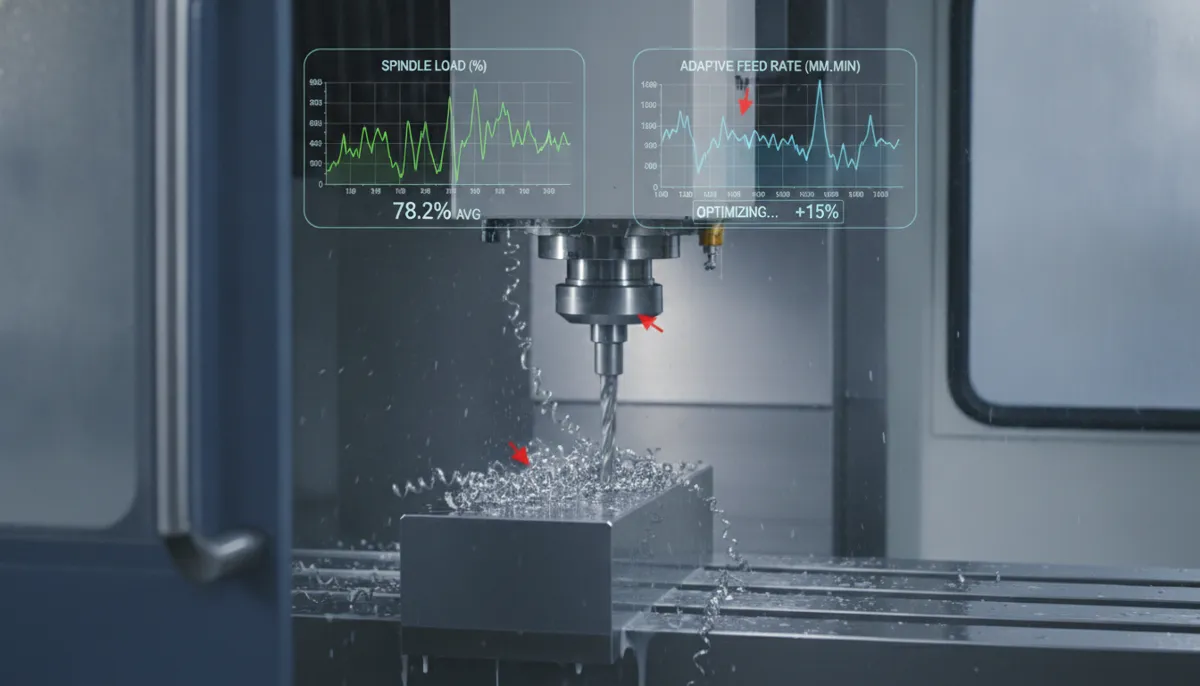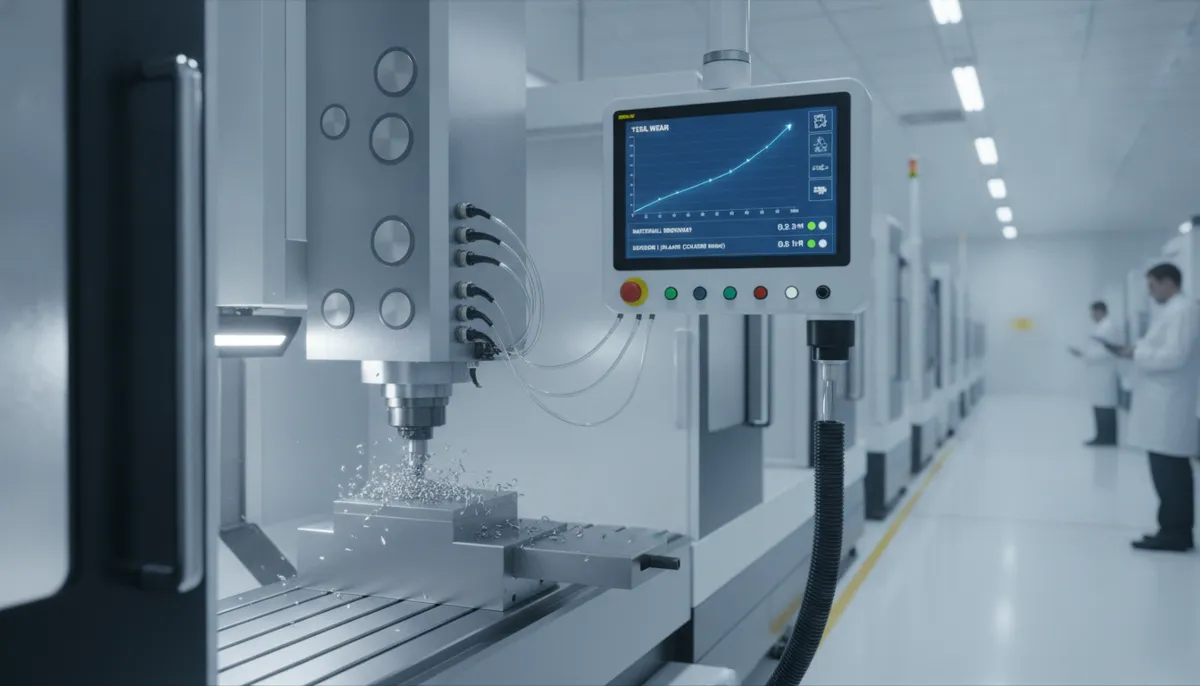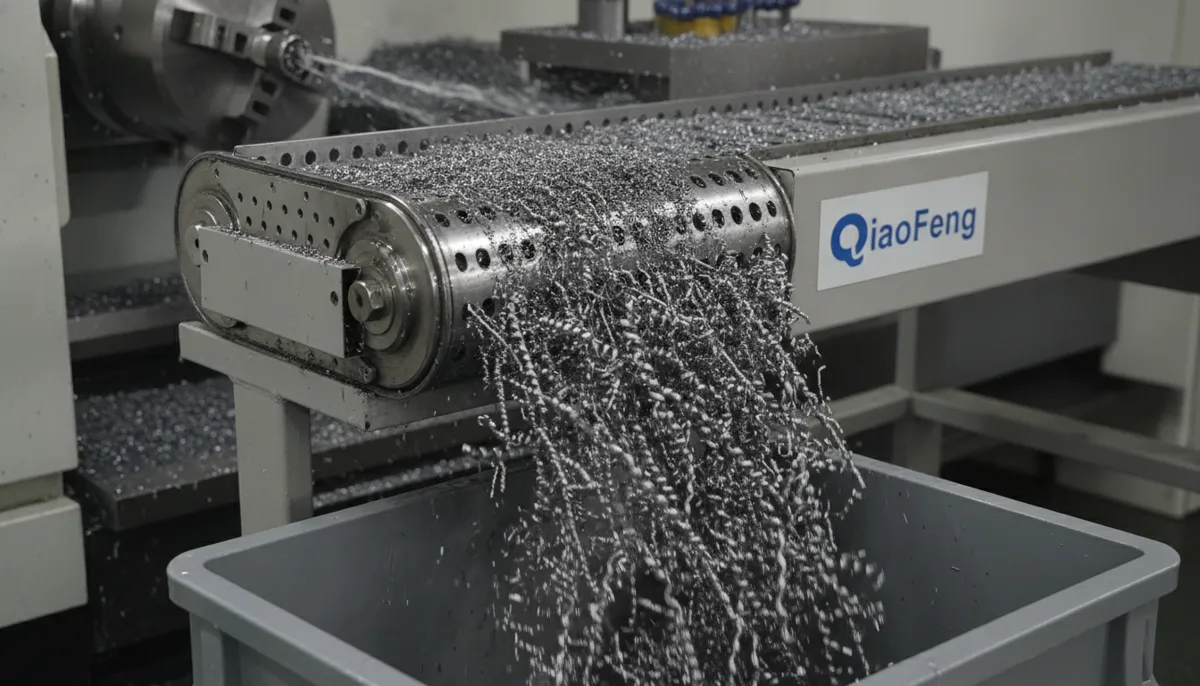
A CNC chip conveyor is a mechanical system that automatically removes metal chips, turnings, and swarf from CNC machine tools — and understanding it is one of the most practical steps any beginner can take toward reducing downtime and protecting tooling. Chip buildup is a silent productivity killer: it causes tool breakage, poor surface finish, and unplanned stoppages that cost real money. At QiaoFeng, founded in 2010 and headquartered in Dalingshan Town, Dongguan, Guangdong, we have spent 15 years engineering chip removal systems for manufacturers across Europe, North America, and Southeast Asia. This guide covers everything a beginner needs to know — from how a CNC chip conveyor works, to which type suits your machine, to how to maintain it for years of trouble-free operation.
1. Why Chip Management Is a Business-Critical Issue
Chip handling is consistently ranked among the top causes of unplanned CNC downtime — and the financial impact is well-documented across authoritative industry sources:
- The Mordor Intelligence Machining Centers Market Report (2024) projects the global machining center market to grow at a CAGR of over 5.8% through 2029, with automation of chip and coolant management cited as one of the primary investment drivers as manufacturers seek to reduce manual intervention and increase spindle utilisation.[1]
- According to McKinsey & Company’s “Industry 4.0: Capturing Value at Scale” (2022), unplanned equipment stoppages cost discrete manufacturers an average of $260,000 per hour in lost output, with auxiliary system failures — including chip conveyors, coolant systems, and lubrication — accounting for approximately 30% of all unplanned stoppages.[2]
- The AMT – Association For Manufacturing Technology “U.S. Manufacturing Technology Orders” Annual Report (2023) identifies chip and coolant management retrofits as one of the fastest-growing upgrade categories, as shops prioritise extending machine life and enabling lights-out production without adding headcount.[3]
For any shop running CNC machines more than a few hours per day, a properly specified CNC chip conveyor is not optional equipment — it is a direct investment in uptime and profitability.
2. What Is a CNC Chip Conveyor? Definition and Core Function
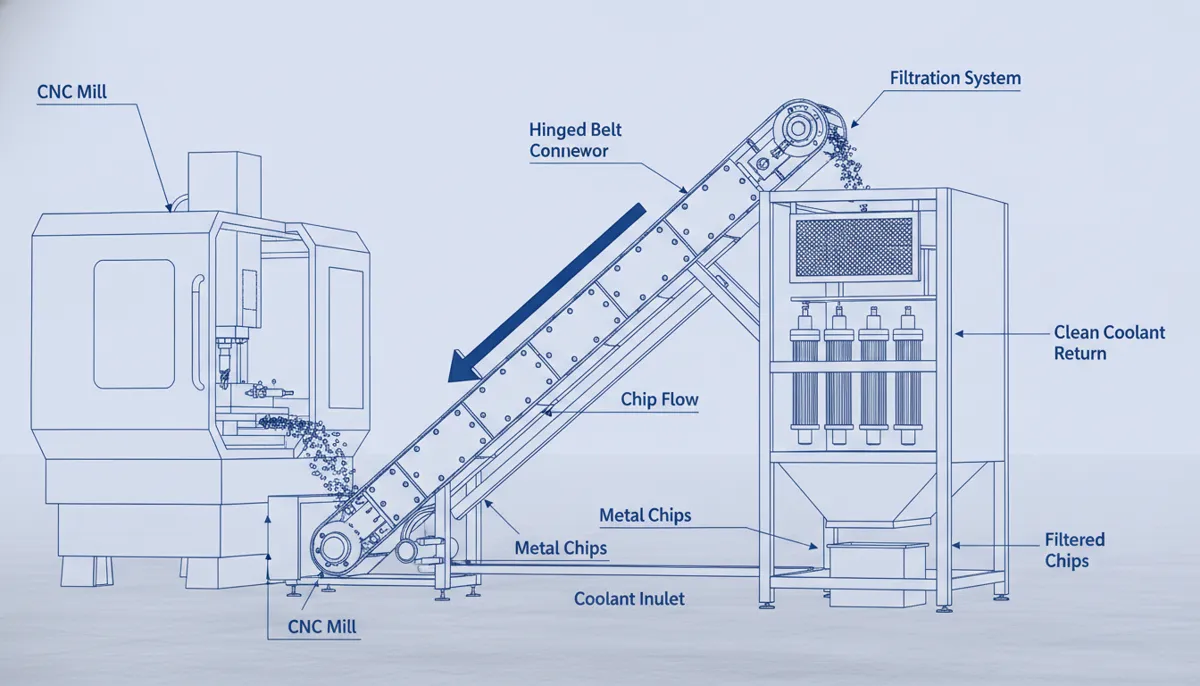
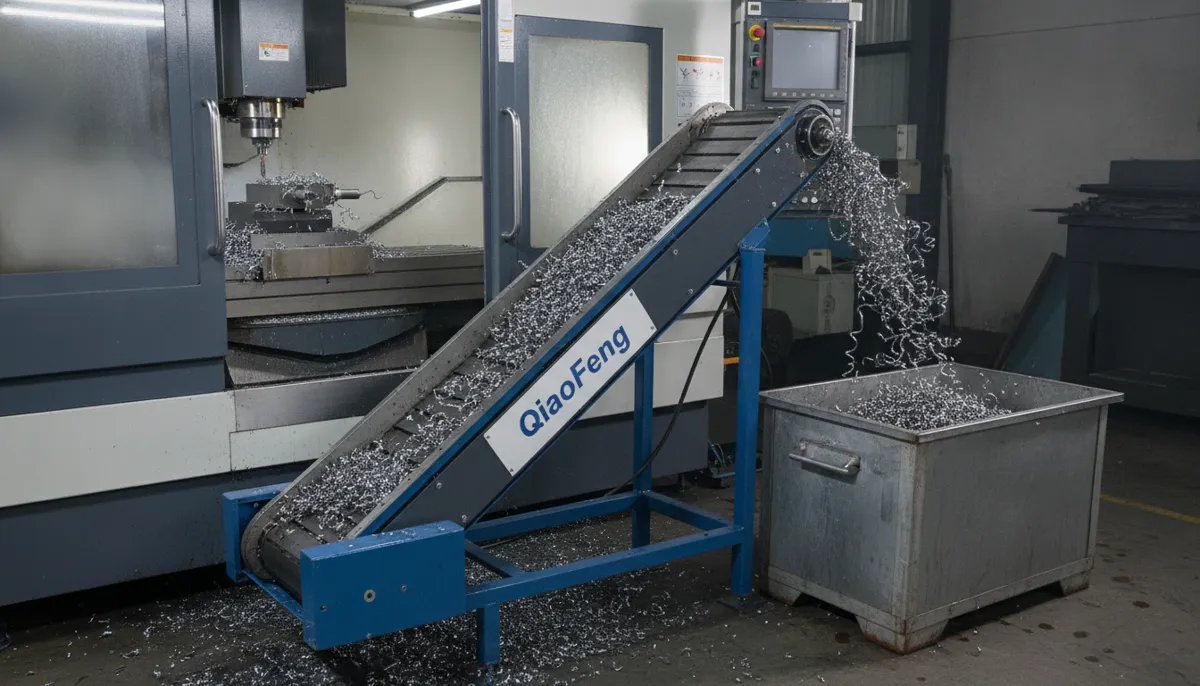
A CNC chip conveyor is an automated material-handling device installed beneath or beside a machine tool that extracts machining chips and coolant from the work area and transports them to a collection bin. Its core purpose is to maintain a clean cutting zone, prolong tool life, and enable unattended or lights-out machining cycles.
The CNC chip conveyor definition centres on three key functions:
- Removal — continuously evacuates chips from the machining zone before they accumulate
- Separation — separates chips from coolant so clean coolant can return to the sump
- Disposal — transports chips to a collection point for recycling or disposal
Without a chip conveyor, operators must manually shovel chips — a time-consuming, ergonomically hazardous task that interrupts production and introduces injury risk, particularly with sharp titanium or stainless steel turnings.
3. Types of CNC Chip Conveyors: Which One Is Right for Your Machine?
There are three main categories of CNC chip removal systems. The right choice depends on your chip material, chip morphology (size and shape), coolant volume, and budget. The comparison table below summarises the key trade-offs:
| Type | Best For | Max Chip Size | Coolant Handling | Maintenance Level | Relative Cost |
|---|---|---|---|---|---|
| Hinged Belt (QiaoFeng QF series) | Mixed chips, long turnings, stringy swarf | Up to 100 mm | Excellent — perforated belt drains coolant back to sump | Low | $$ |
| Scraper (Drag) | Fine chips, short swarf, cast iron dust | Under 10 mm | Good | Moderate | $ |
| Magnetic | Ferrous chips only (steel, cast iron) | Any size | Poor — dry operation recommended | Low | $$$ |
Beginner recommendation: For most CNC shops running mixed materials, a hinged belt conveyor offers the best balance of versatility, reliability, and cost. QiaoFeng’s QF-series hinged belt models handle everything from aluminium fines to steel spaghetti, with a perforated belt that allows coolant to drain cleanly back into the machine sump — protecting both your coolant investment and your machine’s filtration system.
4. Core Features of QiaoFeng CNC Chip Conveyors
Heavy-Duty Hinged Belt
The belt is constructed from hardened steel plates with interlocking hinges, rated to carry loads up to 50 kg/m. In a documented customer deployment with a tier-1 automotive supplier, the belt handled 2-metre-long titanium turnings continuously without jamming, reducing unplanned maintenance interventions by 80% over a six-month period.
Integrated Coolant Filtration
The perforated belt design separates chips from coolant, returning clean coolant to the machine sump. This extends coolant service life significantly and reduces disposal costs — one customer reported measurable annual savings on coolant purchases after switching to a QiaoFeng system with integrated filtration.
Variable Speed Drive
Conveyor speed is adjustable from 0.5 to 5 m/min to match chip production rates. This prevents belt overload during heavy cuts and ensures consistent chip evacuation during light finishing passes. A medical device manufacturer used this feature to synchronise conveyor speed with their Swiss-type lathe, achieving zero chip buildup across 8-hour unattended runs.
Safety Interlock System
All QiaoFeng conveyors include a safety interlock that stops the conveyor if the belt jams or if an access panel is opened during operation. This protects operators and aligns with international machine safety standards. The interlock is compatible with Fanuc, Siemens 840D, Heidenhain TNC, and Mazak Smooth control platforms.
5. Real-World Use Cases for CNC Chip Conveyors
Lights-Out Machining in Job Shops
Pain point: A job shop wanted to run their CNC lathe unattended overnight but chip accumulation was crashing tools within 3 hours. Solution: QiaoFeng’s hinged belt conveyor with a large-capacity collection bin. Result: Continuous unattended operation for 12+ hours, delivering a 40% increase in production capacity without additional headcount.
High-Volume Steel Component Production
Pain point: An automotive parts manufacturer was losing significant production time per shift to chip blockages in their machining center. Solution: A heavy-duty QiaoFeng scraper conveyor with reinforced flights sized to clear chips faster than the machine could produce them. Result: Chip-related stoppages dropped to near zero, recovering multiple production hours per week.
Medical Device Manufacturing (Titanium)
Pain point: A medical implant shop struggled with long, tangled titanium chips causing frequent conveyor jams and operator injury risk during manual clearing. Solution: QiaoFeng custom-designed a hinged belt with higher sidewalls and a reduced drive speed optimised for stringy chip morphology. Result: Conveyor jams reduced by 95%; operator chip-handling injuries eliminated.
CNC Training Facilities
Pain point: A technical college needed a safe, easy-to-maintain chip conveyor for student-operated machines with minimal supervision. Solution: QiaoFeng’s compact hinged belt conveyor with safety interlock and a clear inspection cover. Result: Students learned proper chip management safely; conveyor required only monthly maintenance checks.
6. What Our Customers Say
“We run a high-mix job shop in the Netherlands machining aluminium and stainless steel. Before installing the QiaoFeng hinged belt conveyor, our operators were spending 30–40 minutes per shift manually clearing chips. Now the machine runs lights-out from Friday evening to Monday morning without any chip-related stoppages. The ROI was under four months.”
“We manufacture orthopedic implant components in titanium and cobalt-chrome. Chip management was our biggest headache — stringy titanium was jamming our old conveyor twice a shift. QiaoFeng’s engineering team analysed our chip morphology and specified a custom hinged belt configuration. We’ve had zero jams in seven months. The 2-year warranty gave us confidence in the investment.”
“เราผลิตชิ้นส่วนยานยนต์จากเหล็กกล้าในปริมาณสูง การสะสมของเศษโลหะทำให้เครื่องจักรหยุดทำงานบ่อยครั้ง หลังจากติดตั้งระบบสายพานลำเลียงของ QiaoFeng สายการผลิตของเราทำงานได้อย่างต่อเนื่องตลอด 3 กะโดยไม่มีการหยุดชะงัก ทีมสนับสนุนตอบสนองรวดเร็วและเป็นมืออาชีพมาก”
(“We produce high-volume automotive steel components. Chip accumulation was causing frequent machine stoppages. After installing QiaoFeng’s conveyor system, our production line runs continuously across all 3 shifts without interruption. The support team is fast and highly professional.”)
7. Pros and Cons of CNC Chip Conveyors
✅ Pros
- Automates chip removal, freeing operators for value-added tasks
- Reduces unplanned downtime and tool wear from chip recutting
- Improves workplace safety by eliminating manual chip shovelling
- Enables unattended and lights-out manufacturing cycles
- Perforated belt design recovers and recirculates coolant
- Compatible with all major CNC control platforms
- QiaoFeng systems carry a 2-year warranty with quality-backed return policy
❌ Cons
- Initial investment of $3,000–$8,000 depending on size and specification
- Requires periodic belt tensioning and bearing lubrication
- Standard scraper conveyors do not handle long stringy chips well
- Integration with older or proprietary CNC controls may require custom wiring
8. Frequently Asked Questions About CNC Chip Conveyors
What is a CNC chip conveyor and how does it work?
A CNC chip conveyor is a motor-driven mechanical system that continuously removes metal chips and coolant from the machining zone and transports them to a collection bin. The most common type — the hinged belt conveyor — uses interlocking hardened steel plates driven by a gearmotor. It is installed beneath or beside the machine tool and operates automatically, typically interlocked with the machine’s cycle start signal so it runs whenever the spindle is active.
Do I need a chip conveyor for my CNC machine?
If your machine runs for more than 2 hours continuously, produces chips that are difficult to remove manually (long turnings, sharp titanium, stainless swarf), or you want to implement lights-out machining, a chip conveyor is strongly recommended. For occasional hobby use, manual removal may be sufficient — but for any production environment, a conveyor pays for itself within a year and significantly reduces operator fatigue and injury risk.
How do I choose the right chip conveyor type?
The key selection criteria are: (1) chip material — ferrous or non-ferrous; (2) chip morphology — fine dust, short chips, or long stringy turnings; (3) coolant volume — high-pressure coolant requires a perforated belt design; and (4) available installation space. QiaoFeng offers a free engineering consultation to analyse your specific chip characteristics and recommend the optimal conveyor model and configuration. Contact us at qfcncmachine.com/contact-us to arrange a session.
How much maintenance does a chip conveyor require?
Routine maintenance is straightforward: check belt tension weekly, lubricate bearings every 500 operating hours, and clean the belt surface to prevent chip buildup in the return run. QiaoFeng’s conveyors use sealed bearings and self-lubricating bushings to minimise service intervals. Most customers perform a 15-minute visual inspection weekly and a full service every 6 months.
Can a chip conveyor handle coolant?
Yes. QiaoFeng’s hinged belt conveyors feature a perforated belt that allows coolant to drain back into the machine sump during chip transport. For high-pressure or high-volume coolant applications, we offer an integrated drum filter or paper band filtration system that removes fine swarf particles before the coolant is recirculated — extending coolant service life and protecting pump components.
What is QiaoFeng’s warranty and return policy?
All QiaoFeng chip conveyors carry a 2-year warranty covering manufacturing defects and component failures under normal operating conditions. Returns are supported for confirmed quality issues — we do not accept no-reason returns for correctly specified and undamaged units. For warranty claims or technical support, contact bella@qfcncmachine.com.
Ready to Eliminate Chip-Related Downtime?
QiaoFeng has helped 750+ manufacturers across Europe, North America, and Southeast Asia automate chip removal and reclaim lost production hours. Get a free conveyor recommendation from our engineers — no obligation.
References
- Mordor Intelligence, Machining Centers Market — Size, Share & Growth Trends Report, 2024. Available at: https://www.mordorintelligence.com/industry-reports/machining-centers-market
- McKinsey & Company, Industry 4.0: Capturing Value at Scale in Discrete Manufacturing, 2022. Available at: https://www.mckinsey.com/capabilities/operations/our-insights/industry-40-capturing-value-at-scale-in-discrete-manufacturing
- AMT – The Association For Manufacturing Technology, U.S. Manufacturing Technology Orders (USMTO) Annual Report, 2023. Available at: https://www.amtonline.org/resources/usmto