If you are new to CNC machining, understanding CNC workholding is the single most important foundation skill you can build. Without a reliable way to secure your workpiece, even the most expensive machine and the sharpest tooling will produce scrap. At QiaoFeng CNC — a Dongguan-based manufacturer with 15 years of CNC workholding experience serving 750+ customers across Europe, North America, and Southeast Asia — we have seen firsthand how the right fixture transforms a struggling shop into a precision operation. This beginner’s guide covers the CNC workholding definition, the most common CNC fixture types, a deep dive into CNC vise selection, and a practical comparison of CNC clamping methods so you can start machining with confidence from day one.
1. Why CNC Workholding Matters: Industry Data
The global workholding market was valued at approximately USD 1.81 billion in 2024 and is forecast to reach USD 2.91 billion by 2034, growing at a CAGR of around 4.9% — driven largely by automation, CNC adoption, and Industry 4.0 integration.[1] Meanwhile, the broader machine tools market — within which CNC workholding solutions sit — is projected to reach USD 137.43 billion by 2030 at a CAGR of 5.8%, with automotive and aerospace leading demand.[2] In the Asia-Pacific region specifically, where QiaoFeng operates, the machining centers market alone was valued at USD 12.25 billion in 2025 and is expected to grow at 4.19% CAGR through 2031, underpinned by China’s manufacturing scale and Southeast Asia’s rapid SME industrialization.[3]
Within shops themselves, poor workholding is one of the leading causes of dimensional error, surface finish failure, and tool breakage. Stable, repeatable fixturing is not optional — it is the prerequisite for everything else in precision CNC machining.
2. What Is CNC Workholding? The Definition
CNC workholding refers to any device or method used to clamp, locate, and secure a workpiece to the machine table or spindle during a machining operation. The goal is threefold: prevent movement under cutting forces, maintain a known and repeatable datum position, and allow the cutting tool to reach all required surfaces without obstruction.
Common CNC fixture types include:
- Vises — the most versatile starting point for rectangular and near-rectangular parts.
- Chucks — standard for turned parts on lathes and rotary work on mills.
- Modular fixture plates (zero-point systems) — allow rapid changeover between different workpiece geometries without re-indicating.
- Vacuum fixtures — ideal for thin, flat, or delicate parts where mechanical clamping would cause deformation.
- Magnetic chucks — fast and non-marring for ferrous workpieces in grinding and light milling.
- Custom fixtures — engineered for a specific part family where none of the above provides sufficient access or repeatability.
Choosing the right fixture type from the outset saves hours of re-setup time, reduces scrap, and protects tooling. The sections below walk through the most important decision points.
3. CNC Vise Comparison: QiaoFeng vs. Generic Alternatives
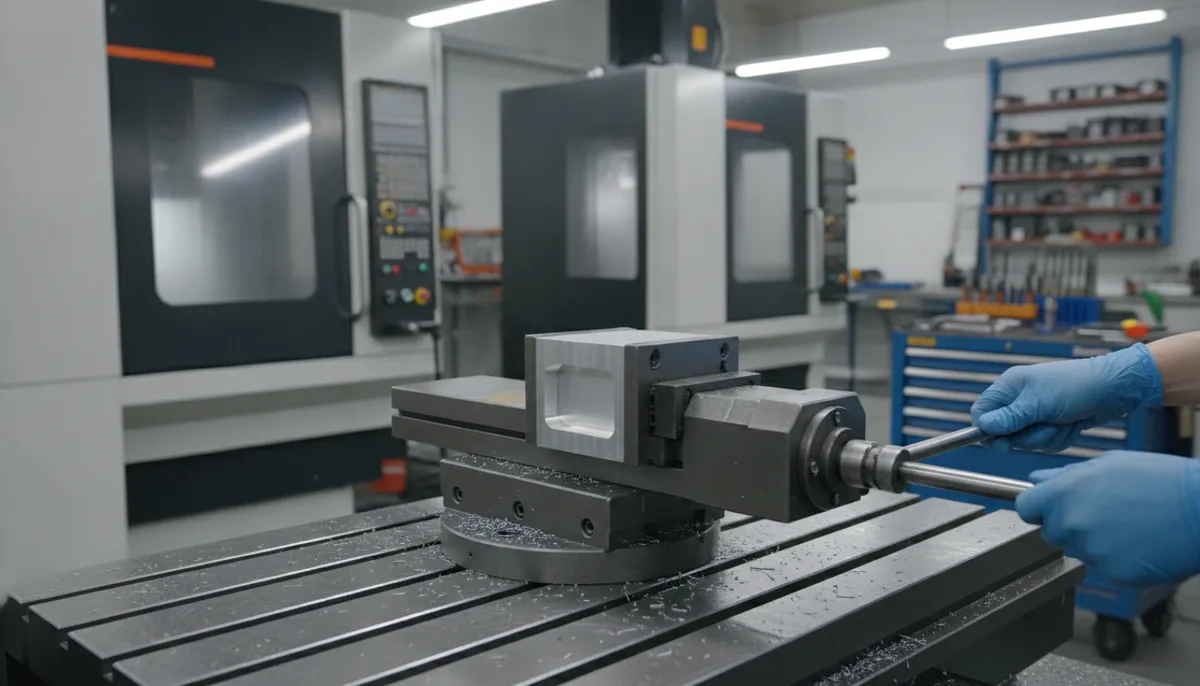
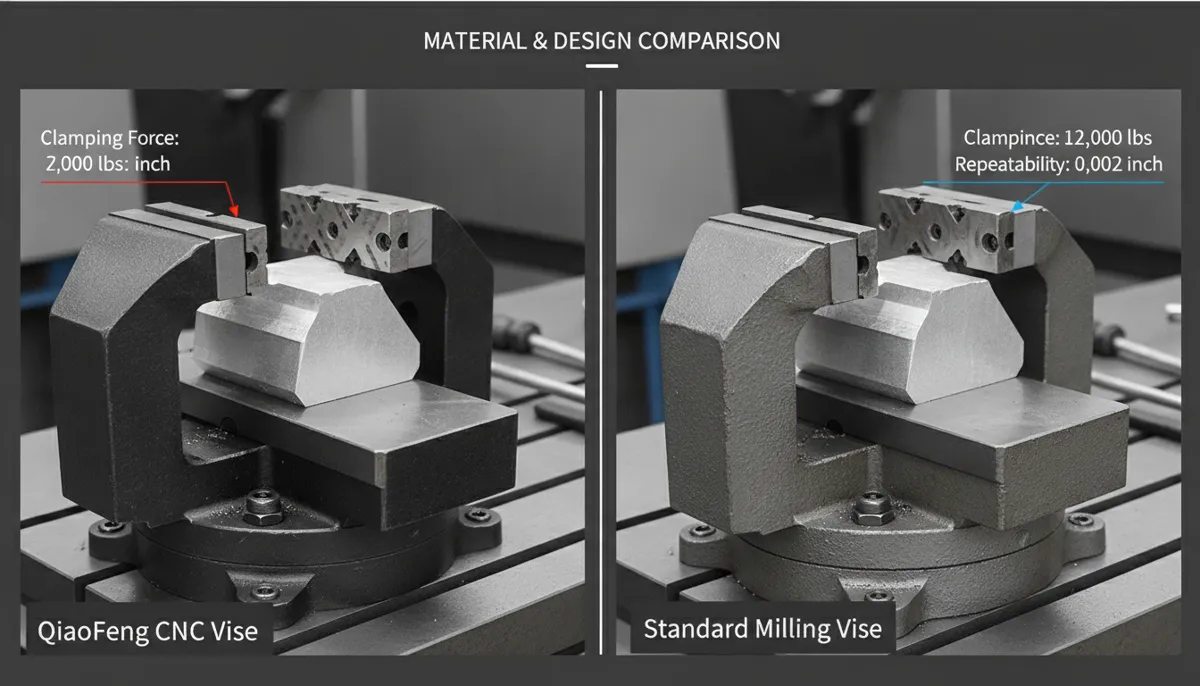
For most beginners, a precision CNC vise is the natural first purchase. The table below compares the QiaoFeng vise against typical carbon-steel and cast-iron alternatives available in the market, across the specification dimensions that matter most for machining accuracy.
| Feature | QiaoFeng Vise | Typical Carbon-Steel Vise | Typical Cast-Iron Vise |
|---|---|---|---|
| Body Material | 440C Stainless Steel | Carbon Steel (EN8) | Grey Cast Iron |
| Max Clamping Force | 12 kN | ~10 kN | ~8 kN |
| Positional Repeatability | ±0.01 mm | ±0.03 mm | ±0.05 mm |
| Weight | 5.2 kg | 6.8 kg | 7.5 kg |
| Corrosion Resistance | Excellent (passivated SS) | Moderate (zinc-plated) | Low (rust-prone) |
| Quick-Change Jaw System | Yes — tool-free in <30 s | Bolt-on only | Bolt-on only |
| Warranty | 2 years | Typically 6–12 months | Typically 6–12 months |
The stainless-steel construction gives the QiaoFeng vise a meaningful edge in coolant-rich environments, where cast-iron vises can develop surface rust that transfers to precision-ground jaws and introduces positioning error over time. The ±0.01 mm repeatability figure means that when you remove and replace a part in the same vise, you can trust it is in the same location to within 10 microns — critical for any multi-operation workflow.
4. CNC Clamping Methods Explained
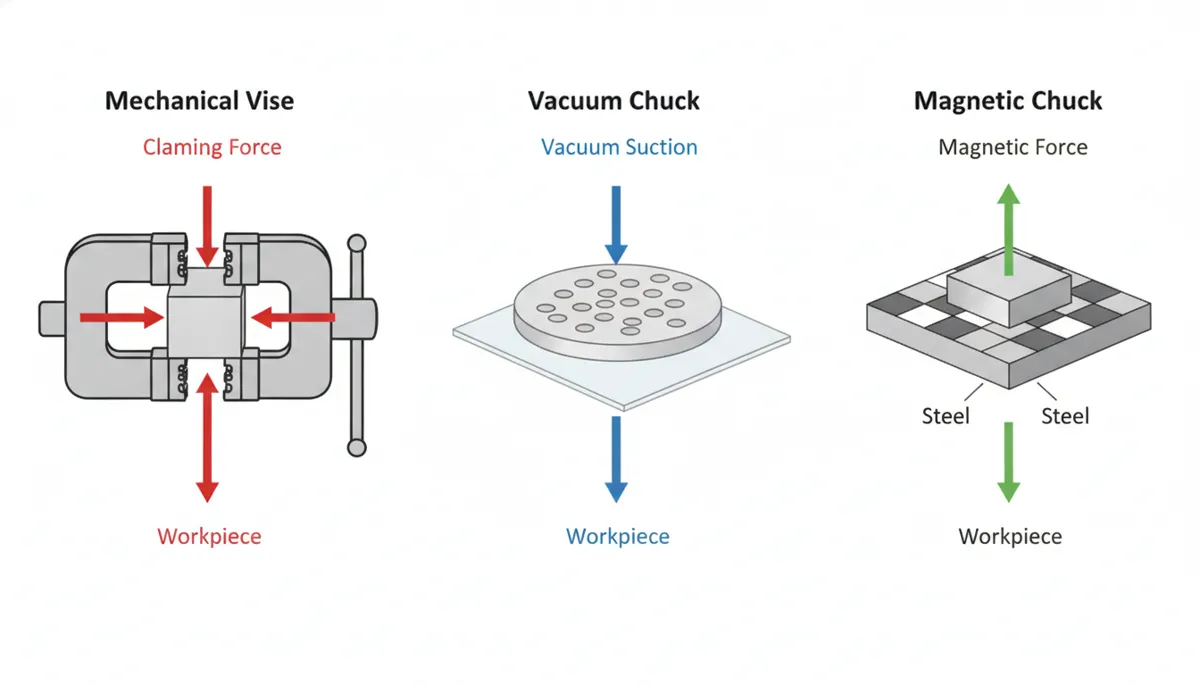
There is no single best approach to CNC clamping. The right method depends on part geometry, material, batch size, and how much access the cutting tool needs. Here is a practical breakdown of the three most common methods:
4.1 Mechanical Clamping (Vises and Strap Clamps)
The default for most job shops. A precision CNC vise grips the workpiece between two hardened jaws, applying force through a lead screw. Strap clamps are used when the vise cannot span the part, or when you need to clamp directly to the machine table via T-slots. Mechanical clamping handles the widest range of materials and offers high clamping force, but it can distort thin-walled parts if applied carelessly. The fix is usually to use soft jaws — aluminium or nylon jaw inserts custom-machined to the part profile — which distribute clamping force over a larger area.
4.2 Vacuum Clamping
A vacuum pump pulls air from a sealed plenum beneath the workpiece, creating uniform downward pressure across the entire bottom face. This is the preferred method for thin aluminium sheet, PCB blanks, and carbon fibre panels where any point load from a mechanical clamp would cause bending. The main limitation is that vacuum clamping only resists vertical force; any significant lateral cutting force — aggressive side milling, for example — can slide the part. Vacuum workholding works best for 2D profiling, engraving, and light 3D contouring passes.
4.3 Magnetic Clamping
Electromagnetic or permanent-magnet chucks hold ferrous workpieces (steel, cast iron) by magnetic attraction. They are extremely fast to load and unload, leave no marks on the workpiece surface, and provide excellent access around all four sides of the part. Magnetic chucks are standard equipment in surface grinding, but they can also be used on mills for light-to-medium cuts. Non-ferrous materials (aluminium, brass, titanium) cannot be held magnetically without special adapters.
4.4 Zero-Point / Modular Fixturing
A zero-point pallet system uses a base plate with precision-ground receiver bores. Every fixture or tombstone in your shop is fitted with matching locating pins. When you drop a fixture onto the pallet, it locates to within 0.005 mm automatically and locks pneumatically or mechanically. Changeover time drops from 20–30 minutes (re-indicating a vise) to under 30 seconds. Zero-point systems are the fastest-growing category in CNC workholding because they remove setup time — which is pure non-cutting, non-earning time — from the equation entirely.
5. Real-World Use Cases & Customer Testimonials
Case 1 — Automotive Supplier, Germany
A medium-sized Bavarian tier-2 supplier was milling aluminium transmission brackets at high volume. Part movement during aggressive side-milling passes was causing dimensional rejects at a rate of around 12–15%. After switching to QiaoFeng’s modular vise system with custom soft jaws profiled to the bracket’s curved base, the scrap rate fell below 2% within the first month. Throughput increased by roughly 20% because operators no longer needed to stop and re-indicate drifted parts.
“We had tried two other vise brands before QiaoFeng. Nothing else held tolerances the way these do under heavy aluminium cuts. Setup time for our bracket line dropped from 40 minutes per changeover to under 8 — and we have not had a single fixture-related reject since installation.”
Case 2 — Aerospace Prototyping Studio, California, USA
A startup aerospace company in the Los Angeles area needed to machine thin-walled titanium brackets for UAV frames without any wall deflection or chatter marks. Using QiaoFeng’s vacuum workholding system combined with a low-profile vise for the datum face, they achieved consistent dimensional tolerances of ±0.005 mm across a 50-part pilot run — hitting the aerospace drawing requirements on the first attempt and securing a production contract from their customer.
“Thin-wall titanium is unforgiving — it wants to chatter and spring at every opportunity. The QiaoFeng vacuum fixture held the parts absolutely dead. Our first article inspection passed with zero deviations. We have ordered three more systems for our second machine.”
Case 3 — Job Shop, Vietnam
A growing job shop in Ho Chi Minh City was machining diverse stainless-steel and brass parts for electronics enclosures in small batches of 10–50 pieces. Frequent changeovers between part families were consuming nearly three hours per day in re-indicating and jaw swaps. After installing QiaoFeng’s quick-change vise system, changeover time per job dropped to under 30 seconds per fixture, saving the shop approximately 2.5 hours of productive machine time per day and allowing them to take on 30% more work with the same two machines.
“Before QiaoFeng, changeover was our biggest bottleneck. Now we can switch between a brass enclosure and a stainless bracket in less than a minute. Our machines are cutting more and waiting less. The ROI was visible within the first three months.”
6. QiaoFeng CNC Vise — Pros & Cons
✔ Pros
- 12 kN clamping force handles aggressive cuts in steel, titanium, and superalloys without part movement.
- 440C stainless steel body resists coolant, cutting fluid, and corrosion — extends service life significantly versus cast iron.
- ±0.01 mm positional repeatability supports multi-operation workflows and reduces re-indicating time to near zero.
- Tool-free quick-change jaw system reduces setup time by up to 40% compared to bolt-on jaw systems.
- 2-year warranty and free technical support from QiaoFeng’s engineering team.
- Standard T-slot and zero-point mounting options compatible with most CNC mills and machining centers.
✘ Cons
- Higher initial purchase price than entry-level cast-iron vises (though most customers report ROI within 6 months through reduced scrap and setup time).
- Lead screw and sliding surfaces require periodic lubrication — roughly every 40–60 hours of use — to maintain precision and prevent premature wear.
- Stainless-steel body, while lighter than cast iron, is heavier than aluminium vises sometimes used in high-speed 5-axis applications where table mass is a constraint.
7. Frequently Asked Questions About CNC Workholding
What is the best CNC workholding solution for a complete beginner?
A precision CNC vise is almost always the right starting point. It is versatile enough to hold the vast majority of prismatic (rectangular or near-rectangular) parts, it is fast to set up once you understand the basics, and a good-quality vise will hold ±0.01 mm repeatability without any special skills. Start with a single vise, learn to use soft jaws for irregularly shaped workpieces, and add a zero-point pallet or vacuum fixture later when your job mix demands it.
How do I choose between mechanical, vacuum, and magnetic CNC clamping?
Use mechanical clamping (vise or strap clamps) as your default — it works on almost any material and geometry and handles the highest cutting forces. Switch to vacuum clamping when the part is too thin or flat to grip mechanically without distortion, or when you need access to all four sides without re-clamping. Use magnetic clamping for ferrous parts in grinding or light milling applications where surface marks are unacceptable. When in doubt, contact QiaoFeng’s engineering team for a free application assessment.
Can I use the same workholding fixtures on different CNC machines?
Yes, provided the machines share a compatible mounting interface. QiaoFeng vises and fixtures come with standard T-slot bases that fit most vertical and horizontal machining centers. If you want seamless transfer between multiple machines, a zero-point pallet system is the answer: the same fixture moves from machine to machine in under 30 seconds and lands in exactly the same position every time.
What maintenance does a CNC vise need?
Three things: (1) clean chips and swarf from the jaw ways and lead screw after every shift using a brush and compressed air; (2) lubricate the lead screw and sliding surfaces every 40–60 hours of use with a quality machine-tool way oil or EP grease; (3) periodically check jaw wear and flatness — worn jaws introduce angular error that cannot be compensated by re-indicating the vise itself. QiaoFeng includes a detailed maintenance checklist and torque specifications with every product, and replacement jaw sets are available separately.
What does QiaoFeng’s warranty and return policy cover?
All QiaoFeng CNC workholding products carry a 2-year warranty covering manufacturing defects in materials and workmanship. If a product fails due to a confirmed quality issue, QiaoFeng will arrange a replacement or refund. Returns are accepted for quality-related issues; the warranty does not cover damage caused by improper use, lack of maintenance, or modification of the product.
Which industries and regions does QiaoFeng primarily serve?
QiaoFeng has shipped workholding solutions to customers in Germany, the UK, the United States, Canada, Vietnam, Thailand, Malaysia, and Singapore, among others. Primary industries served include automotive component machining, aerospace prototyping, electronics enclosure manufacturing, medical device parts, and general job-shop work. The company has been operating from Dalingshan Town, Dongguan, Guangdong since 2010 and holds ISO 9001 certification.
Ready to Upgrade Your CNC Workholding?
Get a free application assessment from QiaoFeng’s engineering team. 750+ customers across Europe, North America, and Southeast Asia trust our solutions — backed by a 2-year warranty and free technical support.
References
- Market Research Future, Workholding Market Size, Share & Growth Report 2024–2034, 2024. https://www.marketresearchfuture.com/reports/workholding-market-24340
- Grand View Research, Machine Tools Market Size, Share & Trends Analysis Report 2024–2030, August 2024. https://www.grandviewresearch.com/industry-analysis/machine-tools-market
- Mordor Intelligence, Machining Centers Market Size, Share & Growth Trends Report, 2024. https://www.mordorintelligence.com/industry-reports/machining-centers-market