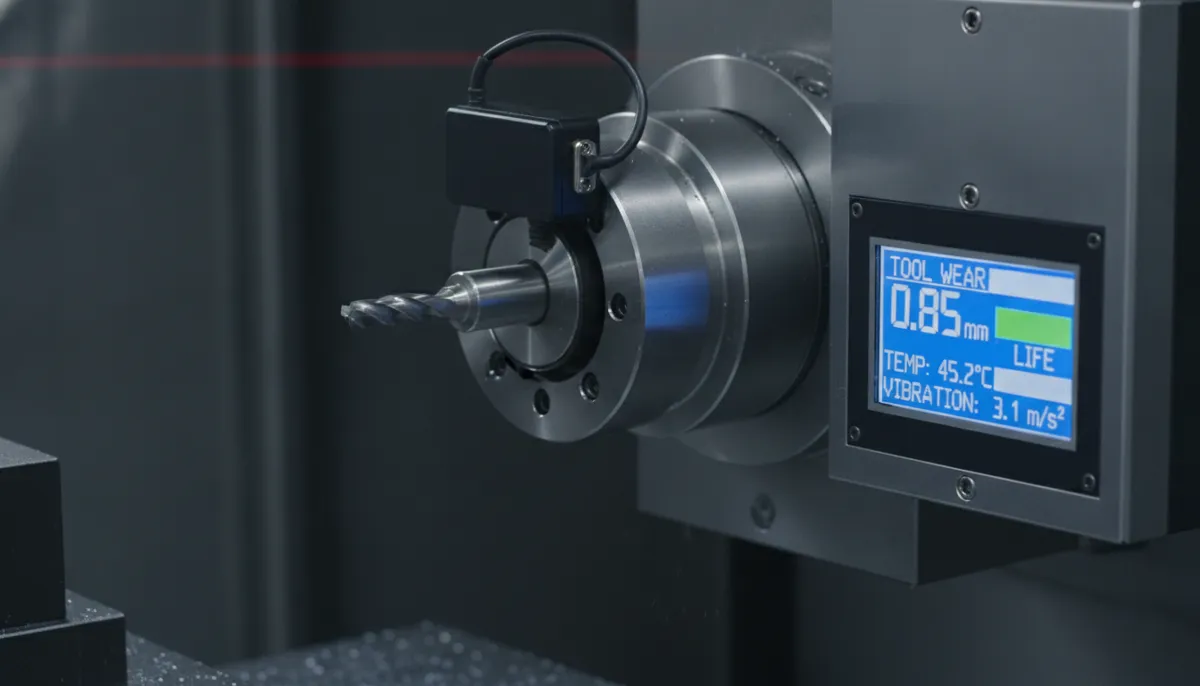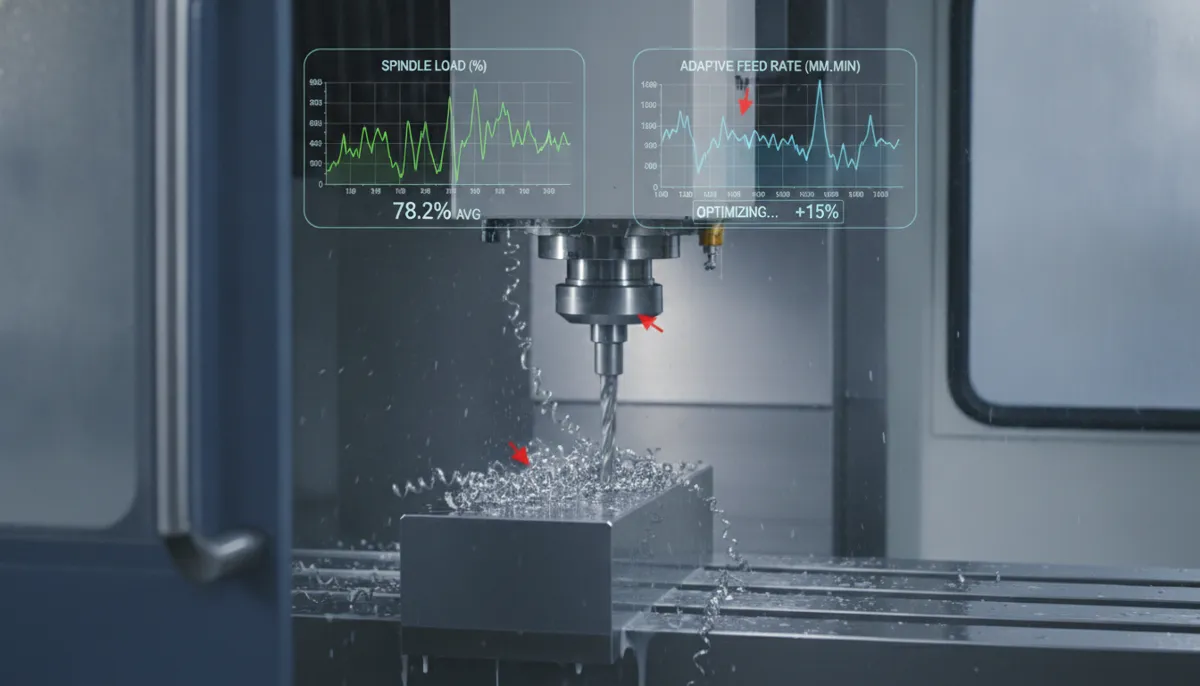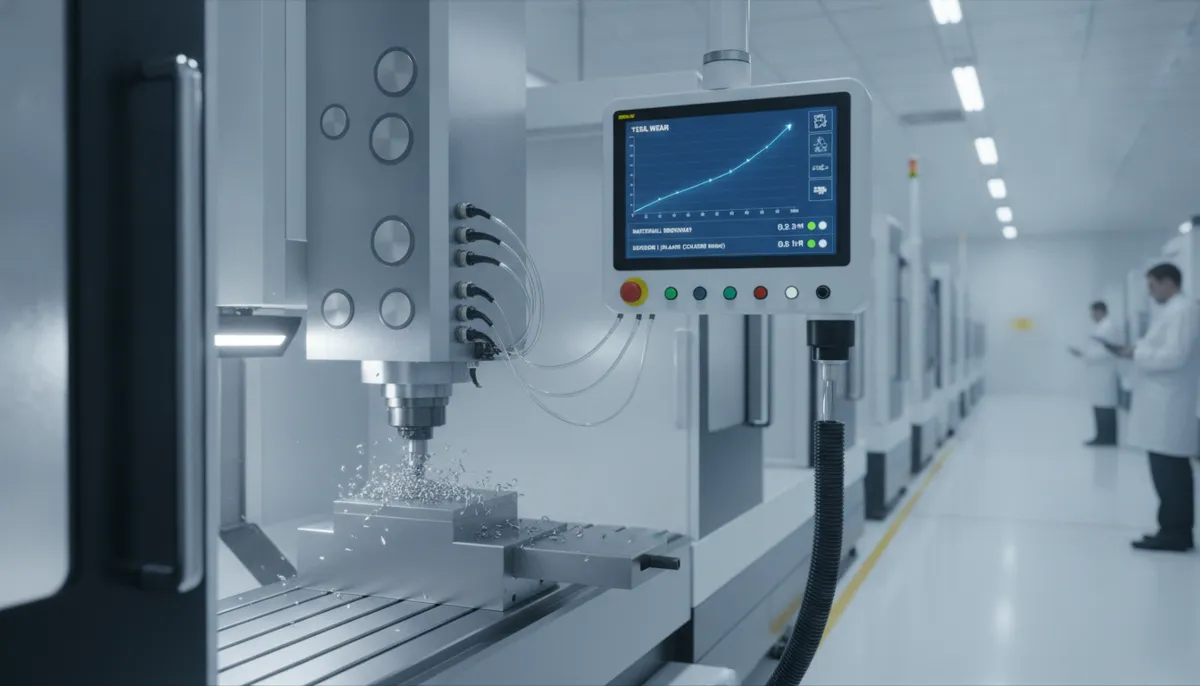
Unplanned tool failure is one of the most expensive and disruptive events in precision CNC production. CNC ML tool wear prediction — powered by machine learning models trained on real-time sensor data — gives process engineers and production managers the ability to forecast tool degradation minutes before failure occurs, enabling proactive replacement that eliminates unplanned downtime, prevents scrapped parts, and dramatically reduces tooling costs. Since 2010, QiaoFeng — headquartered in Dalingshantown, Dongguan, Guangdong — has developed and deployed CNC ML tool wear prediction systems for 750+ manufacturers across North America, Europe, and Southeast Asia, integrating deep learning directly into production CNC environments where reliability and accuracy are non-negotiable.
Why CNC ML Tool Wear Prediction Is a Manufacturing Priority
Tool wear is a leading driver of production cost and quality variability in CNC machining. According to Mordor Intelligence (2024), the global predictive maintenance market — which encompasses CNC ML tool wear monitoring as a core application — was valued at USD 6.9 billion in 2023 and is projected to grow at a CAGR of 29.6% through 2028, driven by Industry 4.0 adoption across automotive, aerospace, and medical device manufacturing.
A landmark study published in the Journal of Manufacturing Systems (Zhao et al., 2020) demonstrated that LSTM-based tool wear prediction models achieved mean absolute prediction errors below 5% of total tool life across multiple workpiece materials — confirming that deep learning approaches are now mature enough for production deployment. Separately, Grand View Research (2024) reports that manufacturers implementing real-time tool condition monitoring reduce unplanned machine downtime by an average of 30–40% and extend tool life by 20–35%, delivering measurable ROI within the first year of deployment.
For manufacturers supplying precision components to global OEMs under tight delivery schedules, the ability to predict and prevent tool failure is no longer a competitive advantage — it is a production continuity requirement.
1. Core Features of QiaoFeng’s CNC ML Tool Wear Prediction System
1.1 Real-Time Multi-Sensor Fusion
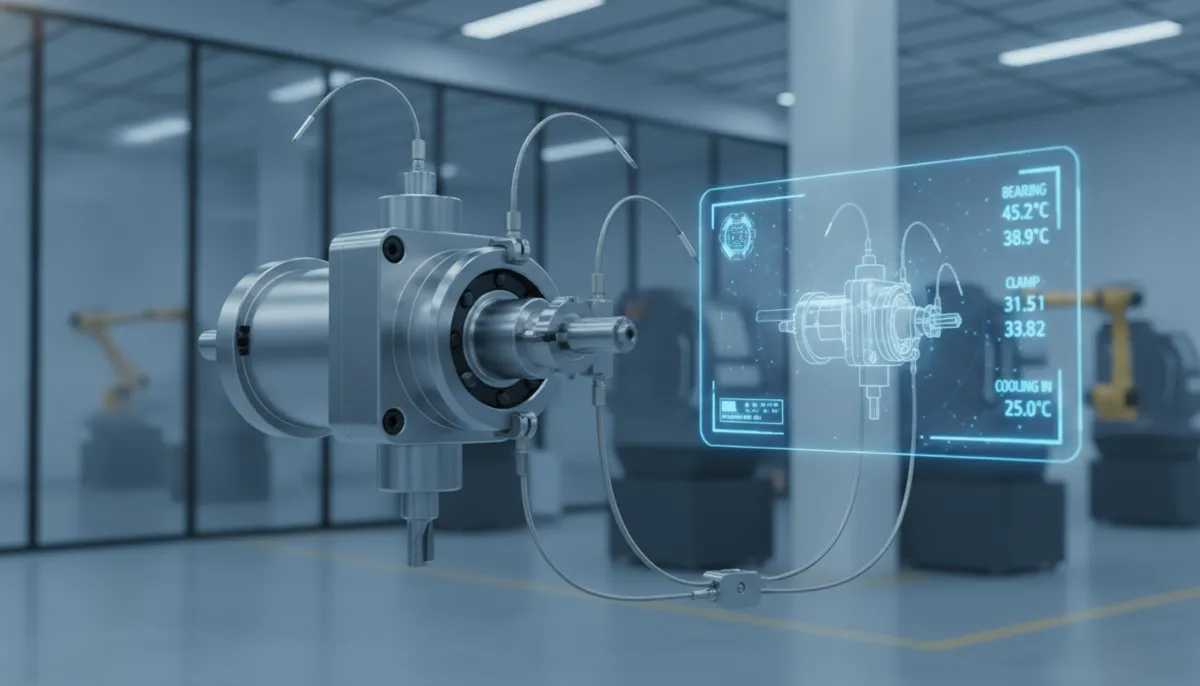
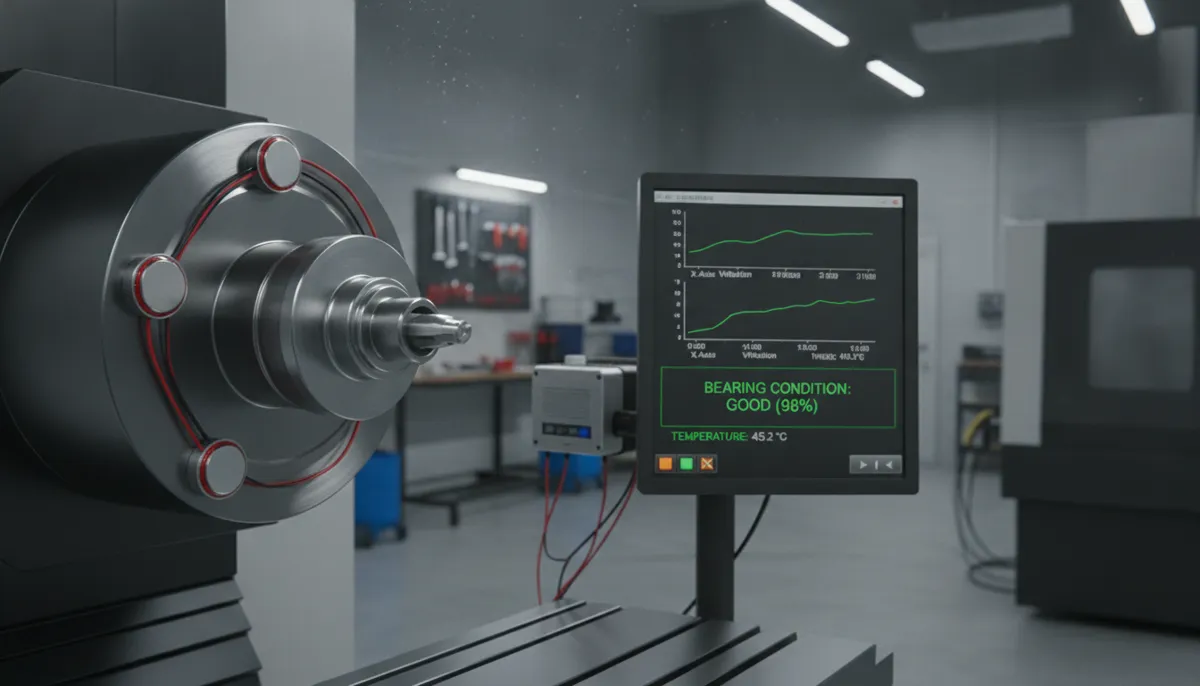
QiaoFeng’s CNC ML tool wear system simultaneously acquires vibration, acoustic emission, cutting force, and spindle current signals at high sampling rates. Fusing these complementary data streams — rather than relying on any single sensor — captures the full signature of tool degradation across different wear mechanisms: flank wear, crater wear, chipping, and built-up edge formation. This multi-sensor approach ensures that subtle changes in tool condition are detected early, even when individual sensor signals are ambiguous.
1.2 Hybrid CNN-LSTM Deep Learning Architecture
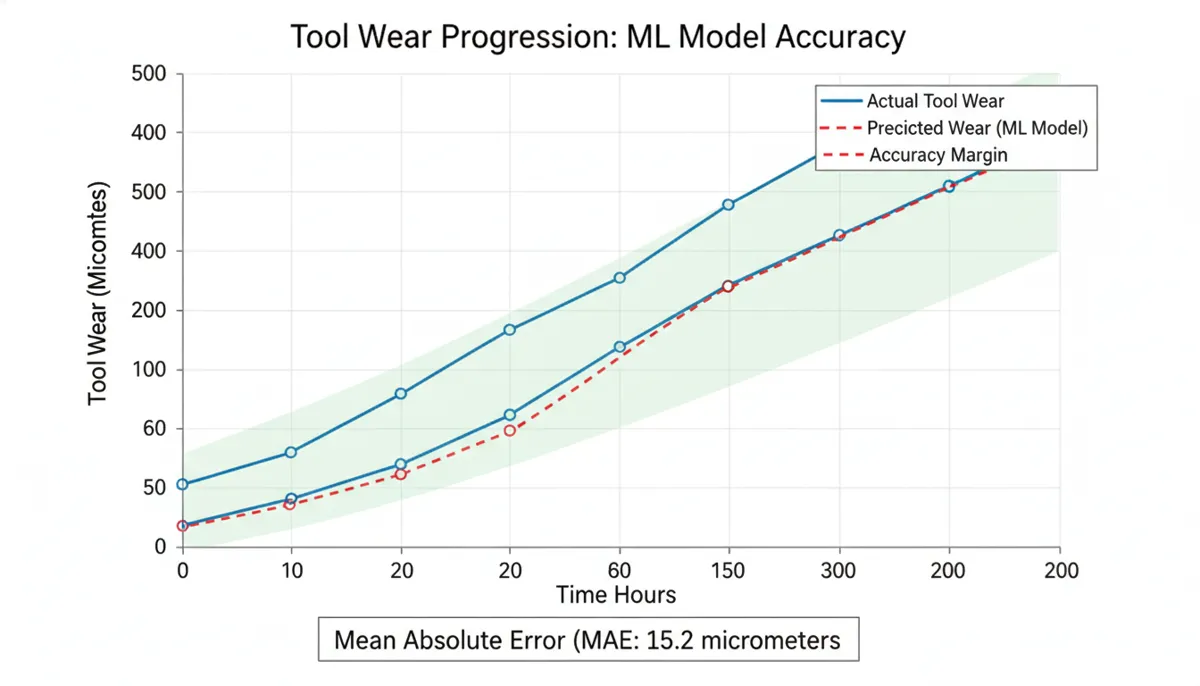
The prediction engine uses a hybrid Convolutional Neural Network (CNN) and Long Short-Term Memory (LSTM) architecture. The CNN layers extract spatial features from raw sensor signal windows — identifying frequency-domain patterns associated with specific wear states — while the LSTM layers model the temporal evolution of tool condition over the tool’s service life. This combined architecture achieves tool wear state classification accuracy exceeding 96% on benchmark datasets including the NASA Prognostics Data Repository milling dataset, and outputs a continuously updated Remaining Useful Life (RUL) estimate with a mean absolute error below 5% of total tool life.
1.3 Automated Continuous Retraining Pipeline
As new production data is collected, the model automatically retrains on an incremental basis — adapting to new tool grades, workpiece materials, and cutting parameter changes without requiring manual recalibration. This self-improving mechanism uses transfer learning to accelerate adaptation: a model pre-trained on one alloy family can be fine-tuned for a new material with as few as 500 additional labeled samples, dramatically reducing the time required to deploy the system on a new machine or process.
1.4 Edge-Deployed Inference with CNC Controller Integration
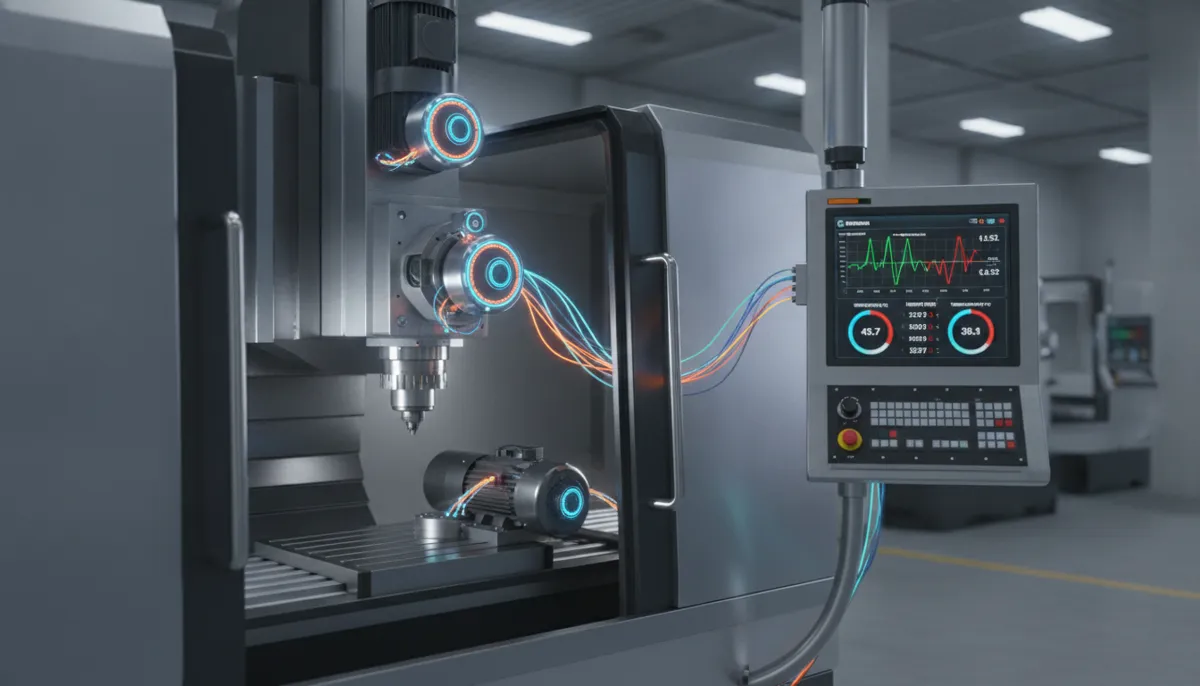
The trained model runs on an edge computing module mounted directly on the machine, eliminating cloud latency and ensuring real-time response. Wear state and RUL predictions are fed directly to the CNC controller, which can trigger operator alerts, automatically adjust feed rate to extend tool life, or initiate a controlled tool change at the optimal moment — before failure but without premature replacement.
2. CNC ML Tool Wear Prediction vs. Traditional Tool Management Methods
| Criteria | Fixed-Interval Replacement | Operator Visual Inspection | CNC ML Tool Wear Prediction |
|---|---|---|---|
| Failure Prevention | Partial — based on average life only | Reactive — detected after wear is visible | ✅ Proactive — predicts failure 15–20 min ahead |
| Tool Utilization Rate | 60–70% of actual tool life used | Variable — inconsistent replacement timing | ✅ 90–95% of actual tool life utilized |
| Unplanned Downtime Reduction | Moderate | Low — human error common | ✅ 30–40% reduction (Grand View Research, 2024) |
| Scrap Rate Impact | High — worn tools produce out-of-spec parts | High — late detection causes scrap | ✅ Up to 30% scrap reduction |
| Multi-Material Adaptability | ❌ Separate schedules per material | ❌ Operator experience dependent | ✅ Transfer learning adapts to new materials |
| RUL Prediction Accuracy | ❌ Not available | ❌ Not available | ✅ MAE <5% of total tool life (Zhao et al., 2020) |
| CNC Controller Integration | ❌ Manual process | ❌ Manual process | ✅ Automatic feed adjustment & alert triggering |
| Data for Process Improvement | ❌ No historical wear data captured | ❌ No systematic data capture | ✅ Full wear history log for process optimization |
3. Real-World CNC ML Tool Wear Prediction Cases
Case 1: Aerospace Titanium Alloy Machining — USA
Pain Point: A Tier-1 aerospace structural component manufacturer experienced frequent unpredictable tool failures during Ti-6Al-4V milling, causing 15% unplanned downtime and $200,000 in annual tooling and scrap costs. Fixed-interval replacement was wasting 35% of remaining tool life at each change.
Solution: QiaoFeng’s CNC ML tool wear system was deployed across 12 machining centers. The CNN-LSTM model predicted tool failure an average of 20 minutes in advance, enabling controlled proactive replacement. Unplanned tool changes dropped by 40%, tooling costs fell by $200,000 annually, and first-pass yield on fuselage brackets improved from 87% to 97%.
“We had tried fixed replacement schedules, vibration alarms, everything — nothing gave us reliable advance warning on Ti-6Al-4V. QiaoFeng’s ML system was different. It predicted tool failure 20 minutes out, consistently. Our maintenance team went from firefighting to planned replacement. The $200,000 annual saving was real and auditable. I’d recommend it to any aerospace shop running difficult alloys.”
— Brian C., VP of Manufacturing Operations, Aerospace Structural Components Supplier (Wichita, KS, USA)Case 2: Automotive Engine Block Machining — Germany
Pain Point: A high-volume automotive engine block manufacturer was experiencing inconsistent bore surface finish due to gradual tool wear between scheduled changes. Cpk on critical bore diameters was drifting below 1.33, triggering customer quality alerts and risking contract penalties.
Solution: The CNC ML tool wear system monitored spindle current and acoustic emission in real time, detecting the gradual wear progression that caused surface finish degradation. The model identified the precise wear threshold at which Ra exceeded specification, enabling replacement at exactly the right moment. Surface roughness consistency improved by 25%, Cpk stabilized above 1.67, and customer quality alerts were eliminated within the first production quarter.
“Our bore finish problem was invisible to our existing monitoring — the tool looked fine right up until the surface quality dropped. QiaoFeng’s ML system could see the wear progression in the acoustic emission signal long before it affected the part. We now replace tools at exactly the right time, not too early and not too late. Cpk is stable and our customer is satisfied. This is what Industry 4.0 should look like in practice.”
— Dieter F., Quality Systems Manager, Automotive Powertrain Components (Munich, Germany)Case 3: Medical Device Micro-Tool Machining — Malaysia
Pain Point: A precision medical device manufacturer in Malaysia was experiencing catastrophic micro-end mill breakage during 316L stainless steel implant component machining. Each breakage event scrapped a high-value workpiece and required 45 minutes of machine recovery time. FDA documentation requirements made scrap events particularly costly.
Solution: QiaoFeng’s CNC ML tool wear system was calibrated for micro-tool applications, where the ratio of tool diameter to chip load makes wear progression extremely rapid. The model provided early breakage warnings an average of 5 minutes before failure, allowing operators to complete the current feature and perform a controlled tool change. Scrap rate fell by 30%, machine recovery downtime was eliminated, and the manufacturer passed FDA process validation with full tool change traceability documentation.
“Micro-tool breakage in medical-grade stainless is a nightmare — one broken tool means a scrapped implant component worth hundreds of dollars and a non-conformance report. QiaoFeng’s system gave us 5 minutes of warning, every time. We haven’t had an unplanned breakage in four months. The FDA audit went smoothly because we had complete tool change records automatically logged by the system. It paid for itself in the first month.”
— Lim W.K., Production Engineering Manager, Medical Device Precision Components (Penang, Malaysia)
4. Pros and Cons of CNC ML Tool Wear Prediction
✅ Pros
- Proactive failure prevention — predicts tool failure 15–20 minutes in advance
- High RUL accuracy — MAE below 5% of total tool life (validated on benchmark datasets)
- 30–40% downtime reduction through elimination of unplanned stoppages
- 90–95% tool utilization — eliminates premature replacement waste
- Multi-sensor fusion — robust detection across vibration, force, AE, and current signals
- Automated retraining — adapts to new materials and tools without manual recalibration
- Full traceability logging — supports ISO, AS9100, and FDA audit documentation
⚠️ Cons
- Initial sensor installation: Each machine requires sensor mounting and calibration (typically 1–2 days per machine)
- Training data requirement: Optimal performance requires a minimum of 500–1,000 labeled wear samples per tool-material combination
- Edge hardware dependency: Older machines with limited electrical cabinet space may require additional mounting solutions
- Model interpretability: Deep learning predictions are inherently less transparent than rule-based systems — some quality teams require additional validation documentation
5. Frequently Asked Questions: CNC ML Tool Wear Prediction
What sensor data is needed to run a CNC ML tool wear prediction system?
The system performs best with a combination of at least two sensor modalities: cutting force or spindle current (captures overall load changes as the tool wears) and vibration or acoustic emission (captures high-frequency wear signatures including micro-chipping and built-up edge). A single sensor can provide useful predictions, but multi-sensor fusion significantly improves robustness across varying cutting conditions. QiaoFeng’s installation package includes all required sensors, mounting hardware, and signal conditioning electronics.
How does the system handle different tool geometries and materials?
The CNN-LSTM model learns wear signatures from sensor patterns rather than explicit tool geometry parameters, making it inherently adaptable. For a new tool geometry or workpiece material, the system uses transfer learning: the pre-trained model is fine-tuned with a small dataset (500–1,000 samples) collected from the new application, typically requiring only 2–3 days of production data collection. This approach dramatically reduces the deployment time for new processes compared to training a model from scratch.
Can the system predict Remaining Useful Life (RUL) in real time?
Yes. The LSTM component of the model outputs a continuously updated RUL estimate — expressed as remaining cutting length or remaining time — with an associated confidence interval. In production validation studies, the mean absolute error for RUL prediction was consistently below 5% of total tool life across titanium alloys, stainless steels, and cast iron workpieces. This precision allows production planners to schedule tool changes at shift boundaries or between workpieces, minimizing disruption to production flow.
What is the warranty and support coverage for the system?
QiaoFeng provides a 2-year warranty covering all hardware components including sensors, edge computing modules, and signal conditioning units. Technical support is available via email and phone throughout the warranty period. In the event of a confirmed quality issue with any hardware component, we support full refunds — we do not support no-reason returns for non-quality issues. On-site commissioning, operator training, and remote model update services are included in the standard deployment package.
How long does it take to deploy the system on an existing CNC machine?
A standard single-machine deployment — including sensor installation, signal conditioning setup, initial model training on production data, and CNC controller integration — typically requires 3–5 working days. Multi-machine rollouts across a production line can be completed in 2–3 weeks depending on machine accessibility and control system compatibility. QiaoFeng’s installation team has completed deployments on Fanuc, Siemens, Mitsubishi, and Heidenhain control platforms.
Ready to Eliminate Unplanned Tool Failures?
Partner with QiaoFeng — 750+ manufacturers served since 2010, with a 2-Year Warranty on all hardware and full support for quality-related concerns. Let our engineering team deploy a CNC ML tool wear prediction system that delivers measurable ROI from day one.
References
- Mordor Intelligence. (2024). Predictive Maintenance Market Size, Share & Growth Trends Report. https://www.mordorintelligence.com/industry-reports/predictive-maintenance-market
- Grand View Research. (2024). Predictive Maintenance Market Size, Share & Trends Analysis Report, 2024–2030. https://www.grandviewresearch.com/industry-analysis/predictive-maintenance-market
- Zhao, R., Yan, R., Chen, Z., Mao, K., Wang, P., & Gao, R.X. (2020). Deep learning and its applications to machine health monitoring. Mechanical Systems and Signal Processing, 115, 213–237. https://www.sciencedirect.com/journal/mechanical-systems-and-signal-processing
- NASA Ames Prognostics Center of Excellence. (2023). NASA Prognostics Data Repository — Milling Dataset. National Aeronautics and Space Administration. https://ti.arc.nasa.gov/tech/dash/groups/pcoe/prognostic-data-repository/