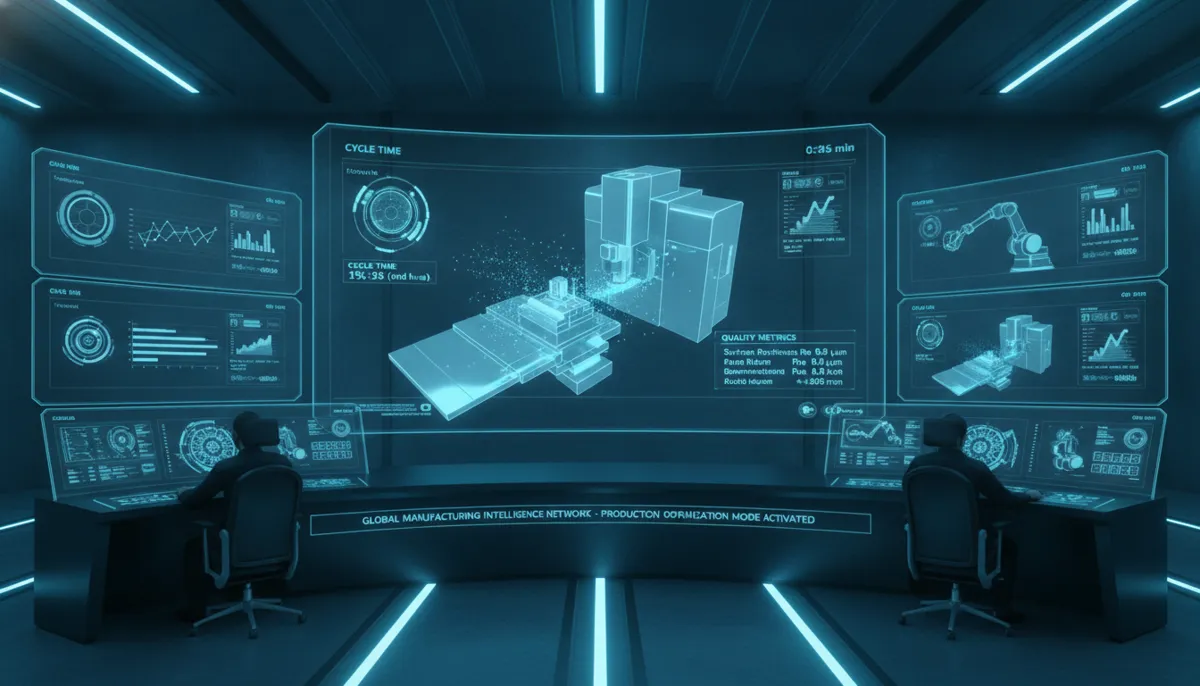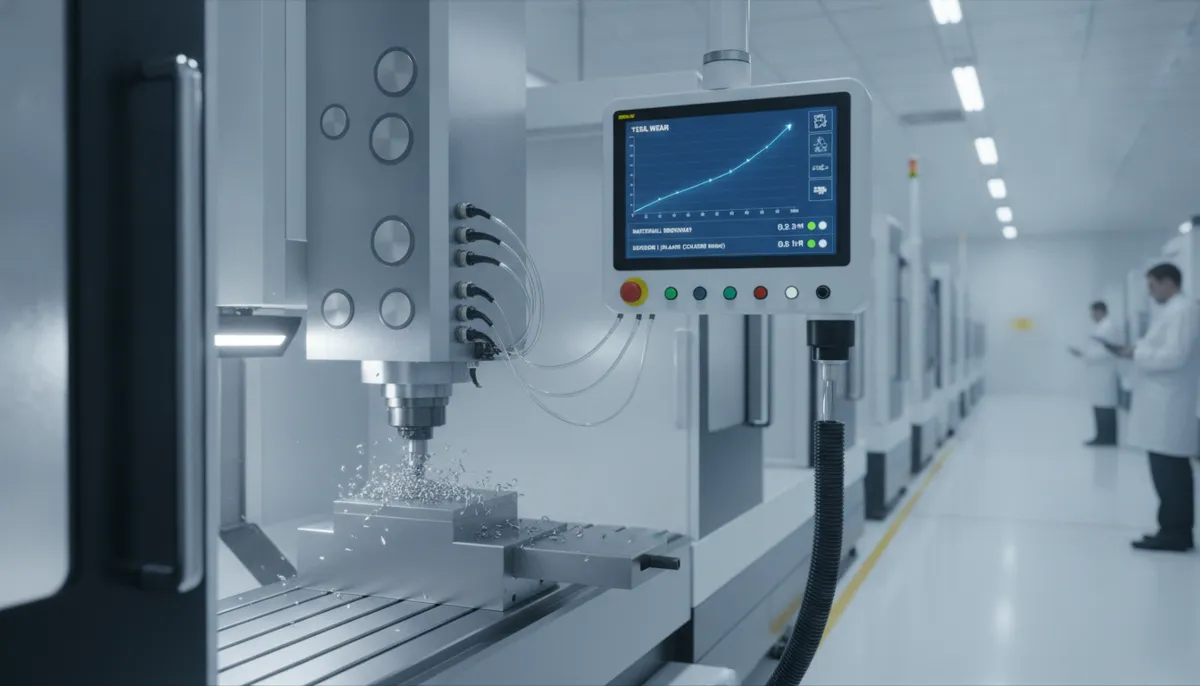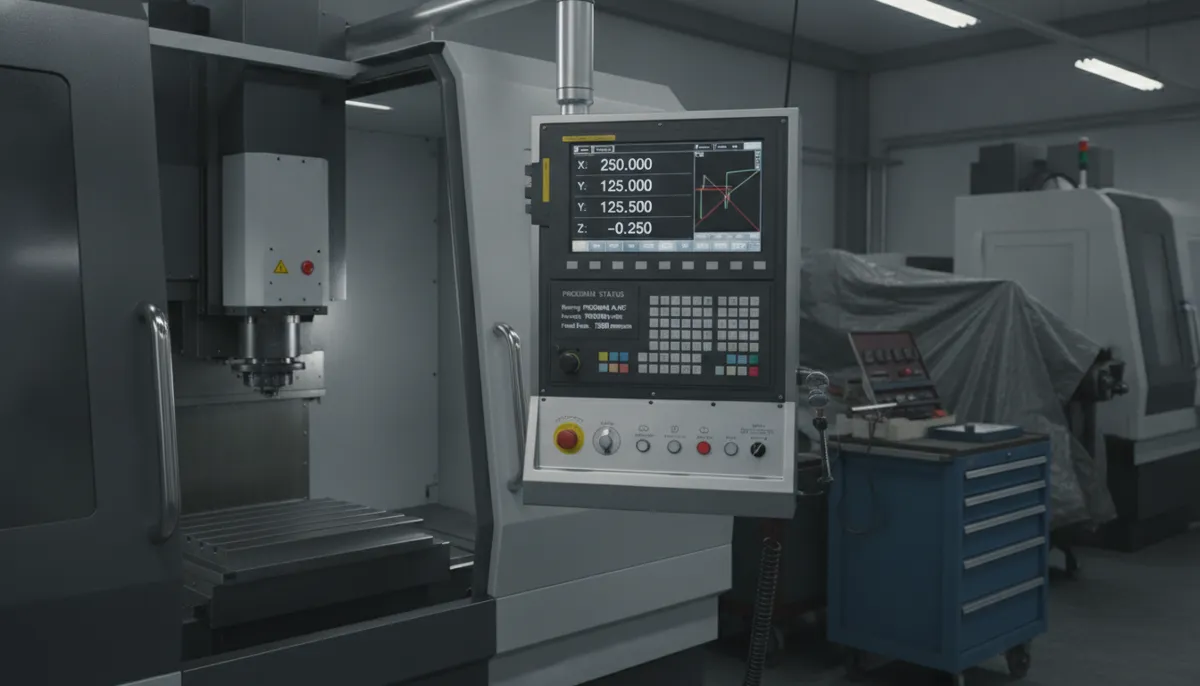
If you’re a CNC beginner — or a buyer evaluating machines for your workshop or factory — understanding the CNC controller is the single most important step to making the right investment. The CNC controller is the brain of every CNC machine: it interprets G-code instructions and converts them into precise electrical signals that drive motors, spindles, and axes. Without a reliable CNC control unit, even the finest machine frame and spindle assembly cannot produce accurate, repeatable parts. This guide by QFCNCMACHINE — founded in 2010 in Dongguan, China, with 15 years of CNC manufacturing experience — breaks down every major CNC controller type, its core functions, and exactly how to choose the right one for your application.
1. Why the CNC Controller Market Is Accelerating in 2026
The CNC controller sits at the intersection of two of the fastest-growing technology trends in manufacturing: automation and precision. According to Mordor Intelligence (2026), the global CNC machines market is valued at USD 79.14 billion in 2026 and is projected to reach USD 105.70 billion by 2031, growing at a CAGR of 5.96%. The report highlights that 5-axis CNC configurations are the fastest-growing segment at 8.25% CAGR — a trend that places enormous demands on controller capability, particularly in multi-axis interpolation and real-time motion control.[1]
MarketsandMarkets (2023) further confirms that increasing automation in manufacturing — driven by the need for high-precision components in automotive, aerospace, and electronics — is the primary growth driver for the CNC market, projected to grow from USD 67.5 billion (2023) to USD 80.4 billion by 2028 at a CAGR of 3.5%. The report specifically identifies controller intelligence — look-ahead processing, jerk control, and AI-assisted toolpath optimization — as key differentiators between entry-level and industrial-grade CNC systems.[2]
Additionally, Fortune Business Insights (2026) values the CNC machine tools market at USD 108.58 billion in 2026, growing to USD 251.61 billion by 2034 at a CAGR of 11.10%, with Asia Pacific holding a 55.70% dominant share — the region where QFCNCMACHINE’s manufacturing base and primary export markets are concentrated.[3]
The bottom line: as machines become more complex and tolerances tighter, the CNC controller is no longer a commodity component — it is the primary determinant of machine performance, reliability, and total cost of ownership.
2. What Is a CNC Controller?
A CNC controller (also called a CNC control unit or CNC system) is the electronic and software system that reads a machining program (G-code / M-code), calculates the required axis movements in real time, and outputs precise electrical signals to servo drives or stepper motor drivers. It simultaneously manages spindle speed, coolant, tool changes, and safety interlocks.
A complete CNC control unit typically consists of:
- CPU / Motion Controller Board — processes G-code and calculates interpolated axis positions
- Operator Panel (HMI) — touchscreen or keypad interface for program input and machine control
- Servo / Drive Interface — communicates position commands to axis drives
- I/O Board — manages inputs (limit switches, probes) and outputs (coolant, ATC, spindle relay)
- Power Supply Unit — conditions and distributes power to all controller components
The quality of the controller’s interpolation algorithm, look-ahead buffer, and jerk control directly determines the surface finish, dimensional accuracy, and cycle time of every part the machine produces.
3. Types of CNC Controllers: A Complete Overview
Choosing the right CNC controller type is one of the most consequential decisions when buying or upgrading a CNC machine. Here are the six main categories:
① Open-Loop Controller
Uses stepper motors with no position feedback. Simple and low-cost. Suitable for light-duty routing, engraving, and hobbyist CNC. Not recommended for precision metalworking — missed steps cause undetected errors.
② Closed-Loop Controller
Uses servo motors with encoder feedback. The controller continuously compares commanded vs. actual position and corrects in real time. Standard for industrial CNC milling, turning, and machining centers. Delivers the accuracy and repeatability required for ±0.01 mm tolerances.
③ PC-Based (Software) Controller
Runs on a standard industrial PC with motion control software (e.g., Mach3, LinuxCNC, or proprietary platforms). Highly flexible and upgradeable. Popular in research labs, custom machines, and retrofit applications. Performance depends heavily on PC hardware and real-time OS configuration.
④ Dedicated Hardware Controller
Purpose-built embedded systems (e.g., Fanuc, Siemens SINUMERIK, Mitsubishi M800). Extremely reliable, fast, and optimized for specific machine types. Higher upfront cost but lower long-term maintenance. The industry standard for production environments.
⑤ Multi-Axis Controller (4/5/6-Axis)
Coordinates simultaneous movement of 4, 5, or 6 axes including rotary (A, B, C) axes. Required for complex aerospace, mold, and medical components. Demands advanced interpolation algorithms (NURBS, spline) and high look-ahead block counts to maintain surface quality at speed.
⑥ IoT / Industry 4.0 Controller
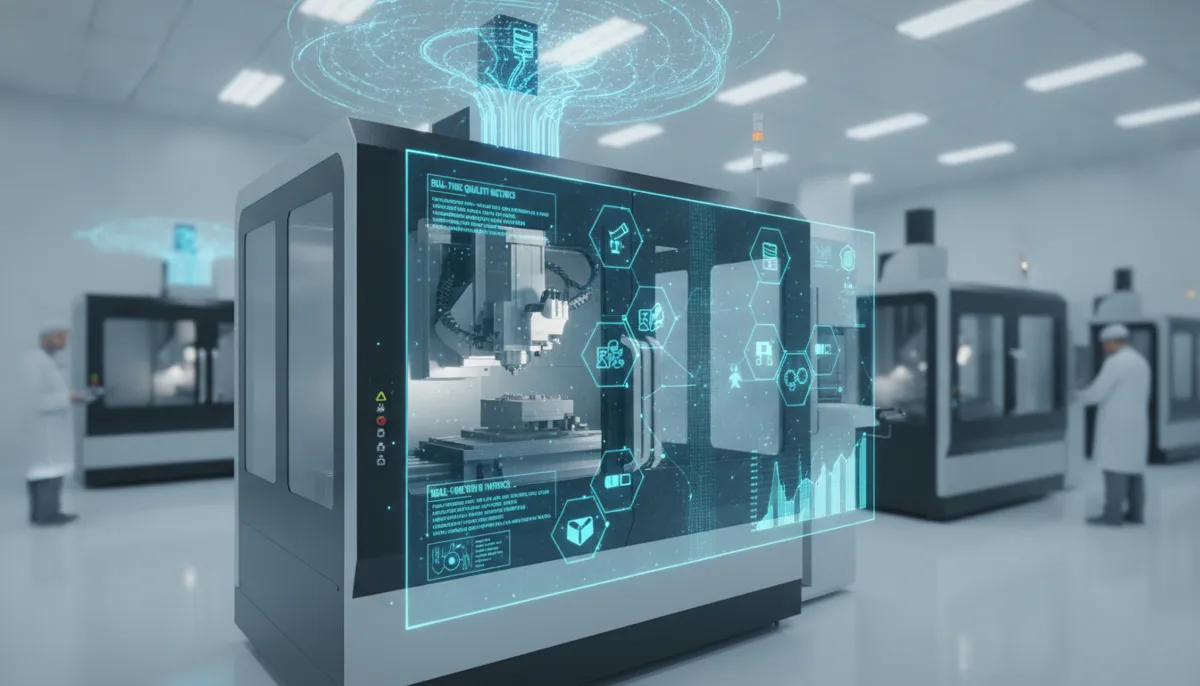
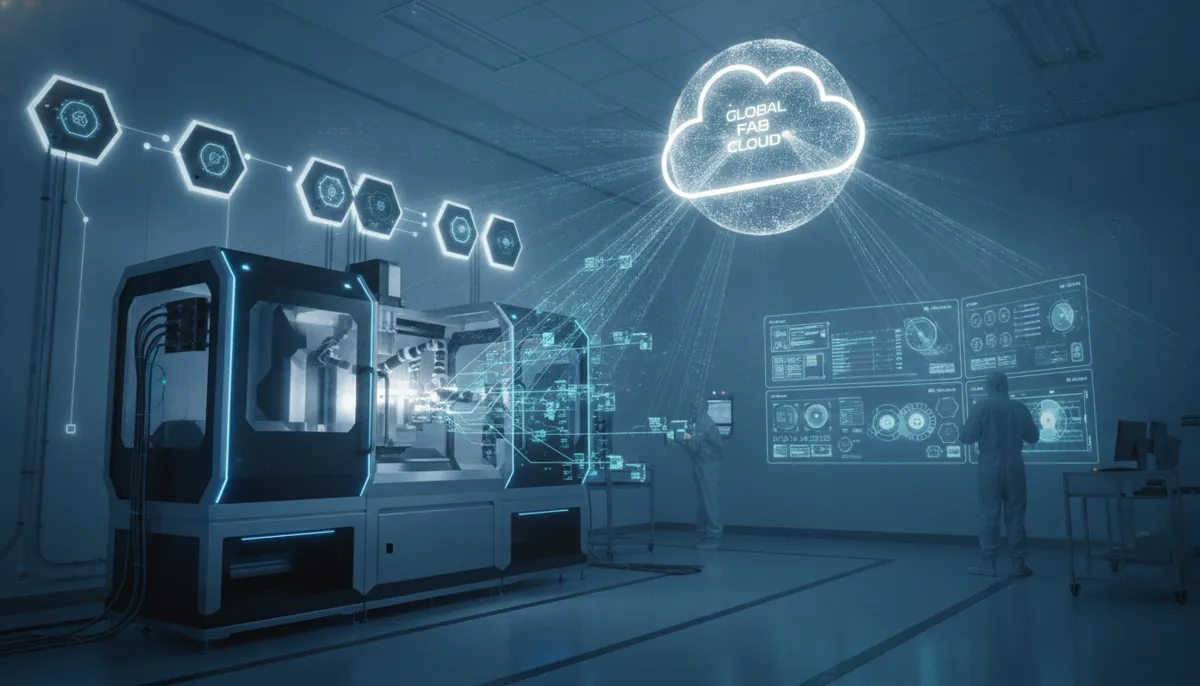
Next-generation controllers with built-in Ethernet/IP, OPC-UA, and cloud connectivity. Enable real-time remote monitoring, predictive maintenance, and ERP/MES integration. Increasingly adopted as manufacturers implement smart factory strategies aligned with Industry 4.0 mandates.
4. Key Functions of a CNC Controller
4.1 Motion Interpolation
Interpolation is how the controller calculates the path between programmed points. Linear interpolation (G01) moves in a straight line; circular interpolation (G02/G03) moves in an arc; helical interpolation combines circular and linear motion for thread milling; spline/NURBS interpolation produces ultra-smooth curves for mold and die surfaces. The more interpolation types a controller supports, the wider the range of parts it can produce accurately.
4.2 Look-Ahead Processing
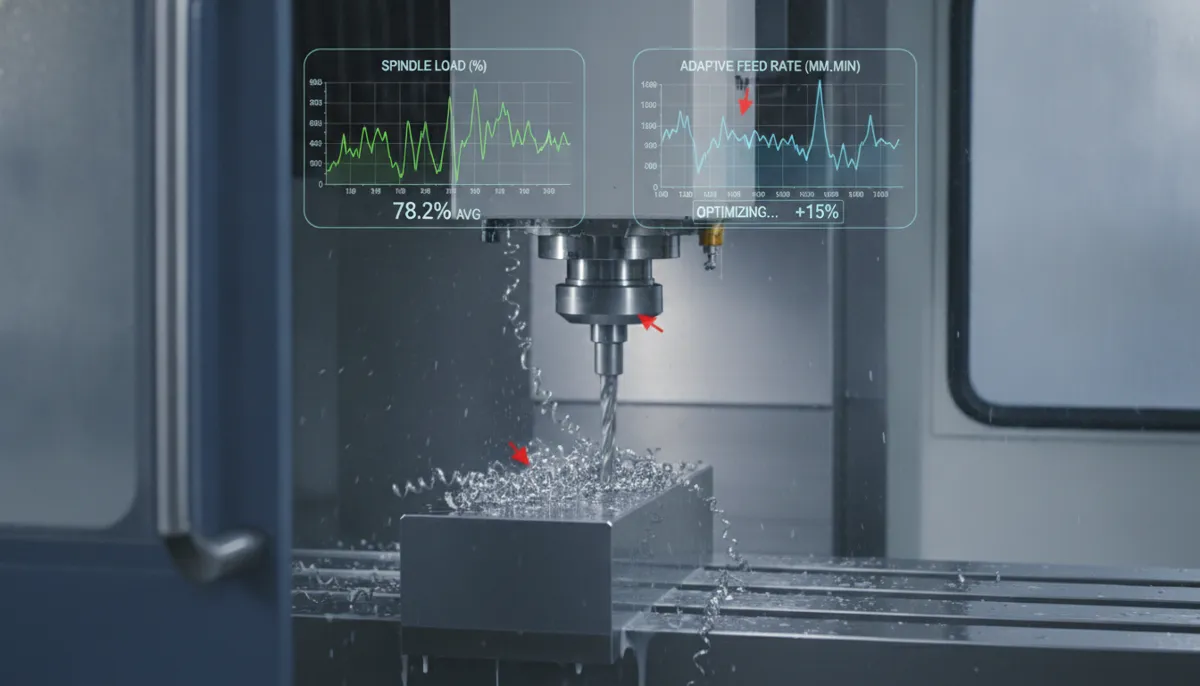
Look-ahead is the controller’s ability to pre-read upcoming program blocks and pre-calculate velocity adjustments before reaching a corner or direction change. A controller with only 20 look-ahead blocks must slow dramatically at every corner, increasing cycle time and leaving deceleration marks. A controller with 500–1,000 look-ahead blocks maintains near-constant velocity through complex contours — critical for high-speed machining of molds and aerospace components.
4.3 Jerk Control
Jerk is the rate of change of acceleration. Uncontrolled jerk causes mechanical shock, vibration marks on surfaces, and premature wear on ballscrews and bearings. Advanced CNC controllers implement S-curve acceleration profiles that limit jerk, producing smoother motion and better surface finish — particularly important when machining hardened steel or thin-wall aluminum.
4.4 Tool and Work Offset Management
The controller stores tool length offsets (H values), tool radius offsets (D values), and work coordinate offsets (G54–G59). Accurate offset management is what allows the same program to run correctly on different machines or with different tool assemblies. Errors in offset management are the leading cause of first-part crashes and dimensional rejects.
4.5 Connectivity and Integration
Modern CNC controllers support Ethernet, USB, RS232, and CAN bus communication. Ethernet connectivity enables direct program transfer from CAM workstations, remote monitoring via web browser, and integration with factory MES/ERP systems. One QFCNCMACHINE customer reduced manual data entry errors by over 80% after switching to automated Ethernet-based program transfer.
5. CNC Controller Types Compared: Which Is Right for You?
The table below compares the six controller types across the criteria that matter most for purchasing decisions. Note: this is a technology-type comparison, not a brand comparison.
| Criteria | Open-Loop | Closed-Loop | PC-Based | Dedicated HW | Multi-Axis (5/6) | IoT / I4.0 |
|---|---|---|---|---|---|---|
| Position Feedback | ❌ None | ✅ Encoder | ✅ Optional | ✅ Encoder | ✅ Encoder | ✅ Encoder |
| Typical Accuracy | ±0.1 mm | ±0.005–0.02 mm | ±0.01–0.05 mm | ±0.001–0.005 mm | ±0.001–0.005 mm | ±0.001–0.005 mm |
| Max Axes | 3 | 3–4 | 3–6 | 3–6 | 5–6 | 5–6 |
| Look-Ahead Blocks | 10–20 | 50–200 | 100–500 | 500–2,000 | 1,000–5,000 | 1,000–5,000 |
| Interpolation Types | Linear only | Linear, Circular | Linear, Circular, Helical | Linear, Circular, Helical, Spline | Linear, Circular, Helical, Spline, NURBS | All + AI-adaptive |
| Network Connectivity | ❌ | USB / RS232 | Ethernet, USB | Ethernet, USB, CAN | Ethernet, USB, CAN | Ethernet, OPC-UA, Cloud |
| Best For | Hobbyist / Routing | Job shop / SME | R&D / Retrofit | Production / High volume | Aerospace / Mold | Smart factory / I4.0 |
| Relative Cost | Lowest | Low–Medium | Medium | Medium–High | High | High–Premium |
6. Real-World Applications of CNC Controllers
Case 1 — High-Precision Mold Making
A mold shop in Guangdong was experiencing surface finish inconsistencies on injection mold cavities. The root cause was an outdated controller with a 20-block look-ahead buffer and no jerk control, causing visible deceleration marks at every direction change. After upgrading to a closed-loop controller with 1,000-block look-ahead and S-curve jerk control, the shop reduced mold reject rates from 8% to under 1% within three months — eliminating the need for manual polishing on most cavities.
Case 2 — Automotive Aluminum Parts Production
An automotive Tier-1 supplier producing aluminum brackets to ±0.02 mm tolerance was experiencing vibration marks at high feed rates. Their existing controller lacked adequate jerk control, causing mechanical shock at corners. Switching to a dedicated hardware controller with real-time S-curve acceleration eliminated the marks entirely, increasing throughput by 20% without any sacrifice in dimensional accuracy.
Case 3 — University Rapid Prototyping Lab
A university engineering lab required a flexible CNC controller for rapid prototyping across multiple materials (aluminum, PEEK, carbon fiber composite). They selected a PC-based open-architecture controller that allowed custom G-code macros and seamless CAD/CAM integration. The result: setup time reduced by 40% and the ability to switch material profiles in minutes — without reprogramming from scratch.
7. What Our Customers Say
“We retrofitted our entire 12-machine CNC milling line in our Stuttgart facility with QFCNCMACHINE’s closed-loop control units two years ago. The improvement in surface finish consistency was immediate — our automotive customers noticed the difference before we even told them about the upgrade. Setup time dropped significantly and we’ve had zero unplanned controller failures in 24 months of three-shift operation.”
“Our job shop in Ohio runs a mix of 3-axis and 5-axis work for aerospace and defense customers. We needed a controller upgrade that wouldn’t require retraining our entire team. QFCNCMACHINE’s multi-axis controller had the most intuitive HMI we evaluated, and their technical support team walked us through the integration over two days. Our programmers were fully productive within a week. The look-ahead improvement alone cut our cycle times on complex contour work by around 18%.”
“We manufacture precision mold tooling for electronics OEMs across Southeast Asia from our facility in Penang. Before upgrading our CNC controllers, we were losing time to manual offset corrections and inconsistent surface finishes between shifts. The QFCNCMACHINE control unit’s offset management and Ethernet program transfer eliminated both problems. First-article approval rates with our customers improved noticeably, and we’ve since recommended QFCNCMACHINE to two other shops in our industrial park.”
8. Pros and Cons of Upgrading Your CNC Controller
✅ Pros of Upgrading
- Immediate improvement in surface finish and dimensional accuracy
- Faster cycle times through improved look-ahead and jerk control
- Reduced scrap and rework costs — better ROI on material
- Ethernet connectivity enables remote monitoring and ERP integration
- Modern HMI reduces operator training time significantly
- Extends useful life of existing machine frames (retrofit option)
- Industry 4.0 readiness — supports smart factory integration
- QFCNCMACHINE controllers: 2-year warranty + lifetime technical support
❌ Cons / Considerations
- Higher upfront investment vs. keeping an existing controller
- Retrofit installations require compatibility assessment (motor brands, drive interfaces)
- Operator retraining required when switching controller brands or platforms
- PC-based controllers require ongoing OS and software maintenance
- Advanced multi-axis controllers require experienced programmers to fully utilize
9. How to Choose the Right CNC Controller: A Step-by-Step Framework
Step 1 — Define Your Most Complex Part
Identify the most geometrically complex part you need to machine. Count the number of axes required, the tightest tolerance, and the required surface finish (Ra value). This defines your minimum controller specification.
Step 2 — Assess Your Production Volume
High-volume production demands a dedicated hardware controller with maximum reliability and minimal downtime. Low-volume R&D or prototyping work can tolerate a PC-based controller with more flexibility and lower cost.
Step 3 — Check Motor and Drive Compatibility
If retrofitting, verify that the new controller supports your existing servo motor brand (Yaskawa, Fanuc, Mitsubishi, Delta). QFCNCMACHINE provides retrofit compatibility guides and adapter kits for the most common motor brands.
Step 4 — Evaluate Connectivity Requirements
If your shop runs CAM software on a networked workstation, Ethernet connectivity is essential. If you plan to implement remote monitoring or connect to an MES/ERP system within 3 years, choose an IoT-capable controller now.
Step 5 — Consider Total Cost of Ownership (TCO)
Factor in not just purchase price but: installation cost, training time, spare parts availability, warranty coverage, and technical support responsiveness. A cheaper controller that causes one week of unplanned downtime per year may cost more than a premium controller over a 5-year horizon.
10. Frequently Asked Questions About CNC Controllers
What is the difference between a CNC controller and a CNC control unit?
The terms are often used interchangeably. Technically, a CNC controller refers to the core processing board and software that interprets G-code and calculates motion. A CNC control unit is the complete assembled system — including the controller board, power supply, I/O boards, servo interfaces, and operator panel. QFCNCMACHINE offers both integrated control units and modular controller boards for custom integration.
Can I retrofit an old CNC machine with a new controller?
Yes — retrofitting is one of the most cost-effective ways to modernize older machines. QFCNCMACHINE provides retrofit kits with adapters compatible with common servo motor brands including Yaskawa, Mitsubishi, and Delta. Many customers have upgraded machines from the 1990s to modern performance levels at a fraction of the cost of a new machine. We recommend a compatibility assessment before purchase — contact our technical team at bella@qfcncmachine.com for a free evaluation.
Which CNC controller type is best for beginners?
For beginners machining metals, a closed-loop controller with an intuitive touchscreen HMI offers the best balance of accuracy and ease of use. Look for built-in tutorials, plain-language alarm messages (not just error codes), and responsive manufacturer support. Avoid open-loop controllers for metal cutting — missed steps cause undetected dimensional errors that can scrap entire batches.
How do I choose between a 3-axis and 5-axis controller?
If you primarily machine prismatic parts with flat surfaces, pockets, and simple profiles, a 3-axis controller is sufficient and more cost-effective. For complex shapes — molds, aerospace components, impellers, turbine blades — a 5-axis controller is necessary to achieve the required geometry in a single setup. QFCNCMACHINE’s controllers support up to 6 axes, allowing you to start with 3-axis operation and expand by adding drives as your work complexity grows.
What is look-ahead and why does it matter?
Look-ahead is the number of upcoming G-code blocks the controller pre-reads to calculate smooth velocity transitions before corners and direction changes. A controller with 20 look-ahead blocks must decelerate sharply at every corner, leaving marks and increasing cycle time. A controller with 1,000 look-ahead blocks maintains near-constant velocity through complex contours — dramatically improving surface finish and throughput on mold and aerospace work.
What is QFCNCMACHINE’s warranty and return policy?
All QFCNCMACHINE CNC controllers and machines come with a 2-year manufacturer’s warranty covering defects in materials and workmanship. Returns are supported for confirmed quality issues. We do not support no-reason returns without a verified quality defect. For after-sales support, contact bella@qfcncmachine.com or call +86 151 1824 3737.
Need Help Choosing the Right CNC Controller?
QFCNCMACHINE has supplied CNC equipment to 750+ customers across Europe, North America, and Southeast Asia since 2010. Our team will assess your application and recommend the right controller type — at no cost. Get in touch today.
References
- Mordor Intelligence, CNC Machines Market Size & Share Analysis — Growth Trends and Forecast (2026–2031), 2026. View Report →
- MarketsandMarkets, CNC Machine Market Size, Share & Industry Trends Growth Analysis Report — Global Forecast to 2028, October 2023. View Report →
- Fortune Business Insights, CNC Machine Market Size, Share & Industry Analysis — Regional Forecast 2026–2034, July 2026. View Report →
- Mordor Intelligence, Machining Centers Market Size, Share & Growth Trends Report, 2024. View Report →