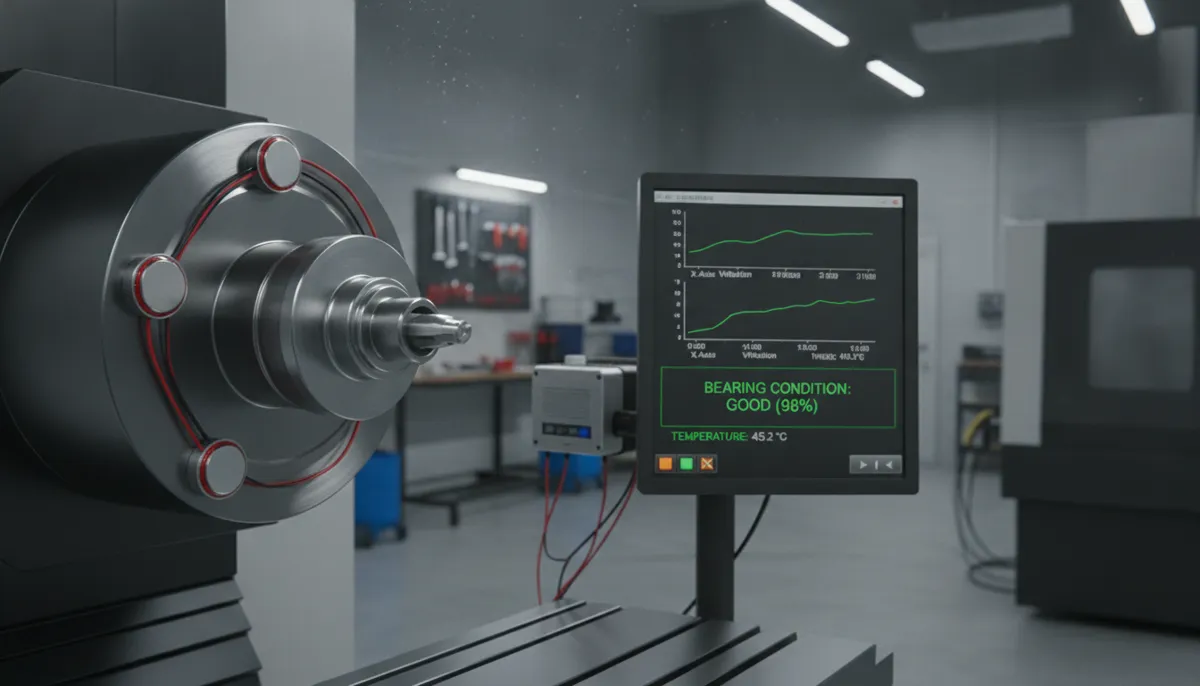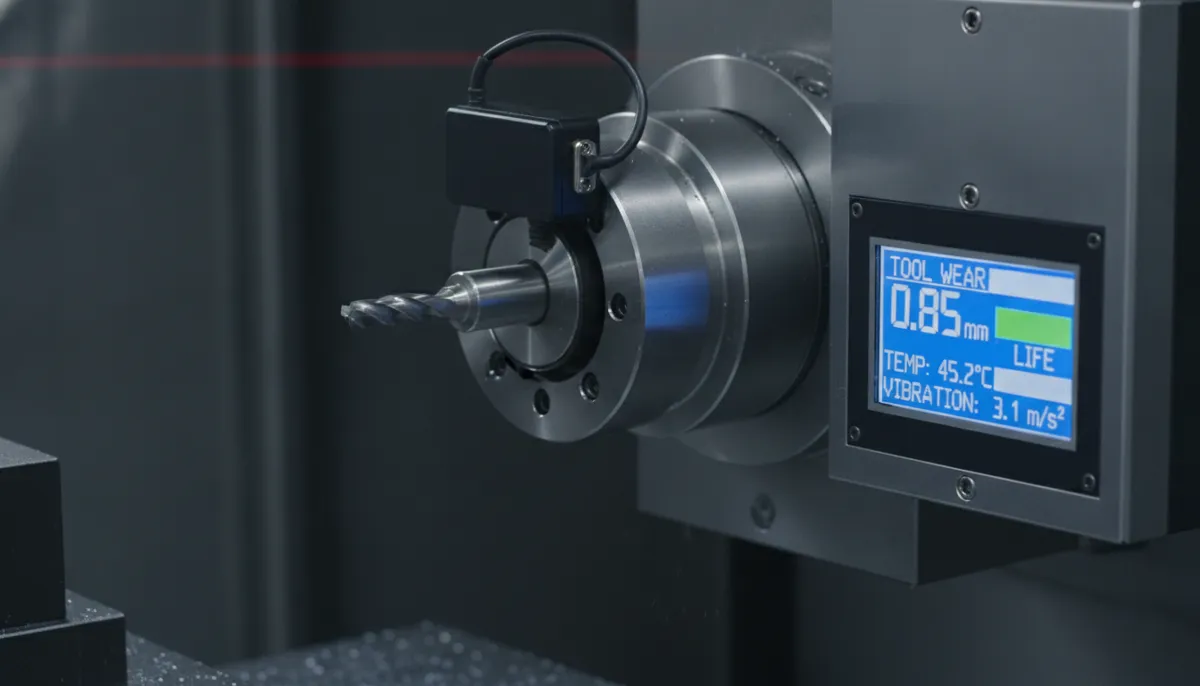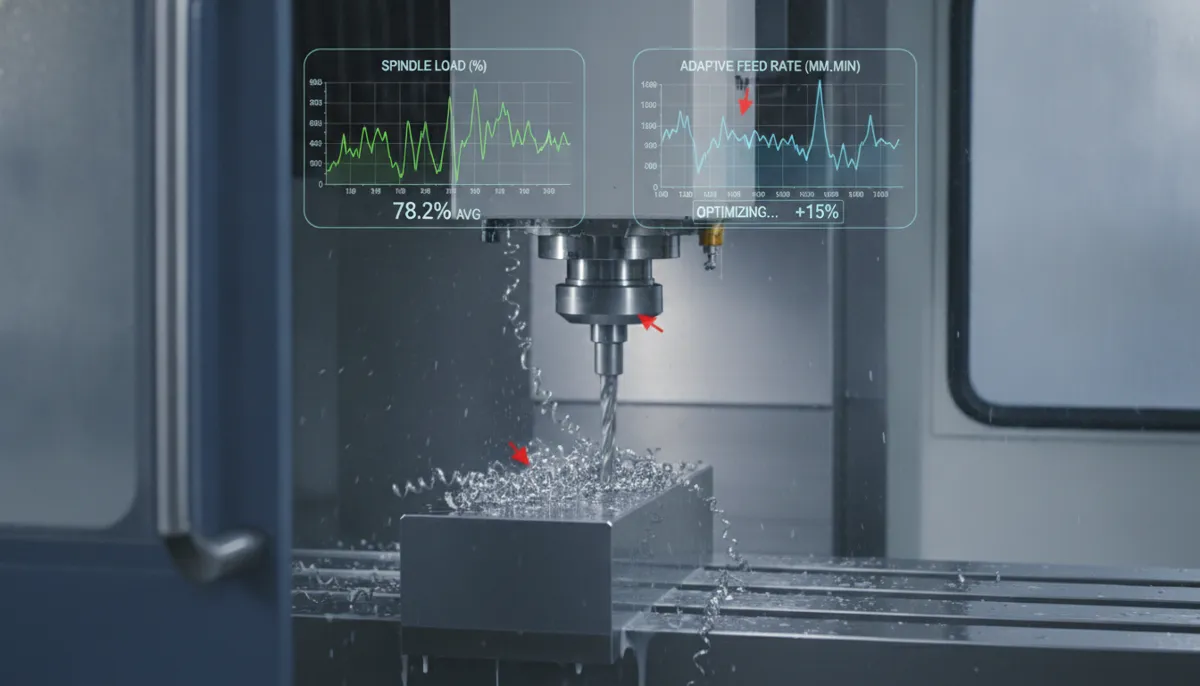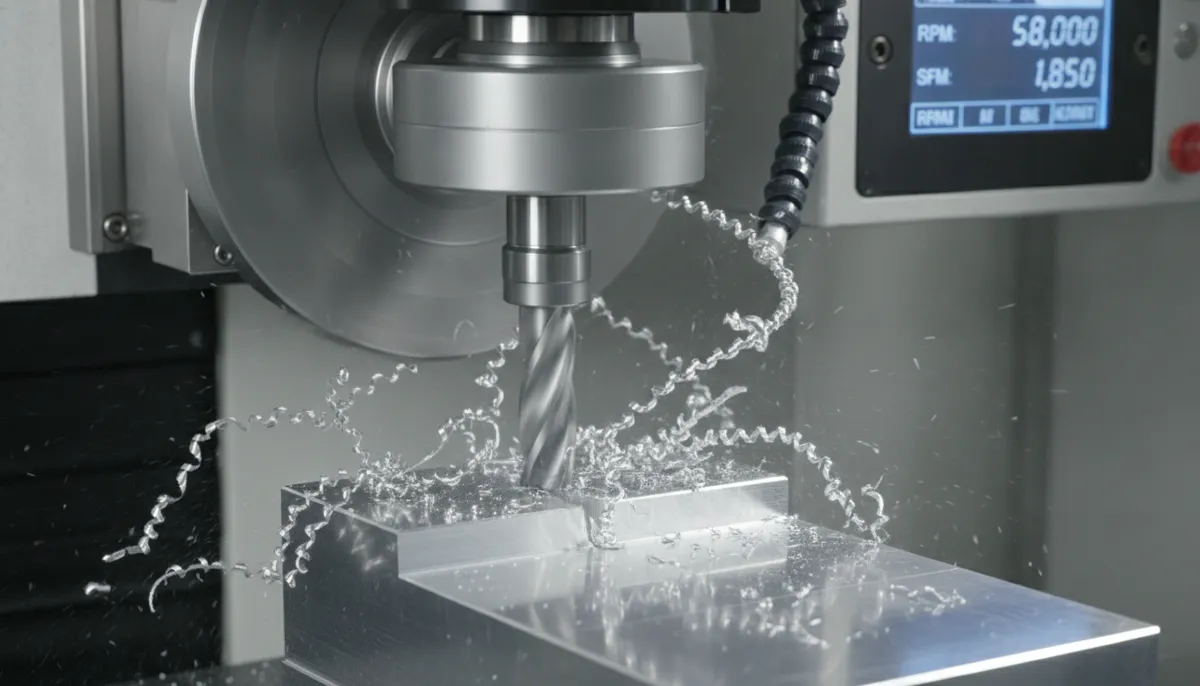
CNC spindle speed — the rotational velocity at which your machine’s spindle turns — is one of the most critical parameters in CNC machining. Set it correctly and you get clean cuts, long tool life, and consistent surface finish. Set it wrong and you face burned tools, chatter, and scrapped parts. This guide from QFCNCMachine breaks down CNC RPM explained, the relationship between RPM and surface speed (SFM / m/min), and how to calculate the right spindle speed for any material — from aluminium to hardened steel.
1. Why CNC Spindle Speed Mastery Is a Market Imperative
The global CNC machine market is projected to grow from USD 74.82 billion in 2025 to USD 105.7 billion by 2031, driven by rising demand for precision-machined components across automotive, aerospace, and medical sectors (Mordor Intelligence, 2025). Within this landscape, machining centres — where spindle speed optimisation is most critical — are expanding rapidly: vertical spindle configurations alone accounted for 58.97% of the machining centres market share in 2025, with multi-spindle configurations forecast at a 7.34% CAGR through 2031 (Mordor Intelligence, 2025). The broader machine tools market is expected to reach USD 110.97 billion by 2033, with CNC machine tools registering the highest CAGR of 4.5% (MarketsandMarkets, 2026). The CNC machining and turning centres segment alone was valued at USD 25.9 billion in 2023 and is projected to reach USD 40.6 billion by 2030 at a CAGR of 6.6% (Grand View Research, 2024). In this environment, incorrect spindle speed selection is one of the leading causes of avoidable tooling costs — making this guide essential reading for any shop floor operator or CNC buyer.
2. What Is CNC Spindle Speed?
CNC spindle speed is how fast your machine’s spindle rotates, measured in RPM (revolutions per minute). However, RPM alone does not tell you how fast the cutting edge is actually moving through the material. That is described by surface speed — expressed as SFM (surface feet per minute) in imperial units, or m/min (metres per minute) in metric. Understanding SFM vs RPM CNC is the single most important concept for beginners: the same RPM produces a completely different cutting speed depending on tool diameter.
3. How to Calculate CNC Spindle Speed (RPM & SFM)
The relationship between RPM and surface speed is governed by two simple formulas. Always calculate SFM first from your tool manufacturer’s data sheet, then derive the RPM for your specific tool diameter.
3.1 Imperial Formula (SFM → RPM)
Example — Cutting 6061 aluminium at 800 SFM with a 1/2-inch end mill:
RPM = (800 × 3.82) ÷ 0.5 = 6,112 RPM
3.2 Metric Formula (m/min → RPM)
where Vc = cutting speed in m/min, D = tool diameter in mm
Example — Cutting 6061 aluminium at 244 m/min with a 12 mm end mill:
RPM = (244 × 1,000) ÷ (3.1416 × 12) = 6,477 RPM
3.3 Reverse: RPM → SFM (Imperial)
Example — Verifying a 0.75-inch end mill at 2,500 RPM:
SFM = (2,500 × 0.75) ÷ 3.82 = 490 SFM (appropriate for P20 steel roughing)
4. CNC Spindle Speed Reference Table by Material
Use the table below as a starting point. Always verify with your tool manufacturer’s data sheet and adjust based on machine rigidity, coolant, and depth of cut. Note: 1 SFM ≈ 0.3048 m/min.
| Material | Recommended SFM | Recommended m/min | Notes |
|---|---|---|---|
| 6061 Aluminium | 600 – 1,000 | 183 – 305 | High RPM; use sharp uncoated or ZrN-coated tools |
| Mild Steel (1018) | 200 – 350 | 61 – 107 | Moderate RPM; flood coolant recommended |
| P20 / H13 Tool Steel | 150 – 300 | 46 – 91 | Lower SFM reduces thermal stress and edge chipping |
| Stainless Steel (304) | 100 – 200 | 30 – 61 | Low SFM; work-hardens quickly — avoid dwelling |
| Titanium (Ti-6Al-4V) | 80 – 150 | 24 – 46 | Very low SFM; high-pressure coolant essential |
| Brass / Copper | 400 – 700 | 122 – 213 | Good machinability; watch for built-up edge |
| MDF / Hardwood | 1,200 – 1,800 | 366 – 549 | High SFM but limit RPM on large-diameter router bits |
| HDPE / Acrylic | 800 – 1,200 | 244 – 366 | Sharp tools; avoid heat build-up to prevent melting |
5. Real-World CNC Spindle Speed Problems Solved
5.1 Aluminium Automotive Brackets — USA
Pain Point: A US-based automotive supplier machining 6061 aluminium brackets experienced severe chatter and a poor surface finish. They were running a 1/4-inch end mill at 8,000 RPM (SFM 524) — well below the optimal range for aluminium.
Solution: Using the formula RPM = (SFM × 3.82) ÷ D, we targeted 800 SFM: RPM = (800 × 3.82) ÷ 0.25 = 12,224 RPM. Increasing spindle speed to 12,000 RPM raised SFM to 785, which is within the optimal aluminium range. Surface finish improved from Ra 3.2 µm to Ra 1.6 µm, and tool life increased by 40%.
“We had been running our aluminium jobs at conservative speeds for years, assuming slower was safer. QFCNCMachine’s team walked us through the SFM calculation and we immediately saw the difference — smoother finish, less chatter, and our end mills last twice as long now. The ROI on the speed optimisation alone paid for the machine consultation.”
5.2 P20 Tool Steel Mould Machining — Germany
Pain Point: A German mould maker using a 3/4-inch carbide end mill on P20 steel at 4,000 RPM (SFM 785) experienced excessive heat, edge chipping, and premature tool failure. SFM 785 is appropriate for aluminium — not hardened tool steel.
Solution: Reducing RPM to 2,500 brought SFM to 490, within the recommended 300–500 SFM range for P20. Cutting temperature dropped by an estimated 30%, edge chipping was eliminated, and tool life extended by 50%. The key principle: harder materials require lower SFM to reduce thermal stress.
“We were burning through carbide inserts every two hours on our P20 moulds. After recalculating the SFM with QFCNCMachine’s reference table, we dropped the spindle speed and the difference was immediate — no more blue chips, no more chipping. Our tooling costs dropped by nearly 40% in the first month.”
5.3 MDF Furniture Routing — Malaysia
Pain Point: A furniture manufacturer in Malaysia routing MDF panels with a 1/2-inch router bit at 18,000 RPM (SFM 2,356) produced consistent burn marks and rough edges, causing high rejection rates.
Solution: Reducing RPM to 14,000 (SFM 1,833) brought the cutting speed within the recommended range for MDF. Burn marks were eliminated, edge quality improved significantly, and the rejection rate dropped from 12% to under 1%. The principle: for large-diameter router bits in wood composites, limit RPM even when SFM targets are high.
“Our operators assumed maximum RPM meant maximum quality. The burn marks on our MDF edges were costing us a fortune in rework. QFCNCMachine helped us understand that SFM — not RPM — is what matters. After adjusting the spindle speed, our rejection rate went from 12% to almost zero within a week.”
6. High RPM vs Low RPM: Pros & Cons
✅ High RPM — Pros
- Faster material removal on soft materials (aluminium, plastics, wood)
- Better surface finish on non-ferrous metals
- Reduced cutting forces on light cuts
- Shorter cycle times for high-volume production
❌ High RPM — Cons
- Excessive heat on hard materials (steel, titanium)
- Rapid tool wear if SFM exceeds material limit
- Risk of chatter on long-reach tools or thin walls
- Built-up edge in aluminium if chip evacuation is poor
✅ Low RPM — Pros
- Longer tool life on hardened steels and titanium
- Lower thermal stress — essential for stainless and Inconel
- Better control in interrupted cuts and thin-wall features
- Reduced vibration on large-diameter facing operations
❌ Low RPM — Cons
- Slower cycle times and lower productivity
- Potential for built-up edge in aluminium (SFM too low)
- Poor surface finish on soft materials
- Under-utilises machine capability on light alloys
7. Common CNC Spindle Speed Mistakes to Avoid
Mistake 1 — Using Maximum RPM for All Materials
The most common beginner error. Maximum RPM is only appropriate when the resulting SFM falls within the recommended range for your material and tool. Running a 3/4-inch end mill at 12,000 RPM on steel produces over 2,900 SFM — roughly 10× the safe limit. Always calculate SFM first.
Mistake 2 — Confusing RPM with Cutting Speed
CNC surface speed (SFM or m/min) is the actual parameter that governs tool wear and surface finish. RPM is simply the machine setting you use to achieve the target SFM for a given tool diameter. Changing tool diameter without adjusting RPM changes your cutting speed — often dramatically.
Mistake 3 — Ignoring Tool Diameter When Scaling RPM
A 1/8-inch end mill and a 1/2-inch end mill require very different RPM settings to achieve the same SFM. Using the same RPM for both results in either a dangerously over-sped large tool or a severely under-sped small tool. Recalculate RPM every time you change tool diameter.
Mistake 4 — Overlooking Coolant and Chip Evacuation
Even a correctly calculated RPM can cause tool failure if chips are not evacuated efficiently. In aluminium at high SFM, chip re-cutting is a major cause of built-up edge. Use air blast or flood coolant, and consider chip-breaking tool geometries for deep pockets.

8. Frequently Asked Questions About CNC Spindle Speed
What is the difference between RPM and SFM in CNC machining?
RPM (revolutions per minute) is the rotational speed of the spindle — the number you set on the machine controller. SFM (surface feet per minute) is the actual speed at which the cutting edge moves through the material, and it depends on both RPM and tool diameter. SFM is the parameter that governs tool wear, heat generation, and surface finish. Always determine your target SFM first, then calculate the required RPM.
How do I calculate the correct spindle speed for my material?
Use the formula: RPM = (SFM × 3.82) ÷ Tool Diameter (inches). First, look up the recommended SFM for your material and tool from the manufacturer’s data sheet (e.g., 600–1,000 SFM for aluminium, 200–350 SFM for mild steel). Then calculate RPM for your specific tool diameter. For metric, use: RPM = (Vc × 1,000) ÷ (π × D), where Vc is in m/min and D is in mm.
What spindle speed should I use for stainless steel?
Stainless steel (e.g., 304 or 316) requires a low SFM of 100–200 SFM (30–61 m/min) due to its work-hardening tendency. For a 1/2-inch carbide end mill: RPM = (150 × 3.82) ÷ 0.5 = 1,146 RPM. Use sharp tools, consistent feed rate, and avoid dwelling in the cut to prevent work hardening.
What happens if CNC spindle speed is too high?
Excessive spindle speed generates too much heat at the cutting edge, leading to accelerated tool wear, edge chipping, poor surface finish, and potential tool breakage. In aluminium, it can cause built-up edge. In steel, it causes work hardening and blue chips — a clear sign that cutting temperature has exceeded the tool’s thermal limit. If you see blue or brown chips, reduce RPM immediately.
Can I use the same spindle speed for different tool diameters?
No. Each tool diameter requires a different RPM to maintain the same SFM. A 1/8-inch tool and a 1/2-inch tool at the same RPM will have cutting speeds that differ by a factor of four. Always recalculate RPM when changing tool diameter, even if you are cutting the same material.
What is QFCNCMachine’s warranty and return policy?
All QFCNCMachine CNC machines come with a 2-year warranty covering manufacturing defects and component failures. Returns are supported for confirmed quality issues. We do not support no-reason returns where no quality defect is present. For warranty claims or technical support, contact us at bella@qfcncmachine.com or call +86 15118243737.
Get the Right Spindle Speed for Your Application
Founded in 2010 and trusted by 750+ customers across Europe, North America, and Southeast Asia, QFCNCMachine’s engineering team in Dalingshan, Dongguan can review your material, tooling, and machine setup — and give you a precise RPM recommendation at no charge.
References
- Mordor Intelligence, CNC Machines Market Size, Share & Growth Trends Report, 2025. https://www.mordorintelligence.com/industry-reports/cnc-machines-market
- Mordor Intelligence, Machining Centers Market Size, Share & Growth Trends Report, 2025. https://www.mordorintelligence.com/industry-reports/machining-centers-market
- MarketsandMarkets, Machine Tools Market Size, Share & Analysis, 2026. https://www.marketsandmarkets.com/Market-Reports/machine-tools-market-168345068.html
- Grand View Research, CNC Machining and Turning Centers Market Size, Share & Trends Analysis Report, 2024. https://www.grandviewresearch.com/industry-analysis/cnc-machining-turning-centers-market-report