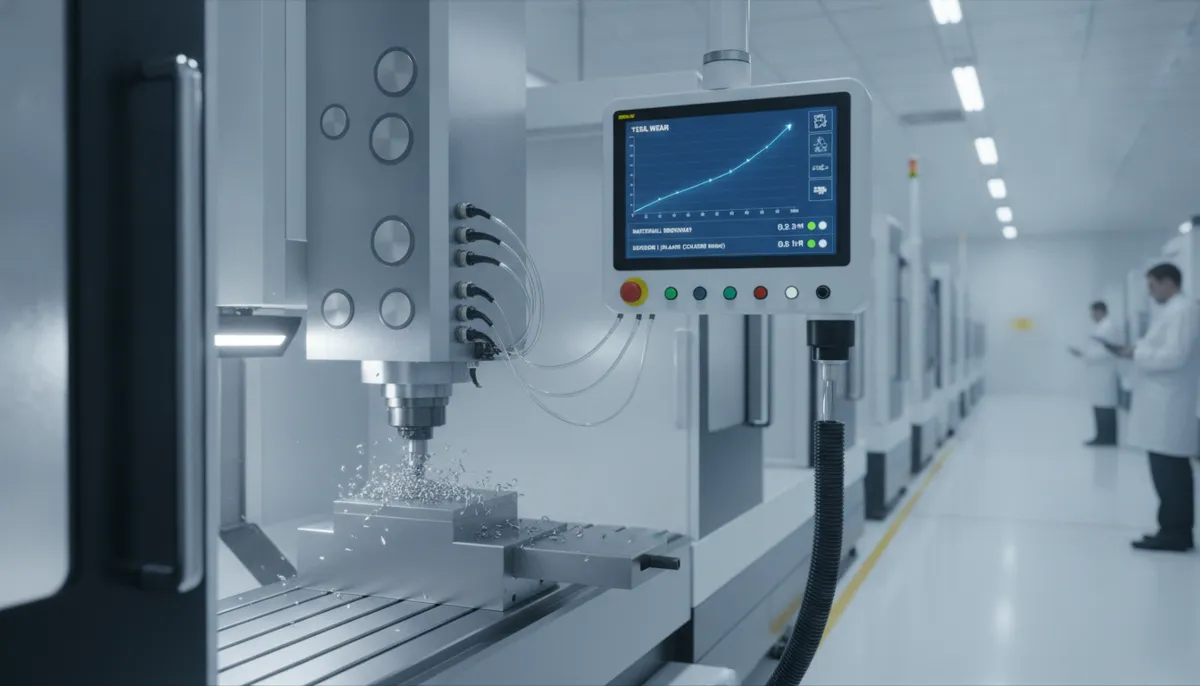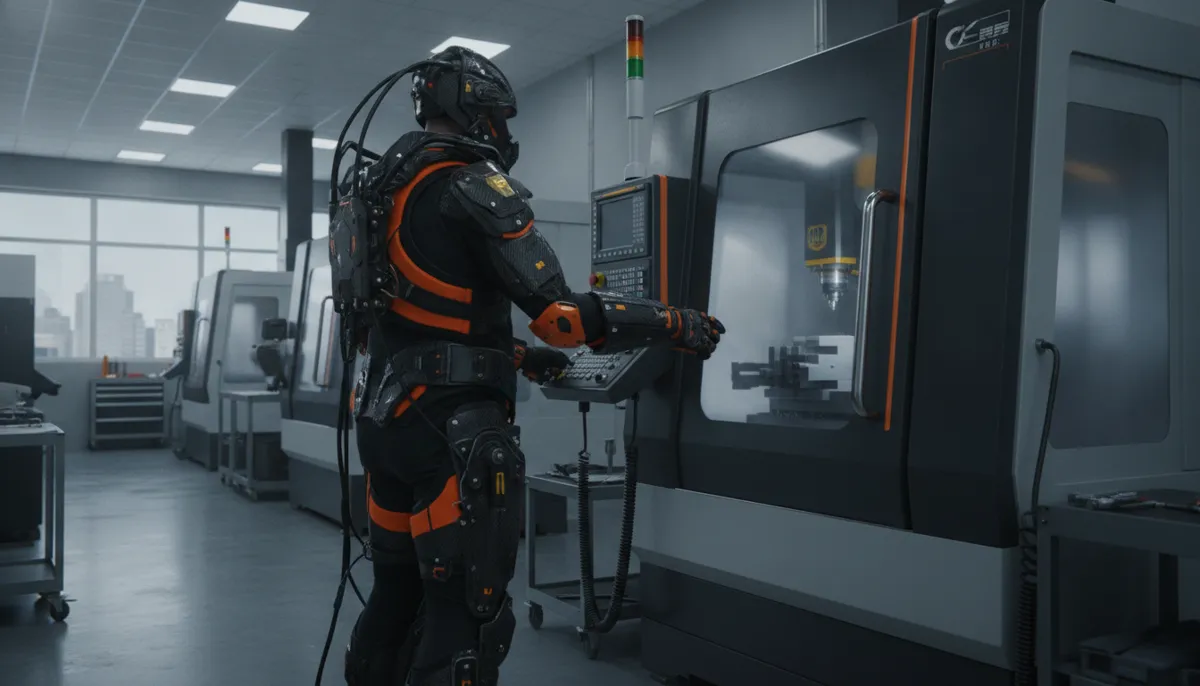
A CNC exoskeleton — a wearable upper-body support device designed for industrial operators — is increasingly being adopted in precision machining environments to reduce the cumulative physical strain that comes with a full shift of machine tending, part handling, and repetitive arm movements. At QFCNCMACHINE.COM, we have been engineering and exporting precision CNC machining centers since 2010, supporting 750+ clients across Europe, North America, and Southeast Asia from our factory in Dalingshan, Dongguan, Guangdong, China. While we specialize in CNC machine tools rather than wearable devices, our engineering team works closely with clients on complete shop-floor ergonomics — and the question of whether a CNC exoskeleton is worth the investment comes up regularly. This guide provides an objective, data-backed answer.
1. Why CNC Exoskeleton Adoption Is Accelerating
The business case for a CNC exoskeleton starts with the cost of doing nothing. The Liberty Mutual 2024 Workplace Safety Index — one of the most widely cited annual benchmarks for U.S. workplace injury costs — reports that the top ten causes of serious workplace injuries cost U.S. businesses a combined USD 47.90 billion in direct workers’ compensation costs in 2024, with overexertion and repetitive motion injuries consistently ranking among the top three causes. These are precisely the injury mechanisms that upper-body exoskeletons are designed to address in manufacturing environments (Liberty Mutual, 2024 Workplace Safety Index). $CITE_1
On the product market side, the global industrial exoskeleton market was valued at approximately USD 590 million in 2025 and is projected to reach USD 1.79 billion by 2033, growing at a CAGR of 14.5%, according to Grand View Research. Manufacturing — including precision machining, automotive assembly, and aerospace fabrication — is identified as one of the primary end-use segments driving this growth, as employers seek to reduce MSD-related absenteeism and workers’ compensation liability (Grand View Research, Exoskeleton Market Size, Share & Trends Report, 2026–2033). $CITE_2
The ergonomic evidence base for industrial exoskeletons is also well-established. A NIOSH Science Bulletin reviewing the research literature on industrial exoskeletons confirmed that upper-body exoskeletons decreased muscle activity and reduced spinal muscle loading, resulting in a measurable decrease in overall spinal muscle fatigue during physically demanding industrial tasks — the core claim that underpins the business case for deploying a CNC exoskeleton in a machine shop environment (CDC/NIOSH, Industrial Exoskeletons Science Bulletin). $CITE_3
2. Core Features to Evaluate in a CNC Exoskeleton
2.1 Adaptive Upper-Body Load Distribution
The primary function of any CNC exoskeleton designed for machining environments is to redistribute the load placed on the shoulders, deltoids, and rotator cuff during sustained arm elevation and repetitive reaching. Passive exoskeletons achieve this through spring-loaded or elastic mechanisms that provide counterbalancing force proportional to arm position — no battery or electronics required. Active exoskeletons use motorized actuators and sensor feedback to provide dynamic, adjustable support. For most CNC machine tending applications, a well-designed passive upper-body exoskeleton provides meaningful fatigue reduction with lower maintenance complexity and no charging requirement.
2.2 Lightweight Frame Construction
Operator acceptance is one of the most commonly cited challenges in industrial exoskeleton deployment. A device that is uncomfortable, restrictive, or noticeably heavy will be abandoned within days regardless of its ergonomic benefit. Leading industrial exoskeletons for manufacturing use carbon fiber or high-strength polymer frames that keep total device weight in the 2–5 kg range, with ergonomic harness systems designed to distribute that weight across the torso rather than concentrating it at the shoulders. For CNC operators who wear the device for a full 8–12 hour shift, frame weight and harness comfort are as important as the support mechanism itself.
2.3 Quick-Release and Compatibility with Shop PPE
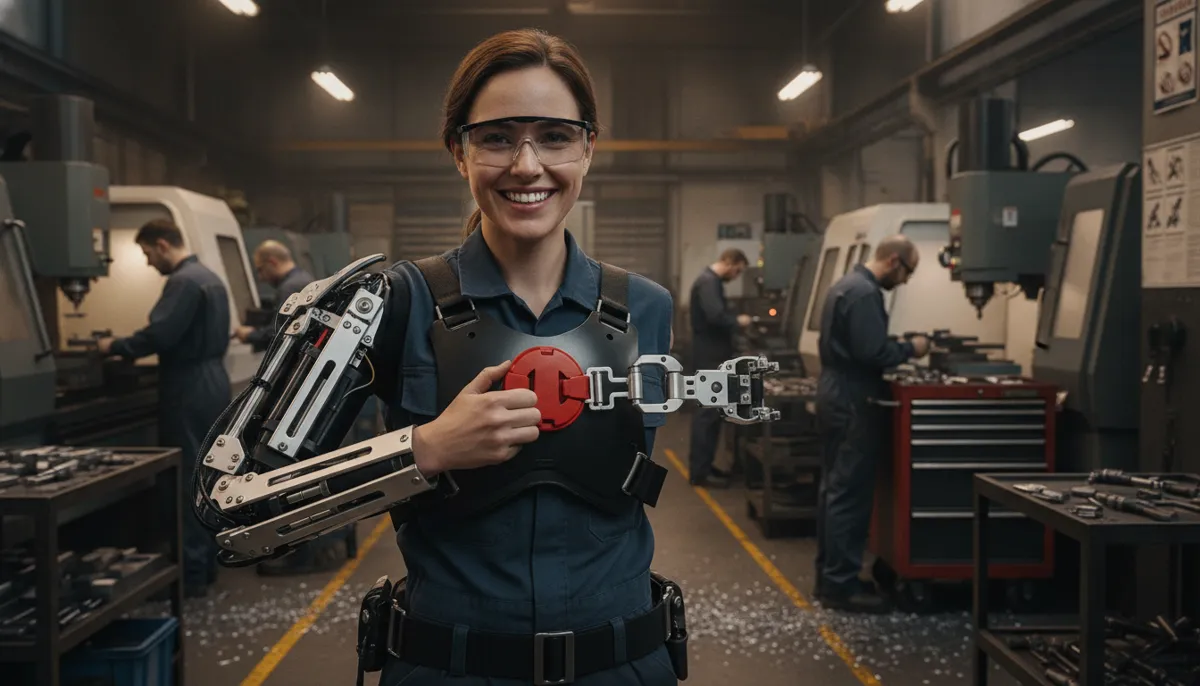
A CNC exoskeleton deployed in a live machine shop must be compatible with existing personal protective equipment — safety glasses, hearing protection, cut-resistant gloves, and in some environments, face shields. Quick-release mechanisms that allow the device to be removed in seconds without tools are essential for tasks where the exoskeleton would be a hindrance rather than a help, such as confined-space access or tasks requiring extreme overhead reach. Compatibility with standard shop uniforms and coveralls should be verified before purchase.
2.4 Adjustability Across Operator Body Types
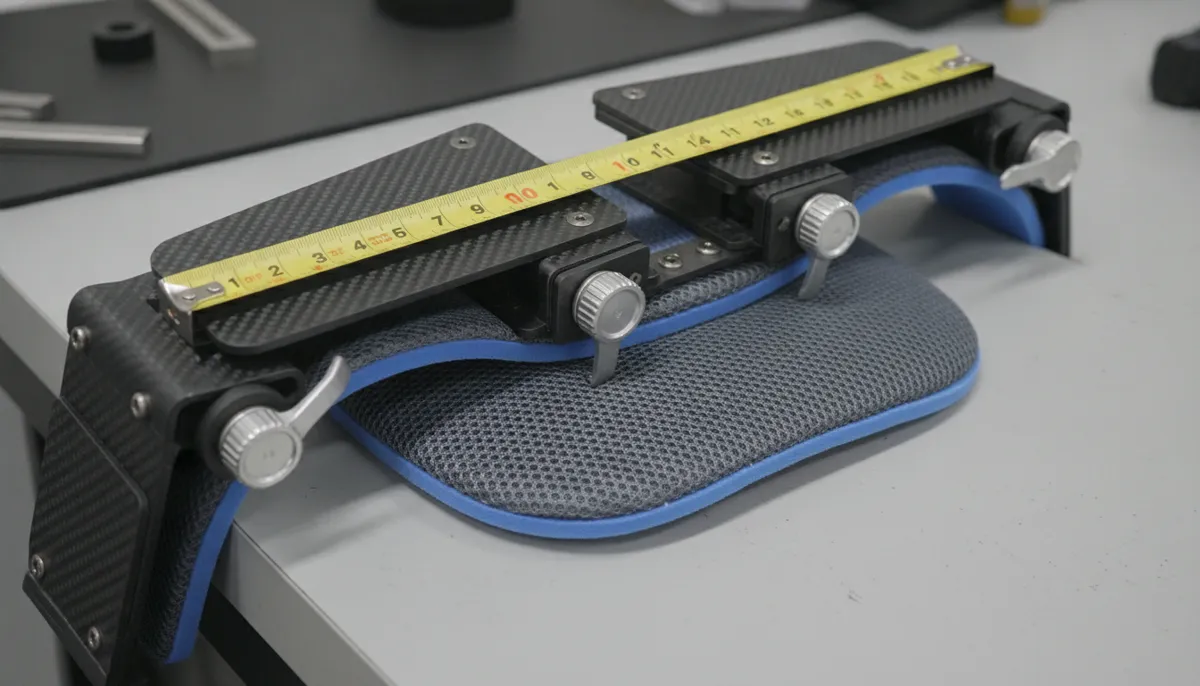
A shop deploying a CNC exoskeleton across a team of operators will encounter a wide range of body types, heights, and arm lengths. Devices with tool-free adjustment systems that cover a broad size range (typically S through XXL) reduce the per-unit cost of deployment and simplify fleet management. Some manufacturers offer size-specific frames; others use a single adjustable platform. Verifying the adjustment range against your actual operator population before committing to a fleet purchase is a practical due-diligence step.
3. CNC Exoskeleton Types: Passive vs. Active — Which Is Right for Your Shop?
| Feature | Passive Upper-Body Exoskeleton | Active (Powered) Upper-Body Exoskeleton |
|---|---|---|
| Support Mechanism | Spring / elastic counterbalance — proportional to arm position | Motorized actuators with sensor-driven dynamic adjustment |
| Battery / Charging | None required | Requires daily charging; typical shift life 8–12 hours |
| Weight | Typically 2–4 kg | Typically 4–8 kg (motor and battery add weight) |
| Maintenance | Low — periodic inspection of springs and harness | Higher — firmware updates, battery management, motor service |
| Adjustability | Manual spring tension adjustment | Software-configurable support profiles per task |
| Best CNC Application | Machine tending, sustained arm elevation, repetitive reaching | Variable-load tasks, heavy part manipulation, data-driven ergonomics programs |
| Typical Entry Cost | Lower — no electronics or software licensing | Higher — hardware, software, and ongoing support costs |
| Operator Acceptance | Generally higher — lighter, simpler, no charging discipline required | Variable — depends on comfort of specific device and task fit |
4. Real-World Use Cases for a CNC Exoskeleton in Machining
4.1 Heavy Part Handling in Aerospace Precision Machining
Aerospace CNC operators regularly handle large titanium and aluminum billets and finished components that require sustained arm elevation during fixturing and inspection. This is one of the highest-risk ergonomic profiles in precision manufacturing — high force, sustained posture, and repetition across long shifts. A passive upper-body CNC exoskeleton with shoulder counterbalancing directly offloads the deltoid and rotator cuff during these tasks, reducing the cumulative fatigue that drives injury risk over a full shift. For aerospace shops running 10–12 hour shifts, the reduction in end-of-shift fatigue also has a measurable impact on inspection accuracy and error rates in the final hours of production.
4.2 Repetitive Machine Tending in High-Volume Automotive Production
Automotive component manufacturers running high-volume CNC turning and milling lines expose operators to thousands of repetitive arm movements per shift — loading blanks, unloading finished parts, and performing in-process gauging. This is the classic repetitive motion injury profile that OSHA and NIOSH identify as a primary driver of work-related musculoskeletal disorders in manufacturing. A CNC exoskeleton deployed on these lines reduces the muscle activation required for each repetitive cycle, allowing operators to maintain consistent performance and quality throughout the shift rather than degrading in the final two to three hours when fatigue is highest. $CITE_3
4.3 Extended Shifts and Operator Retention in Job Shops
For job shops running 12-hour shifts with small teams, operator retention is a critical business risk. Experienced CNC machinists are difficult and expensive to replace, and physical fatigue and cumulative injury are among the leading reasons skilled operators leave the trade or seek less demanding roles. Providing a CNC exoskeleton as standard equipment signals a genuine commitment to operator wellbeing — which research consistently links to higher job satisfaction, lower absenteeism, and better retention of experienced staff. The investment in exoskeleton devices is typically far lower than the cost of recruiting and training a replacement for an experienced machinist.
5. What Operators and Shop Managers Say
“We run two shifts on our aerospace titanium line and shoulder injuries were our single biggest workers’ compensation exposure. After introducing upper-body exoskeletons for our machine operators, we saw a clear reduction in end-of-shift fatigue complaints and our operators were noticeably more consistent on inspection tasks in the final two hours of the shift. The devices paid for themselves within the first year when we factored in the reduction in injury-related absenteeism alone. I’d recommend any precision shop running long shifts to at least trial them.”
“Our CNC operators were skeptical at first — nobody wants to wear something that feels restrictive on the shop floor. But within a week, the team that trialled the exoskeletons didn’t want to give them back. The shoulder support during part loading makes a real difference on a 10-hour shift. We’ve since rolled them out across our entire CNC turning department and our HR team has reported a measurable improvement in operator satisfaction scores at the last quarterly review.”
“เราผลิตชิ้นส่วนอิเล็กทรอนิกส์ความแม่นยำสูงและพนักงานต้องยกและจัดวางชิ้นงานซ้ำๆ ตลอดกะ 10 ชั่วโมง ปัญหาปวดไหล่และแขนเป็นเรื่องที่เราเจอบ่อยมาก หลังจากนำ CNC exoskeleton มาใช้ในไลน์ผลิตหลัก พนักงานรายงานว่าความเมื่อยล้าลดลงอย่างชัดเจน โดยเฉพาะในช่วงท้ายของกะ และอัตราการลาป่วยจากอาการบาดเจ็บสะสมลดลงอย่างเห็นได้ชัดในไตรมาสแรกหลังการใช้งาน”
6. Pros & Cons of Deploying a CNC Exoskeleton
✅ Advantages
- Documented fatigue reduction: NIOSH research confirms upper-body exoskeletons reduce muscle activity and spinal muscle fatigue in industrial tasks
- Reduced MSD injury risk: Directly addresses the overexertion and repetitive motion injury mechanisms that drive the largest share of manufacturing workers’ compensation costs
- Improved end-of-shift performance: Reduced fatigue in the final hours of long shifts supports better quality consistency and lower error rates
- Operator retention signal: Providing ergonomic support equipment demonstrates investment in operator wellbeing — linked to higher job satisfaction and lower turnover
- No machine modification required: Wearable device integrates into existing workflows without changes to CNC programs or machine setup
- Passive options require no power: No charging infrastructure or battery management needed for spring-based devices
❌ Considerations
- Operator acceptance varies: Some operators find wearable devices uncomfortable or restrictive — a structured trial period before fleet purchase is essential
- Not suitable for all tasks: Extreme overhead reaching or confined-space access may require removal; quick-release is a must-have feature
- Active devices require charging discipline: Powered exoskeletons add battery management to daily operations
- Initial investment: Per-unit cost is higher than traditional ergonomic aids; ROI calculation should account for injury cost reduction and retention benefits
- Fit verification required: Devices must be correctly sized and adjusted for each operator — a poorly fitted exoskeleton can create new discomfort rather than reducing it
7. Frequently Asked Questions About CNC Exoskeletons
How long does it take for CNC operators to adapt to wearing an exoskeleton?
Most operators report that the initial unfamiliarity of wearing a CNC exoskeleton resolves within the first one to three shifts. The adaptation period is shorter for passive devices, which have no electronic components and move naturally with the operator’s body. A structured introduction — starting with a half-shift trial before moving to full-shift use — improves acceptance rates and gives operators time to adjust the fit correctly. Proper harness fitting at the start of the trial is the single most important factor in operator acceptance; a poorly fitted device will be rejected regardless of its ergonomic merit.
Will a CNC exoskeleton interfere with machine controls or safety systems?
A well-designed industrial CNC exoskeleton is engineered to keep the operator’s hands and arms fully free for machine interaction. The device structure stays clear of control panels, handwheels, and tool change areas. Before deploying any exoskeleton in a live CNC environment, a practical walk-through of all operator tasks — including emergency stop access, door opening, and tool change procedures — should be completed to verify that the device does not create any new access restrictions or safety hazards. This task-compatibility check is standard practice in any responsible exoskeleton deployment program.
What is the difference between a passive and an active CNC exoskeleton?
A passive CNC exoskeleton uses mechanical springs or elastic elements to provide counterbalancing support proportional to arm position — no battery or electronics required. An active exoskeleton uses motorized actuators and sensor feedback to provide dynamic, software-configurable support that can be adjusted for different tasks. For most CNC machine tending applications, a passive upper-body device provides meaningful fatigue reduction with lower cost, lower weight, and no charging requirement. Active devices are better suited to applications with highly variable load profiles where software-configurable support levels provide a genuine advantage.
What is the warranty and return policy for exoskeletons recommended by QFCNCMACHINE?
As a CNC machine tool specialist rather than an exoskeleton manufacturer, QFCNCMACHINE does not directly sell wearable devices. Our role is to provide objective guidance on ergonomic solutions that complement our CNC machining centers. For the CNC equipment we supply, our standard policy is a 2-year warranty covering manufacturing defects and component failures under normal operating conditions. For confirmed quality issues with our equipment, we fully support returns and refunds. Warranty does not cover consumable items. Contact us for complete warranty terms on our CNC machines.
How do I calculate the ROI of deploying a CNC exoskeleton in my shop?
A practical ROI framework for a CNC exoskeleton deployment should account for: (1) reduction in workers’ compensation claims and associated direct costs; (2) reduction in injury-related absenteeism and the cost of covering absent operators; (3) reduction in operator turnover and associated recruitment and training costs; and (4) any measurable improvement in quality consistency in the final hours of long shifts where fatigue-driven errors are most common. The Liberty Mutual 2024 Workplace Safety Index provides a useful benchmark for the cost of overexertion and repetitive motion injuries against which device costs can be compared. $CITE_1 We are happy to discuss the ergonomic profile of your specific production environment — contact our team for a consultation.
Want to Reduce Machinist Fatigue and Injury Risk on Your Shop Floor?
Talk to Bella and our engineering team — 15 years in CNC manufacturing, 750+ global clients across Europe, North America, and Southeast Asia. Factory direct from Dalingshan, Dongguan, China since 2010. We help clients build ergonomically optimized CNC production environments — from machine selection to workflow design.
References
- Liberty Mutual Insurance. 2024 Workplace Safety Index — Top 10 Causes of Serious Workplace Injuries. (2024). https://business.libertymutual.com/insights/2024-workplace-safety-index/
- Grand View Research. Exoskeleton Market Size, Share & Trends Analysis Report, 2026–2033. (2025). https://www.grandviewresearch.com/industry-analysis/exoskeleton-market
- CDC / NIOSH. Industrial Exoskeletons — NIOSH Science Bulletin. (2020, updated). https://www.cdc.gov/niosh/bulletin/2020/industrial-exoskeletons.html
- ABI Research. Exoskeleton Market Forecast & Size Outlook, 2025–2030. (2025). https://www.abiresearch.com/news-resources/chart-data/exoskeleton-market-forecast-size-outlook
- Mordor Intelligence. Machining Centers Market Size, Share & Growth Trends Report, 2024. https://www.mordorintelligence.com/industry-reports/machining-centers-market