CNC Self-Optimizing Machines: AI-Driven Adaptation for Better Ergonomics & Efficiency
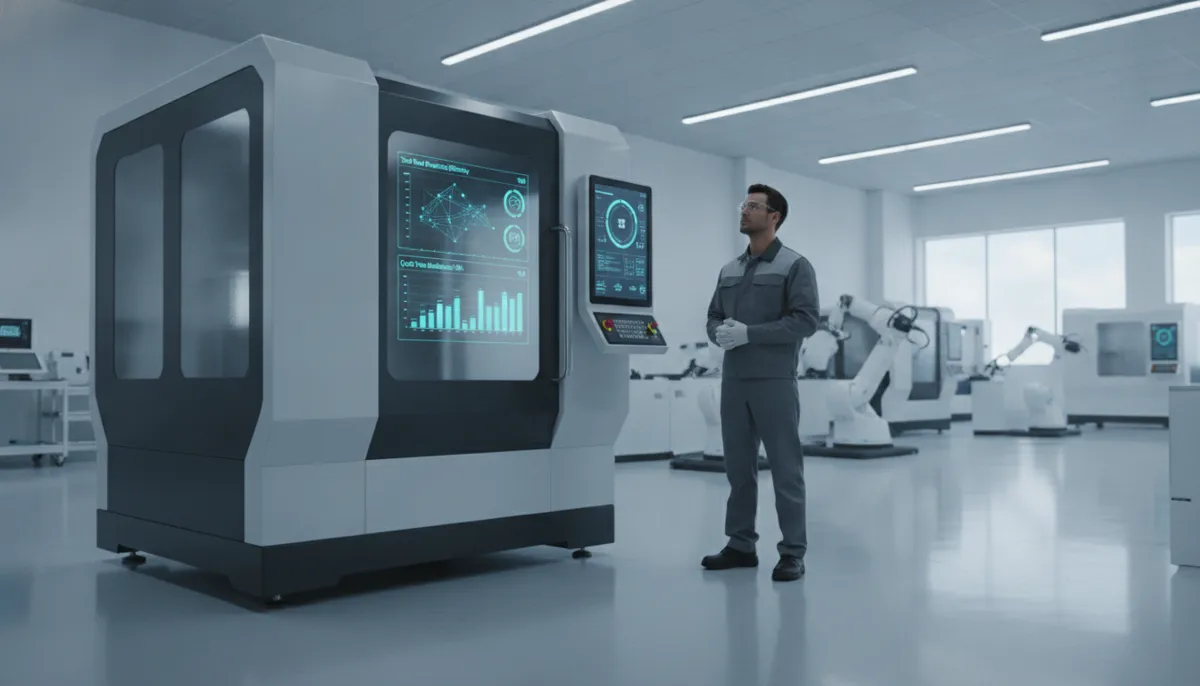
CNC self-optimizing machines represent the next evolution in precision manufacturing — systems that use AI-driven adaptive control to continuously adjust cutting parameters in real time, reducing operator workload, minimizing physical strain, and delivering more consistent part quality than fixed-parameter programming alone. At QFCNCMACHINE.COM, we have been engineering and exporting precision CNC machining centers since 2010, supporting 750+ clients across Europe, North America, and Southeast Asia from our factory in Dalingshan, Dongguan, Guangdong, China. In this guide, we explain how CNC self-optimizing machines work, what the technology stack looks like in practice, why ergonomics is a genuine and measurable benefit — and how to evaluate whether this capability is right for your production environment.
1. The Market and Workplace Case for CNC Self-Optimizing Machines
The global AI in manufacturing market — which encompasses adaptive control, machine learning-based process optimization, and intelligent CNC systems — was valued at USD 34.18 billion in 2025 and is forecast to grow at a strong CAGR through 2030, driven by demand for higher throughput, tighter tolerances, and reduced dependence on skilled operator availability (MarketsandMarkets, Artificial Intelligence in Manufacturing Market, 2025). The broader CNC machine market underpinning this growth was valued at USD 109.36 billion in 2025 and is projected to expand at a CAGR of 8.7% through the forecast period, with AI-integrated adaptive machining systems among the fastest-growing segments (Maximize Market Research, CNC Machine Market Report, 2025).
The ergonomic dimension of CNC self-optimizing machines is equally well-supported by data. The U.S. Occupational Safety and Health Administration (OSHA) identifies musculoskeletal disorders (MSDs) — caused by repetitive motions, sustained awkward postures, and constant manual machine monitoring — as among the most prevalent and costly workplace injuries in manufacturing environments (OSHA, Ergonomics: Prevention of Musculoskeletal Disorders in the Workplace). The U.S. Centers for Disease Control and Prevention (CDC/NIOSH) similarly confirms that ergonomic interventions that reduce repetitive manual tasks and sustained physical load are among the most effective strategies for reducing work-related MSD risk in industrial settings (CDC/NIOSH, About Ergonomics and Work-Related Musculoskeletal Disorders). By automating the repetitive parameter adjustments that operators would otherwise perform manually, CNC self-optimizing machines directly address these documented ergonomic risk factors.
2. Core Features of CNC Self-Optimizing Machines
2.1 AI-Powered Toolpath and Parameter Optimization
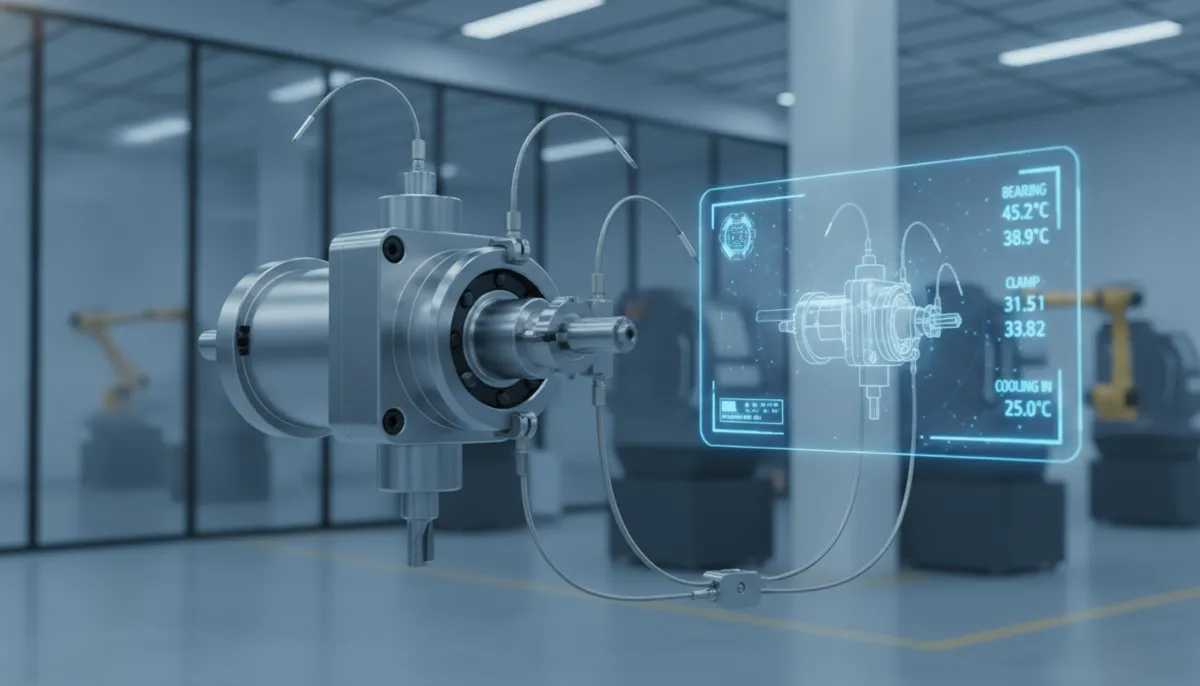
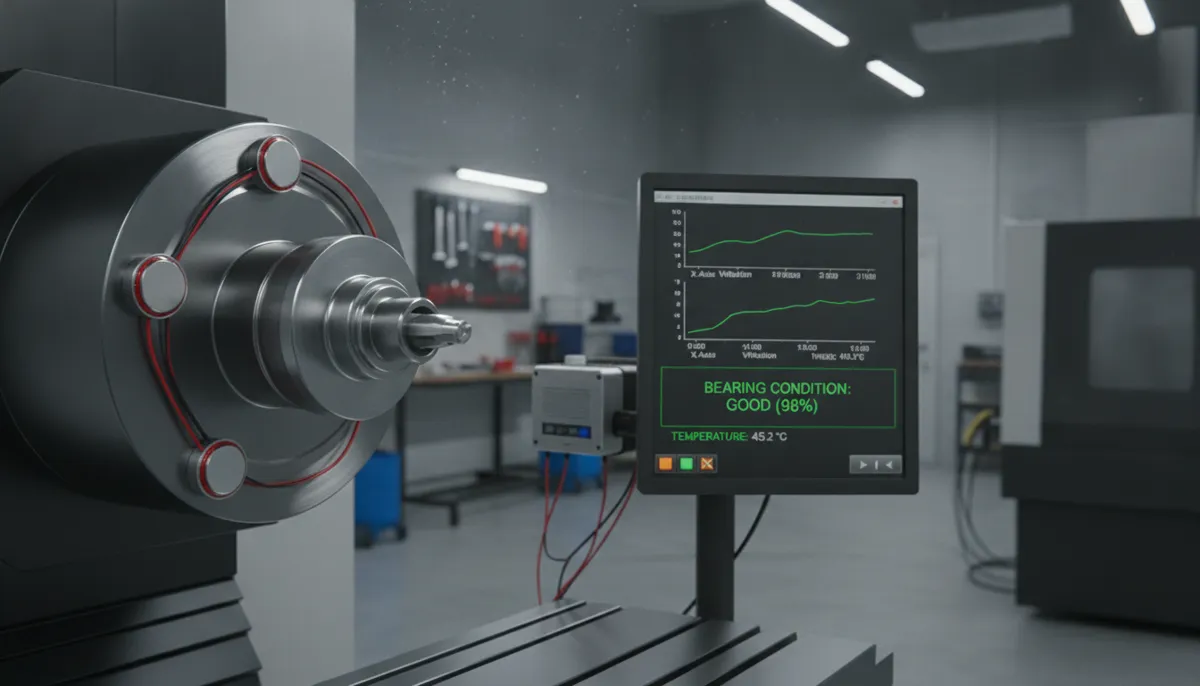
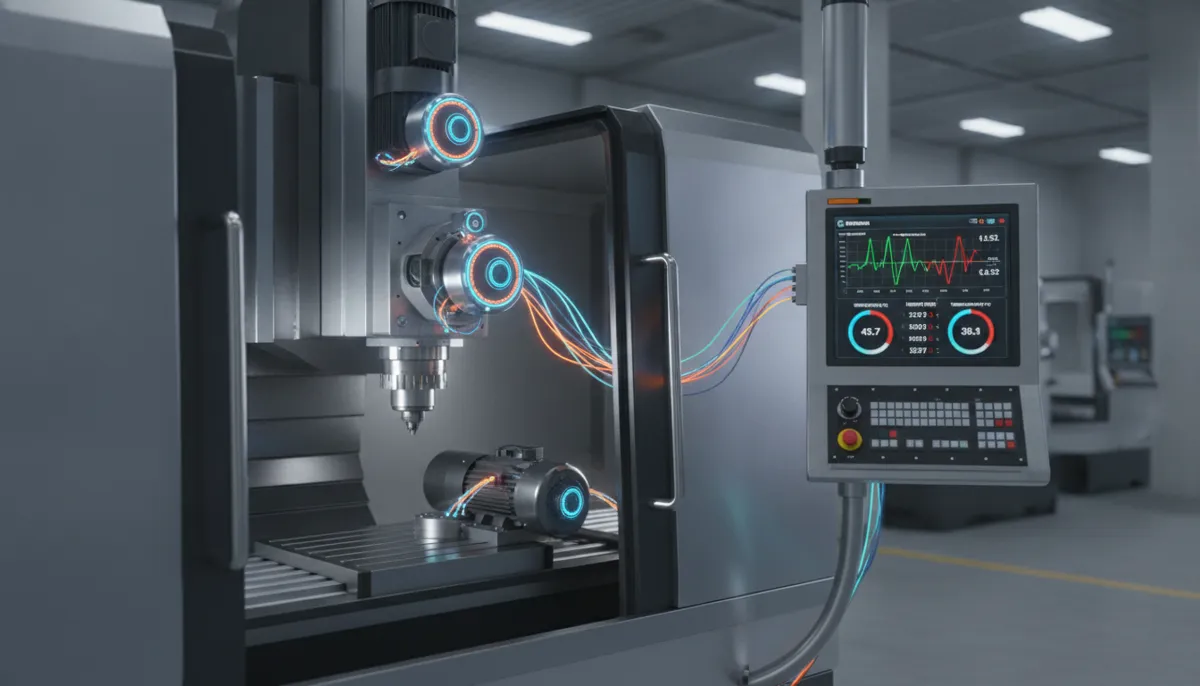
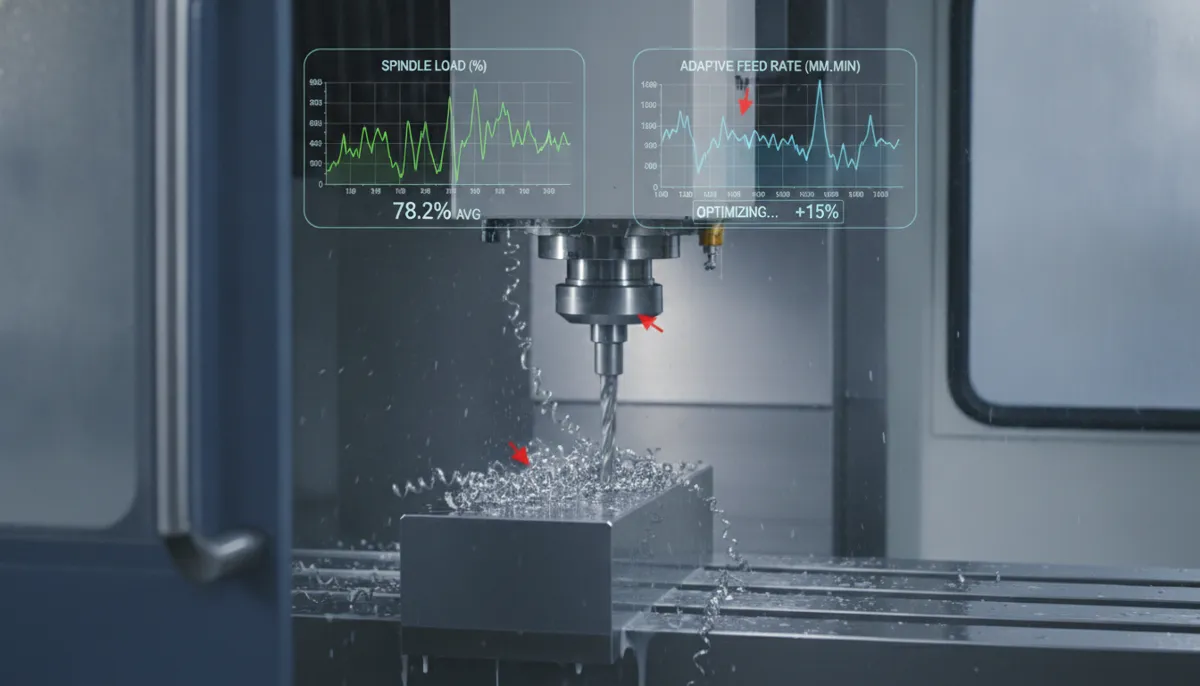
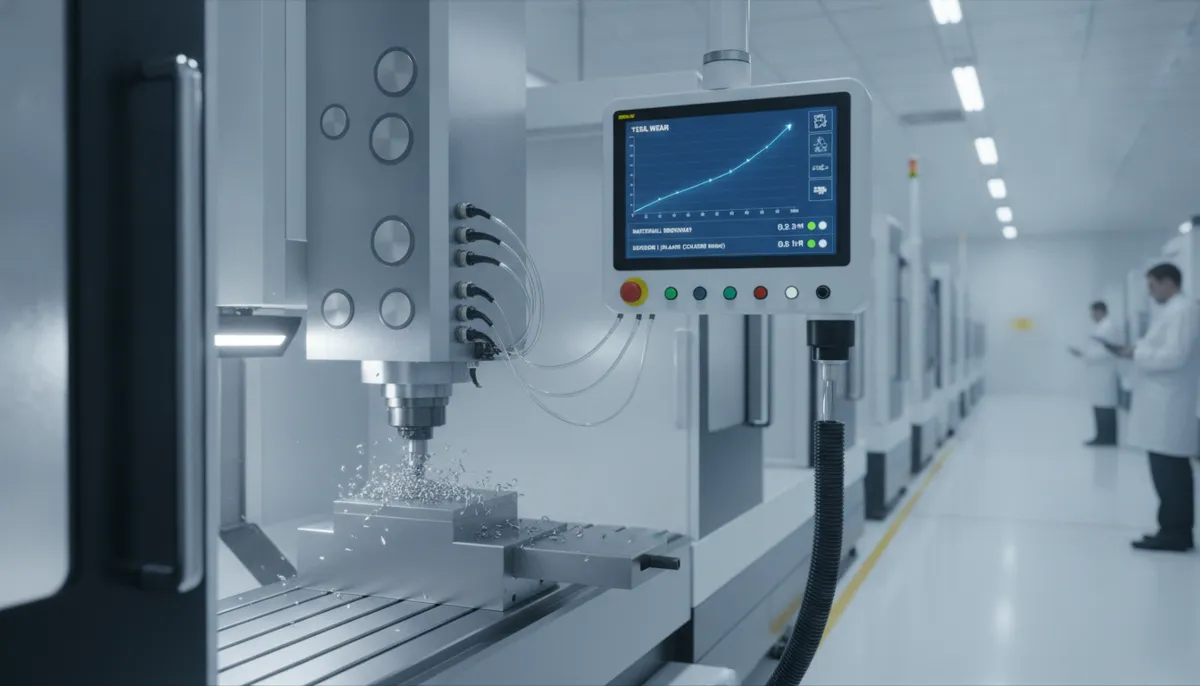
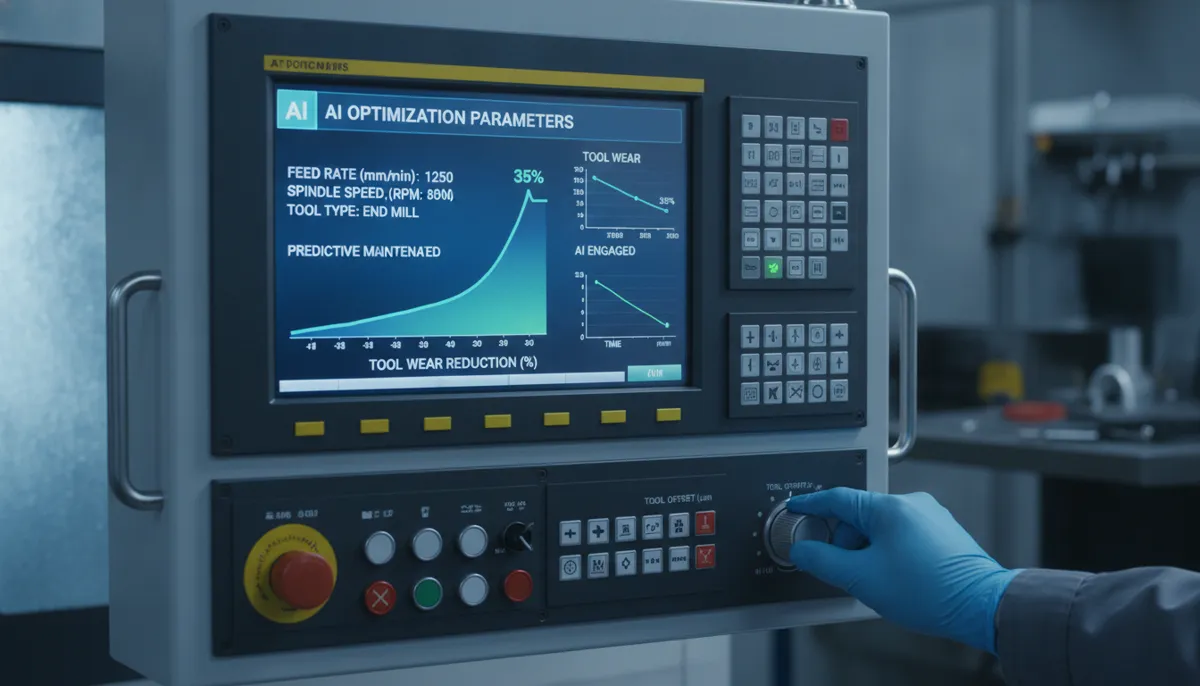
At the heart of any CNC self-optimizing machine is a real-time adaptive control layer that continuously monitors spindle load, cutting forces, vibration, and thermal state — and adjusts feed rates, spindle speeds, and depth of cut accordingly. Unlike fixed-parameter CNC programs that assume ideal conditions, adaptive control responds to actual cutting conditions: a harder-than-expected material zone, a slightly worn tool edge, or a thermal expansion event in the spindle. The result is a more stable cutting process with lower peak loads on both the tool and the machine structure. For operators, this means significantly fewer manual interventions during production runs — reducing the repetitive keyboard inputs and machine-side monitoring that contribute to cumulative physical strain.
2.2 Automatic Vibration Detection and Damping
Chatter — the self-excited vibration that occurs when cutting forces exceed the dynamic stiffness of the tool-workpiece system — is one of the most common causes of poor surface finish, accelerated tool wear, and operator stress in precision machining. CNC self-optimizing machines use built-in accelerometers and spindle load monitoring to detect the onset of chatter in real time and respond by adjusting spindle speed to shift the system away from resonance. This is particularly valuable when machining difficult materials like titanium alloys, Inconel, and hardened steels, where the chatter stability window is narrow and the consequences of tool breakage are costly. Operators no longer need to stand at the machine listening for chatter and manually tweaking speeds — a task that is both cognitively demanding and physically tiring over long shifts.
2.3 Self-Learning Adaptive Control
Beyond real-time reaction, advanced CNC self-optimizing machines incorporate machine learning modules that build a process knowledge base from historical cutting data. Over time, the system learns the optimal parameter envelope for recurring part families, material batches, and tool types — reducing the setup experimentation typically required when a job re-enters the schedule. For high-mix shops running many different part numbers, this self-learning capability progressively reduces the cognitive burden on programmers and setup technicians, allowing them to focus on higher-value engineering tasks rather than repetitive parameter optimization.
3. CNC Self-Optimizing Machines vs Standard CNC: Feature Comparison
| Capability | CNC Self-Optimizing Machines | Standard Fixed-Parameter CNC |
|---|---|---|
| Parameter Adjustment | Real-time AI-driven, automatic | Manual, operator-dependent |
| Chatter Response | Automatic spindle speed adjustment on detection | Operator must identify and intervene manually |
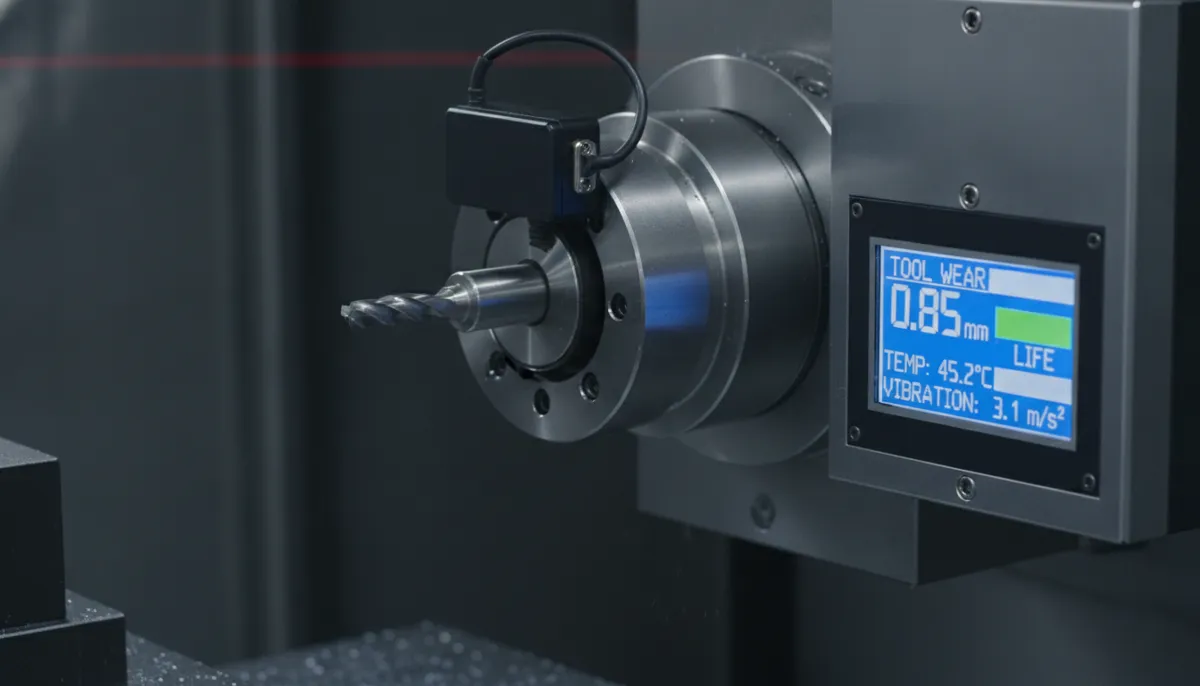
| Tool Wear Compensation | Continuous load monitoring, automatic offset correction | Scheduled manual measurement and offset entry |
| Material Variation Handling | Adaptive — adjusts to hardness/thermal variation in real time | Fixed — assumes uniform material properties |
| Operator Physical Load | Reduced — fewer manual interventions per shift | Higher — continuous monitoring and adjustment required |
| Process Knowledge Retention | Stored in system — reusable for repeat jobs | Operator-dependent — lost when staff change |
| Best Suited For | Difficult materials, tight tolerances, high-mix, long runs | Simple geometry, stable materials, high-volume repeat parts |
| Initial Investment | Higher — AI/sensor hardware and software integration | Lower — standard controller and programming |
4. Real-World Applications of CNC Self-Optimizing Machines
4.1 High-Mix, Low-Volume: Automotive Custom Parts
Challenge: A job shop producing custom automotive structural components faced frequent changeovers across a wide range of aluminum and steel alloys. Each new material batch required manual parameter adjustment by the most experienced operator — creating a bottleneck and a single point of failure whenever that operator was absent. Scrap rates on first-off parts were consistently higher than acceptable.
Approach: The shop deployed CNC self-optimizing machines with adaptive feed control and a self-learning parameter database. The system built a material-specific knowledge base over the first three months of operation, progressively reducing the trial-and-error required for new jobs.
Outcome: First-off scrap rates dropped significantly. Setup time for repeat jobs decreased as the system recalled previously optimized parameters automatically. The most experienced operator was freed from constant machine-side monitoring to focus on programming and quality oversight — reducing physical fatigue and improving job satisfaction.
4.2 Medical Device Manufacturing: Surgical Instrument Precision
Challenge: A contract manufacturer producing stainless steel surgical instruments required sustained dimensional accuracy within very tight tolerances across long production runs. Tool wear during extended runs caused gradual dimensional drift that required frequent manual measurement and offset correction — a repetitive, physically demanding task that contributed to operator fatigue and occasional missed corrections.
Approach: In-process probing combined with adaptive offset correction on a CNC self-optimizing machine automated the dimensional monitoring and correction cycle. The system measured critical features periodically during the run and applied corrections without operator input.
Outcome: Dimensional consistency improved across the full production run. Manual measurement frequency was reduced substantially. Operators reported less physical strain from repeated gauging tasks and were able to manage a larger number of machines per shift.
4.3 Aerospace Titanium Machining: Chatter Elimination
Challenge: An aerospace sub-contractor machining titanium alloy brackets experienced persistent chatter on thin-wall features, causing surface finish failures and occasional tool breakage. Manual chatter mitigation required experienced operators to stand at the machine and make incremental speed adjustments — a time-consuming and physically tiring process that was not consistently reproducible across different operators.
Approach: The facility upgraded to CNC self-optimizing machines with real-time vibration monitoring and automatic spindle speed adjustment. The system detected chatter onset within milliseconds and shifted spindle speed to a stable cutting zone automatically.
Outcome: Chatter-related surface finish failures were eliminated on the affected part families. Tool breakage incidents on those features dropped to near zero. The need for experienced operators to stand at the machine during critical cuts was removed, reducing both physical strain and the skill-dependency risk.
5. What Clients Say About CNC Self-Optimizing Machines
“We had been struggling with chatter on our titanium aerospace components for months — every experienced operator had their own workaround, and none of them were fully consistent. After switching to QFCNCMACHINE’s self-optimizing setup with real-time vibration control, the chatter problem essentially disappeared on those part families. Our operators are less stressed, the surface finish is consistent across shifts, and we’ve stopped losing tools to unexpected breakage on those features. The 2-year warranty and Bella’s responsive technical support made the transition straightforward.”
“Our biggest pain point was operator fatigue on long surgical instrument runs — the constant manual gauging and offset corrections were wearing our team down and causing occasional errors late in the shift. The adaptive offset correction on the self-optimizing machine we sourced through QFCNCMACHINE automated that entire cycle. Our operators now manage more machines per shift with less physical strain, and our dimensional consistency across long runs has improved noticeably. The quality-backed warranty policy also gave us confidence in the investment.”
“เราผลิตชิ้นส่วนยานยนต์ที่มีความหลากหลายสูงและต้องการการปรับพารามิเตอร์บ่อยครั้ง ก่อนหน้านี้ต้องพึ่งพาช่างที่มีประสบการณ์สูงในการปรับค่าทุกครั้ง หลังจากใช้ CNC self-optimizing machines จาก QFCNCMACHINE ระบบเรียนรู้และจดจำค่าที่เหมาะสมสำหรับแต่ละงานโดยอัตโนมัติ ช่างของเราทำงานได้สบายขึ้นมาก ความเมื่อยล้าลดลงอย่างเห็นได้ชัด และอัตราของเสียในงานแรกลดลงอย่างมีนัยสำคัญ”
6. Pros & Cons of CNC Self-Optimizing Machines
✅ Advantages
- Reduced operator physical load: Automated parameter adjustments eliminate repetitive manual interventions that contribute to MSDs and fatigue
- More consistent part quality: Real-time adaptive control compensates for material variation and tool wear without operator input
- Chatter elimination: Automatic vibration detection and spindle speed adjustment removes one of the most common causes of surface finish failure
- Process knowledge retention: Self-learning systems store optimized parameters — reducing dependency on individual operator expertise
- Compatible with existing CAM: Adaptive control works on top of standard G-code programs — no full reprogramming required
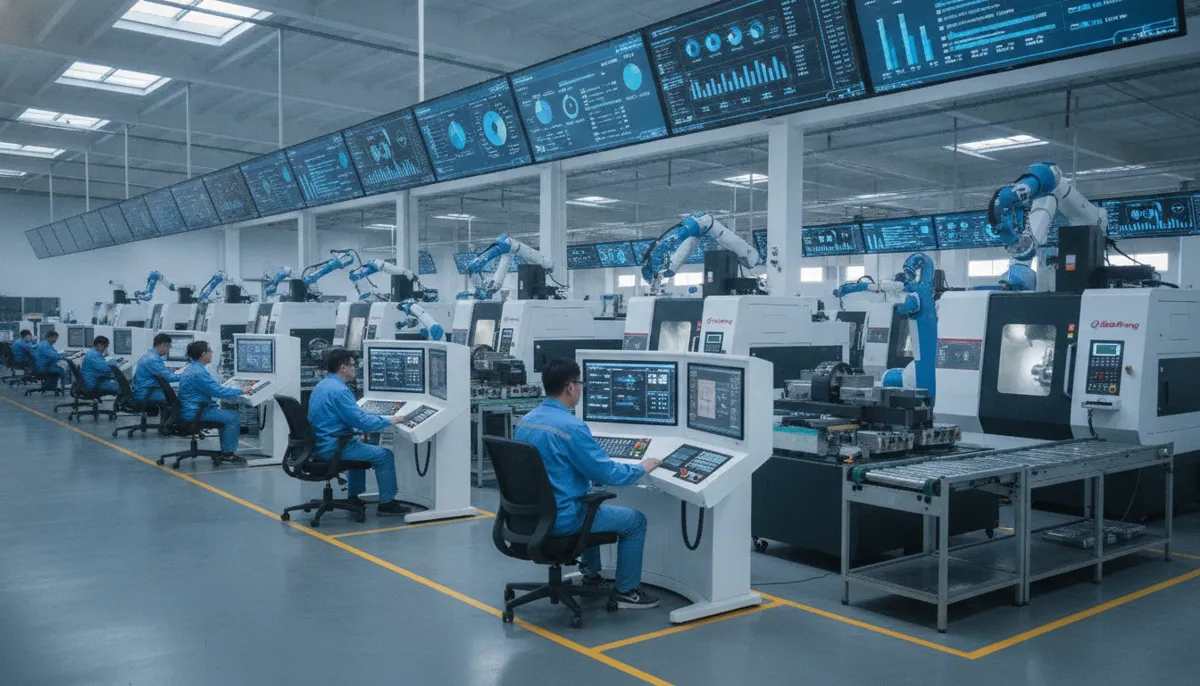
- Scalable supervision: Reduced intervention frequency allows one operator to manage more machines per shift
❌ Considerations
- Higher initial cost: AI/sensor hardware and software integration adds to base machine price
- Learning period: Self-learning systems require initial production runs to build an effective process knowledge base
- Operator training needed: Teams need to understand how to interpret system feedback and set appropriate override boundaries
- Less beneficial for simple jobs: For straightforward parts in stable materials, fixed-parameter programming may be equally effective at lower cost
- Software dependency: Adaptive control systems require periodic firmware/software updates and IT support
7. Frequently Asked Questions About CNC Self-Optimizing Machines
What makes a CNC machine “self-optimizing”?
A CNC self-optimizing machine incorporates real-time sensor monitoring (spindle load, vibration, temperature, cutting forces) combined with an adaptive control layer that adjusts machining parameters — feed rate, spindle speed, depth of cut — automatically in response to actual cutting conditions. Unlike standard CNC machines that execute a fixed program regardless of what is happening at the cutting zone, self-optimizing systems respond dynamically to material variation, tool wear progression, and thermal changes. More advanced implementations also include machine learning modules that build a process knowledge base from historical data, progressively improving parameter selection for recurring jobs.
How do CNC self-optimizing machines improve operator ergonomics?
The ergonomic benefit is direct and well-supported by occupational health research. OSHA and CDC/NIOSH both identify repetitive manual tasks and sustained machine-side monitoring as primary risk factors for work-related musculoskeletal disorders (MSDs) in manufacturing. CNC self-optimizing machines reduce the frequency of these tasks by automating the parameter adjustments, offset corrections, and chatter interventions that operators would otherwise perform manually — often dozens of times per shift. The result is lower cumulative physical load, reduced cognitive stress from constant monitoring, and the ability to supervise more machines from a less physically demanding position.
Can self-optimizing CNC machines adapt to different materials automatically?
Yes — within the boundaries set by the programmer. The adaptive control system uses real-time spindle load and vibration data to adjust parameters for material hardness variations, thermal conductivity differences, and batch-to-batch material inconsistencies. For entirely new materials not previously encountered by the system, the self-learning module typically requires a small number of initial cycles to establish a reliable baseline before optimization becomes fully effective. Operators can set parameter boundaries (maximum feed rate, minimum spindle speed, etc.) within which the system operates autonomously.
Is self-optimizing CNC technology compatible with my existing CAM software?
Yes. The adaptive control layer in CNC self-optimizing machines operates on top of standard G-code programs generated by any major CAM package (Mastercam, Hypermill, Fusion 360, NX CAM, and others). The system does not require proprietary programming formats. Operators and programmers can continue using their existing CAM workflows; the self-optimizing layer makes real-time adjustments within the boundaries of the programmed toolpath. Manual override is always available.
What ROI should I realistically expect?
ROI from CNC self-optimizing machines comes from multiple sources: reduced scrap on first-off and in-process parts, lower tool consumption through more stable cutting conditions, reduced setup time for repeat jobs as the system builds its knowledge base, and the ability to run more machines per operator per shift. Payback timelines vary based on part complexity, material cost, and current scrap/tool rates — but for shops machining difficult materials or running high-mix schedules, the compounding effect of these gains typically supports a strong business case. We provide a detailed, customized ROI analysis as part of our free consultation process.
What warranty and after-sales support does QFCNCMACHINE provide?
All CNC machines from QFCNCMACHINE come with a 2-year warranty covering manufacturing defects and component failures under normal operating conditions. For confirmed quality issues, we fully support returns and refunds. Warranty does not cover consumable items. Our after-sales team provides remote diagnostics, spare parts dispatch, and on-site support where required. Contact us for complete warranty terms and after-sales service details.
Ready to Reduce Operator Fatigue and Improve Part Consistency?
Talk to Bella and our engineering team — 15 years in CNC manufacturing, 750+ global clients across Europe, North America, and Southeast Asia. Factory direct from Dongguan, China since 2010. Get a free process assessment and find out whether CNC self-optimizing machines are the right fit for your production environment.
References
- MarketsandMarkets. Artificial Intelligence in Manufacturing Market — Global Forecast to 2030. (2025). https://www.marketsandmarkets.com/Market-Reports/artificial-intelligence-manufacturing-market-72679105.html
- Maximize Market Research. CNC Machine Market — Industry Analysis and Forecast, 2025–2032. (2025). https://www.maximizemarketresearch.com/market-report/cnc-machine-market/126307/
- U.S. Occupational Safety and Health Administration (OSHA). Ergonomics: Prevention of Musculoskeletal Disorders in the Workplace. https://www.osha.gov/ergonomics
- U.S. Centers for Disease Control and Prevention / NIOSH. About Ergonomics and Work-Related Musculoskeletal Disorders. https://www.cdc.gov/niosh/ergonomics/about/index.html
- Mordor Intelligence. CNC Machines Market Size, Share & Growth Trends Report, 2024. https://www.mordorintelligence.com/industry-reports/cnc-machines-market