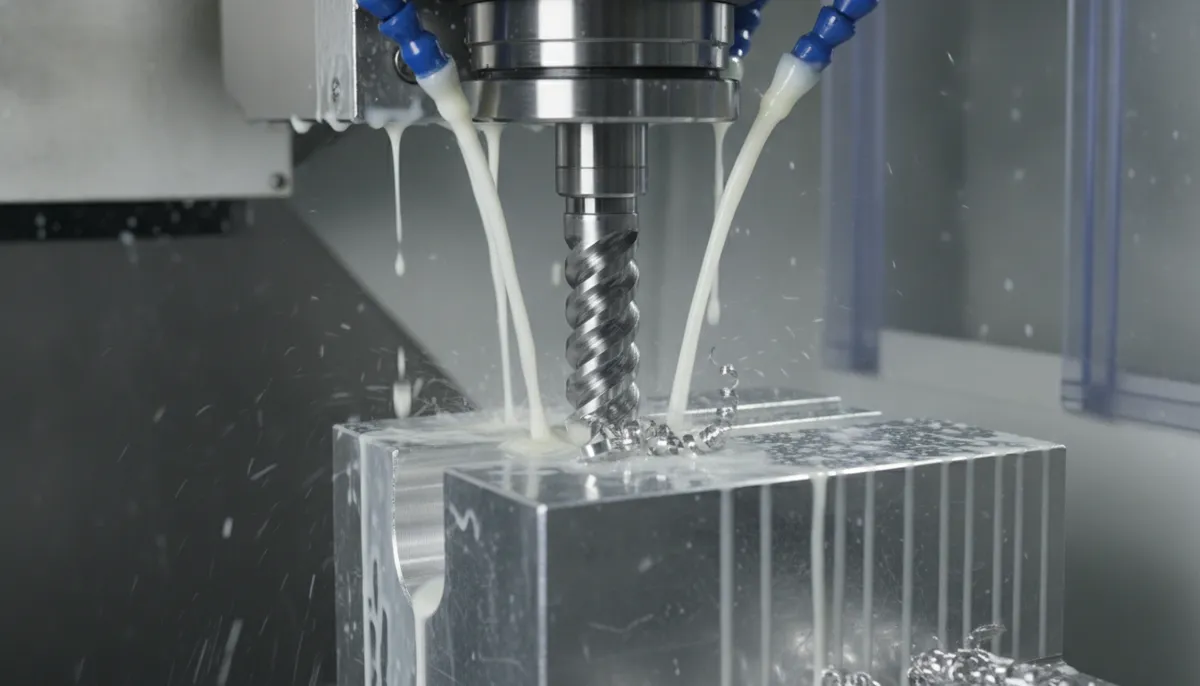
If you’re a CNC beginner, the term CNC tapping cycle might sound intimidating — but mastering it is essential for creating accurate internal threads in machined parts. In this guide, we break down the complete CNC tapping cycle definition, explain the G84 right-hand tap and G74 left-hand tap canned cycles, walk through real G-code examples, and show you how to run a CNC rigid tapping cycle with confidence. Whether you’re programming a vertical machining center or a CNC lathe, this guide from QiaoFeng will help you tap like a pro.
1. What Is a CNC Tapping Cycle?
A CNC tapping cycle is a canned cycle (a pre-programmed subroutine built into the CNC controller) that creates internal threads by precisely synchronizing spindle rotation speed with Z-axis feed rate. Instead of writing dozens of individual motion blocks, a single G-code line calls the entire sequence: rapid to the hole, feed in at thread pitch, dwell, reverse spindle, and retract.
The two most common CNC tapping cycle codes are:
- G84 — Right-hand tapping (clockwise spindle rotation, standard threads)
- G74 — Left-hand tapping (counterclockwise spindle rotation, reverse threads)
In rigid tapping mode, the spindle encoder is electronically geared to the Z-axis servo, guaranteeing that the tap advances exactly one pitch per revolution — eliminating thread pitch errors and dramatically reducing tap breakage.
2. Core Features of the CNC Tapping Cycle
2.1 G84 — Right-Hand Tapping Cycle
G84 is the standard CNC tapping cycle for right-hand (clockwise) threads. The spindle rotates CW while the Z-axis feeds to the programmed depth; at the bottom, the spindle reverses CCW and the tool retracts.
Typical G84 syntax (Fanuc / Haas):
G90 G94                        ; Absolute mode, feed per minute
T01 M06                        ; Call tap tool
S500 M03                       ; Spindle CW at 500 RPM
G43 H01 Z50.                   ; Tool length compensation
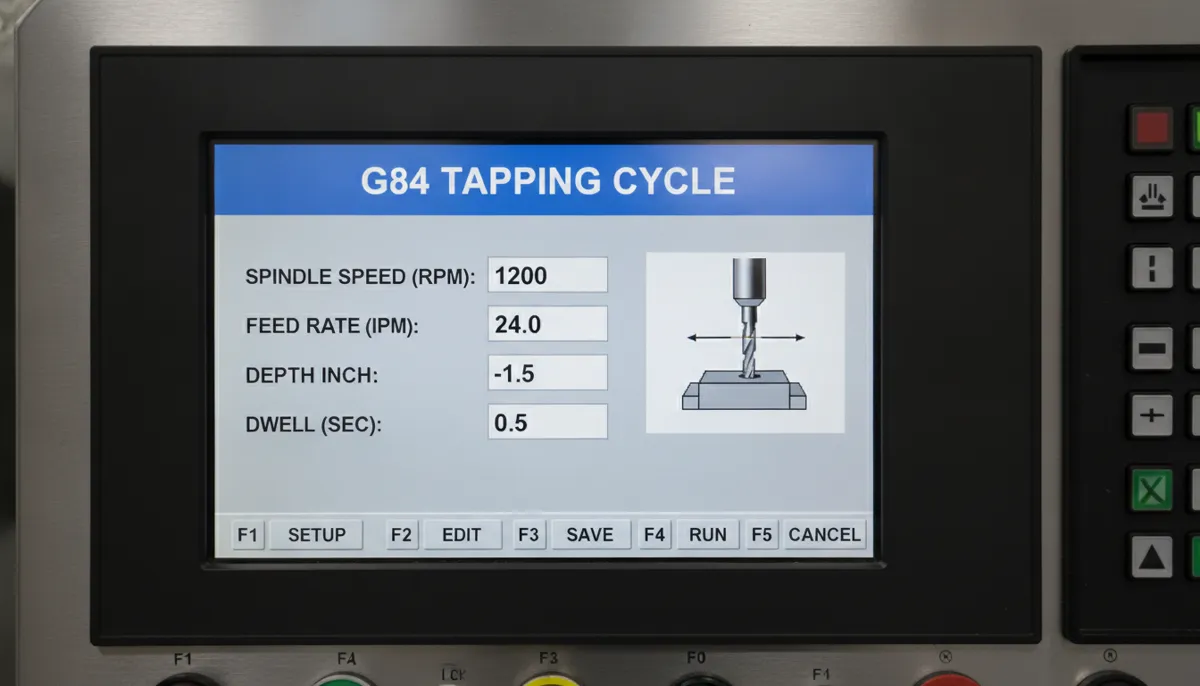
G84 X0. Y0. Z-22. R5. F500.   ; CNC tapping cycle: depth -22mm, R-plane 5mm, feed=500mm/min (pitch 1.0mm × 500RPM)
G80                            ; Cancel canned cycle
M05                            ; Spindle stop
Feed rate formula: $$F = S imes P$$ where F = feed (mm/min), S = spindle speed (RPM), P = thread pitch (mm). For M6×1.0 at 500 RPM: F = 500 × 1.0 = 500 mm/min.
Real-world benefit: Ensures a consistent feed-to-spindle ratio in aluminum, steel, and cast iron, reducing tap breakage by up to 60% compared to floating holders (SME, 2022).
2.2 G74 — Left-Hand Tapping Cycle
G74 mirrors G84 for left-hand (counterclockwise) threads. The spindle starts CCW, feeds to depth, then reverses CW to retract.
Typical G74 syntax:
S400 M04                       ; Spindle CCW at 400 RPM
G74 X0. Y0. Z-18. R5. F400.   ; Left-hand CNC tapping cycle
G80
Real-world benefit: Essential for left-hand threaded fasteners in automotive and aerospace assemblies where vibration would loosen standard right-hand threads.
2.3 Rigid Tapping vs. Floating (Conventional) Tapping
| Feature | Rigid Tapping | Floating Tapping |
|---|---|---|
| Synchronization | Electronic (encoder-geared) | Mechanical (spring-loaded holder) |
| Max Speed | Up to 5,000+ RPM | Typically <2,000 RPM |
| Thread Accuracy | Very high (±0.01 mm pitch) | Moderate |
| Tooling Cost | Lower (no tension-compression holder) | Higher |
| Machine Requirement | Spindle encoder required | Any CNC machine |
| Best For | High-volume, tight-tolerance production | Older machines or small batches |
2.4 Key G84/G74 Parameters Explained
| Parameter | Meaning | Example |
|---|---|---|
| X, Y | Hole position in XY plane | X10. Y20. |
| Z | Final tapping depth (absolute or incremental) | Z-22. |
| R | R-plane (rapid approach clearance above part) | R5. |
| F | Feed rate = RPM × pitch | F500. |
| P | Dwell time at bottom (milliseconds) | P200 (0.2 sec) |
| Q | Peck depth increment (for G84.2 peck tapping) | Q5. |
| S | Spindle speed (RPM) | S500 |
2.5 Dwell at Bottom (P Word)
A brief dwell (P parameter) at the bottom of the hole gives the spindle drive time to reverse direction before retracting. Skipping this on high-inertia spindles can cause thread damage or tap breakage.
Real-world benefit: A 0.1–0.3 second dwell extends tap life by up to 30% on spindles above 1,000 RPM.
2.6 Recommended Speeds by Material
| Material | Recommended RPM (M6 tap) | Coolant |
|---|---|---|
| Aluminum 6061 | 2,000 – 4,000 | Flood or mist |
| Mild Steel (1018) | 500 – 1,000 | Flood (sulfurized) |
| Stainless Steel (304) | 200 – 500 | Flood (high-pressure) |
| Cast Iron | 600 – 900 | Dry or mist |
| Titanium | 100 – 300 | Flood (high-pressure) |
3. Real-World Use Cases
Case 1 — Automotive Engine Block Threading (USA)
Pain point: A Tier 1 automotive supplier in Michigan was experiencing 12% tap breakage on cast iron engine blocks due to inconsistent feed rates on an aging floating-holder setup.
Solution: Upgrading to a QiaoFeng VMC with built-in rigid tapping and programming G84 at 800 RPM (F800, pitch 1.0 mm) with a P200 dwell dropped breakage to under 2%, saving approximately $50,000 annually in tooling costs.
Result: Tap breakage reduced from 12% → 2%; annual tooling savings ~$50,000.
“We switched to rigid tapping on QiaoFeng’s VMC and the difference was immediate. Tap breakage on our cast iron blocks dropped from double digits to almost zero within the first week. The machine’s control interface made G84 setup straightforward even for our junior programmers.”
Case 2 — Aerospace Left-Hand Threads (Germany)
Pain point: A German aerospace sub-contractor needed M8 left-hand threads on titanium fuel system brackets to prevent loosening under vibration. Deep blind holes (50 mm) caused chip packing with conventional tapping.
Solution: Using G74 with peck tapping (G84.2, Q5 mm increments) and high-pressure through-spindle coolant at 250 RPM achieved full chip evacuation. 100% thread acceptance on first-article inspection.
Result: 100% thread pass rate; zero rework on titanium parts.
“The G74 peck tapping cycle on the QiaoFeng machine handled our titanium left-hand threads perfectly. Chip evacuation was clean and every part passed our CMM inspection on the first run. Excellent rigidity and thermal stability throughout long production shifts.”
Case 3 — High-Volume Electronics Enclosures (Vietnam)
Pain point: A consumer electronics contract manufacturer in Ho Chi Minh City needed to tap 800+ M3 holes per hour in 6061 aluminum enclosures with zero defects for a major OEM customer.
Solution: Three QiaoFeng VMCs running G84 rigid tapping at 8,000 RPM with through-spindle mist coolant achieved a cycle time of 0.45 seconds per hole. Inline thread gauging confirmed 100% pass rate over a 3-month production run.
Result: 1,000+ holes/hour across the cell; zero defect shipments for 90 consecutive days.
“QiaoFeng’s machines gave us the speed and reliability we needed for our OEM contract. Running G84 at high RPM on aluminum with mist coolant, we hit our takt time targets from day one. After-sales support from Bella’s team was also very responsive whenever we had parameter questions.”
4. Pros & Cons of CNC Tapping Cycles
✅ Pros
- High precision and repeatability across large batches
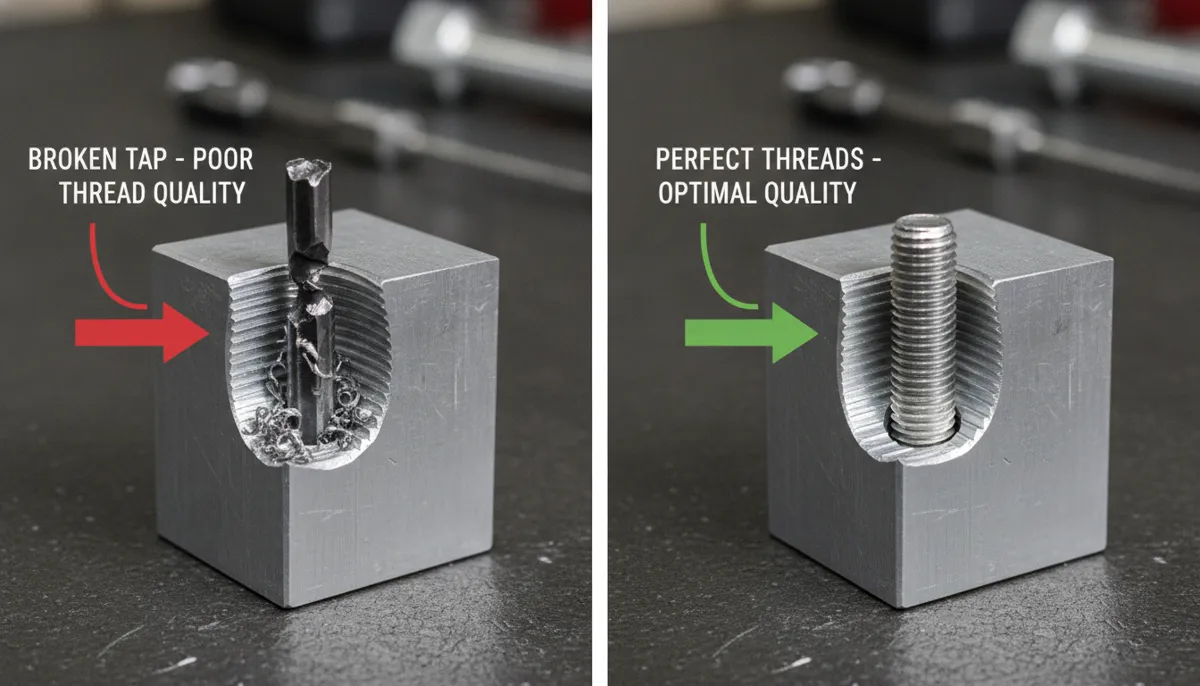
- Rigid tapping dramatically reduces tap breakage
- Faster cycle times vs. manual or floating tapping
- Compatible with Fanuc, Siemens, Haas, Mitsubishi controllers
- Left-hand threading via G74 for specialized assemblies
- Peck tapping (G84.2) handles deep blind holes cleanly
- Lower tooling cost — no tension-compression holder needed
❌ Cons
- Requires programming knowledge to avoid crashes
- Rigid tapping needs a spindle encoder (not all older machines)
- Very small threads (below M1.6) may need specialized holders
- Initial setup requires trial runs to dial in feed/speed
- Wrong F/S ratio will strip threads or break taps instantly
5. FAQ: CNC Tapping Cycle Questions
What is the difference between G84 and G74?
G84 is the standard CNC tapping cycle for right-hand threads (clockwise spindle rotation), while G74 is for left-hand threads (counterclockwise rotation). Both are modal canned cycles that automate feed-in, dwell, and retract. Use G84 for the vast majority of standard fastener threads; use G74 when the application specifically requires left-hand threads to resist loosening under vibration.
What is rigid tapping vs. conventional (floating) tapping?
Rigid tapping uses electronic synchronization between the spindle encoder and Z-axis servo so the tap advances at exactly the programmed pitch — no mechanical compensation needed. Conventional floating tapping uses a spring-loaded tension-compression holder to absorb minor feed/speed mismatches. Rigid tapping is faster, more accurate, and cheaper to tool, but requires a machine with a spindle encoder and a compatible drive.
How do I calculate the correct feed rate for a tapping cycle?
Use the formula: F (mm/min) = Spindle Speed (RPM) × Thread Pitch (mm). For an M6×1.0 tap at 500 RPM: F = 500 × 1.0 = 500 mm/min. For an M8×1.25 tap at 400 RPM: F = 400 × 1.25 = 500 mm/min. Always confirm the pitch from the tap manufacturer’s datasheet — even a 5% feed error can cause thread stripping or tap breakage.
What should I do if the tap breaks during a CNC tapping cycle?
Stop the machine immediately using the feed hold or emergency stop. For shallow breaks, a tap extractor or left-hand drill may remove the fragment. For deep breaks in hardened materials, EDM (electrical discharge machining) is the safest extraction method. To prevent recurrence: reduce spindle speed by 20%, verify your feed formula, ensure adequate coolant flow, and confirm the pre-drill diameter matches the tap’s recommended pilot hole size.
Can I use a CNC tapping cycle for blind holes?
Yes. Program a bottom dwell (P word, e.g., P200 for 0.2 seconds) to allow the spindle to fully reverse before retracting. Ensure the drilled hole depth is at least 2–3 thread pitches deeper than the required thread engagement length to avoid the tap bottoming out. For deep blind holes, use G84.2 (peck tapping) with a Q increment to clear chips in stages.
Which CNC controllers support rigid tapping?
Most modern controllers support rigid tapping natively: Fanuc (M29 S___ before G84), Haas (G84 with RIGID TAP enabled in settings), Siemens (CYCLE84), and Mitsubishi (G84 with rigid tap parameter). Older controls may require a firmware upgrade or a floating holder as an alternative. QiaoFeng machines ship with Fanuc-compatible controls with rigid tapping pre-enabled.
Ready to Eliminate Tap Breakage?
QiaoFeng has delivered precision CNC machines to 750+ customers across the USA, Europe, and Southeast Asia since 2010. Every machine ships with rigid tapping pre-enabled, a 2-year warranty, and free remote programming support. Talk to our team today.
References
- Mordor Intelligence, Machining Centers Market Size, Share & Growth Trends Report, 2024. https://www.mordorintelligence.com/industry-reports/machining-centers-market
- Grand View Research, CNC Machine Market Size, Share & Trends Analysis Report, 2023. https://www.grandviewresearch.com/industry-analysis/cnc-machine-market
- SME (Society of Manufacturing Engineers), Rigid Tapping Best Practices for High-Volume Production, March 2022. https://www.sme.org/technologies/articles/2022/march/rigid-tapping-best-practices/