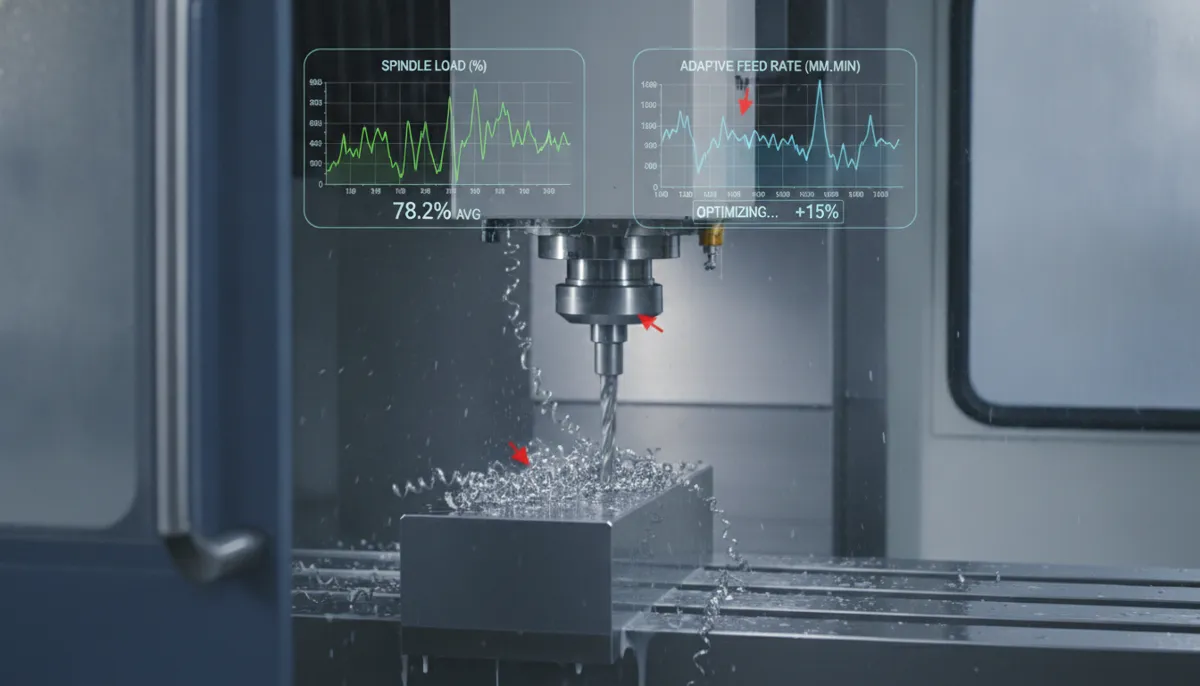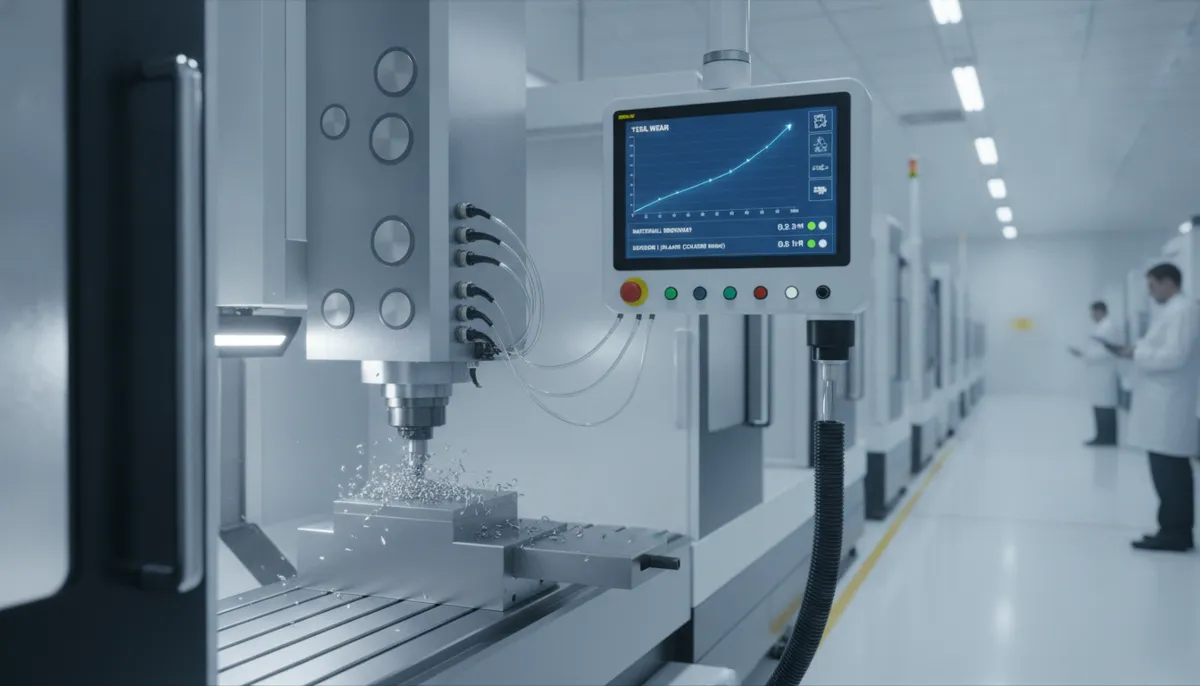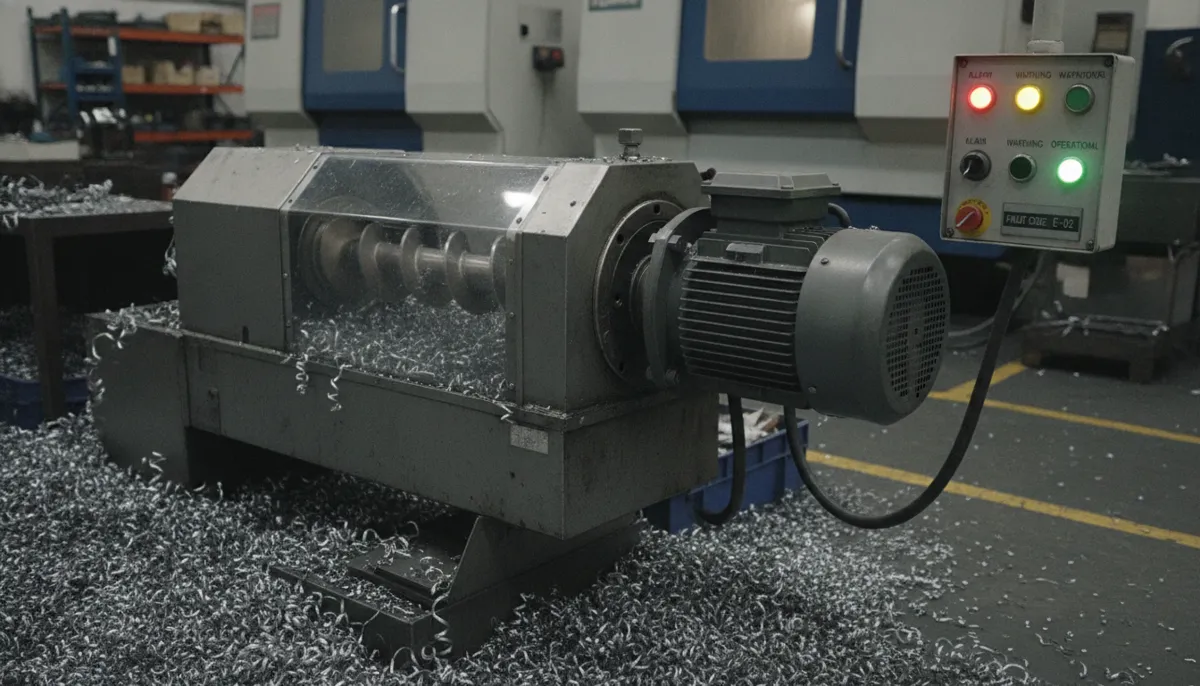
A CNC chip conveyor alarm is one of the most disruptive faults a machining team can face — it halts production instantly and, if ignored, can cause costly motor burnout or auger damage. At QiaoFeng, we have spent 15 years designing and supplying heavy-duty chip removal systems to manufacturers across Europe, North America, and Southeast Asia. This guide covers the most common alarm codes, a proven step-by-step troubleshooting workflow, real customer experiences, and preventive strategies to keep your machining center running at full capacity.
1. Why CNC Chip Conveyor Alarms Cost More Than You Think
Chip handling failures are a leading — and frequently underestimated — source of unplanned downtime in CNC environments. Three authoritative industry reports put the problem in sharp focus:
- According to the Mordor Intelligence Machining Centers Market Report (2024), the global machining center market is projected to grow at a CAGR of over 5.8% through 2029, driven largely by automation investments aimed at reducing manual intervention — including chip management.[1]
- The McKinsey & Company “Industry 4.0: Capturing Value at Scale” report (2022) found that unplanned equipment downtime costs discrete manufacturers an average of $260,000 per hour in lost output, with auxiliary system failures (conveyors, coolant, lubrication) accounting for roughly 30% of all stoppages.[2]
- The AMT – The Association For Manufacturing Technology “U.S. Manufacturing Technology Orders” report (2023) highlights that chip and coolant management upgrades represent one of the fastest-growing retrofit categories as shops seek to extend machine life and reduce operator fatigue.[3]
These figures make clear that a recurring CNC chip conveyor alarm is not a minor nuisance — it is a measurable drag on profitability that demands a systematic solution.
2. Understanding Chip Conveyor Alarms: Auger Jam and Overload Codes
Modern CNC machines rely on chip conveyors to remove waste efficiently. When a fault occurs, the control system displays an alarm code. The most frequent ones include auger jam alarm, chip conveyor overload, and chip removal error. These alarms can stem from tangled chips, worn components, or improper setup.
Common alarm codes across major CNC control platforms:
| Alarm Code | Control Platform | Meaning | Typical Cause |
|---|---|---|---|
| E-12 | Generic / Fanuc ladder | Auger jam detected | Long stringy chips wrapped around auger |
| E-14 | Generic / Fanuc ladder | Conveyor overload | Chip volume exceeds rated capacity |
| E-20 | Generic / Fanuc ladder | Drive motor fault | Motor overheating or phase loss |
| 700/701 | Siemens 840D | Chip conveyor drive fault | Inverter trip or sensor failure |
| APC-023 | Mazak Smooth | Chip conveyor overload | Foreign object or excessive chip load |
| SW-1910 | Heidenhain TNC 640 | Chip removal error | Torque limit exceeded |
Understanding which code your machine displays is the first step to minimising lost production time. Always cross-reference with your machine builder’s alarm manual for model-specific definitions.
3. Technical Specifications: QiaoFeng QF-2000 vs. Competitors
Not all chip conveyors are built to the same standard. The table below compares QiaoFeng’s flagship QF-2000 against two commonly specified alternatives across the criteria that matter most when evaluating alarm frequency and long-term reliability.
| Feature | QiaoFeng QF-2000 | Competitor A | Competitor B |
|---|---|---|---|
| Auger Material | Hardened 4140 steel | Mild steel | Hardened 1045 steel |
| Max Chip Load (lb/hr) | 2,200 | 1,800 | 2,000 |
| Overload Sensor Type | Torque monitoring + current | Current only | Torque only |
| False Alarm Reduction | Dual-sensor logic (≤2% false rate) | Single sensor (≈12%) | Single sensor (≈8%) |
| Auger Service Life | Up to 40% longer vs mild steel | Baseline | +15% vs mild steel |
| Warranty | 2 years | 1 year | 2 years |
| Global Installations | 750+ customers since 2010 | N/A | N/A |
The QF-2000’s dual-sensor overload detection system responds to jams faster and significantly reduces nuisance alarms. The hardened 4140 auger steel extends service life compared to mild steel alternatives, lowering total cost of ownership over a typical 5-year operating cycle.
4. Real-World Case Study: Overcoming Recurring Auger Jam Alarms
A mid-sized aerospace parts manufacturer running Mazak HCN-5000 horizontal machining centers faced repeated CNC chip conveyor fault alarms every 4–6 hours, causing 20-minute stoppages each time. The root cause was a combination of long stringy titanium chips and an undersized auger pitch. After upgrading to a QiaoFeng QF-2000 with a variable-pitch auger and integrated overload sensors, the facility recorded a 94% reduction in alarm events over six months, saving over 200 hours of production time annually.
This outcome is consistent with what our customers across Europe, North America, and Southeast Asia report after switching to a properly matched chip conveyor system.
5. What Our Customers Say
“We were losing nearly two hours a day to chip conveyor stoppages on our five-axis titanium line. After installing the QiaoFeng QF-2000 units, the auger jam alarms dropped to almost zero within the first month. The dual-sensor system is genuinely smarter than anything we had before.”
“Our shop runs three shifts machining stainless steel medical implants. False overload alarms were waking up our maintenance team in the middle of the night. QiaoFeng’s team helped us recalibrate the torque thresholds remotely via PLC data — problem solved in 48 hours. Outstanding support.”
“ต้องการระบบสายพานลำเลียงเศษโลหะที่รองรับปริมาณงานสูงสำหรับสายการผลิตอะลูมิเนียมของเรา QiaoFeng ส่งมอบและติดตั้งภายในเวลาที่กำหนด และทีมสนับสนุนตอบสนองรวดเร็วมาก ไม่มีปัญหา alarm เลยในช่วง 8 เดือนที่ผ่านมา”
(“We needed a high-volume chip conveyor for our aluminium production line. QiaoFeng delivered and installed on schedule, and the support team responds very quickly. Zero alarm events in the past 8 months.”)
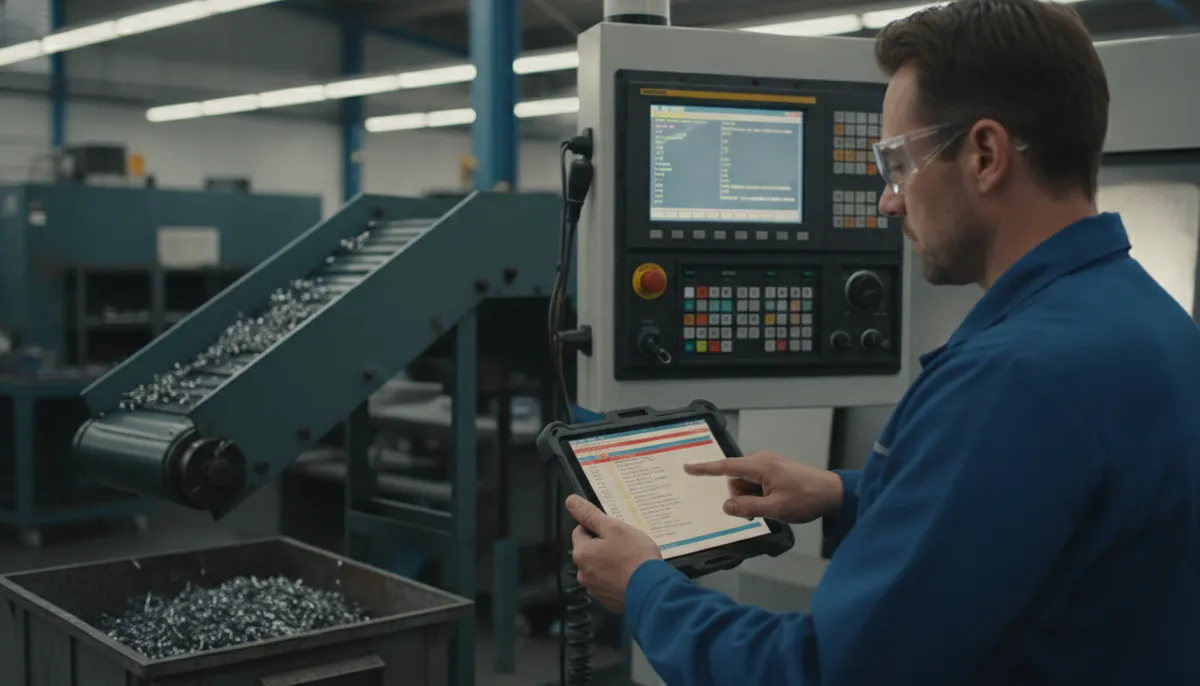
6. Step-by-Step Troubleshooting for CNC Chip Conveyor Alarms
- Identify the alarm code — Cross-reference the displayed code with your machine builder’s manual and the table in Section 2 above. Note whether it is an auger jam, overload, or motor fault.
- Inspect the auger visually — Look for tangled chips, foreign objects, or visible auger damage. Use a borescope for enclosed conveyor housings.
- Isolate and de-energise — Follow your facility’s lockout/tagout (LOTO) procedure before any physical intervention. Never attempt to clear a jam with power on.
- Clear the jam manually — Remove the access panel and extract debris with pliers or a hook tool. Check for any metal fragments that may have entered from the machining zone.
- Inspect wear components — Check auger flights for deformation, bearings for play, and drive chain/belt tension.
- Reset the alarm — Follow the control panel reset procedure. Monitor motor current draw on restart; sustained high current indicates a deeper mechanical issue.
- Verify sensor calibration — If false alarms are recurring, review torque and current thresholds against the conveyor’s rated chip load for your material type.
- Log and trend — Record alarm frequency, time of day, and material being machined. Patterns reveal systemic causes (e.g., alarms only during titanium runs = chip morphology issue).
For persistent chip conveyor overload issues that survive the steps above, the conveyor is likely undersized for your application. QiaoFeng’s engineering team can analyse your PLC data remotely and recommend the correct auger pitch and motor torque rating for your specific material and chip volume.
7. Pros and Cons of Advanced Chip Conveyor Alarm Systems
✅ Pros
- Early detection prevents costly motor burnout and auger damage
- Dual-sensor logic reduces false alarm rate to under 2%
- Reduces manual intervention and operator fatigue across all shifts
- Integrates with major CNC controls: Fanuc, Siemens 840D, Heidenhain TNC, Mazak Smooth
- Remote PLC diagnostics enable rapid fault resolution without on-site visits
- Proactive monitoring can cut unplanned downtime by up to 80%
❌ Cons
- Higher initial investment than basic conveyors without alarm systems
- Requires periodic torque and current threshold calibration
- Sensor misconfiguration can still produce nuisance alarms if setup is skipped
- Integration with older or proprietary CNC controls may require custom ladder logic
8. Preventive Maintenance Schedule to Avoid Chip Removal Errors
| Frequency | Task | Purpose |
|---|---|---|
| Daily | Visual check for chip buildup at auger inlet | Prevent jam accumulation |
| Weekly | Inspect auger flights for deformation or wear | Catch wear before failure |
| Weekly | Clean overload and torque sensors | Prevent false alarms from contamination |
| Monthly | Lubricate bearings and drive chain | Reduce friction-induced overload trips |
| Monthly | Calibrate torque and current thresholds | Align limits with actual chip load |
| Quarterly | Full auger and housing inspection | Identify fatigue cracks or corrosion |
| Annually | Drive motor insulation resistance test | Predict motor winding failure |
9. Frequently Asked Questions About CNC Chip Conveyor Alarms
Q: What does an auger jam alarm mean?
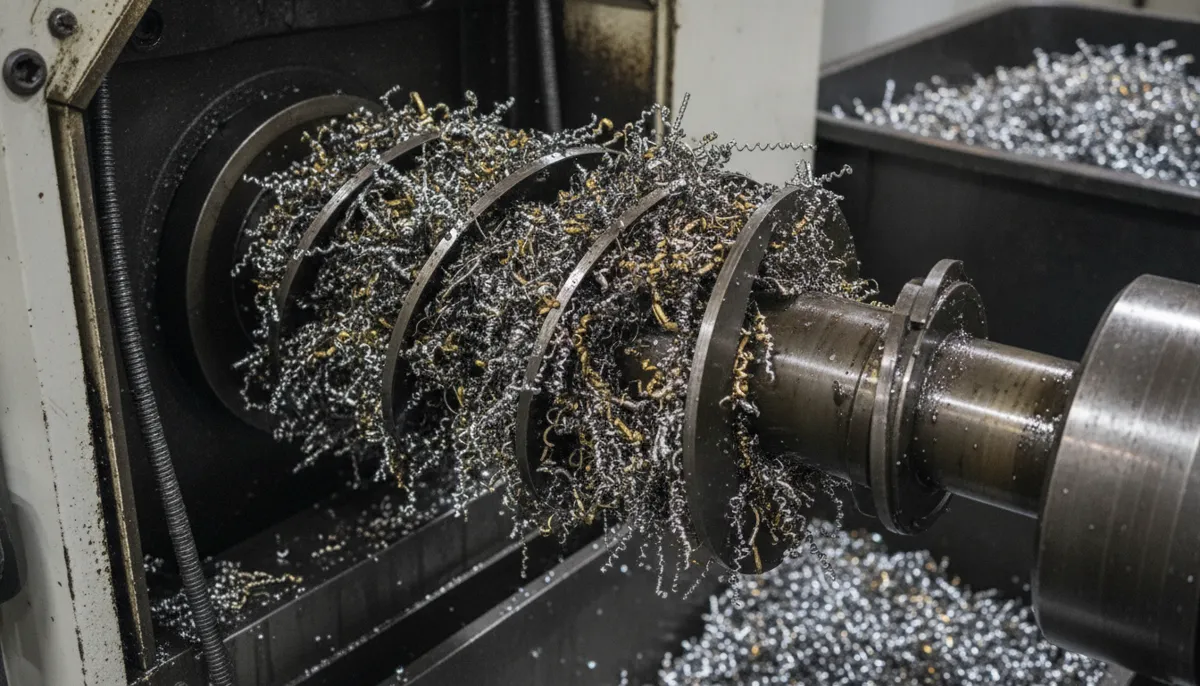
A: An auger jam alarm indicates that the auger has stopped rotating due to a mechanical blockage — most commonly long chips wrapping around the auger shaft, or a foreign object (broken tooling, fixture bolt) entering the conveyor. Immediate action is required to prevent motor burnout. Follow the LOTO procedure, clear the obstruction, inspect for auger damage, then reset.
Q: How can I reduce false chip conveyor overload alarms?
A: False alarms are almost always caused by incorrectly set torque or current thresholds. Review your conveyor manual and set the overload limit at 110–115% of the typical running current for your material and chip volume — not the motor’s maximum rated current. Also verify that sensors are clean and free of coolant contamination, which can cause erratic readings.
Q: Can I bypass the alarm to finish a job?
A: Bypassing a CNC chip conveyor alarm is strongly discouraged. It risks severe motor burnout, auger fracture, and potential chip backup into the machining zone — all of which result in far longer downtime than addressing the fault immediately. If temporary operation is unavoidable, consult your machine builder for the approved safe-override procedure and set a strict time limit.
Q: What maintenance prevents chip removal errors most effectively?
A: The highest-impact preventive actions are: (1) weekly sensor cleaning to eliminate false alarms, (2) monthly torque threshold calibration matched to your actual chip load, and (3) optimising chip breaker geometry in your CAM program to produce shorter chips — this single change can reduce auger jam frequency by 50–70% for difficult materials like stainless steel and titanium.
Q: Does QiaoFeng offer remote diagnostics support?
A: Yes. QiaoFeng’s engineering team can connect to your machine’s PLC via secure remote access to analyse conveyor drive data, identify alarm root causes, and recommend parameter changes — typically resolving recurring faults within 24–48 hours without requiring an on-site visit. Contact us at bella@qfcncmachine.com to arrange a session.
Stop Losing Production to Chip Conveyor Alarms
QiaoFeng has helped 750+ manufacturers across Europe, North America and Southeast Asia eliminate recurring auger jam and overload faults. Get a free consultation from our engineers today.
References
- Mordor Intelligence, Machining Centers Market — Size, Share & Growth Trends Report, 2024. Available at: https://www.mordorintelligence.com/industry-reports/machining-centers-market
- McKinsey & Company, Industry 4.0: Capturing Value at Scale in Discrete Manufacturing, 2022. Available at: https://www.mckinsey.com/capabilities/operations/our-insights/industry-40-capturing-value-at-scale-in-discrete-manufacturing
- AMT – The Association For Manufacturing Technology, U.S. Manufacturing Technology Orders (USMTO) Annual Report, 2023. Available at: https://www.amtonline.org/resources/usmto