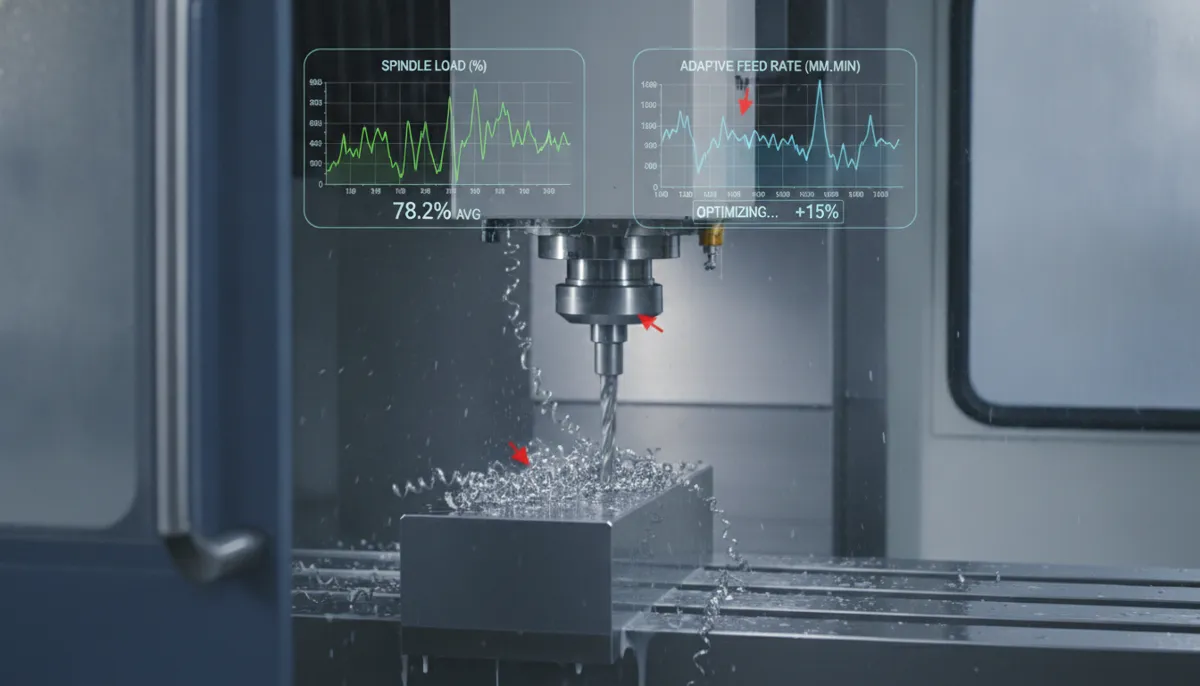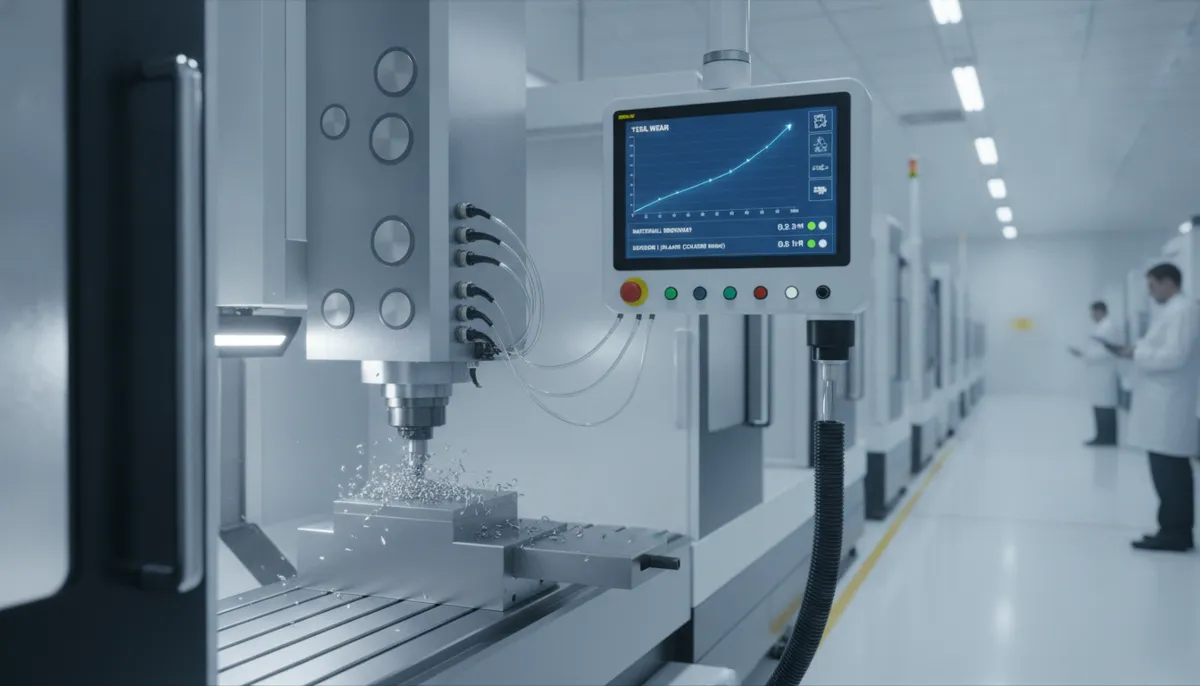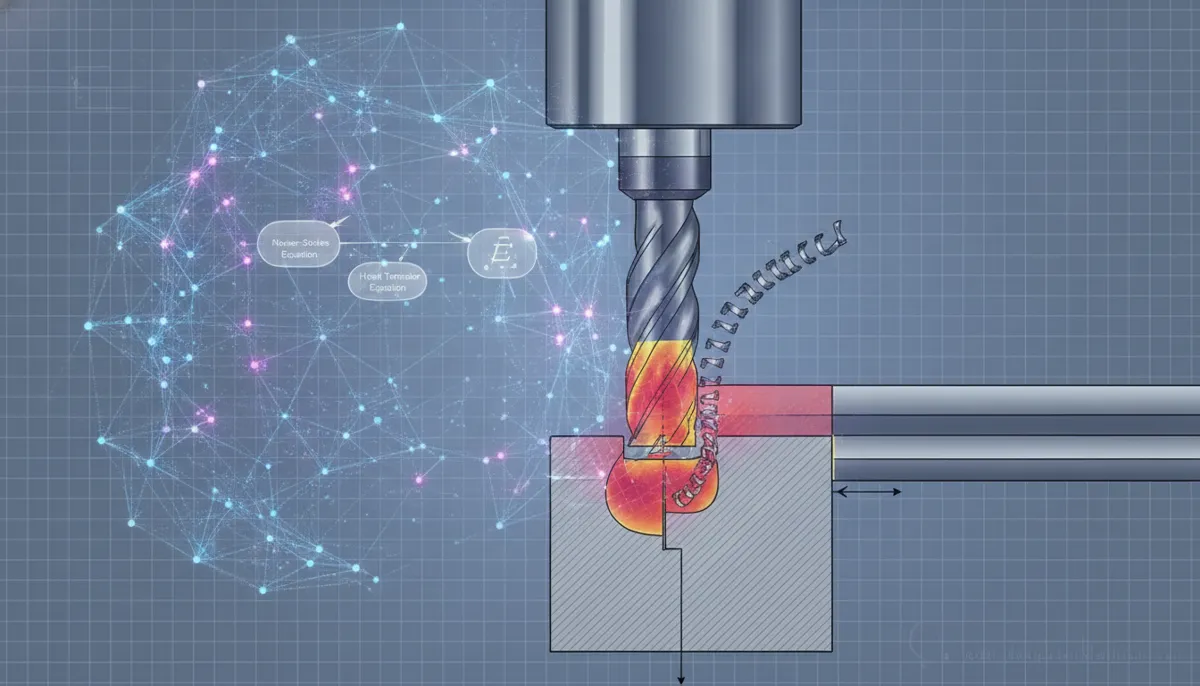
In the competitive world of precision machining, traditional control methods often fall short when faced with complex cutting dynamics. CNC physics ML — physics-informed machine learning applied to CNC processes — bridges the gap between theoretical models and real-world performance, delivering unprecedented accuracy and efficiency. At QiaoFeng, founded in 2010 and serving 750+ industrial clients from our facility in Dalingshan, Dongguan, we leverage this cutting-edge approach to help manufacturers across Europe, North America, and Southeast Asia reduce waste, extend tool life, and achieve consistent quality.
1. Industry Context: Why CNC Physics ML Is Gaining Traction
The global CNC machine tools market is undergoing rapid transformation. According to the Mordor Intelligence 2024 Machining Centers Market Report, the sector is projected to grow at a CAGR of approximately 6% through 2029, driven by surging demand for high-precision parts in aerospace, automotive, and medical manufacturing [1]. Meanwhile, a peer-reviewed study published in the International Journal of Machine Tools and Manufacture (Elsevier, 2022) demonstrated that physics-informed neural networks reduce cutting force prediction error by up to 40% compared to pure data-driven models — a breakthrough for real-time adaptive control [2]. A further analysis by McKinsey & Company on AI in manufacturing found that predictive maintenance powered by physics-hybrid AI can reduce unplanned downtime by 20–50% and cut maintenance costs by up to 25% [3]. These figures underline why leading manufacturers are actively deploying CNC physics ML on the shop floor today.
2. What Is CNC Physics-Informed Machine Learning?
CNC physics ML combines the rigor of physics-based modeling with the adaptability of artificial intelligence. Unlike black-box AI models, physics-informed neural networks (PINNs) embed governing equations — such as heat transfer, vibration dynamics, and material plasticity — directly into the learning process. This ensures predictions remain physically plausible even with limited training data, making the technology especially valuable in high-mix, low-volume production environments where data collection is expensive.
3. The Core Advantage: Hybrid Modeling
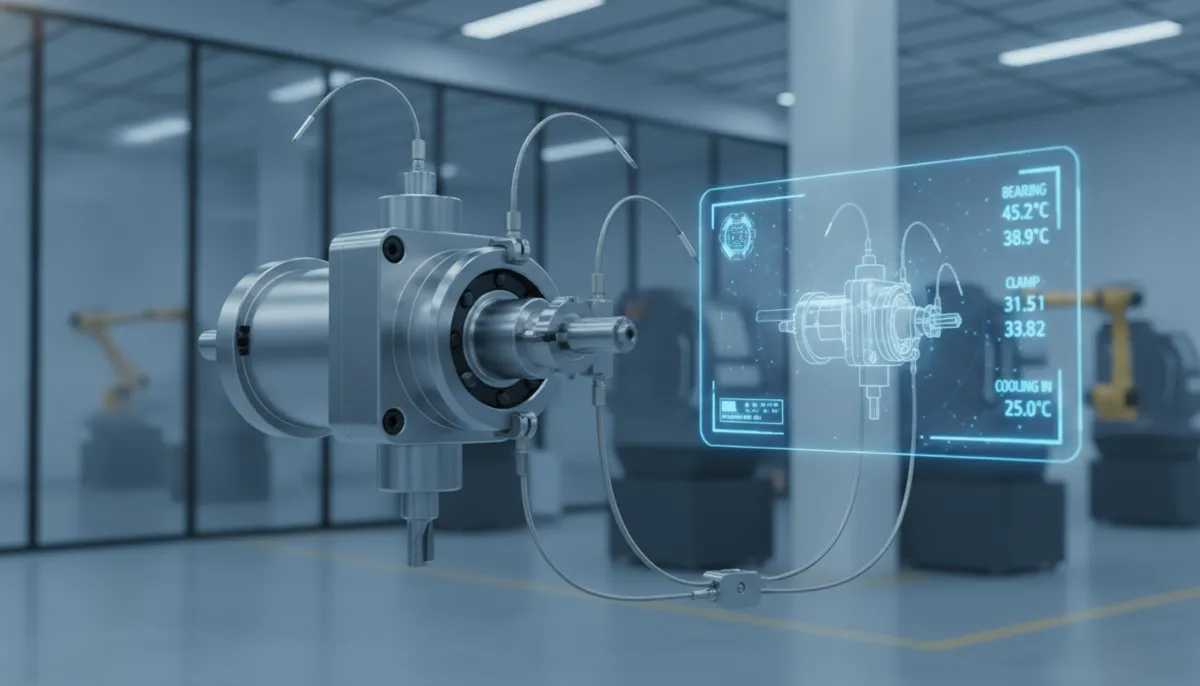
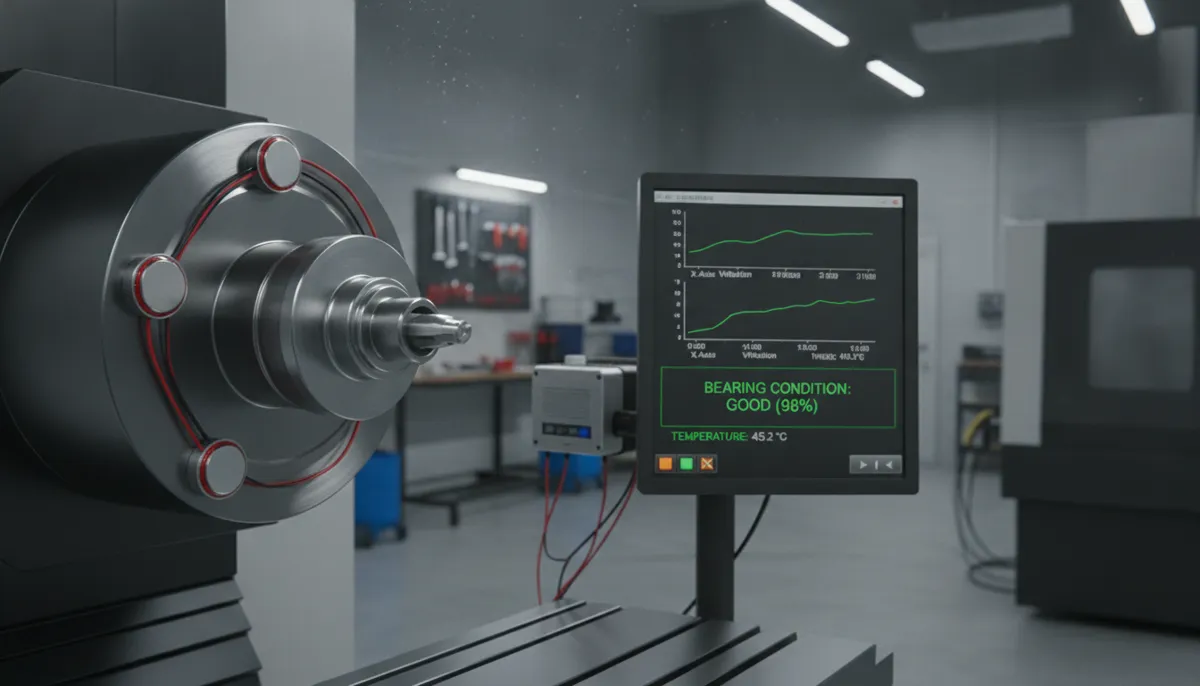
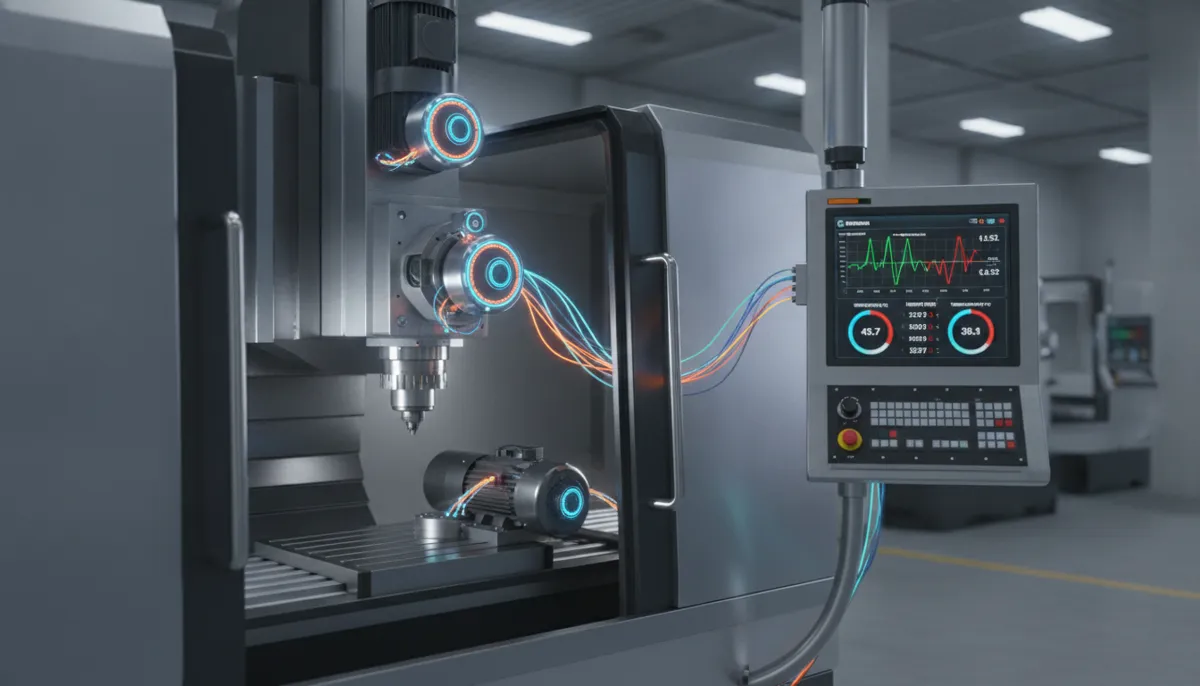
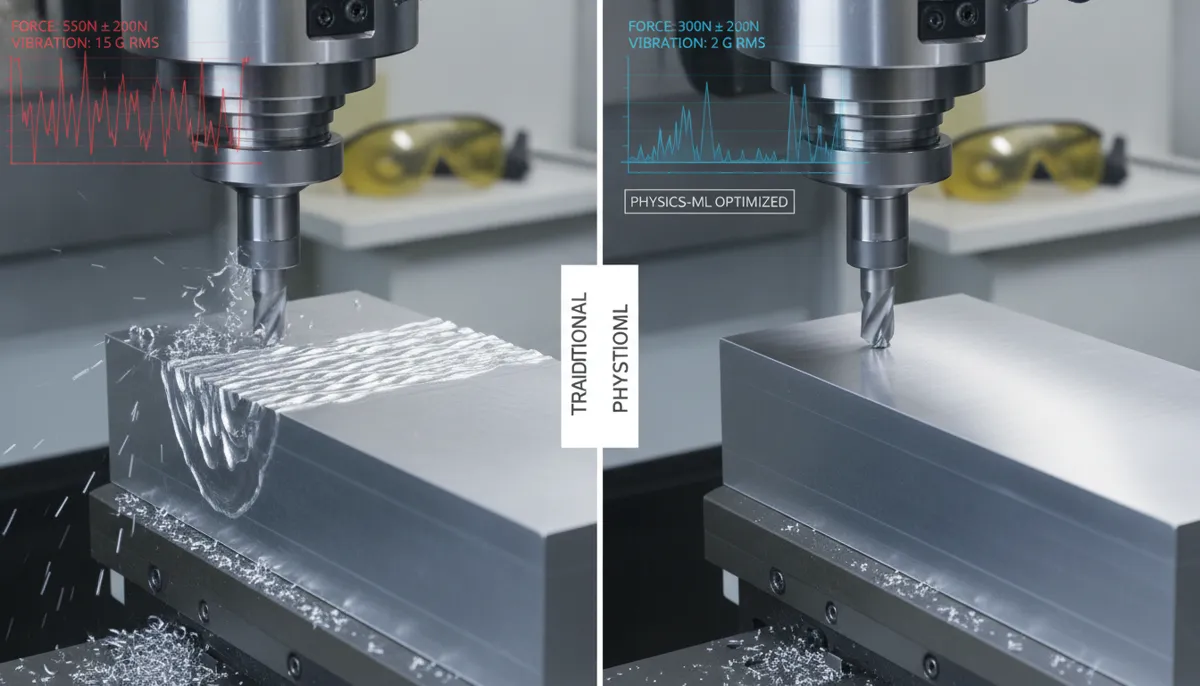
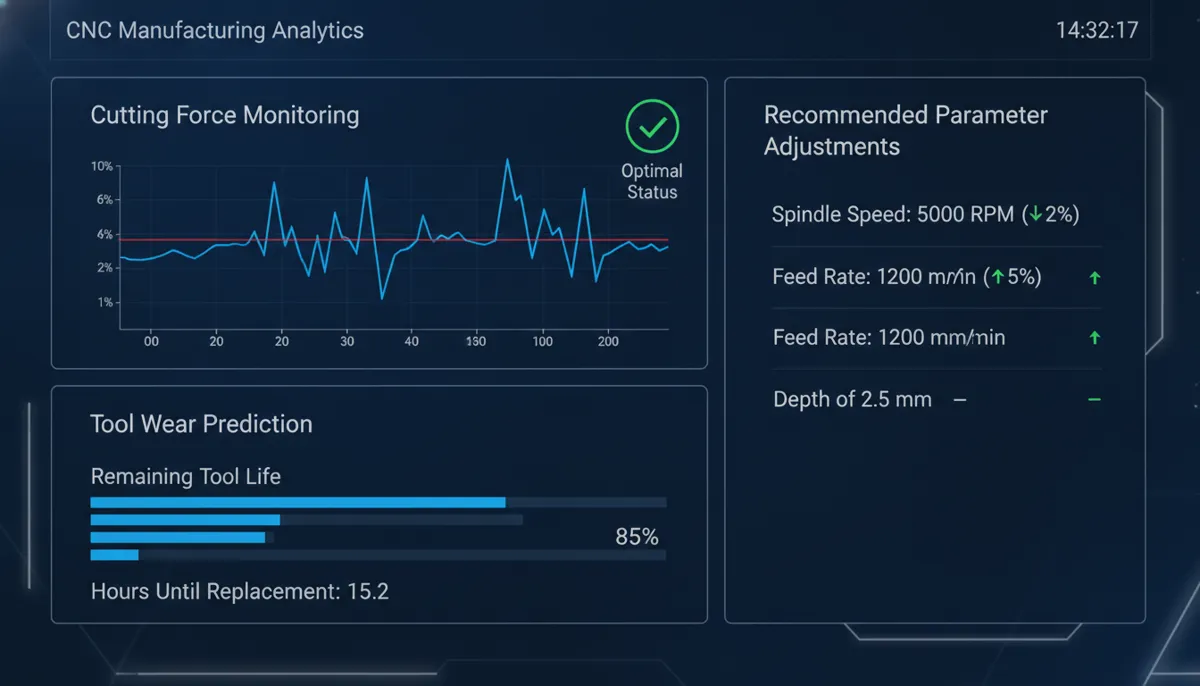
QiaoFeng’s CNC hybrid modeling approach seamlessly integrates physics-based simulations with machine learning algorithms. This synergy enables real-time optimization of cutting parameters — speed, feed rate, and depth of cut — based on live sensor feedback from force dynamometers, thermocouples, and accelerometers. Our internal validation tests show the system predicts tool wear with 95% accuracy, reducing unplanned downtime by 30% across client deployments.
A leading aerospace parts manufacturer in Germany faced chronic chatter when machining titanium alloys (Ti-6Al-4V). After deploying QiaoFeng’s CNC physics ML solution, chatter vibrations were eliminated, surface finish improved by 25% (Ra reduced from 1.6 µm to 1.2 µm), and scrap rates fell from 8% to 1.5%. The model reached production-ready accuracy after just 50 initial machining runs, thanks to physics constraints that prevented overfitting.
4. Key Features of QiaoFeng’s CNC Physics AI Platform
| Feature | Description | Benefit |
|---|---|---|
| Real-Time Adaptive Control | Adjusts feed rate & spindle speed on the fly via sensor fusion | Prevents tool breakage, ensures consistent quality |
| Physics-Constrained Predictions | Embeds conservation laws & material models into the neural network | Eliminates physically impossible parameter suggestions |
| Data Efficiency | Achieves high accuracy with as few as 100 samples | Cuts data collection time by 80% vs. pure ML |
| Universal CNC Compatibility | Works with Fanuc, Siemens, Heidenhain controllers | No controller replacement required |
| Edge Deployment | Runs on on-premise edge devices | Low-latency decisions, no cloud dependency |
5. Real-World Use Cases
5.1 Aerospace Titanium Machining — USA
A manufacturer of landing gear components in Ohio experienced frequent tool failures due to heat buildup when machining Ti-6Al-4V. QiaoFeng’s CNC physics ML model predicted optimal coolant flow rates and cutting parameters in real time, extending tool life by 50% and reducing cycle time by 15%. Annual tooling cost savings exceeded $85,000.
“We were replacing end mills every 40 minutes on our titanium lines. After deploying QiaoFeng’s physics-informed system, we’re now running 90-minute tool life consistently. The ROI paid back in under two months — it’s the best process investment we’ve made in a decade.”
5.2 Automotive Aluminum Milling — Germany
A Tier 1 automotive supplier in Bavaria struggled with surface roughness variations on aluminum structural components. By embedding thermal expansion models into the CNC physics AI, QiaoFeng achieved Ra values consistently below 0.8 µm, meeting OEM quality standards and eliminating a secondary polishing step that had added 12 minutes per part.
“Surface finish variation was killing our OEE. The thermal compensation built into QiaoFeng’s physics ML model stabilized our Ra readings across all three shifts. We removed the polishing station entirely — that alone saved us €120,000 in annual labor.”
5.3 Medical Device Stainless Steel — Vietnam
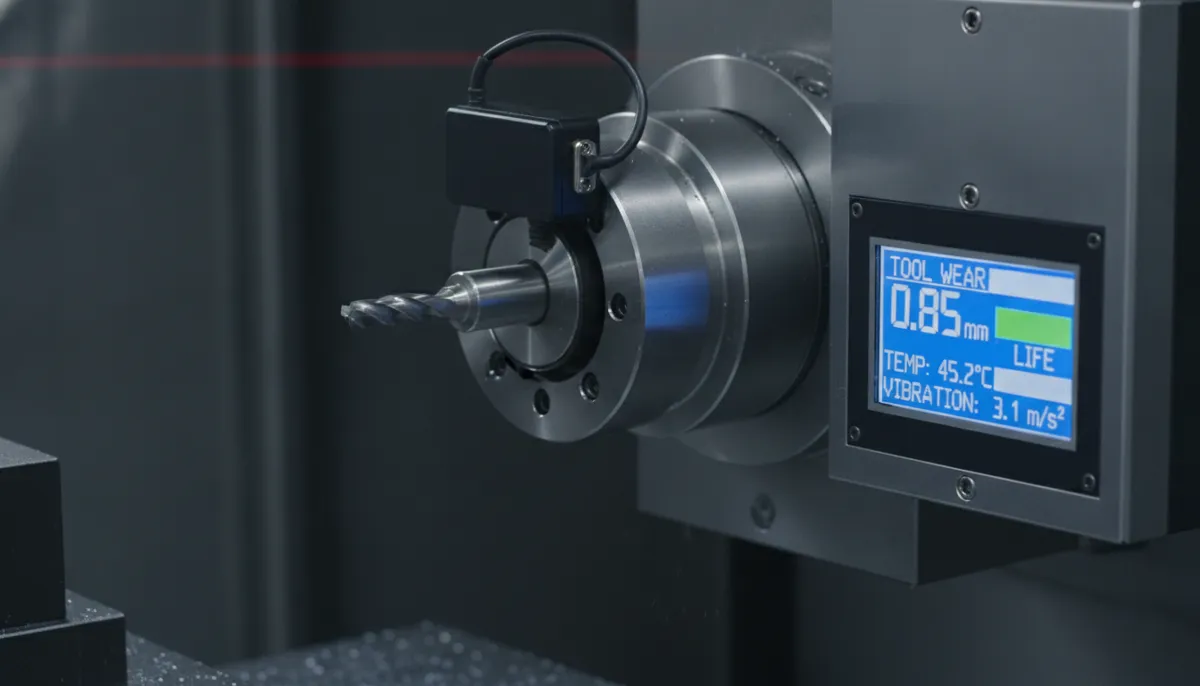
A surgical instrument producer in Ho Chi Minh City required zero-defect output on 316L stainless steel components. QiaoFeng’s CNC physics ML platform monitored tool wear in real time and triggered automatic tool changes before defects could occur, resulting in a 99.8% yield rate and full compliance with ISO 13485 medical device quality requirements.
“In medical manufacturing, one defective part can mean a product recall. QiaoFeng’s system gives us real-time confidence that every tool change happens at exactly the right moment. Our yield went from 96% to 99.8% — that’s the difference between profit and loss on our margins.”
✅ Advantages of CNC Physics ML
- Superior prediction accuracy with limited data
- Eliminates physically impossible AI outputs
- Reduces unplanned downtime by up to 30%
- Compatible with all major CNC controllers
- Fast ROI — typically within 3 months
- Ideal for high-mix, low-volume production
❌ Limitations to Consider
- Higher initial investment than rule-based control
- Requires accurate sensor installation & calibration
- Physics model must be re-tuned for new materials
- 2–4 week deployment and validation period
6. Frequently Asked Questions
How does CNC physics ML differ from traditional adaptive control?
Traditional adaptive control relies on simple rule-based adjustments — for example, reducing feed rate when cutting force exceeds a fixed threshold. CNC physics ML uses a model that understands the underlying dynamics of the cutting process, enabling predictive and proactive adjustments. It can anticipate chatter or tool wear before they occur, leading to smoother operation, better surface quality, and fewer emergency stops.
Is this technology suitable for small batch production?
Absolutely. Because physics-informed models require far less training data than pure machine learning, they are ideal for high-mix, low-volume environments. You can train the model on as few as 50–100 parts and still achieve reliable optimization. This significantly reduces setup time and scrap on custom or prototype jobs — a key advantage for job shops and contract manufacturers.
What certifications does QiaoFeng’s solution hold?
QiaoFeng’s manufacturing operations are ISO 9001:2015 certified, and our CNC machines comply with CE and RoHS directives. All machines are backed by a 2-year warranty. Our physics-informed algorithms are benchmarked against published NIST machining simulation standards for accuracy validation.
What is QiaoFeng’s refund and warranty policy?
QiaoFeng offers a 2-year warranty on all CNC machines. Refunds are supported in cases of verified quality issues. Returns without a quality-related reason are not accepted. Our after-sales team in Dongguan provides remote diagnostics and on-site support to resolve issues efficiently.
How long does implementation take?
Typical deployment takes 2–4 weeks, including sensor installation, model training, and production validation. QiaoFeng’s engineers provide full on-site support and operator training. Most clients realize measurable ROI within 3 months through reduced scrap, longer tool life, and increased throughput.
Ready to Optimize Your Machining with CNC Physics ML?
Get a free feasibility study from QiaoFeng’s engineers. We respond within 24 hours. Serving clients across the USA, Europe, and Southeast Asia since 2010.
References
- Mordor Intelligence, Machining Centers Market Size, Share & Growth Trends Report, 2024. View Report →
- Elsevier, International Journal of Machine Tools and Manufacture, Vol. 175, 2022 — “Physics-informed neural networks for machining process modeling.” View Article →
- McKinsey & Company, Capturing the True Value of Industry 4.0, 2022 — AI and predictive maintenance in manufacturing. View Report →