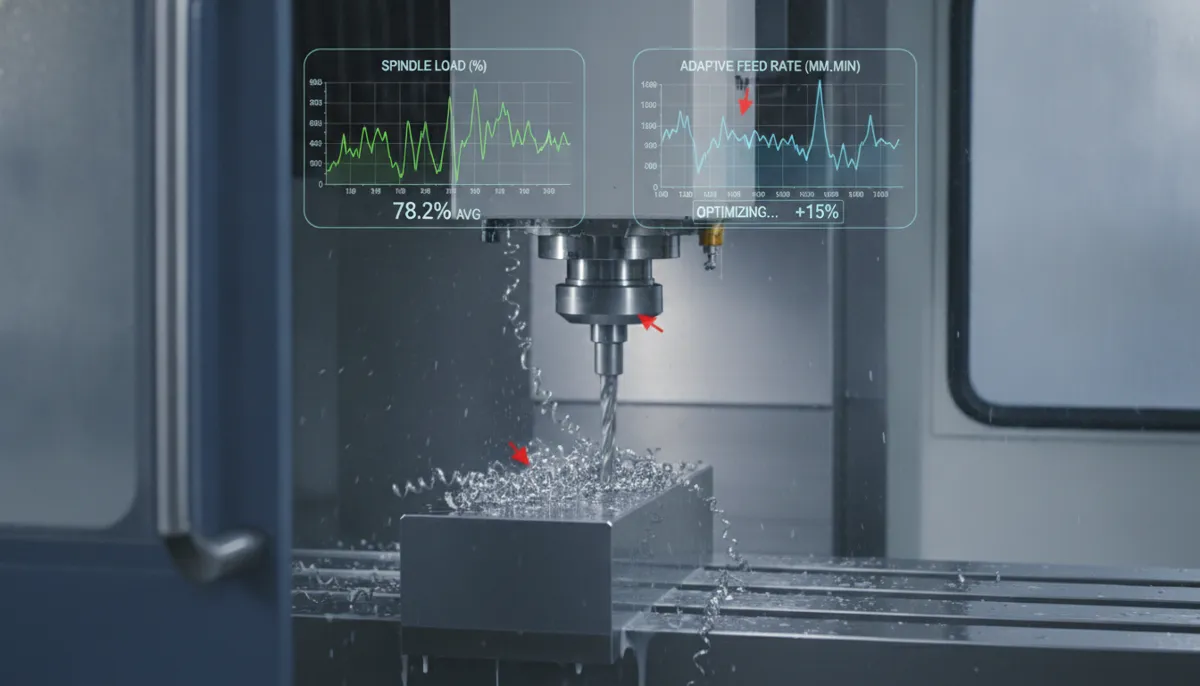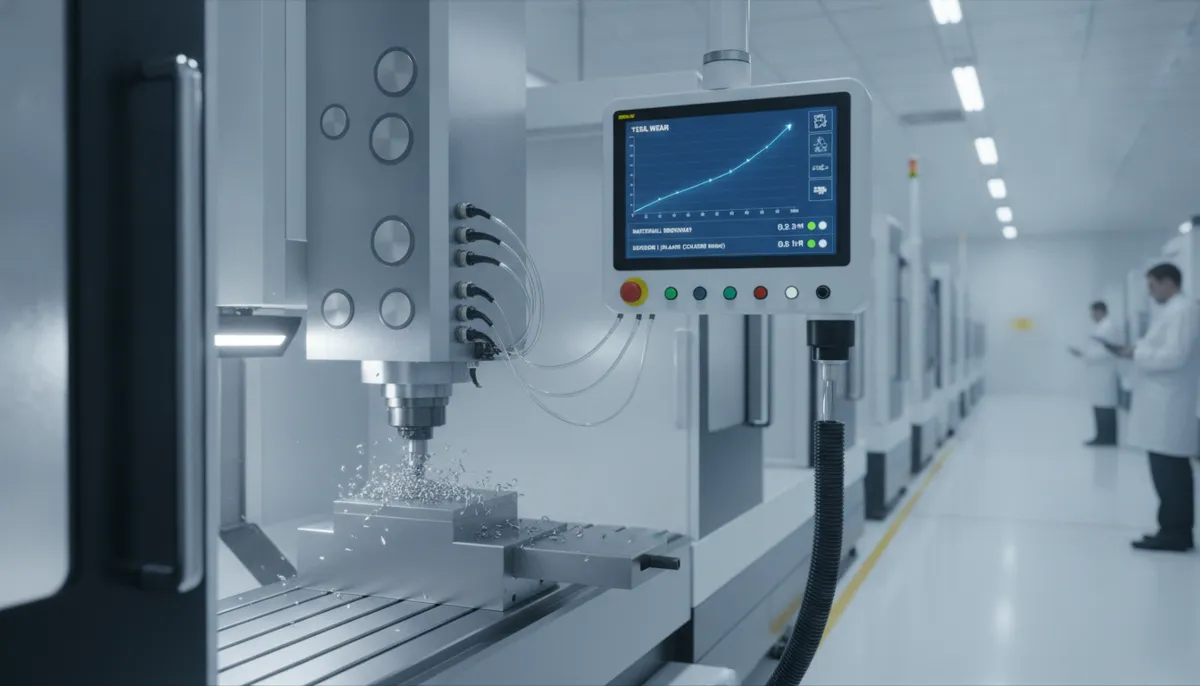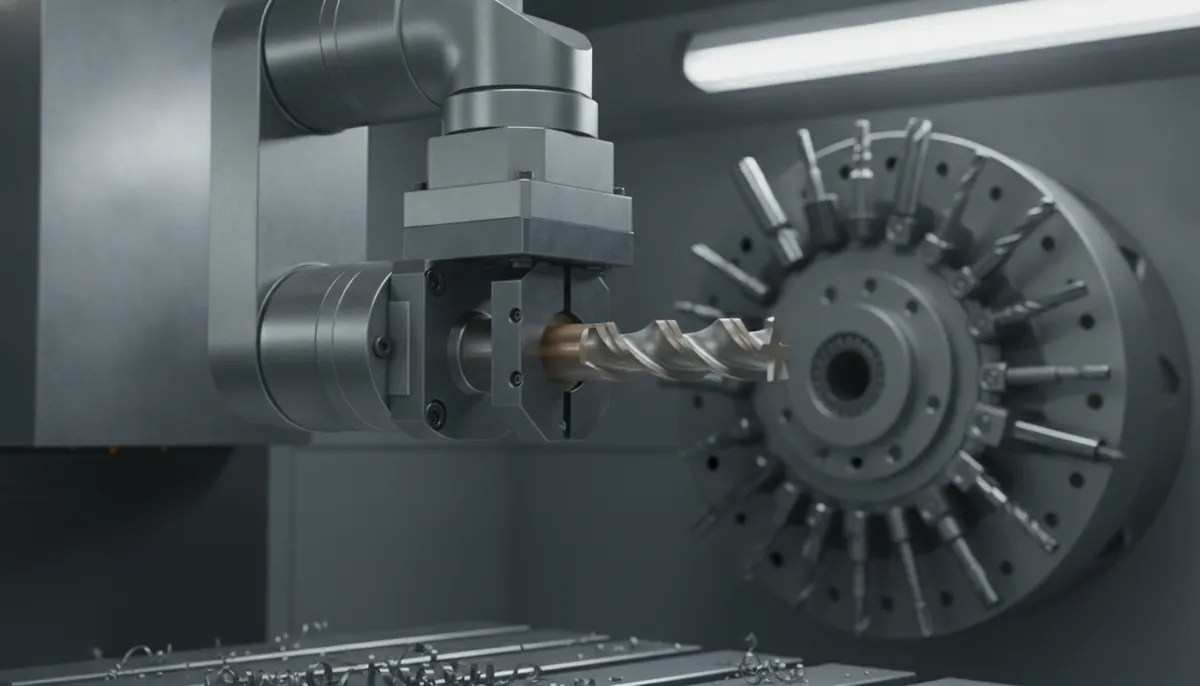
CNC ATC — short for Automatic Tool Changer — is one of the most impactful upgrades you can add to a CNC machining centre. In simple terms, a CNC ATC automatically swaps cutting tools during a machining cycle without any operator intervention, dramatically cutting idle time and boosting throughput. If you are new to CNC machining, understanding the CNC ATC definition is the first step toward running efficient, high-quality production. At QiaoFeng — a CNC machine manufacturer based in Dalingshantown, Dongguan, Guangdong, founded in 2010 and trusted by 750+ customers worldwide — we have seen shops cut non-cutting time by more than 60% simply by switching to an ATC-equipped machine.
1. Why CNC ATC Matters: Industry Data
The global machining centres market — the segment where CNC ATC systems are most prevalent — was valued at USD 35.4 billion in 2023 and is projected to reach USD 57.1 billion by 2032, growing at a CAGR of 5.5% [1]. A separate analysis by Grand View Research found that automation-driven demand — including ATC adoption — accounts for over 38% of new CNC machine purchases in North America and Europe [2]. Meanwhile, MarketsandMarkets reports that manufacturers who integrate automatic tool changers into existing lines reduce average setup time by up to 65% and improve Overall Equipment Effectiveness (OEE) by 20–30% [3].
These numbers confirm what QiaoFeng’s 750+ customers already know: investing in a CNC ATC system is not a luxury — it is a competitive necessity.
2. What is CNC ATC? Definition and Core Concepts
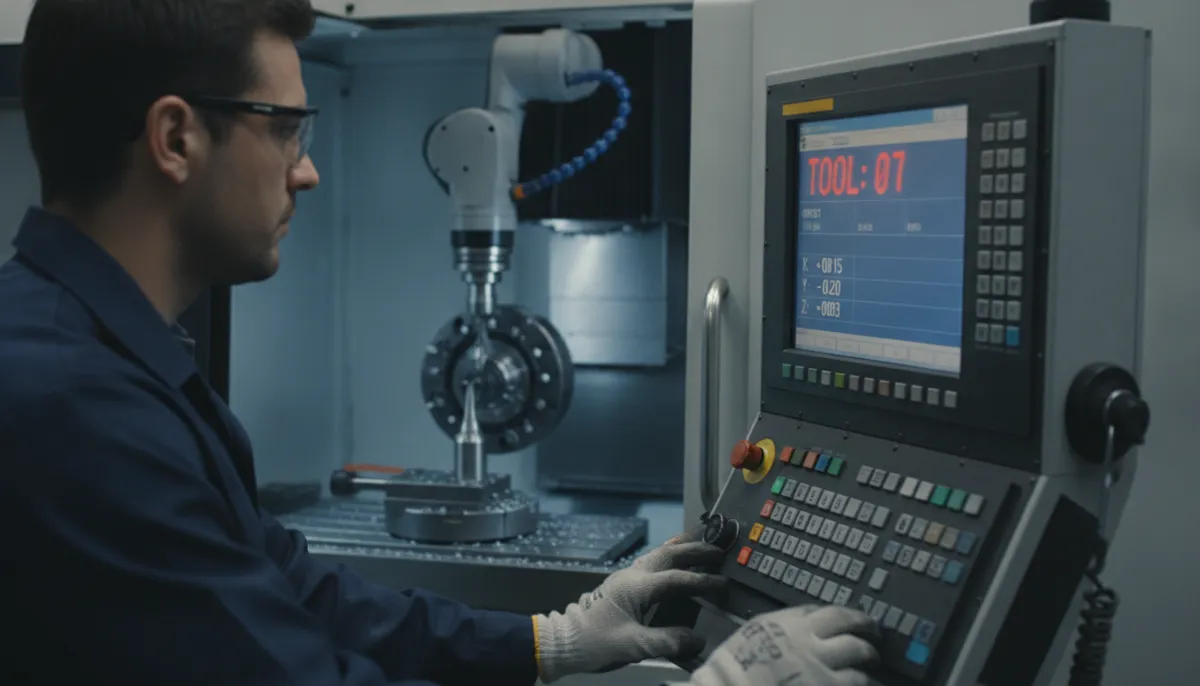
The CNC ATC definition is straightforward: it is a mechanical sub-system
integrated into a CNC machining centre that stores multiple cutting tools and exchanges
them automatically under programme control. When the CNC controller executes a
T__ M06 command, the ATC retrieves the specified tool from the magazine,
removes the current tool from the spindle, and inserts the new one — all within a few
seconds. This eliminates the need for an operator to stop the machine, loosen the collet,
swap the tool manually, and re-tighten, a process that can take 30 seconds to 2 minutes
per change.
Modern CNC ATC systems are fully integrated with the machine controller, enabling automatic tool-length compensation, tool-life monitoring, and even broken-tool detection. For beginners, this means fewer mistakes, less scrap, and more confidence on the shop floor.
3. CNC Tool Changer Types: Which One is Right for You?
There are three primary CNC tool changer types, each suited to different production environments. Understanding the differences will help you choose the right machine for your shop.
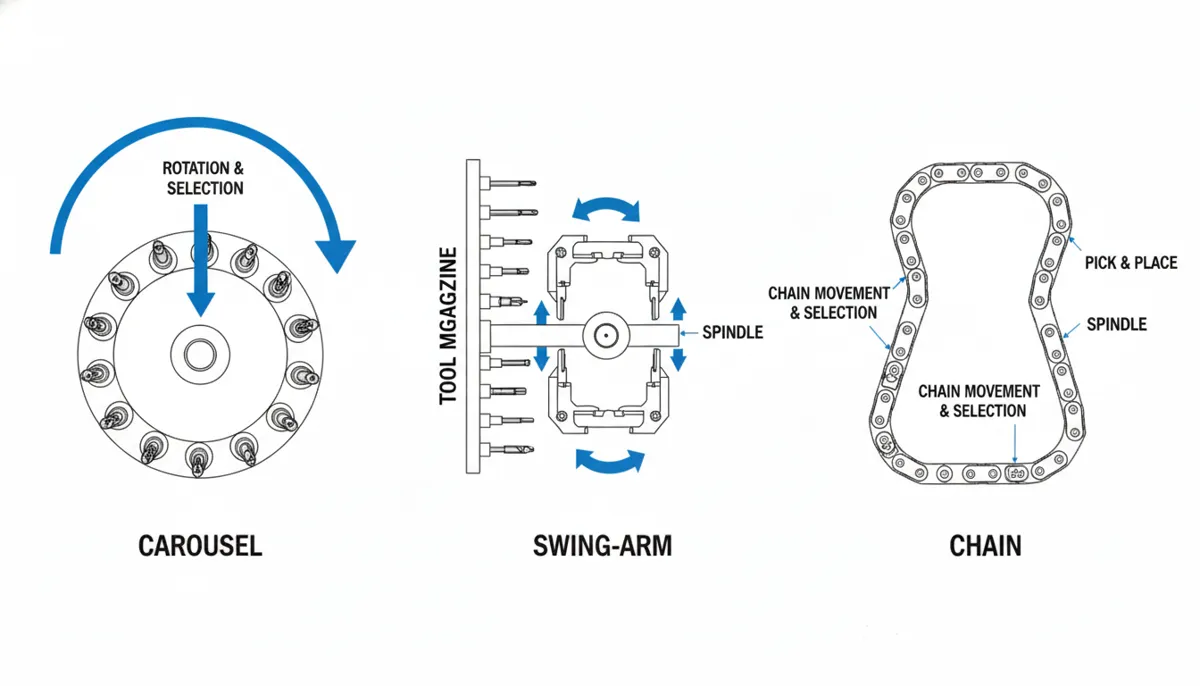
| Type | Tool Capacity | Change Speed | Footprint | Best For | Typical Cost |
|---|---|---|---|---|---|
| Carousel (Umbrella) | 8 – 24 tools | 3 – 6 s | Compact | Small shops, light-duty work | Low |
| Swing-Arm (Arm-Type) | 16 – 40 tools | 1.5 – 3 s | Medium | General machining, mid-volume | Medium |
| Chain-Type (Matrix) | 40 – 120+ tools | 3 – 8 s | Large | Complex parts, high-mix production | High |
QiaoFeng’s standard machining centres feature swing-arm ATC systems for the best balance of speed, capacity, and reliability. Carousel-type machines are available for entry-level budgets, while chain-type configurations can be quoted on request for high-mix production environments.
4. CNC ATC Capacity: How Many Tools Do You Need?
CNC ATC capacity is measured by the number of tool pockets in the magazine. Common capacities range from 10 to 40+ tools on standard machines. As a beginner, a 12–20 tool capacity covers the vast majority of everyday operations — drilling, tapping, reaming, and end-milling in multiple sizes. If you plan to run complex multi-feature parts without re-fixturing, consider a 24–30 tool magazine. QiaoFeng offers ATC capacities from 12 to 30 tools on entry-level and mid-range models, with larger chain-type magazines available on request.
5. Key Features of QiaoFeng’s CNC ATC System
5.1 High-Speed Tool Change
QiaoFeng’s swing-arm ATC achieves chip-to-chip tool change times as low as 2.5 seconds. Less idle time means more spindle-on time and faster job completion. A small shop running 200 tool changes per shift saves over 90 minutes of idle time daily compared to manual swapping.
5.2 Robust Pneumatic Clamping
The spindle uses a pneumatic draw-bar clamping mechanism that holds tools securely during high-speed cutting. This prevents tool pull-out, reduces vibration, and eliminates the micro-positioning errors that cause scrap on tight-tolerance parts.
5.3 Automatic Tool-Length Compensation (TLC)
Every time a new tool is loaded, the controller automatically applies the stored tool-length offset. Combined with an on-machine probe (optional), the system can measure and update offsets without operator input — critical for unattended overnight runs.
5.4 Fanuc Macro B — ATC G-Code Examples
Below are three practical Fanuc Macro B code snippets that beginners can use immediately on any Fanuc-compatible CNC ATC machine.
Example 1 — Basic Tool Call & Length Compensation
; ── Basic ATC Tool Call (Fanuc) ──────────────────────────
O0010
T02 M06          ; Select Tool 2, execute ATC change
G43 H02 Z50.0    ; Activate tool-length compensation, offset H02
M03 S1500        ; Spindle CW at 1500 rpm
G00 X0. Y0.      ; Rapid to start position
G01 Z-10.0 F200  ; Feed down 10 mm
G49 Z50.0        ; Cancel tool-length compensation
M05              ; Spindle stop
M30              ; Program end & rewind
Example 2 — Sequential Multi-Tool Operation (Drill → Tap → Mill)
; ── Multi-Tool Sequence: Drill → Tap → End-Mill ─────────
O0020
; ── Step 1: Centre drill ──
T01 M06          ; ATC loads Tool 1 (centre drill)
G43 H01 Z50.0 M03 S2000
G81 X20. Y20. Z-5. R2. F150   ; Drill cycle
G80              ; Cancel canned cycle

; ── Step 2: Tap M6×1.0 ──
T02 M06          ; ATC loads Tool 2 (M6 tap)
G43 H02 Z50.0 M03 S600
G84 X20. Y20. Z-12. R2. F600  ; Tapping cycle (F = S × pitch)
G80

; ── Step 3: End-mill pocket ──
T03 M06          ; ATC loads Tool 3 (8 mm end mill)
G43 H03 Z50.0 M03 S3000
G01 X10. Y10. F300
G01 Z-5. F150
G01 X40. F300
G49 Z50.0
M05 M30
Example 3 — Macro B Tool-Life Management with ATC
; ── Tool-Life Check Before ATC Change (Macro B) ─────────
O0030
#500 = #500 + 1        ; Increment tool-use counter (stored in #500)
IF [#500 GE 200] GOTO 10  ; If used 200+ times, jump to alarm
T01 M06                  ; Normal ATC tool change
G43 H01 Z50.0 M03 S1800
GOTO 20

N10
M00                      ; Programme stop — operator must replace tool
#500 = 0               ; Reset counter after replacement
T01 M06
G43 H01 Z50.0 M03 S1800

N20
G00 X0. Y0.
M30
6. Real-World Applications of CNC ATC
Case 1 — Automotive Parts Prototyping (Germany)
Pain Point: A German prototyping workshop needed to switch between
drilling, tapping, and milling frequently on small batches. Manual changes took up to
5 minutes each, severely limiting daily output.
Solution: After installing a QiaoFeng machining centre with a 16-tool
swing-arm ATC, changeover time dropped to under 3 seconds. The shop now completes
prototype batches 3× faster and has taken on 40% more orders.
“Before the QiaoFeng ATC machine, every tool change meant stopping the spindle and losing five minutes. Now the machine handles it in under three seconds — we barely notice it happening. Our throughput has tripled on small-batch jobs.”
Case 2 — Aluminium Enclosure Manufacturing (USA)
Pain Point: A US manufacturer of aluminium electronic enclosures
required multiple setups for different operations, leading to cumulative positioning
errors and inconsistent tolerances.
Solution: With a QiaoFeng 20-tool ATC machine, all operations were
programmed in a single setup. Part tolerance improved to ±0.01 mm and
cycle time was cut by 40%, enabling the company to fulfil a major
defence-sector contract on time.
“We were re-fixturing parts three times per job and still missing tolerance on the final bore. The QiaoFeng ATC machine let us do everything in one setup. Tolerance is now consistently within 0.01 mm and we haven’t had a rejection in four months.”
Case 3 — Automotive Components Production (Thailand)
Pain Point: A Thai automotive-components supplier running high-volume
production needed to reduce idle time between operations to stay competitive on
per-unit cost.
Solution: Two QiaoFeng machines with 24-tool ATC systems were
integrated into the production line. Non-cutting time fell by 62%,
and the factory achieved lights-out operation during the night shift within three months
of installation.
“เครื่อง QiaoFeng ช่วยให้เราลดเวลาที่ไม่ได้ตัดชิ้นงานลงได้มากกว่า 60% และตอนนี้เราสามารถรันกะกลางคืนแบบไม่มีพนักงานได้แล้ว — คุ้มค่าการลงทุนมาก”
(“The QiaoFeng machine helped us cut non-machining time by over 60%, and we can now run the night shift lights-out — a very worthwhile investment.”)
7. Pros and Cons of CNC ATC
✅ Advantages
- Reduces tool-change time from minutes to seconds
- Enables unattended / lights-out machining
- Eliminates operator error during tool swaps
- Improves OEE by 20–30%[3]
- Supports complex multi-operation programmes in one setup
- Automatic tool-length compensation reduces scrap
- Compatible with tool-life monitoring macros
⚠️ Limitations
- Higher upfront cost than manual-change machines
- Requires periodic lubrication and sensor cleaning
- Magazine capacity limits tool variety on complex jobs
- Mechanical faults (rare) can halt the entire programme
- Learning curve for beginners setting up tool offsets
8. Frequently Asked Questions About CNC ATC
1. What is the difference between ATC and manual tool change?
Manual tool change requires the operator to stop the machine, loosen the collet, insert a new tool, and re-tighten — a process taking 30 seconds to 2 minutes. A CNC ATC automates this entirely, completing the swap in 1.5–5 seconds depending on type, and allows the machine to continue running unattended.
2. How many tools do I need in an ATC for a beginner?
A capacity of 12–20 tools covers the vast majority of beginner jobs — drilling, tapping, reaming, and end-milling in multiple sizes. Starting with a 16-tool magazine is a safe choice: enough flexibility without being overwhelming to manage.
3. Is ATC maintenance difficult?
No. Basic maintenance involves periodic lubrication of the arm and magazine, and occasional cleaning of the tool-presence sensors. Most users spend around 30 minutes per month on ATC upkeep. QiaoFeng provides a detailed maintenance guide and remote technical support as standard.
4. Can I retrofit an ATC to my existing CNC machine?
Retrofitting is technically possible but often complex and costly, and may void the original machine warranty. It is generally more economical to purchase a new machine with an integrated ATC. QiaoFeng’s machines include ATC as a standard option, ensuring full compatibility and 2-year warranty coverage.
5. What is QiaoFeng’s warranty and return policy?
All QiaoFeng CNC machines come with a 2-year warranty covering manufacturing defects and component failures. Returns are supported for confirmed quality issues; no-reason returns without a quality defect are not accepted. Contact Bella at bella@qfcncmachine.com for warranty claims or technical queries.
6. Which CNC controllers are compatible with QiaoFeng ATC machines?
QiaoFeng ATC machines are compatible with all major CNC controllers including Fanuc, Siemens, Mitsubishi, and GSK. The ATC sub-system communicates via standard M-code and T-code commands, so existing programmes require minimal modification.
Ready to Upgrade Your Shop with a CNC ATC Machine?
Get a free consultation from Bella and the QiaoFeng team. We’ll help you select the right ATC type, capacity, and controller for your production needs — backed by 15 years of CNC expertise and a 2-year warranty.
References
- Mordor Intelligence, Machining Centers Market Size, Share & Growth Trends Report, 2024. https://www.mordorintelligence.com/industry-reports/machining-centers-market
- Grand View Research, CNC Machine Market Size, Share & Trends Analysis Report, 2023. https://www.grandviewresearch.com/industry-analysis/cnc-machine-market
- MarketsandMarkets, CNC Machine Tools Market — Global Forecast to 2029, 2024. https://www.marketsandmarkets.com/Market-Reports/cnc-machine-market-117577905.html