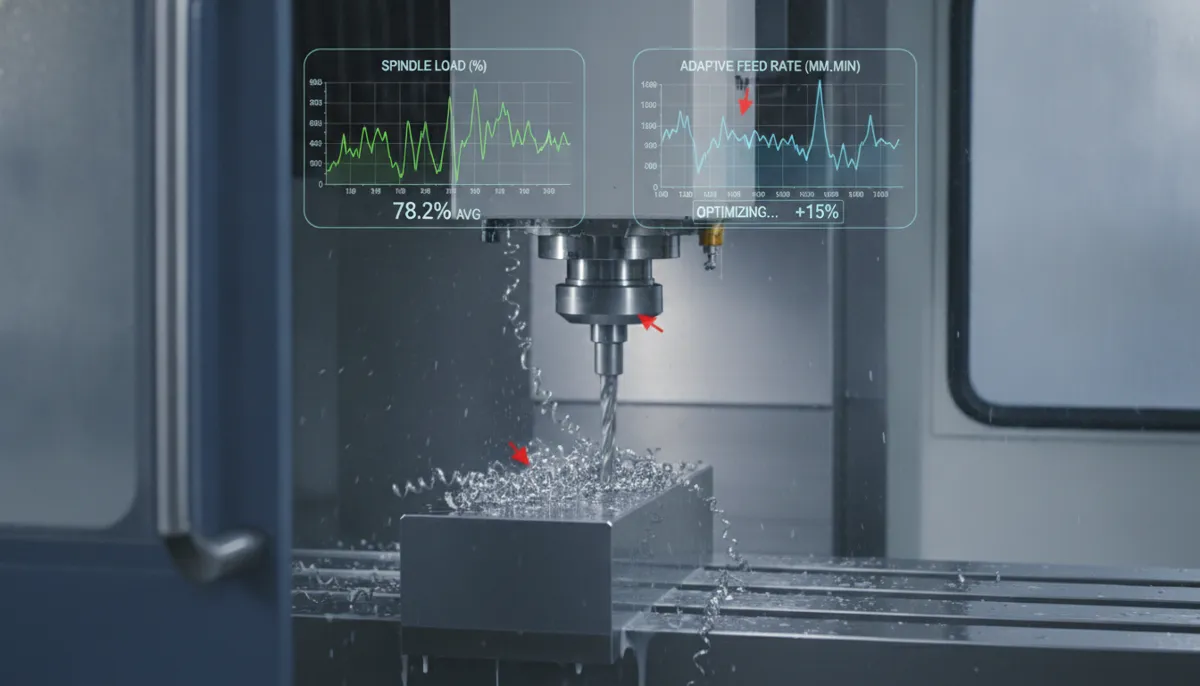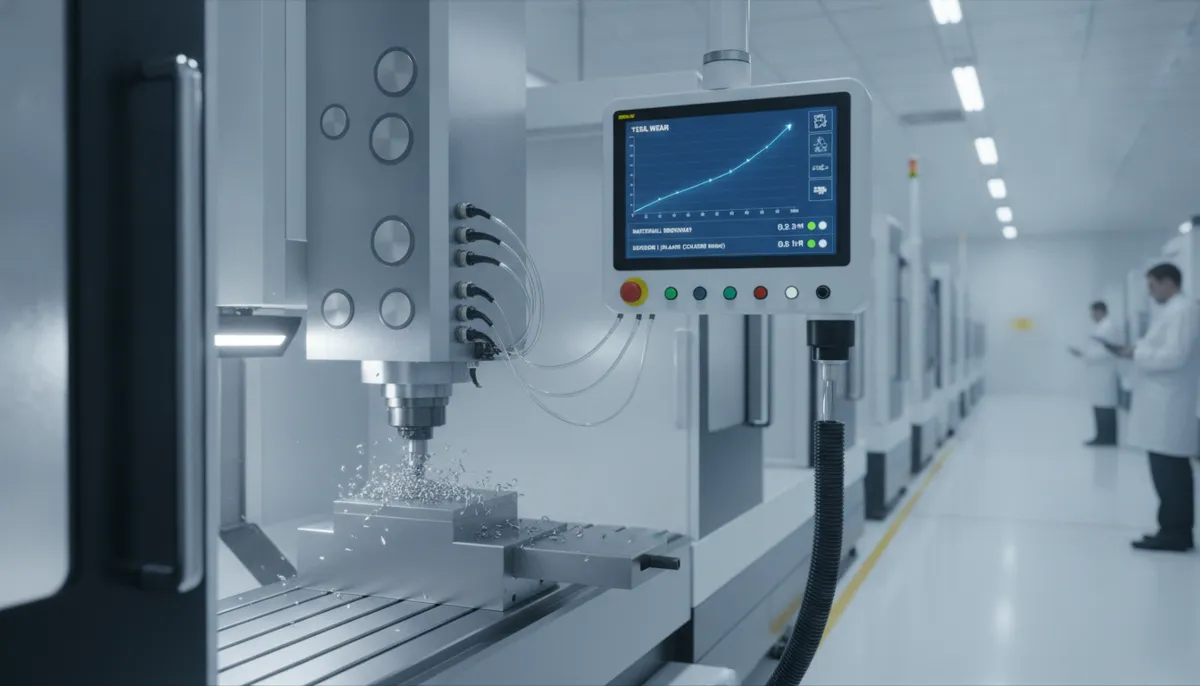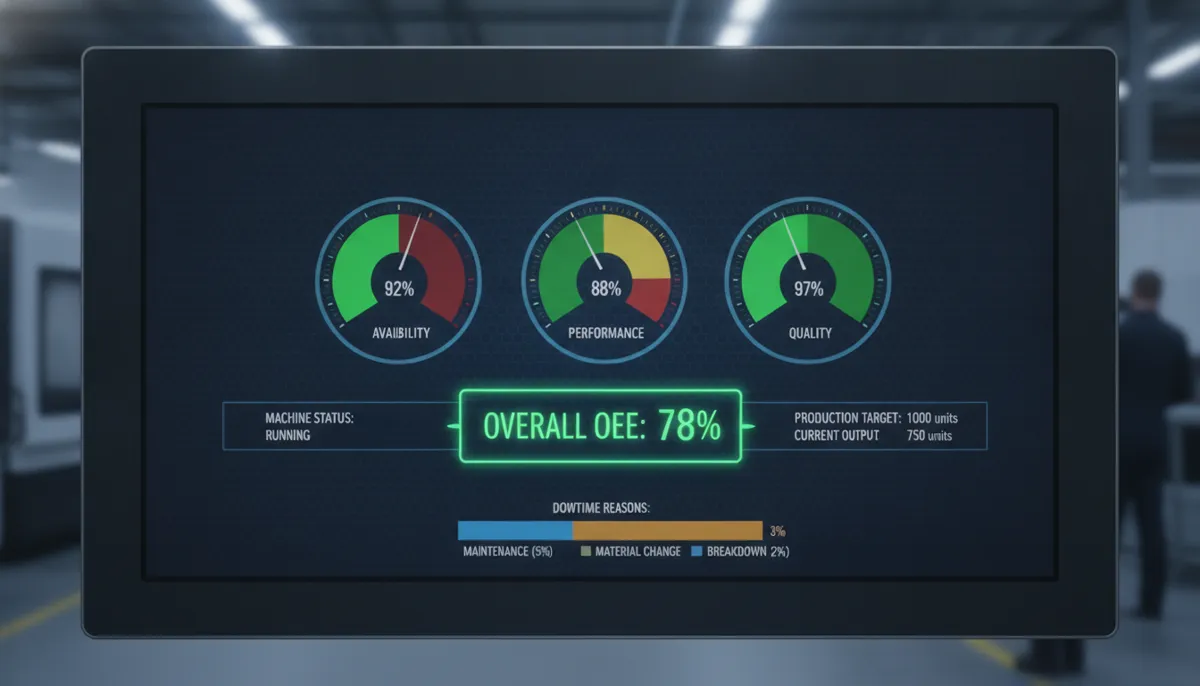
If you are new to manufacturing or machine shop management, you have likely heard the term OEE. Simply put, getting CNC OEE explained clearly is the first step for manufacturing beginners and CNC operators to improve productivity and reduce waste. OEE is a powerful metric that combines availability, performance, and quality into one clear percentage, showing you exactly how effectively your CNC machines are running.
According to industry data, the average OEE in discrete manufacturing is around 60%, while world-class OEE is 85% or higher. By having CNC OEE explained and applied correctly, you can identify hidden bottlenecks and make data-driven decisions to maximize your shop floor’s output.
Industry Insights on Machine Efficiency
Why does OEE matter so much? Recent global manufacturing reports highlight its critical role. According to a 2024 report by Mordor Intelligence, the Machining Centers Market is growing rapidly, demanding higher efficiency from existing equipment. Furthermore, studies by McKinsey & Company on Industry 4.0 show that implementing digital performance management (like OEE tracking) can boost throughput by 10% to 30%. Deloitte’s Smart Factory research also emphasizes that asset efficiency is the top driver for smart factory investments.
What is CNC OEE? Definition and Calculation
Overall Equipment Effectiveness (OEE) is a standard metric that multiplies three crucial factors. To get the core of CNC OEE explained, you must understand its formula:
- Availability (Uptime): Operating Time ÷ Planned Production Time. (Measures machine breakdowns and setup time).
- Performance (Speed): (Ideal Cycle Time × Total Parts) ÷ Operating Time. (Measures minor stops and reduced speed).
- Quality (Defect-free output): Good Parts ÷ Total Parts. (Measures scrap and rework).
The Formula: OEE = Availability × Performance × Quality
For example, if your machine’s Availability is 90% (0.90), Performance is 95% (0.95), and Quality is 99% (0.99), your OEE = 0.90 × 0.95 × 0.99 = 0.846, or 84.6%.
Core Features of CNC OEE Monitoring
While calculating OEE manually is possible, modern manufacturing relies on automated tracking. Here is how automatic tracking compares to manual methods:
| Feature | Manual Tracking | Automated CNC OEE Tracking |
|---|---|---|
| Data Accuracy | Prone to human error and estimation | 100% accurate, directly from the machine PLC |
| Real-Time Visibility | Delayed (usually calculated end of shift) | Instant dashboard updates |
| Loss Identification | Hard to track micro-stops (<5 mins) | Automatically categorizes all 6 Big Losses |
Real-World Scenarios: CNC OEE Explained in Action
At QiaoFeng, we have served over 750+ clients globally since our establishment in 2010. Having CNC OEE explained and implemented has transformed their operations. Here is what our clients from different regions have to say:
“Before tracking OEE, we thought our setup times were normal. Once we analyzed the Availability data, we implemented SMED techniques and cut changeovers by 30%. QiaoFeng’s machines and guidance were game-changers for our auto parts production.”
“Quality is non-negotiable in aerospace. OEE tracking helped us pinpoint a recurring performance drop that was causing a 5% scrap rate. Fixing a worn spindle bearing brought our quality up to 99.8%.”
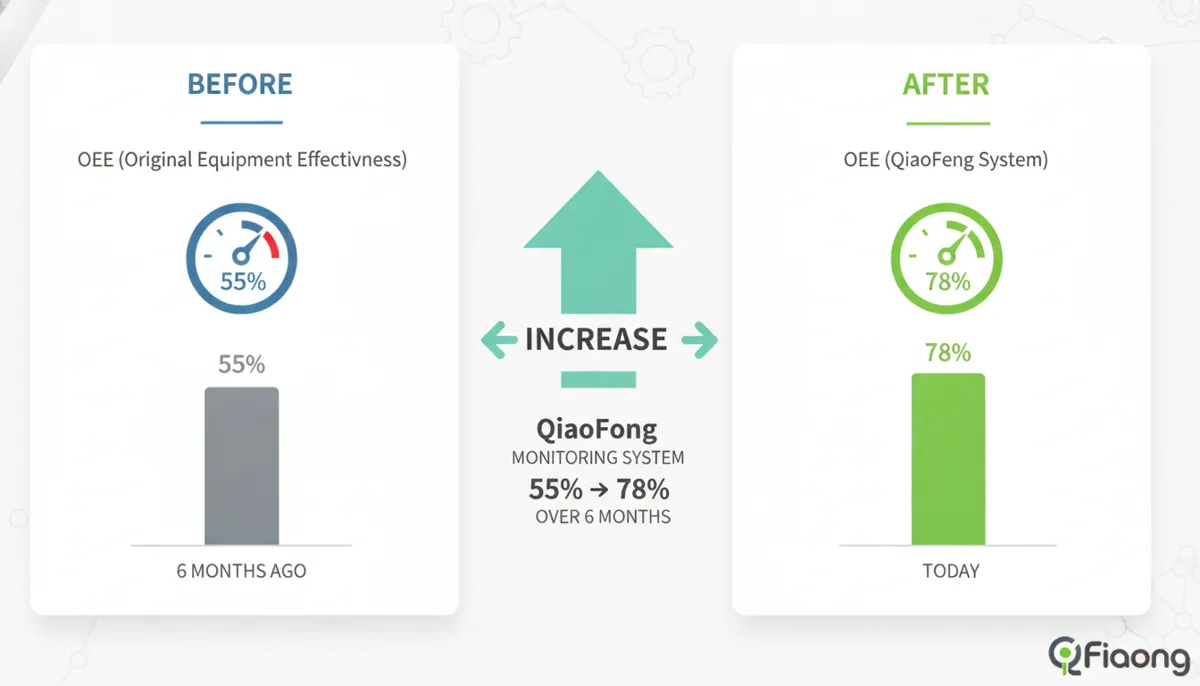
“Managing a high-mix job shop is tough. By having CNC OEE explained to our operators, everyone now focuses on reducing minor stops. Our overall shop efficiency jumped from 55% to 72% in just four months.”
Pros of OEE Tracking
- Identifies hidden production bottlenecks
- Reduces machine downtime and scrap
- Provides objective data for decision-making
- Maximizes ROI on existing equipment
Challenges of OEE Tracking
- Manual calculation can be time-consuming
- Requires cultural shift for operators
- Initial setup of IoT sensors may need investment
FAQ: CNC OEE Explained for Beginners
What is a good OEE score for a CNC machine?
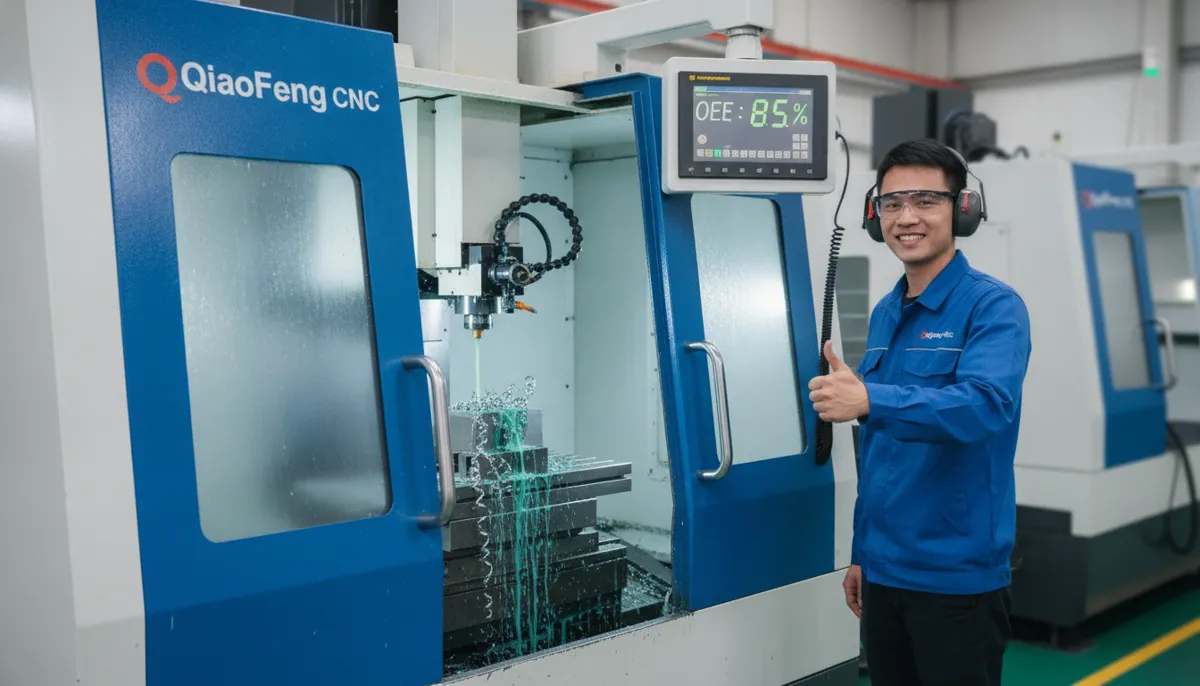
For discrete manufacturing, a world-class OEE is 85% or higher. However, many companies start around 60%. The key is continuous improvement. Focus on reducing downtime and defects first.
Can OEE be used for older manual machines?
Yes, but data collection is manual (via paper logs or spreadsheets). For accurate tracking, upgrading to modern CNC machines with automatic data collection is highly recommended.
Why is quality part of OEE?
Producing defective parts wastes time and materials. Even if a machine runs fast with high uptime, poor quality lowers your effective output. Including quality ensures you focus on making good, sellable parts.
Ready to Optimize Your CNC Production?
Now that you have CNC OEE explained, it’s time to take action. Contact QiaoFeng today to discuss how our high-efficiency CNC machines can boost your shop’s profitability.
References
- Mordor Intelligence. (2024). Machining Centers Market Size, Share & Growth Trends Report.
- McKinsey & Company. (2015). Industry 4.0: How to navigate digitization of the manufacturing sector.
- Deloitte. (2019). Smart Factory Study: Capturing value through the connected manufacturing enterprise.